AI Receptionist for Landscaping Businesses
An AI receptionist for landscaping businesses answers quote and service questions 24/7, qualifies property details, and shares your booking link.
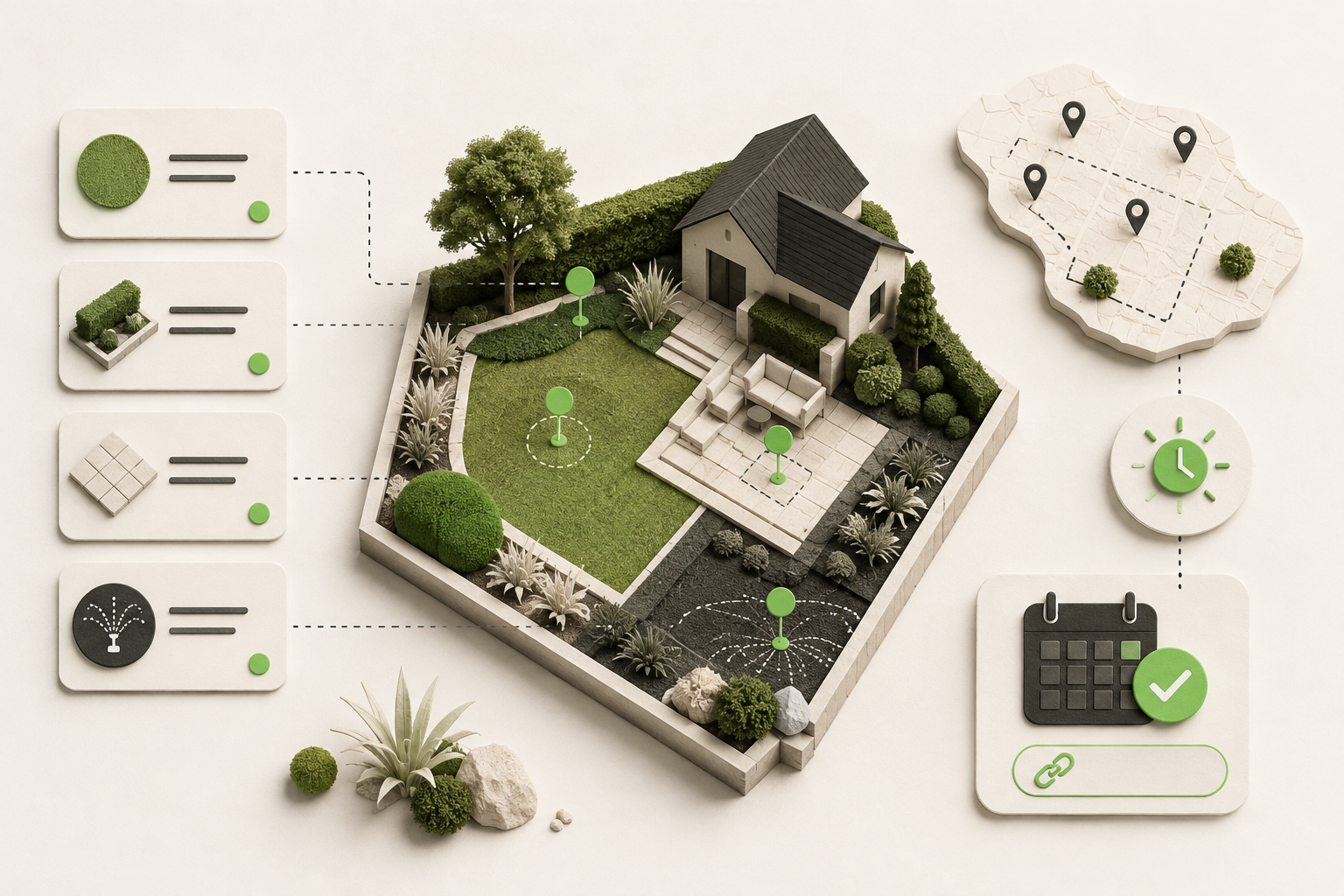
TL;DR: Spring hits and every landscaping company's phone and inbox fill with the same requests — mowing quotes, spring cleanup, mulch installs — arriving faster than a small crew can respond between jobs. An AI receptionist for landscaping businesses answers those inquiries the moment they land, on your website, WhatsApp, Instagram DM, and Facebook Messenger, asks the qualifying questions your estimator needs (property size, service type, recurring vs. one-off), and shares your booking link for the walkthrough. It is chat-first, not a phone system — voice is on Hyperleap's roadmap — so it runs alongside your existing phone setup, not instead of it. Crew scheduling stays with your office; the AI handles the front-desk work of answering, qualifying, and routing. Plans start at $40/month with a 7-day free trial (credit card required).
AI Receptionist for Landscaping Businesses
Landscaping demand isn't steady — it's seasonal in a way few other trades are. Spring brings a flood of new-customer inquiries as everyone wants their yard back in shape at once. Fall cleanup compresses a whole season's worth of leaf-removal requests into a few weeks. If you offer snow service, winter flips the entire business model overnight. In between, the daily grind looks different but the interruption is the same: a crew leader mid-job, an owner running estimates, or an office of one fielding "do you service my street," "what's your rate for biweekly mowing," and "can you do a one-time spring cleanup" — over and over, all day.
An AI receptionist covers both problems: the predictable seasonal surge and the daily drip of repetitive questions. This guide covers what a chat-based AI receptionist does specifically for a landscaping business — how it separates a one-time cleanup request from a recurring maintenance customer, what property and service details it should collect before an estimator gets involved, and how it stays in its lane on pricing and scheduling. For the deeper conversational detail on how the underlying chatbot handles landscaping-specific questions, see our guide to AI chatbots for landscaping businesses; for the full deployment across the customer journey, see the AI agents for landscaping companies pillar page.
Chat-first, not phone-first
Hyperleap's AI receptionist works on your website chat widget, WhatsApp, Instagram DM, and Facebook Messenger. It does not answer phone calls today — voice is on the roadmap, not shipped. If most of your inquiries arrive by phone, pair it with your existing phone setup rather than replacing it. See our AI receptionist vs. answering service comparison for how the two work together.
What Is an AI Receptionist for Landscaping Businesses?
An AI receptionist for landscaping businesses is a chat-based system that performs the front-desk job of answering inquiries, qualifying leads, and routing them to the right person — running continuously, including the exact weeks when seasonal demand spikes hardest. It is not a phone system; it operates on the channels homeowners and property managers already use to research landscapers outside of calling: your website chat widget, WhatsApp, Instagram DM, and Facebook Messenger.
For a landscaping business, that front-desk function needs to do a few things well:
- Answer immediately, especially during seasonal surges. Spring and fall are when volume is highest and your crew is least available to answer messages.
- Separate residential from commercial, and recurring from one-off. A homeowner asking about biweekly mowing is a different sales conversation than a property manager asking about a multi-site contract.
- Collect the property details an estimator needs. Lot size, service type, timing, and — on visual channels like Instagram and Messenger — photos of the space.
- Keep crew scheduling with your office. The AI qualifies and routes; it doesn't touch the actual job calendar.
This is different from a generic FAQ widget, which answers "what are your hours?" and stops. An AI receptionist captures and qualifies a lead end-to-end — closer to what an office manager does during peak season than what a static contact form does. For the deeper conversational walkthrough, see the AI chatbot for landscaping businesses guide.
Why Landscaping Businesses Lose Leads to Faster Competitors
The seasonal surge nobody staffs for
Landscaping demand doesn't ramp up gradually — it jumps within days of the first warm week in spring, spikes again with fall cleanup, and can flip entirely if you offer snow removal. Most landscaping businesses are staffed for an average week, not the two or three peak weeks that generate a disproportionate share of annual new-customer inquiries. Invoca's research puts the missed-contact rate across home service businesses at 27% in a normal week — a number that only gets worse when demand triples during a seasonal window.
The recurring-vs-one-off mismatch
Not every inquiry is the same value. A homeowner asking for a one-time mulch install is a different opportunity than one asking about weekly mowing for the season — but if both questions land on the same overwhelmed inbox with no triage, the higher-value recurring lead can wait just as long as the one-off, and recurring customers are exactly the ones with other options during a surge.
The response-speed math
Once a homeowner sends an inquiry, they're often messaging two or three landscapers in the same afternoon, especially during peak season when word-of-mouth and neighborhood Facebook groups drive a burst of near-simultaneous inquiries. InsideSales research found leads contacted within 5 minutes are 100x more likely to convert than those reached after 30 minutes. Our related breakdown on why home service businesses lose jobs to slow response covers this pattern across trades, including landscaping and lawn care, and our industry-by-industry look at response time and conversion rates breaks the pattern down further. For a broader look at what missed inquiries cost across business types, see what missed calls really cost your small business.
The math on recurring accounts lost to slow response
A recurring mowing or maintenance account is often worth several thousand dollars a year in repeat revenue, not just the value of a single visit. If a landscaping business loses even a few recurring-account inquiries a season to slow response, that's a meaningful multiple of a $40/month AI receptionist plan across the life of those accounts. Treat this as an illustrative comparison, not a guaranteed outcome — your numbers will differ based on your service mix and pricing.
7 Ways an AI Receptionist Handles the Landscaping Front Desk
1. Answers instantly, especially during peak season
What this looks like in practice: The first warm weekend of spring drives a wave of "can you fit me in for a cleanup" messages across your website and Facebook page. Instead of a slow trickle of callbacks over the following week, each one gets an immediate response.
Real-world impact: No inquiry sits unanswered because your two- or three-person office is fully booked with active jobs during the exact weeks when new-customer demand peaks.
Why it works: A chat-based system doesn't have a busy signal. It handles many simultaneous conversations across web, WhatsApp, Instagram DM, and Facebook Messenger without any of them waiting in a queue.
Key features:
- Coverage across Website, WhatsApp, Instagram DM, and Facebook Messenger
- No capacity ceiling during seasonal surges
- Responds in seconds, any time of day
2. Separates residential from commercial inquiries
What this looks like in practice: The AI asks early whether the inquiry is for a single residential property or a commercial site (or multiple properties), routing each toward the right follow-up — a standard quote flow for residential, a request for site details and contact info for commercial.
Real-world impact: Commercial and multi-property leads, which often represent significantly more recurring revenue, don't get lost in the same queue as one-off residential requests.
Why it works: Document-grounded conversation flows mean the bot asks a consistent qualifying sequence that reflects how your business actually prices and services each type of account.
Key features:
- Residential vs. commercial routing logic
- Different qualifying questions by account type
- Consistent triage regardless of volume
3. Qualifies recurring maintenance vs. one-off project work
What this looks like in practice: "I need my yard mowed every two weeks" and "I need a one-time cleanup before I sell my house" are both landscaping inquiries, but they're different sales conversations. The AI asks which the homeowner wants and routes accordingly.
Real-world impact: Your team can prioritize higher-value recurring accounts appropriately instead of treating every inquiry as equally urgent or equally valuable.
Why it works: The qualification questions are configured around your actual service structure — recurring maintenance plans versus project-based work — so the distinction happens automatically in the conversation.
Key features:
- Recurring vs. one-off service classification
- Service-type intake (mowing, cleanup, install, hardscape)
- Timing and frequency preferences captured upfront
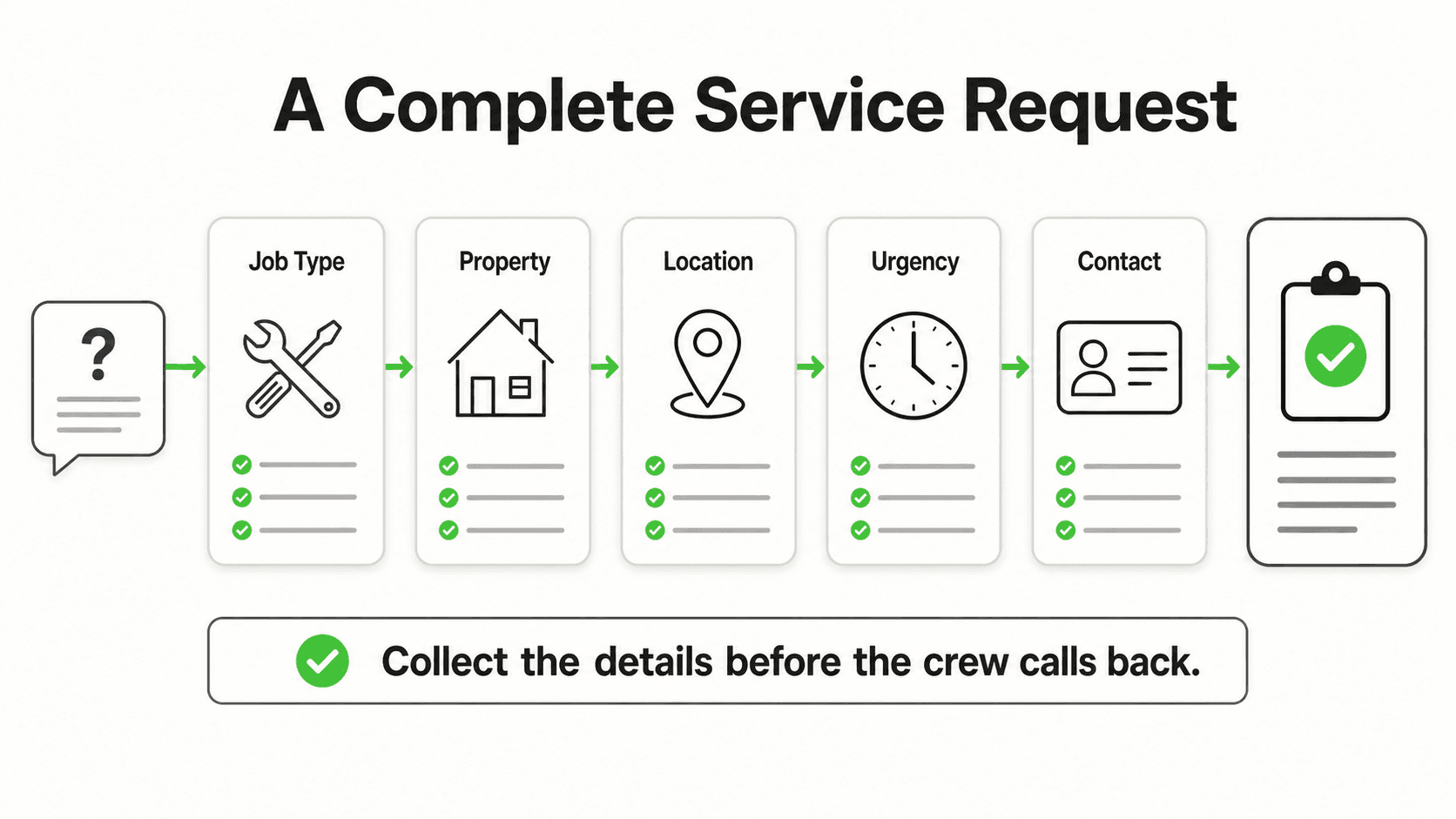
4. Collects property and service details before your estimator gets involved
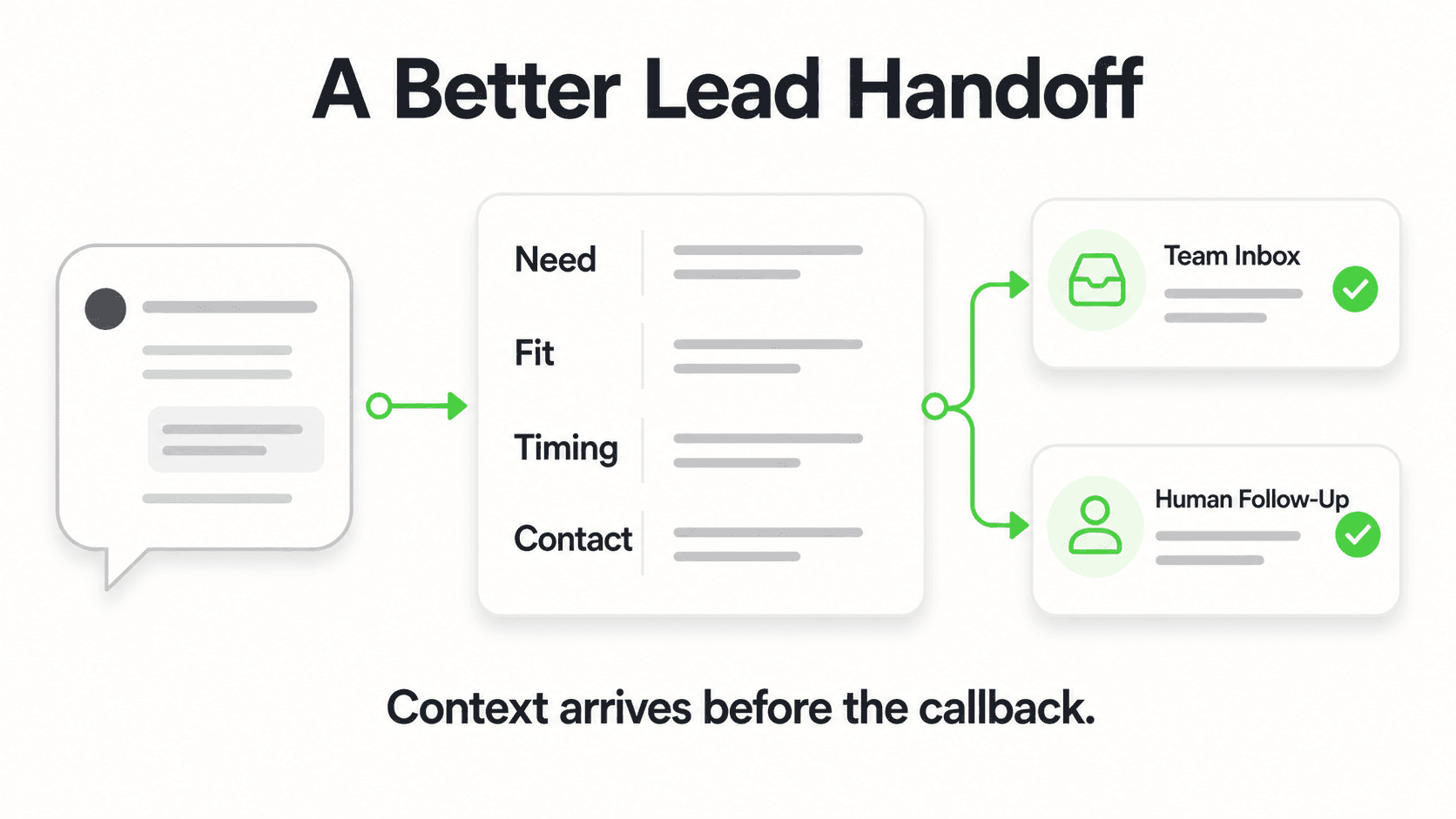
What this looks like in practice: Before a human sees the lead, the AI has gathered approximate lot size, the services wanted, and — on Instagram DM and WhatsApp, which support image sharing — photos of the yard or the area needing work.
Real-world impact: Estimators arrive at a property, or quote from photos, already knowing the scope instead of starting the conversation cold.
Why it works: A lead form gates the conversation — contact details are collected before the detailed conversation continues — so every lead includes a callback number even if the chat ends early.
Key features:
- Structured intake fields (lot size, service type, timing)
- Photo sharing supported on WhatsApp and Instagram DM
- Contact details captured up front, before the detailed questions
5. Answers service-area and pricing-range questions from your own content
What this looks like in practice: "Do you service my ZIP code?" and "what's a typical price range for biweekly mowing on a quarter-acre lot?" are two of the most repeated questions a landscaping office fields. The AI answers both from your documented service area and price ranges.
Real-world impact: Homeowners doing early research get a real, consistent answer instead of a generic "contact us for pricing," without your team repeating the same explanation constantly.
Why it works: The AI answers only from what you've uploaded — your service-area list and typical price ranges by service and lot size. It shares ranges, not a calculated final quote.
Key features:
- Service-area matching against your ZIP or radius list
- Price-range answers by service type and property size
- Escalates anything outside its knowledge to your team
6. Handles seasonal offers and cleanup campaigns
What this looks like in practice: When you add spring cleanup, fall leaf removal, or winterization packages to its knowledge, the AI explains what's included and the current price range for anyone who asks during that season.
Real-world impact: Seasonal promotions get consistent, accurate explanations across every conversation instead of depending on whoever happens to answer the phone that day.
Why it works: The AI's knowledge is document-grounded and can be updated as your seasonal service list changes, keeping answers current without rewriting a script each time.
Key features:
- Seasonal service and pricing updates via your own documents
- Consistent explanation of what's included in each package
- No outbound campaign messaging — it answers inbound conversations a customer starts
7. Books the estimate walkthrough in the chat
What this looks like in practice: Once a lead is qualified, the AI offers real open times from your Calendly or Cal.com calendar and books the in-person estimate or walkthrough in the conversation, rather than leaving the homeowner waiting for a callback.
Real-world impact: Estimate scheduling happens without adding to your office's callback list, and your estimator arrives with property details already in hand.
Why it works: The booking lands in the Calendly or Cal.com calendar you already use and the homeowner gets the invite by email, so your scheduling system stays the single source of truth. (In-chat booking needs Calendly Standard or higher; with any other tool, the AI shares your booking link.) Crew dispatch and job scheduling remain entirely with your office.
Key features:
- Books estimate walkthroughs in the chat (Calendly or Cal.com) or shares your booking link
- Keeps qualification and scheduling logic separate from crew dispatch
- No risk of double-booking since your calendar tool stays authoritative
See how it handles a spring-surge morning
Set up an AI receptionist that answers, qualifies, and routes landscaping leads across web, WhatsApp, and social DMs — starting at $40/month.
Start Free TrialReal Results: What Landscaping Businesses Are Achieving
Fewer leads lost during seasonal surges
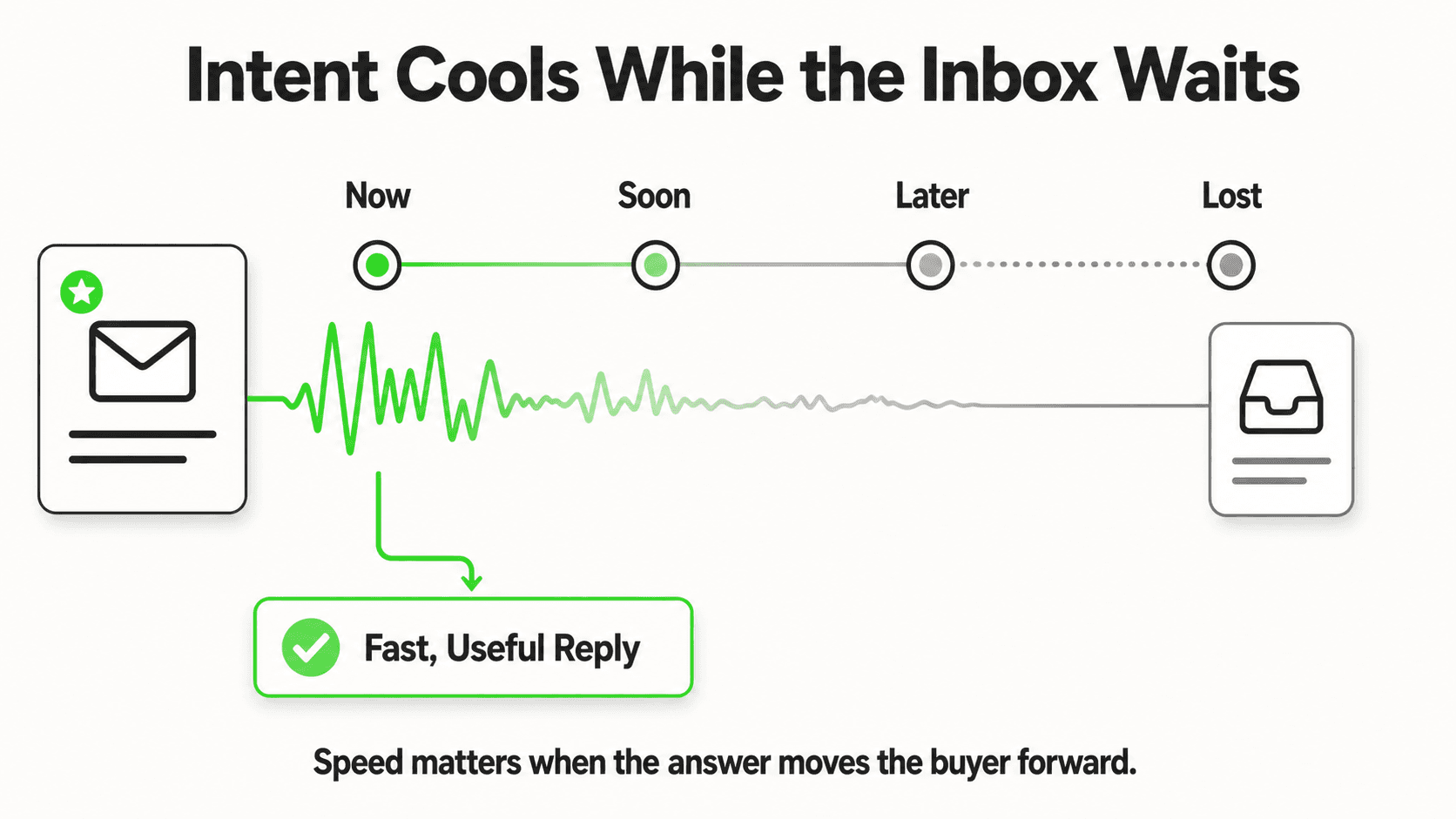
- Every inbound message during spring or fall gets an immediate reply instead of joining a callback queue
- Leads arrive with lot size, service type, and timing already collected
- Recurring-maintenance inquiries get routed with the same priority as one-off requests, instead of getting lost in the surge
Office time reclaimed from repetitive questions
- Routine FAQ volume (service area, pricing ranges, what's included in a cleanup) is answered without a human touch
- Estimators get to properties with the scope already understood
- Your team's attention goes to quoting and closing, not repeating the same five answers
Lower cost than adding seasonal office staff
- Peak season is exactly when many landscaping businesses consider temporary phone or office help
- AI Agents plans start at $40/month (Plus), with a 7-day free trial (credit card required)
- No per-conversation cost the way temporary staffing bills
Illustrative example, not a guarantee
These are structural advantages an always-on chat receptionist provides during peak season, not promised outcomes. Actual results depend on your service area, seasonal mix, and how the AI receptionist is configured. Where a number appears above, it's sourced — Invoca and InsideSales research cited earlier — or clearly labeled as illustrative.
Implementation Roadmap for Landscaping Businesses
Getting an AI receptionist live for a landscaping business is a matter of days:
Days 1-2: Upload your business knowledge. Service area, service list (mowing, cleanup, install, hardscape), typical price ranges, and seasonal offers if you run them.
Days 3-4: Configure qualification logic. Define the questions that separate residential from commercial and recurring from one-off work, and what property details your estimator needs before a site visit.
Day 5: Connect notification routing. Point qualified leads to wherever your office actually checks — email, dashboard, or CRM via webhook.
Days 6-7: Deploy across channels and test. Add the chat widget to your website, connect WhatsApp Business, Instagram, and Facebook Messenger, and run test conversations simulating a spring cleanup request and a recurring-maintenance inquiry.
Before each peak season: Review and refine. Check captured conversations for gaps in your knowledge base before spring and fall, when volume will test the setup hardest.
Frequently Asked Questions
Does an AI receptionist for landscaping businesses answer phone calls?
No. Hyperleap's AI receptionist is chat-first — it operates on your website chat widget, WhatsApp, Instagram DM, and Facebook Messenger. It does not currently answer inbound phone calls; voice support is on the roadmap but not shipped. If most of your demand arrives by phone, pair it with your existing phone setup.
Can it tell the difference between a recurring customer and a one-time job?
Yes, when configured with your service structure. It asks whether the homeowner wants recurring maintenance or a one-time project and routes each toward the appropriate follow-up, so higher-value recurring accounts get identified early.
Can it collect photos of the property before an estimate?
Yes, on channels that support image sharing — WhatsApp and Instagram DM. A homeowner can send photos of the yard or the area needing work, which your estimator can review before or during the site visit.
Will it schedule my crew or manage my job calendar?
No. The AI receptionist handles the front-desk work of answering, qualifying, and booking estimate visits. Crew scheduling and job dispatch stay entirely with your office and your existing scheduling tools.
How much does an AI receptionist for landscaping businesses cost?
Hyperleap AI Agents plans start at $40/month (Plus), including one chatbot across four channels with 3,000 AI responses per month. Higher tiers (Pro at $100/month, Max at $200/month) add more chatbots, channels, and response volume. All plans include a 7-day free trial; a credit card is required to start. See our AI receptionist cost guide for a broader comparison.
Can it tell customers whether we service their area?
Yes, from the service-area list you provide. It compares the ZIP code or neighborhood a customer gives against that list and hands uncertain or edge cases to your team.
Does it work with my scheduling or CRM software?
It connects via REST API and webhooks, so captured leads can flow into whatever system your office already uses. It does not offer native, pre-built integrations with specific landscaping CRM or scheduling platforms today — treat any such connection as an integration requirement to evaluate via the API.
The Landscaping Front Desk That Handles Every Season
Landscaping is a business of extremes: a steady drip of repetitive questions most weeks, and a flood of new-customer demand during the two or three weeks each season when everyone wants their property ready at once. An AI receptionist covers both — answering instantly year-round so the same questions stop landing on your estimator, and absorbing the seasonal surge without a capacity ceiling. It separates residential from commercial, recurring from one-off, and gets a clean, structured lead to your team in seconds rather than days.
It's not a phone system, and it's honest about that — pair it with your existing phone line if calls remain a major channel, and let it own the chat, WhatsApp, and social volume where homeowners increasingly research and reach out first. For a landscaping business that loses even a handful of recurring accounts a season to slow response, that gap is worth closing. See our pricing for plan details, or explore the full AI agents for home service businesses picture, including how the same front-desk approach applies to roofing, plumbing, and HVAC companies.
Stop losing landscaping leads to slow response
Give your landscaping business 24/7 coverage across website, WhatsApp, and social DMs — qualifying and routing leads while your crew is on-site.
Get Started FreeIndustry Solutions
See how AI chatbots work for these industries:
Related Articles
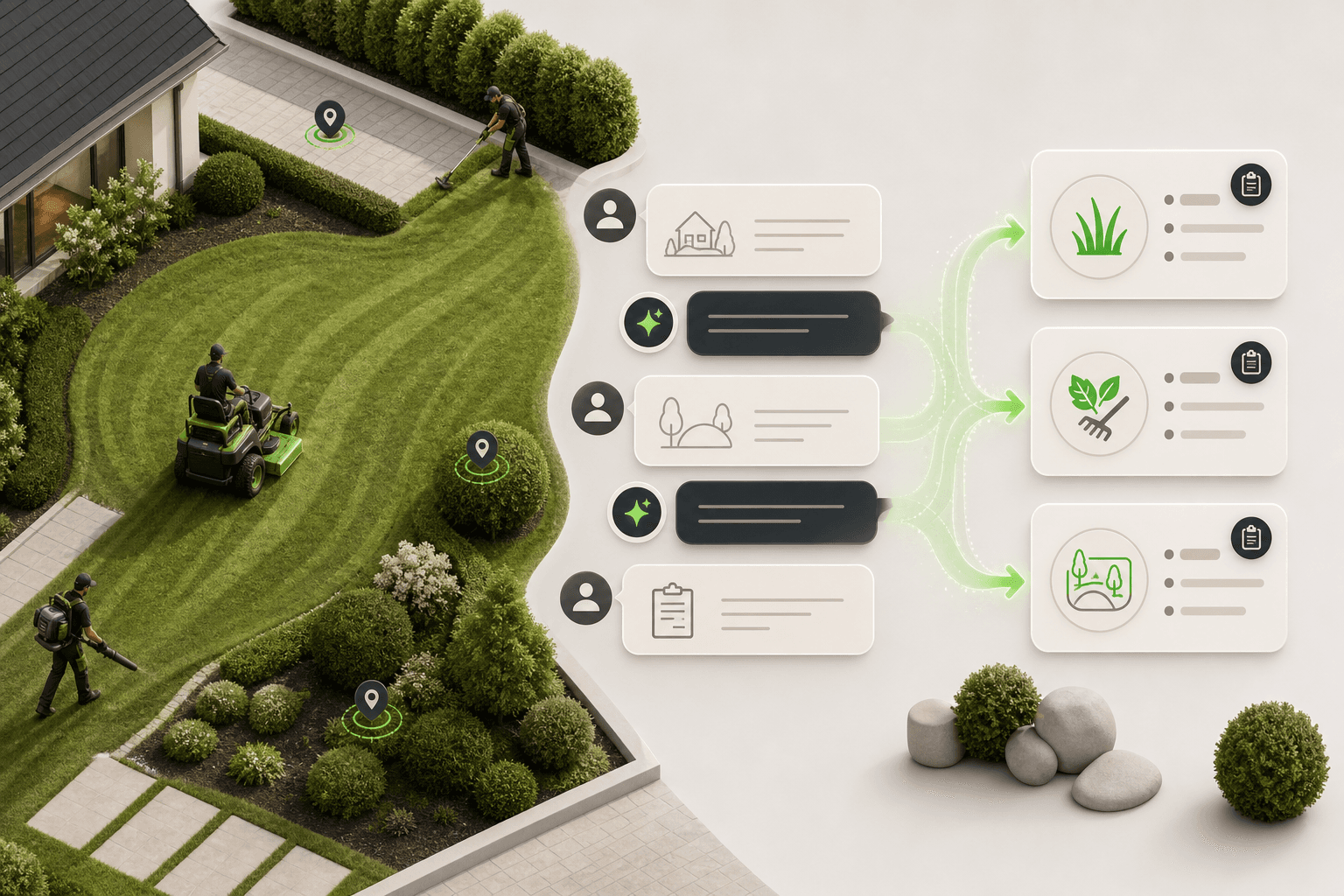
Chatbot for Landscaping Business: Quotes & Crews 24/7
A chatbot for landscaping businesses captures quote requests with property details and screens service areas while your crew is on the mower.

AI Receptionist for HVAC: Handle Summer Call Surges
How an AI receptionist for HVAC companies covers seasonal call surges, qualifies emergency vs. maintenance requests, and books jobs 24/7.
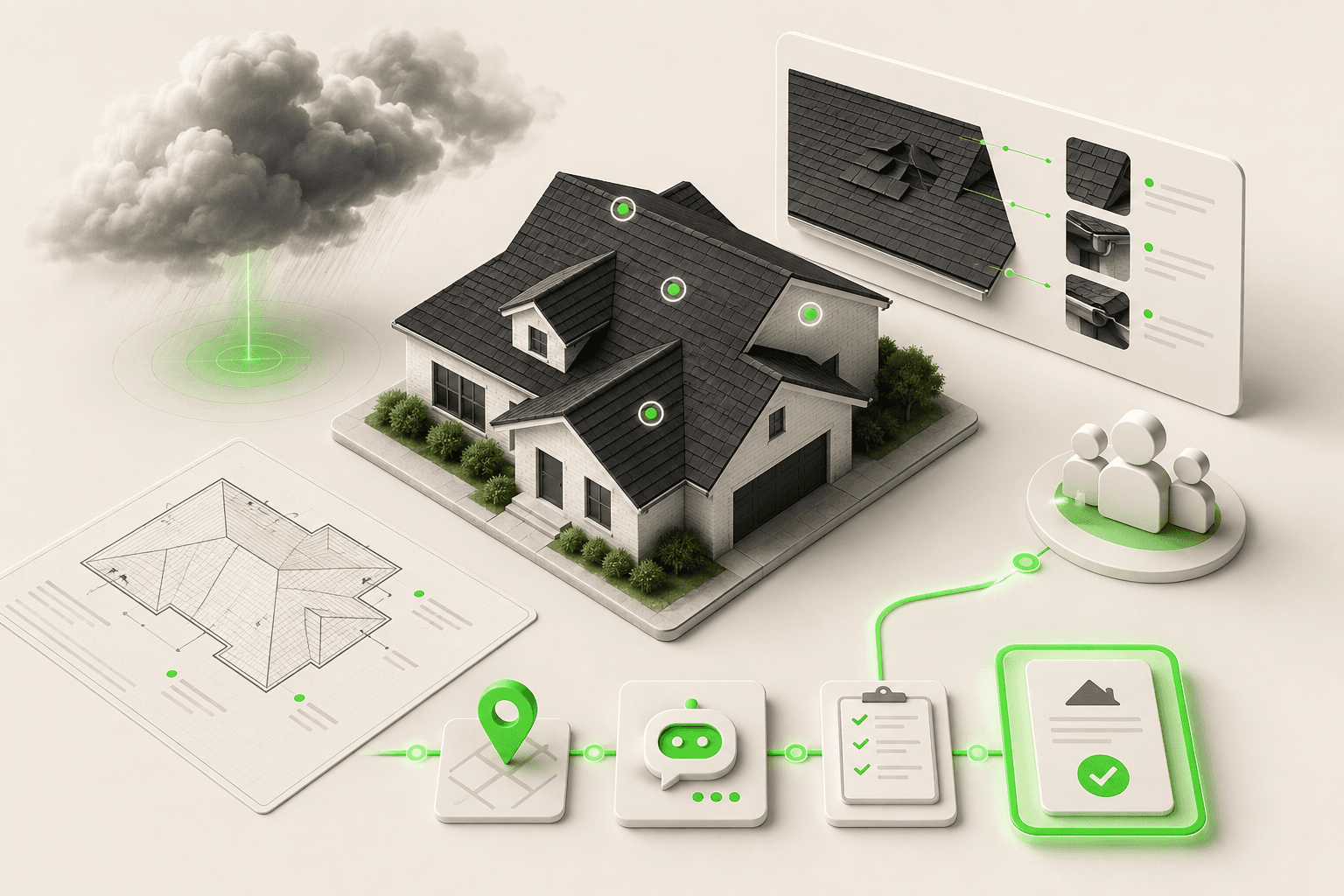
AI Receptionist for Roofing Companies: Never Miss a Lead
An AI receptionist for roofing companies answers storm-damage and estimate questions 24/7, qualifies homeowners, and routes leads to your team.

AI Chatbot for Moving Companies: Win the Quote Race
A chatbot for moving companies qualifies quote requests instantly — origin, destination, home size, date — so you respond before rival estimates land.