What Missed Calls Really Cost Your Small Business
A worked example of what missed calls cost small businesses in lost jobs, plus where inquiries actually arrive now and what to do about it.
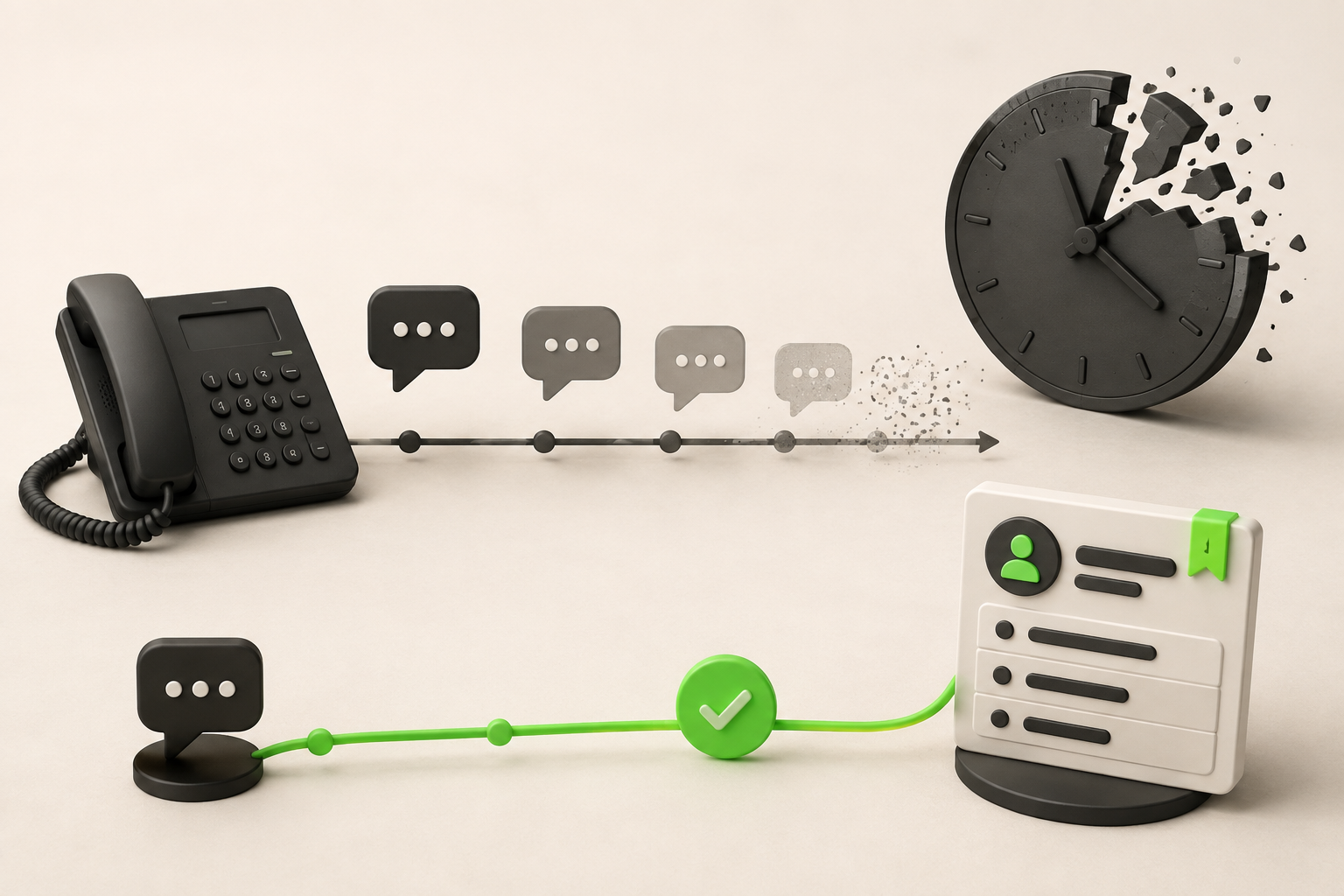
TL;DR: A missed call isn't a shrug — it's a lead your competitor is about to answer. Home service businesses miss an estimated 27% of inbound calls, and 85% of callers who hit voicemail never call back (Invoca). Leads contacted within 5 minutes convert far better than those reached later (InsideSales), and a widely cited Harvard Business Review study by James Oldroyd found most companies take far longer than that to respond to a new inquiry. This piece walks through an illustrative math model for what missed calls cost by business type, shows where inquiries actually arrive now (increasingly chat and messaging, not just the phone), and lays out what to do about each channel — phone coverage is a separate decision (forwarding, an answering service, or voice AI, which is on Hyperleap's roadmap) from message-channel coverage (an AI front desk on your website, WhatsApp, Instagram DM, and Facebook Messenger).
What Missed Calls Really Cost Your Small Business
The phone rings while you're with a customer, mid-job, or simply asleep. It goes to voicemail. Most business owners treat that as a minor annoyance — a callback they'll get to later. It isn't. It's a prospective customer who is, at that exact moment, deciding whether to wait for you or call the next name on the list. Most of the time, they don't wait.
This isn't a scare story about a single missed call. It's an honest accounting exercise: how much does a missed call actually cost, using your own numbers instead of a vague industry claim; where do inquiries actually show up today, now that chat, WhatsApp, and Instagram DMs have joined the phone as a front door; and what should you realistically do about each channel, since "just answer every call" isn't advice — it's a wish. By the end, you'll have a simple audit you can run on your own business this week.
The Honest Math: What a Missed Call Costs
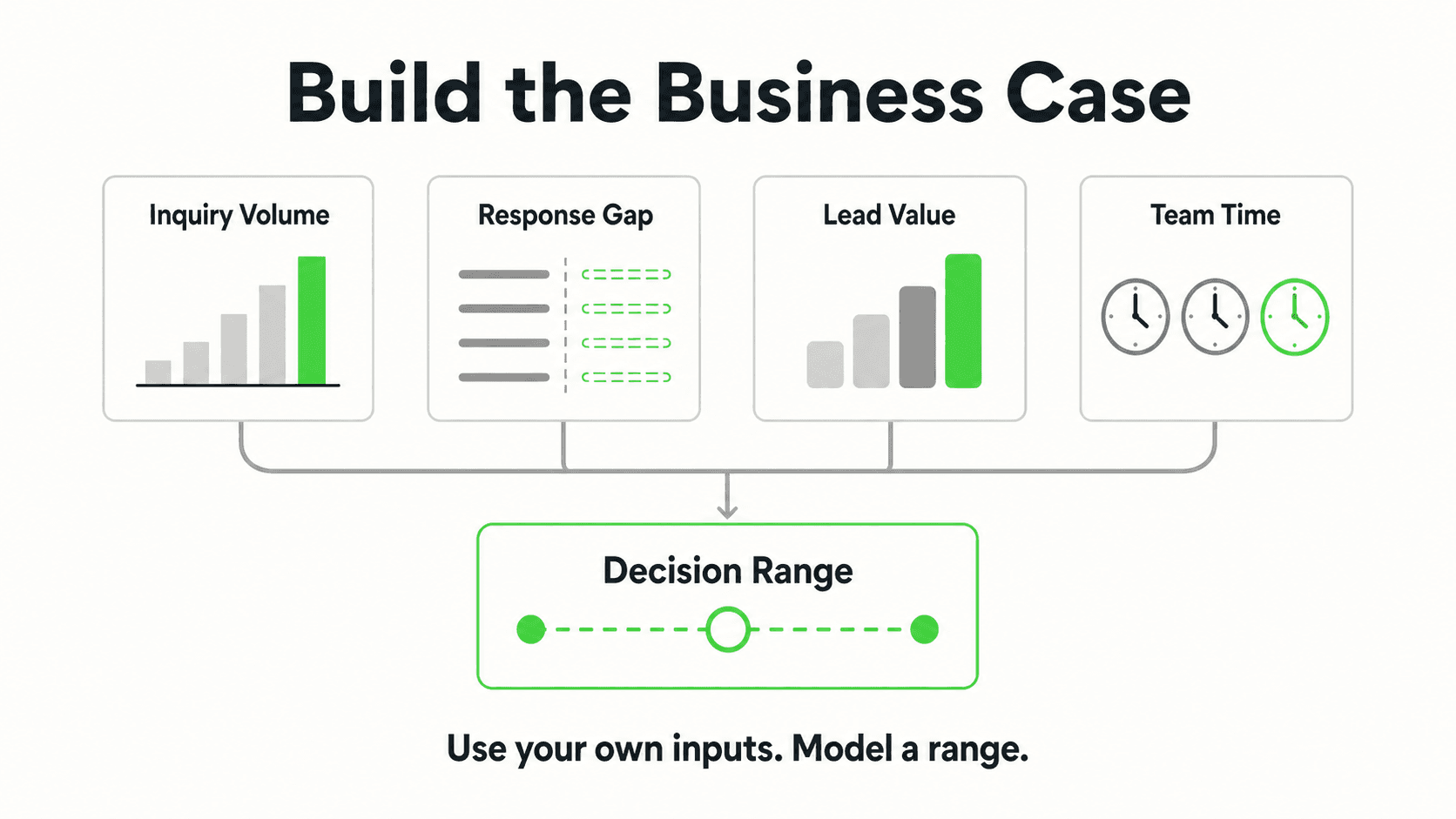
A missed call costs you the number of missed calls, times the share that would have converted, times what a converted customer is worth to you. That's the whole model. The uncertainty isn't in the formula — it's in your own inputs, which is exactly why a generic industry percentage is less useful to you than plugging in your own numbers.
The formula:
Missed calls per day × close rate on answered inquiries × average job/customer value = daily cost of missed calls
Illustrative example — your numbers will differ
The table below uses assumed inputs to show how the math works across different business types. These are not measured outcomes for any real business; they're a worked example so you can substitute your own inquiry volume, close rate, and average value.
| Business type | Inquiries/day | Assumed unanswered share | Assumed close rate on answered inquiries | Avg. job/customer value | Illustrative daily cost |
|---|---|---|---|---|---|
| Plumbing (emergency + planned) | 12 | 25% | 35% | $450 | ~$142/day |
| Med spa (consult bookings) | 8 | 20% | 40% | $600 | ~$154/day |
| Law firm (intake calls) | 6 | 20% | 25% | $2,000 | ~$150/day |
Even at conservative assumptions, each of these illustrative businesses is looking at roughly $4,000-$4,700 a month in inquiries that never had a chance to convert, simply because nobody answered. Run the same formula with your own inquiry volume, your own close rate, and your own average customer value — the exact structure of the model doesn't change, only the inputs do. Our ROI calculator lets you plug in your own numbers directly.
Why the unanswered share matters more than it looks
A 20-25% unanswered rate sounds survivable until you multiply it across a full year. At 20 inquiries a day, 250 working days a year, and a 22% unanswered rate, that's over 1,000 inquiries a year that never got a chance to become a customer — regardless of how good your close rate is on the ones you do answer.
Where Inquiries Actually Arrive Now
The phone is no longer the only front door — and for a growing share of customers, it isn't even the first one they try. Customers increasingly research a business online before calling, and many now prefer to send a message rather than make a call at all, especially outside business hours when picking up the phone feels like an imposition. A website chat widget, a WhatsApp message, an Instagram DM after seeing a post or an ad — these are now legitimate front doors, not backup channels.
This matters because most small businesses built their entire response process around one channel: the phone. A missed call at least leaves a voicemail and a callback number. A missed chat message, a WhatsApp inquiry that sits unread, or an Instagram DM buried under personal notifications often leaves nothing — the customer simply moves on, and the business never even knows the inquiry existed. Invoca's research on home service businesses found 85% of callers who reach voicemail never call back — and a message sent to a channel nobody is actively monitoring has, functionally, the same fate.
The practical shift: if you're only counting missed phone calls, you're undercounting your actual missed-inquiry problem. The full picture includes every channel a customer might use to reach you first.
A quick channel audit
For one week, track every place a customer inquiry could arrive — phone, website contact form, website chat if you have one, WhatsApp, Instagram DMs, Facebook Messenger, and email. For each channel, note how long it typically takes someone to notice and respond. Most business owners are surprised by how many channels have no one actively watching them.
The Interruption Cost on the Owner's Day
The real cost of missed calls isn't only lost revenue — it's the daily interruption cost on whoever's job it is to answer. For most small businesses, that person is the owner, the technician on the job, or a single office manager wearing five hats. Every call or message that has to be answered mid-task doesn't just cost the two minutes of the actual answer — it costs the context-switch afterward, the lost focus on the job at hand, and the accumulated fatigue of being interruptible all day, every day.
This is the part that "just hire someone to answer the phone" misses. The problem for most small businesses isn't only that calls go unanswered — it's that answering them consumes the attention of the person who should be doing higher-value work: closing the next job, running the current one, or actually growing the business instead of staffing its front desk. The after-hours gap is a real and legitimate cost, but it's one clause in this story, not the whole thesis — the bigger, more constant cost is the interruption tax during business hours, every single day.
First to Respond Wins: The Economics of Speed
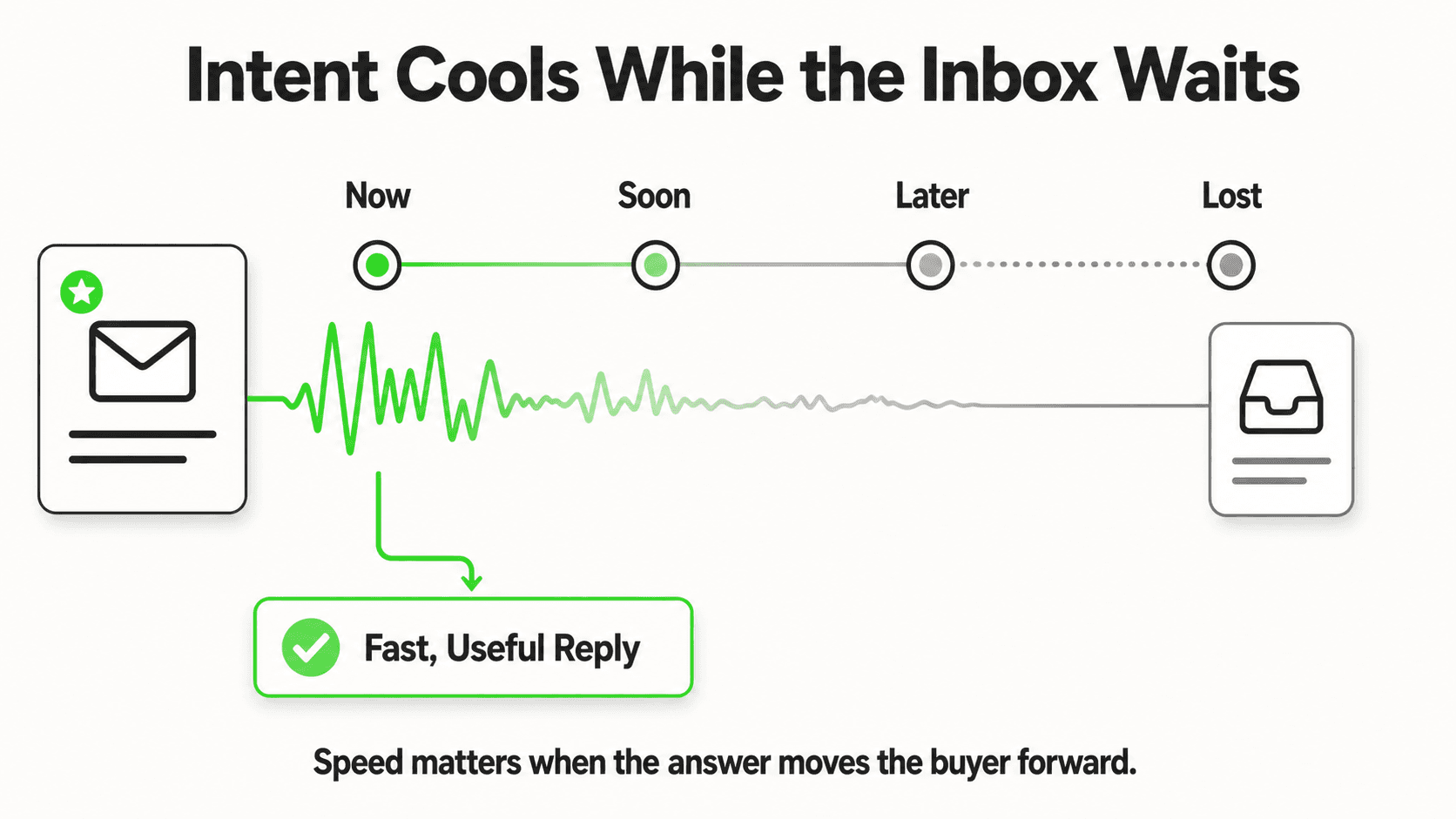
In most service businesses, the first vendor to respond gets the job — not the best one, not the cheapest one, the fastest one. Customers requesting a quote from a plumber, a landscaper, or a law firm rarely wait around comparing every option in depth; they go with whoever answers first and seems competent, because the alternative is more waiting.
A widely cited study published through Harvard Business Review, "The Short Life of Online Sales Leads" by James B. Oldroyd, found that most companies take far longer to respond to a new sales inquiry than the customer's patience allows — and that the odds of actually qualifying a lead drop sharply with every additional hour of delay. Separately, InsideSales research found leads contacted within 5 minutes convert dramatically better than those reached after 30 minutes. Neither study claims a business can guarantee a specific conversion lift by responding faster — but the direction of the effect, and its size, is hard to argue with.
For a small business, this means the competitive question isn't "are we good at what we do" — most competent businesses are. It's "are we the first one to respond." That's a solvable, structural problem, not a talent or quality problem.
What to Do About the Phone vs. What to Do About Messages
Phone coverage and message-channel coverage are two different problems with two different solutions — treating them as one leads to a worse fix for both.
For the phone specifically, your realistic options are:
- Call forwarding to a mobile number so calls follow you or a team member outside the office, at the cost of interrupting whoever's phone it rings on.
- A live answering service, typically priced from roughly $50-$450/month for small-business plans, or billed per minute on usage-based plans — a real cost, but one that keeps a human voice on the line.
- Voice AI, which is a genuine and growing category — but it's on Hyperleap's roadmap, not a feature we offer today. If phone is your dominant channel and you need automated voice coverage right now, that's a gap worth being honest about rather than overselling a chat product into.
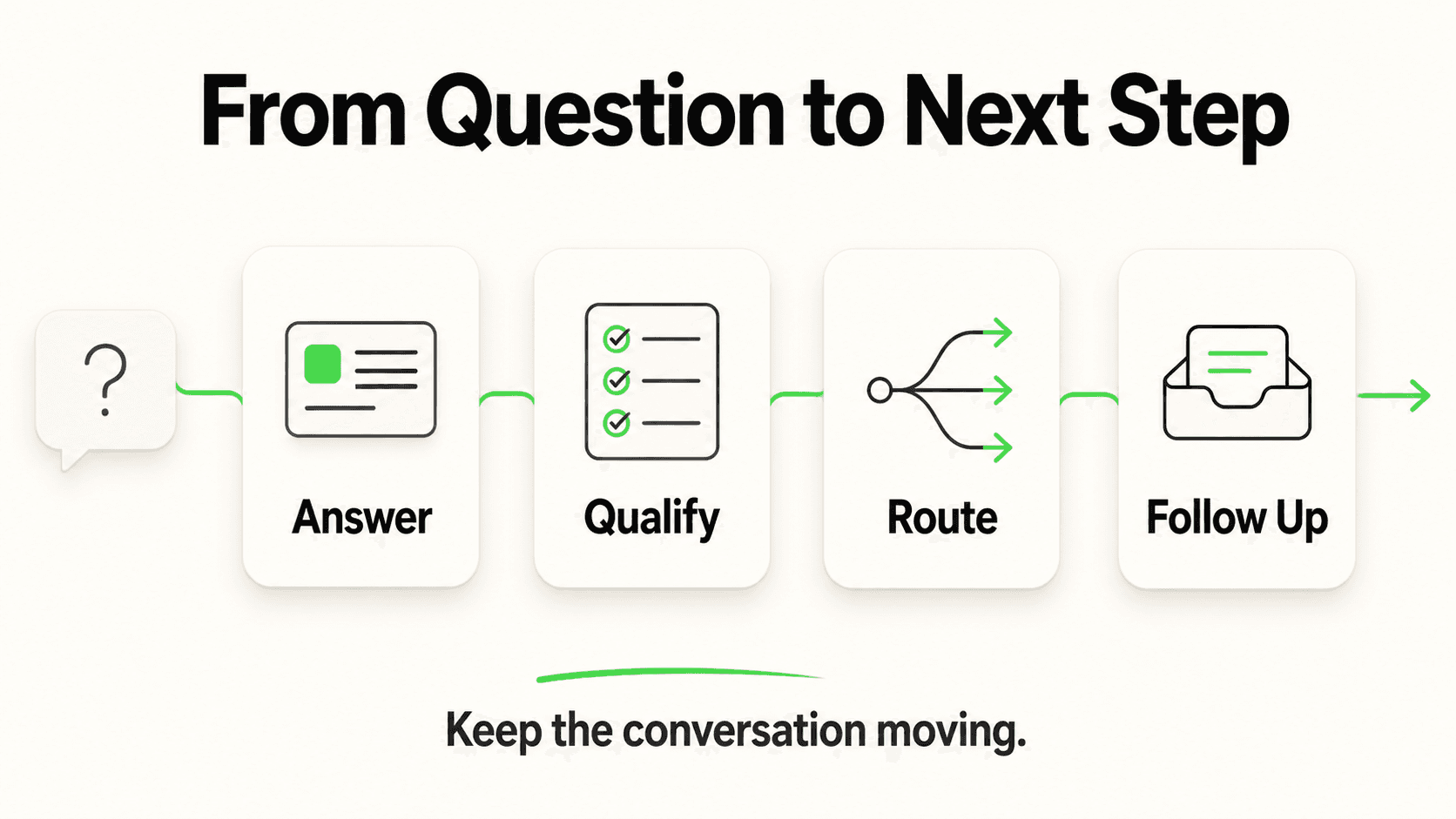
For your message channels — website chat, WhatsApp, Instagram DM, Facebook Messenger — an AI front desk is built specifically for this problem: it answers instantly, asks the qualifying questions a person would ask, and routes the details to your team, all without anyone picking up a phone. This is where a chat-based AI receptionist genuinely closes the gap documented above, because it's covering channels where automated, always-on coverage is available today, not a capability still in development.
The honest framing: don't buy an AI receptionist expecting it to solve your missed-phone-call problem — it won't, because it doesn't answer calls. Buy it to solve your missed-message problem, which for a growing share of businesses is now the bigger and faster-growing gap. Then separately decide what to do about the phone, using the options above.
See what an AI front desk covers
Answer every website, WhatsApp, Instagram, and Messenger inquiry instantly — while you decide separately what to do about the phone.
Start Free TrialA Simple Missed-Inquiry Audit You Can Run This Week
You don't need new software to find out how much this is costing you — you need one week of honest tracking. Here's the audit:
- Log every inbound channel for one week. Phone, website form, website chat, WhatsApp, Instagram DM, Facebook Messenger, email — list them all, including the ones you're not sure anyone actively watches.
- For each inquiry, note the response time. Not "we got back to them eventually" — the actual number of minutes or hours between when the message arrived and when someone replied.
- Flag anything over 30 minutes during business hours, and anything unanswered after hours. These are your leaks.
- Estimate your close rate on inquiries you do answer promptly, using your own sales records, not a guess.
- Plug your numbers into the formula above (inquiries × unanswered share × close rate × average value) to get your own illustrative daily and monthly cost, or use the ROI calculator to do the math for you.
- Decide, channel by channel, what fix fits. Forwarding, an answering service, or voice AI on the roadmap for phone; an always-on chat receptionist for website, WhatsApp, Instagram, and Messenger.
This audit takes a week and costs nothing but attention — and for most small businesses, the number it produces is larger than expected, precisely because missed inquiries are invisible by default. Nobody logs the call that went to voicemail and was never returned, or the Instagram DM that sat unread for three days. Related reading: our deep dive on why home service businesses lose jobs to slow response, our industry-by-industry look at response time and conversion rates, and our piece on why salons and medspas lose clients to missed calls specifically.
Why "Just Hire Someone" Isn't the Whole Answer
Adding a person to answer the phone or watch the inbox helps, but it doesn't fully solve the structural problem — coverage still has gaps. A single additional hire covers roughly 40 hours a week, one channel at a time, and still goes home, gets sick, and takes lunch. Customers don't stop reaching out during any of those windows. A part-time or full-time front-desk hire is a reasonable option for many small businesses and often the right one for phone coverage specifically — but it's worth being clear-eyed about what it does and doesn't fix.
What a human hire is genuinely better at: judgment calls, relationship-building, handling an angry or complicated customer, and anything that doesn't fit a documented process. What it doesn't fix on its own: coverage across every channel simultaneously, 24/7 availability without shift costs, and the moment-to-moment speed advantage of an immediate reply versus a callback queue — even a good one.
This is why the more durable answer for most small businesses is a combination: a person (or a few) handling judgment and relationships during business hours, plus automated coverage — a live answering service or forwarding for the phone, an AI front desk for chat and social — filling the gaps a single hire structurally can't cover on their own, at any hour, on any channel, at once.
What Changes When Every Channel Has Someone Watching It
The practical effect of closing the response gap isn't a personality change in your business — it's that fewer opportunities quietly disappear before anyone even knows they existed. Today, a missed call at least leaves a voicemail; a missed website chat message or an unanswered Instagram DM often leaves nothing traceable at all. Once every channel has consistent, fast coverage, two things become visible for the first time: how much inquiry volume you were actually generating all along, and how much of it had been silently lost to slow or missing responses.
For most small business owners, this reframes the ROI conversation. The question isn't "should I spend $40 a month on a chat tool" in isolation — it's "how many of the inquiries I'm already paying to generate, through ads, referrals, and organic search, are currently landing in a channel nobody is watching." Fixing that gap doesn't require new marketing spend; it requires making sure the demand you already have gets a response.
Frequently Asked Questions
How much does a missed call actually cost a small business?
It depends entirely on your inquiry volume, your close rate, and your average customer value — there's no single universal number. Using the formula (missed calls × unanswered share × close rate × average value), a business fielding a dozen inquiries a day with a moderate close rate and a few-hundred-dollar average job value can be looking at illustrative losses in the low thousands of dollars per month. Use the ROI calculator to run your own numbers.
Does an AI receptionist answer phone calls?
Not today. Hyperleap's AI receptionist is chat-first — it covers your website chat widget, WhatsApp, Instagram DM, and Facebook Messenger. Voice AI is on the roadmap but not a current capability. If phone is your dominant inbound channel, pair a chat-based AI receptionist with call forwarding or a live answering service rather than expecting it to cover calls. See our AI receptionist vs. answering service comparison for how the two fit together.
What percentage of small business calls go unanswered?
Research from Invoca on home service businesses puts the missed-call rate at roughly 27%, with 85% of callers who reach voicemail never calling back. Rates vary by industry and by whether a business has dedicated front-desk staff — this figure is a home-services benchmark, not a universal number for every business type.
Why does response speed matter so much?
A widely cited Harvard Business Review study by James Oldroyd found that the odds of successfully engaging a new inquiry fall sharply with each hour of delay, and separate research from InsideSales found leads contacted within 5 minutes convert far better than those contacted later. In practice, customers requesting quotes from service businesses often contact more than one option at once and go with whoever responds first and seems credible.
Should I fix my phone problem or my chat problem first?
Whichever channel generates more of your actual inquiry volume today, and whichever has the largest gap between "message arrives" and "someone responds." Track both for a week using the audit above before deciding — many businesses assume phone is their biggest gap and discover that unanswered website and social messages are actually larger and easier to fix immediately.
Is an answering service a good alternative to an AI receptionist?
They solve different problems. A live answering service covers phone calls with a human voice, typically at a per-minute or monthly-plan cost; a chat-based AI receptionist covers website, WhatsApp, Instagram, and Messenger at a flat monthly rate and never puts anyone on hold. Many small businesses run both — an answering service for the phone, an AI receptionist for message channels — rather than treating them as competing choices.
How much does an AI receptionist cost compared to the cost of missed inquiries?
Hyperleap AI Agents plans start at $40/month (Plus), with a 7-day free trial (credit card required). For most small businesses, even a conservative estimate of monthly missed-inquiry cost using the formula above exceeds that price many times over — though actual outcomes depend on your specific volume and close rate. See our AI receptionist cost guide for a full pricing breakdown, or explore industry-specific coverage for roofing, landscaping, plumbing, and HVAC businesses.
Stop Guessing What Missed Calls Cost You
Missed calls and missed messages aren't a rounding error — they're customers who found the next option before you got back to them. The fix isn't a vague resolution to "answer more" — it's running the actual numbers for your business, recognizing that inquiries now arrive across more channels than just the phone, and matching the right coverage to each one: a phone solution for calls, and an always-on AI front desk for the website, WhatsApp, Instagram, and Messenger inquiries that are a growing share of how customers reach out first.
Run the audit this week. The number it produces is usually the argument for fixing this that no industry statistic can make as convincingly as your own data can.
Find out what missed inquiries are costing you
Answer every website, WhatsApp, Instagram, and Messenger message instantly — starting at $40/month with a 7-day free trial.
Get Started FreeIndustry Solutions
See how AI chatbots work for these industries:
Related Articles
AI Receptionist Cost in 2026: What You Actually Pay
AI receptionist cost ranges from $20/month for automated voice AI to $300+/month for live-agent phone answering. Full breakdown by category.

AI Chatbot vs Receptionist: Cost Comparison for SMBs
Should your small business hire a receptionist or deploy an AI chatbot? A practical cost comparison covering salary, availability, scalability, and ROI.
How to Build a Business Case for AI Chatbots: ROI Framework
A practical ROI framework for SMBs evaluating AI chatbots — calculate costs, measure returns, and build a convincing business case.
The State of AI Customer Service for Small Businesses 2026
50+ sourced statistics on AI chatbot adoption, response times, ROI, and customer preferences — the definitive 2026 data guide for small business owners and operators.