AI Receptionist Cost in 2026: What You Actually Pay
AI receptionist cost ranges from $20/month for automated voice AI to $300+/month for live-agent phone answering. Full breakdown by category.
TL;DR
- AI receptionist cost ranges from about $20/month to $600+/month, depending on category: automated voice AI runs roughly $20–$29/month on entry tiers plus per-minute overage, live-agent-backed phone services run $250–$450/month, and chat-first AI receptionists like Hyperleap AI run a flat $40–$200/month with no per-minute billing.
- A full-time human receptionist costs $44,000–$51,000/year in total US employment cost — base salary plus payroll taxes, benefits, and turnover — according to Bureau of Labor Statistics wage and compensation data. That's 20–100x the annual cost of a chat-based AI receptionist plan.
- The three cost drivers that matter most: pricing model (per-minute, per-resolution, or flat-rate), channel (phone vs. website/WhatsApp/Instagram/Facebook), and overage terms (what happens when you exceed your plan).
- Hidden costs to budget for regardless of vendor: setup/onboarding fees, channel API pass-throughs (like WhatsApp's own conversation pricing), seat fees, and overage rates once you exceed a plan's included volume.
- Hyperleap AI is a chat-first AI receptionist — website, WhatsApp, Instagram DM, and Facebook Messenger — starting at $40/month with a 7-day free trial (credit card required). Voice/phone answering is on Hyperleap's roadmap, not a current capability.
A homeowner's water heater fails at 9:47 p.m. on a Tuesday. They don't wait until morning — they open Google, find three plumbers, and start typing or dialing. Whichever business responds first usually gets the job. The other two find out the next day, if they find out at all.
That single moment is why "AI receptionist" has become one of the most searched terms in small business software over the past two years — and also why pricing for it is so confusing. Depending on which vendor you land on, "AI receptionist" might mean a synthetic voice answering your phone for $20/month, a live human backed by AI tools for $300/month, or a chat-based system answering your website and WhatsApp for a flat $40/month with no per-minute clock running. These are genuinely different products solving genuinely different problems, and comparing their price tags without understanding what you're buying is how businesses end up either overpaying or under-covered.
This guide breaks down AI receptionist cost across every major category — chat-first subscriptions, automated voice AI, live-agent phone services, and the human receptionist baseline everyone is implicitly comparing against — with sourced pricing throughout, so you can figure out what a real deployment costs for your business before you talk to a single sales rep. For the full product walkthrough of what a chat-first AI receptionist actually does, see our complete AI receptionist guide.
What Is an AI Receptionist and What Does It Cost?
An AI receptionist is software that automatically answers, qualifies, and routes incoming customer inquiries without a human operator on the line — either by phone (voice AI) or by chat (website, WhatsApp, Instagram DM, Facebook Messenger). Cost depends entirely on which type you're buying: automated voice AI starts around $20–$29/month plus per-minute overage, live-agent-backed phone answering runs $250–$450/month, and flat-rate chat-first platforms run $40–$200/month regardless of conversation volume within plan limits.
The category splits into three structurally different products, and each has its own pricing logic:
1. Chat-first AI receptionists (Hyperleap AI and similar platforms) answer text-based conversations on your website chat widget, WhatsApp Business, Instagram DM, and Facebook Messenger. They're priced as flat-rate software subscriptions — a fixed monthly fee for a set number of AI responses, not a per-minute or per-call meter. This is the model covered in depth in our AI chatbot pricing models guide, which breaks down per-message, per-resolution, and flat-rate structures across the wider chatbot market.
2. Automated voice AI (My AI Front Desk, Dialzara, and similar) uses a synthetic voice to answer inbound phone calls without a human on the line, typically starting at a low monthly base fee plus per-minute charges once you exceed an included allotment.
3. Live-agent-backed phone answering (Smith.ai, Ruby, and traditional answering services) staffs real human operators — sometimes supported by AI tools for screening and call summaries — to answer, route, or take messages on every call. You're paying primarily for staffed hours, which is why this category costs the most.
Which category you need depends entirely on where your inbound demand actually originates. A business whose leads arrive mostly through a website contact form and WhatsApp doesn't need a voice product at all; a business whose customers only ever call needs voice coverage regardless of price. For a deeper breakdown of when each channel wins, see our AI receptionist vs. answering service comparison.
Who this guide is for
This is written for small and mid-sized business owners evaluating AI receptionist software — home services, dental and medical practices, law firms, real estate teams, salons, and professional services — who want a clear, sourced answer to "how much does this actually cost me" before requesting a demo.
Why AI Receptionist Pricing Is So Confusing
Most SMB owners start their search with a single question — "how much does an AI receptionist cost?" — and get wildly different answers depending on which vendor's landing page they land on first, because the category bundles three unrelated products under one label.
The category name covers two different channels
"AI receptionist" gets used interchangeably for voice (phone-answering) products and chat (web/messaging) products, even though they solve different problems and price on completely different models. A vendor selling per-minute voice AI and a vendor selling flat-rate chat software will both call themselves "AI receptionists" in their marketing, and their pricing pages will look nothing alike. Our best AI receptionist software comparison breaks down which vendors fall into which bucket.
Per-minute and per-call pricing hides the real monthly number
A $29/month "starting price" on a voice AI product sounds cheap until you check the included minutes. Dialzara's entry tier, for example, includes 60 voice minutes before per-minute overage kicks in — a single busy week of calls can blow past that. The headline number is rarely the number you'll actually pay once volume ramps up.
Live-agent pricing reflects staffing costs, not software costs
Smith.ai and Ruby charge $250–$300/month for entry tiers because you're paying for staffed human hours behind the AI tooling, not a software license. That's a legitimate cost structure for businesses that need a live voice on every call — but comparing it directly to a software-only chat subscription is comparing apples to a different fruit entirely.
Nobody quotes the true cost of the human alternative
Most businesses evaluating AI receptionist software are implicitly comparing it to hiring a person — but rarely price out what that person actually costs once payroll taxes, benefits, and turnover are included, not just the salary line on a job posting.
AI Receptionist Cost by Category
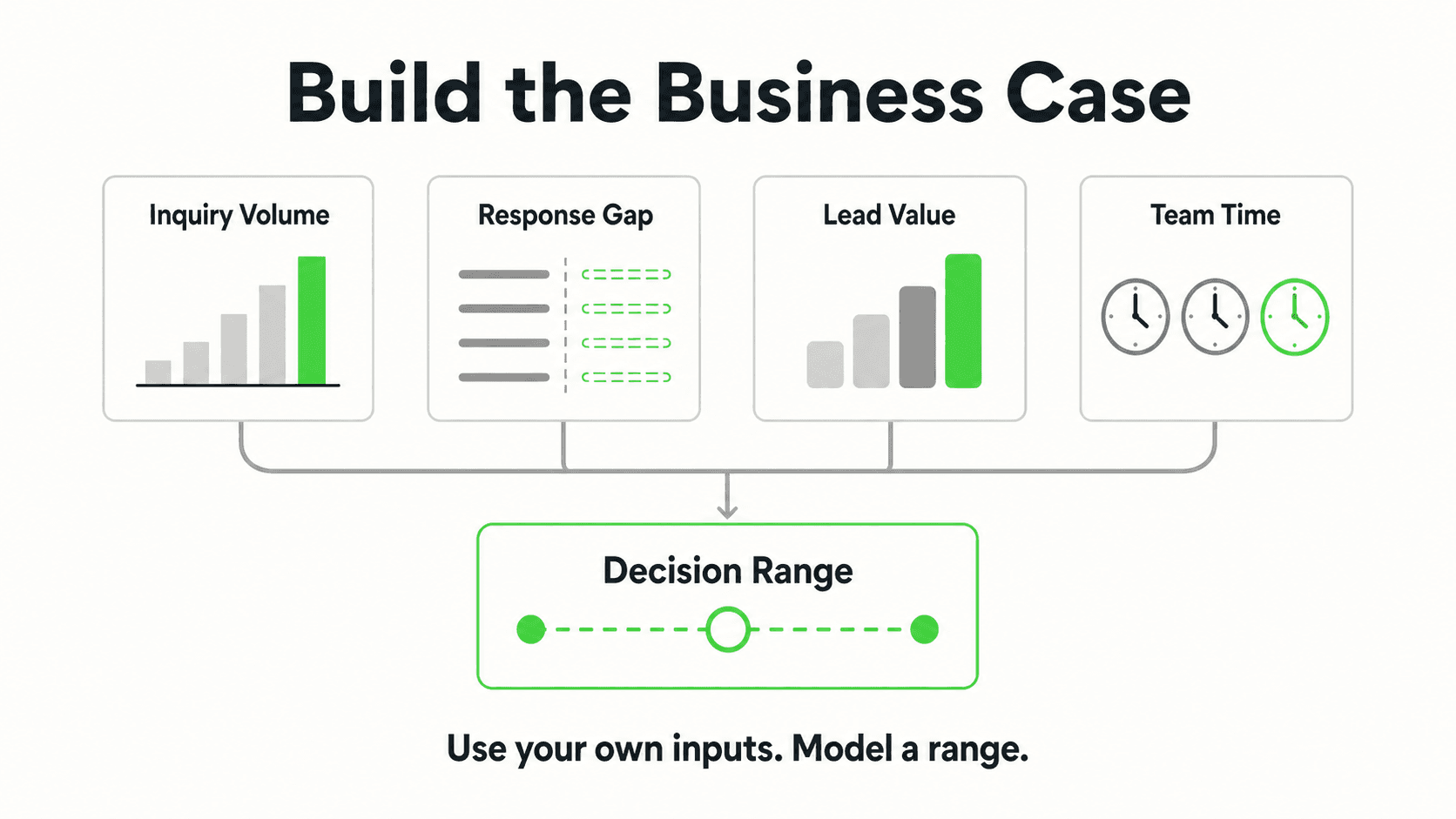
Here is what each category of AI receptionist actually costs, using current published pricing where available. Always verify directly with the vendor, since tiers and inclusions change.
1. Chat-First AI Receptionist (Website, WhatsApp, Instagram, Facebook)
What this looks like in practice: Flat monthly subscription tied to a volume of AI responses, not a per-minute or per-call meter. Hyperleap AI's three plans:
| Plan | Price | AI Responses/mo | Chatbots | Channels |
|---|---|---|---|---|
| Plus | $40/month | 3,000 | 1 | 4 per chatbot |
| Pro | $100/month | 12,000 | 2 | 8 (4 per chatbot) |
| Max | $200/month | 30,000 | 5 | 20 (4 per chatbot) |
All three plans include a 7-day free trial (credit card required — there is no free plan). Additional responses beyond a plan's limit can be purchased as Credit Packs at $12 per 1,000 responses on any plan, rather than forcing an upgrade. See full details on the pricing page.
Real-world impact: Annual cost ranges from $480/year (Plus) to $2,400/year (Max) — flat, with no per-conversation metering regardless of how many messages a single customer sends.
Why it works this way: Chat conversations vary wildly in length — a "what are your hours" question might take one exchange, a service inquiry might take fifteen. Flat pricing based on total monthly AI responses (rather than per-message or per-resolution billing) means a long conversation doesn't create a surprise bill. For a full breakdown of why this pricing model tends to suit SMBs better than usage-metered alternatives, see AI chatbot pricing models compared.
2. Automated Voice AI (Phone Calls, No Human Agent)
What this looks like in practice: A synthetic voice answers inbound calls and handles the conversation without a live operator. Entry pricing is low, but per-minute overage adds up quickly during busy periods.
| Provider | Entry Price | Included Volume | Overage |
|---|---|---|---|
| My AI Front Desk | $20/month (testing tier) | 10 chatbot conversations, 40 SMS | Bundled usage caps + overage |
| Dialzara | $29/month | 60 voice minutes | Per-minute overage |
Pricing per current published tiers on each vendor's site as referenced in our best AI receptionist software comparison; verify directly before committing, since automated voice AI pricing changes frequently.
Real-world impact: A business fielding steady call volume above the included allotment (say, 300+ minutes/month) can see automated voice AI costs climb well past $100/month once per-minute overage is factored in — the entry price is a floor, not a ceiling.
Why it's priced this way: Voice AI vendors incur real per-minute infrastructure costs (speech-to-text, text-to-speech, telephony) that scale with call duration, which is why the pricing model mirrors that cost structure rather than offering a flat rate.
3. Live-Agent-Backed Phone Answering
What this looks like in practice: A real human operator answers, screens, or transfers every call, often supported by AI tools for call summaries and CRM logging behind the scenes. This is the most expensive category because you're paying for staffed hours.
| Provider | Entry Price | Included Volume | Overage |
|---|---|---|---|
| Smith.ai | $300/month | 30 calls, live 24/7 staffing | Per-call overage above allotment |
| Ruby | $250/month | 50 minutes, live receptionist | Per-minute, tiered |
| Podium | ~$399/month | Review management, SMS, basic AI answering | Annual contract typical |
Pricing per current published tiers as referenced in our best AI receptionist software comparison; confirm directly with each vendor.
Real-world impact: A law firm or medical practice fielding 200+ calls/month on Smith.ai's per-call overage structure, or Ruby's per-minute tiers, can see monthly bills climb to $600–$1,000+ during high-volume months — pricing that scales with call volume the same way traditional answering services do.
Traditional (non-AI) answering services follow a similar pattern: small-business plans typically run $50–$450/month, or $0.75–$2.00+ per minute on usage-based plans, according to 2026 industry pricing guides from Nextiva and HouseCallPro. At $0.90–$1.25/minute mid-range rates, a single 8–10 minute call — common for a homeowner explaining an emergency repair — can cost $7–$12 before a technician is even dispatched.
4. The Human Receptionist Baseline
What this looks like in practice: A full-time employee whose true cost extends well past the salary figure on a job posting. According to the U.S. Bureau of Labor Statistics (BLS, May 2024 data), the median annual wage for receptionists and information clerks is approximately $36,000, reaching $42,000–$48,000 in higher-cost metro areas.
In the US, total employment cost typically runs 1.25–1.4x base salary once payroll taxes, benefits, and paid time off are added — per the BLS Employer Costs for Employee Compensation (ECEC) survey, which shows benefits averaging 29.4% of total compensation for civilian workers. That puts a $36,000 base salary at $44,000–$51,000/year in real employer cost.
Real-world impact: That figure doesn't include recruiting and training costs from turnover — the median tenure for receptionists is roughly 2.5 years (BLS), meaning most businesses face a rehire cycle every few years on top of the standing annual cost. It also covers exactly one shift; a receptionist doesn't answer calls or messages at 9 p.m., on weekends, or during lunch. For the full line-item breakdown, see our AI chatbot vs. hiring a receptionist cost comparison.
Cost per hour of coverage, not just cost per month
A $44,000–$51,000/year receptionist covers roughly 2,000 working hours — a standard 40-hour week, minus holidays and PTO. A $40/month AI receptionist plan covers 8,760 hours a year, nights and weekends included. When you divide total cost by hours actually covered, the gap widens well beyond the sticker-price comparison.
What Affects AI Receptionist Price
Four factors determine what you'll actually pay for an AI receptionist, regardless of category — understanding them before you compare vendor pricing pages prevents the most common overspend mistakes.
Channel: phone vs. chat
Phone-based products (voice AI, live-agent services) are priced around call minutes or staffed hours, which scale with usage and creates variable monthly bills. Chat-based products are typically priced around a flat monthly response allotment, which creates predictable bills but requires estimating your expected conversation volume upfront. If most of your inquiries arrive through your website, WhatsApp, or social DMs rather than your phone line, a chat-first product avoids per-minute math entirely.
Pricing model: flat-rate, per-minute, or per-resolution
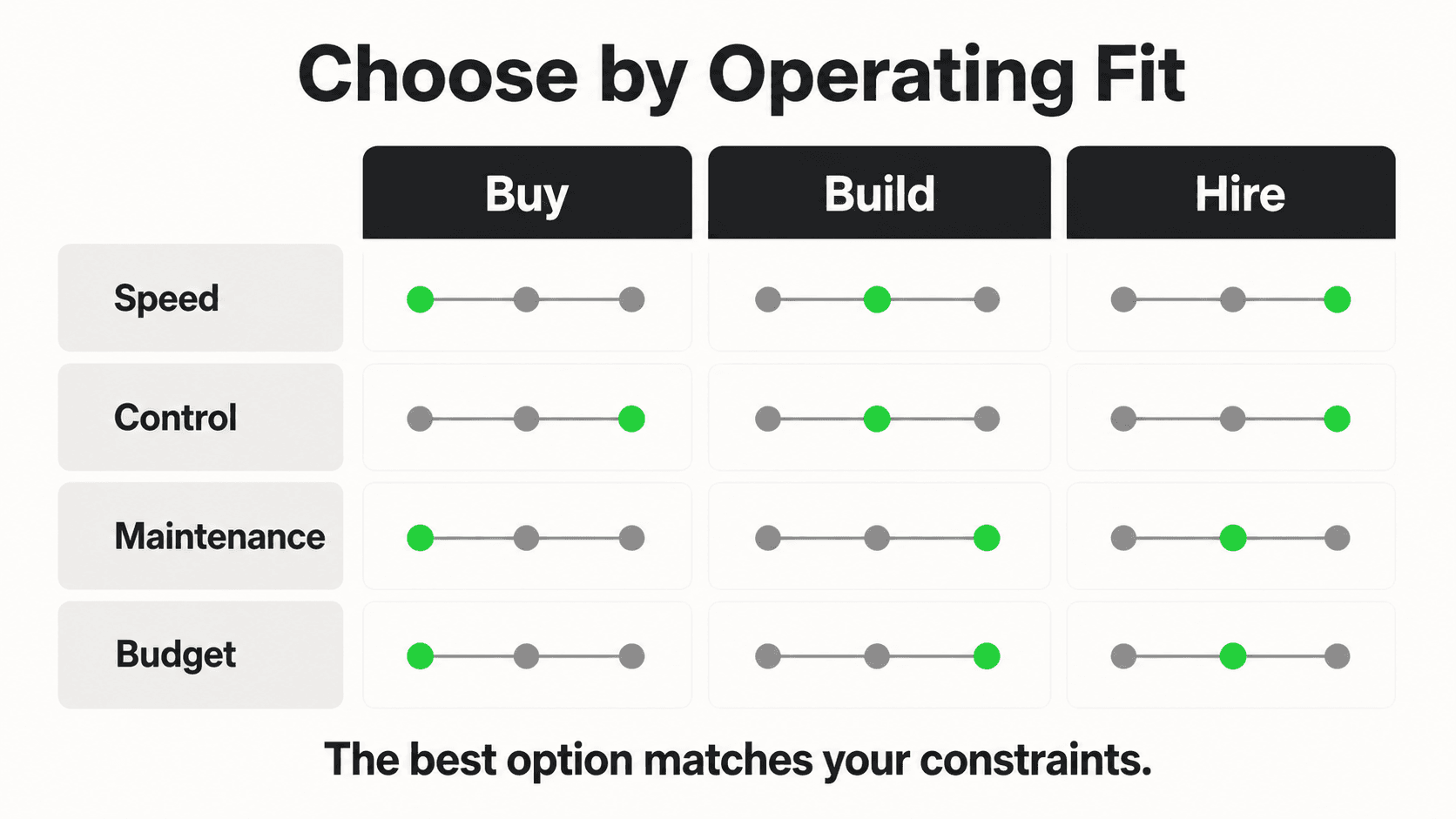
Even within a single channel, vendors price differently. Flat-rate plans (most chat-first platforms) charge a fixed fee for a volume allotment. Per-minute plans (most voice AI) charge based on call duration. Per-resolution plans (used by some support-focused chatbot vendors) charge per completed conversation. Each model rewards different usage patterns — see AI chatbot pricing models compared for the full mechanics of each.
Volume and overage terms
The advertised "starting price" almost never reflects what you'll pay at real volume. Ask every vendor explicitly: what happens when I exceed my plan's included minutes, calls, or responses? Hard cutoff, automatic overage billing, or forced upgrade? This single question separates a predictable monthly bill from a surprise invoice.
Setup, onboarding, and add-ons
A pure software subscription price rarely includes everything. Budget separately for:
- One-time setup or onboarding fees — legitimate if a vendor invests real implementation time; Hyperleap AI's Managed Setup add-on, for example, is priced
$299Free rather than buried in the monthly fee. - Channel API pass-throughs — WhatsApp Business API has its own Meta-set conversation pricing that varies by country and message category; confirm whether a vendor's price includes it or adds it on top.
- Team seat limits — most SMB-focused platforms include generous seat counts, but confirm before assuming unlimited access.
- Add-on features — Hyperleap's optional add-ons (OTP-verified lead capture from $100 usage-based, Multi-variant (locations, courses, etc) at $40/month plus 2x credits per request, Suite tools at $99 one-time) are priced and gated separately from base plans, never bundled in as "included."
Worked Scenario: A 40-Person Home Services Company (Illustrative)
The following is an illustrative scenario, not a real customer engagement — figures are rounded for clarity and should be validated against your own inquiry volume before budgeting.
Consider a plumbing and HVAC company with 40 employees fielding roughly 350 customer inquiries a month, split between phone calls (60%) and website/WhatsApp messages (40%) — a mix that's increasingly common as customers research services online before deciding whether to call.
Option A — hire a second front-desk employee to cover evening and weekend gaps: roughly $44,000–$51,000/year in total employment cost, covering one person's standard working hours, with no coverage during the after-hours window when many emergency calls actually arrive.
Option B — add a live-agent phone service for after-hours call coverage: Smith.ai-tier pricing around $300/month base ($3,600/year) for 30 calls, with per-call overage likely required at this company's call volume — potentially pushing the annual total toward $6,000–$9,000 depending on actual after-hours call frequency.
Option C — deploy a chat-first AI receptionist on the website and WhatsApp to capture the 40% of inquiries arriving as messages, at Hyperleap's Pro plan ($100/month, $1,200/year) for 12,000 AI responses across two chatbots — while phone calls continue routing to existing staff during business hours.
Option D — combine B and C: a live-agent or voice AI service for after-hours phone coverage, plus a chat-first AI receptionist for website and WhatsApp inquiries, addressing both channels for a combined annual cost still well under the price of one additional full-time hire.
The point isn't that one option is universally correct — it's that the right combination depends entirely on where this specific business's inquiries actually originate, which is why checking your own channel mix before comparing vendor pricing pages matters more than any single price comparison.
See what a chat-first AI receptionist costs for your volume
Try Hyperleap's AI receptionist across your website and WhatsApp — flat pricing from $40/month, 7-day free trial.
Start Free TrialImplementation: Estimating Your Real Monthly Cost
Before signing up for any AI receptionist, run this quick estimate to avoid both over- and under-buying.
Step 1 — Audit your actual inbound channel mix. Pull the last 90 days of inquiries from your phone log, website contact form, WhatsApp, and social DMs. Most businesses assume they know this split and are wrong by a wide margin.
Step 2 — Estimate monthly conversation volume by channel. For chat-first pricing, estimate total inquiries per month and multiply by average conversation depth (typically 5–8 AI messages per qualification conversation) to size your response allotment. For voice AI, estimate total call minutes per month including seasonal peaks.
Step 3 — Price out the overage scenario, not just the entry tier. Take your busiest historical month, not your average month, and check what that volume would cost on each vendor's overage terms.
Step 4 — Compare the fully-loaded number against the human baseline. Include setup fees, add-ons you'll actually need, and channel pass-throughs — then compare that annual total against the $44,000–$51,000/year fully-loaded cost of a single additional hire.
Step 5 — Start on the smallest plan that covers your real volume. Both Hyperleap's Credit Packs and most voice AI vendors' overage billing let you start conservatively and scale up rather than overpaying for headroom you may not need in month one.
For the honest positioning on when voice beats chat (and vice versa), see chat-based vs. voice AI receptionists.
Frequently Asked Questions
How much does an AI receptionist cost per month?
It depends on category. Chat-first AI receptionists like Hyperleap AI start at $40/month flat. Automated voice AI (My AI Front Desk, Dialzara) starts around $20–$29/month plus per-minute overage. Live-agent-backed phone services (Smith.ai, Ruby) start at $250–$300/month since you're paying for staffed human hours. There is no single "AI receptionist price" — the category covers structurally different products.
Is an AI receptionist cheaper than hiring a receptionist?
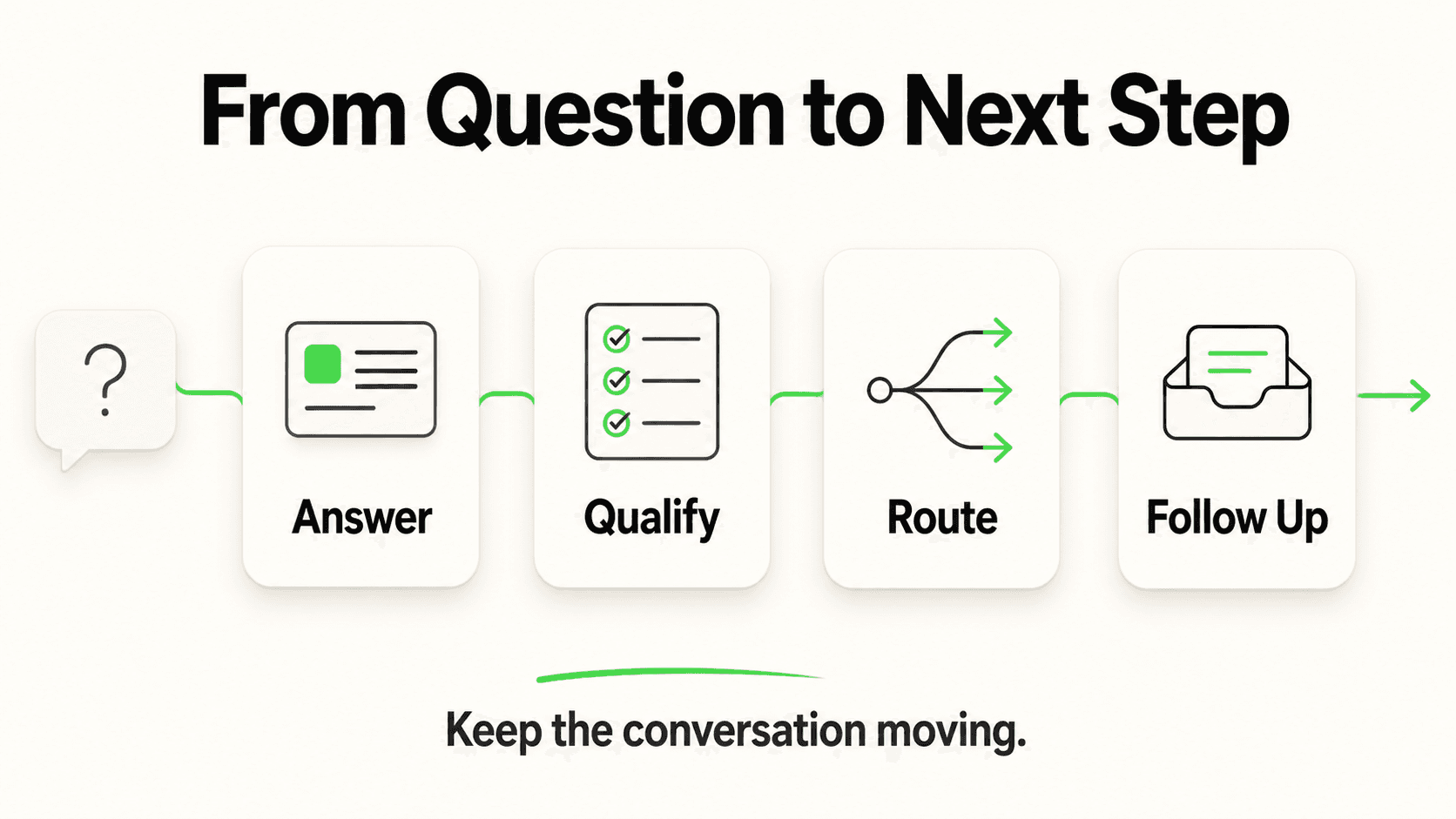
Almost always, on a straight annual cost basis. A full-time US receptionist costs $44,000–$51,000/year in total employment cost (BLS wage data plus benefits), while even the most expensive AI receptionist category (live-agent-backed phone services) typically runs $3,000–$7,000/year at moderate volume, and flat-rate chat-first plans run $480–$2,400/year. An AI receptionist also covers nights and weekends a single employee's shift cannot, though it doesn't replace the judgment and relationship-building a skilled human brings to complex situations.
Does AI receptionist pricing include phone calls?
Not always — this is the single most common point of confusion. Hyperleap AI and similar chat-first platforms answer website, WhatsApp, Instagram DM, and Facebook Messenger conversations, not phone calls; voice/phone support is on Hyperleap's roadmap but not available today. If you need phone coverage, you're looking at a separate category: automated voice AI (My AI Front Desk, Dialzara) or live-agent services (Smith.ai, Ruby).
What hidden costs should I watch for in AI receptionist pricing?
Four to check before signing: overage rates once you exceed your plan's included volume, one-time setup or onboarding fees, channel API pass-throughs (WhatsApp Business API has its own Meta-set pricing separate from most vendors' platform fees), and add-on features priced separately from the base plan (verification tools, advanced knowledge retrieval, team/workspace limits).
Can I switch AI receptionist plans as my business grows?
Most platforms, including Hyperleap AI, allow mid-cycle plan upgrades, with downgrades typically taking effect at the next billing period. Look for vendors offering add-on credit packs for occasional volume spikes rather than forcing a full plan upgrade every time you have one busy month — this avoids paying for permanent headroom you only need seasonally.
Do I need both a chat AI receptionist and a phone answering service?
If your inquiries arrive through both channels in meaningful volume, running both is common and often cost-effective — a chat-first platform for website/WhatsApp/social inquiries and a voice product (or a live answering service) for phone calls, rather than expecting one tool to cover a channel it wasn't built for. Audit your actual last-90-days channel mix before deciding; many SMBs assume they're phone-first when a large share of inquiries are already arriving as messages.
Is there a free AI receptionist?
Hyperleap AI does not offer a free plan — all plans require a credit card and start with a 7-day free trial. Some voice AI vendors advertise low-cost "testing tier" entry pricing (for example, My AI Front Desk's $20/month tier with limited included volume), but these are still paid plans, not free tiers, and are typically sized for evaluation rather than production use.
Data Sources
- U.S. Bureau of Labor Statistics, Occupational Employment and Wage Statistics — Receptionists and Information Clerks (May 2024)
- U.S. Bureau of Labor Statistics, Employer Costs for Employee Compensation (ECEC) survey
- Nextiva answering service cost guide (2026)
- HouseCallPro answering service cost guide (2026)
- Hyperleap AI published plan pricing, pricing page
- Vendor-published pricing for Smith.ai, Ruby, My AI Front Desk, Dialzara, and Podium, as compiled in our best AI receptionist software comparison
The Real Comparison Isn't Vendor vs. Vendor — It's Channel vs. Channel
Every AI receptionist pricing page makes its own product look like the obvious choice. The actual decision is simpler than any of them make it look: figure out where your inquiries come from, then price the channel that matches. A phone-heavy law firm or medical practice should be comparing Smith.ai and Ruby against the true cost of another hire, not against a chat-first platform that was never built to answer a ringing phone. A home services or professional services business whose leads increasingly arrive by website chat and WhatsApp should be comparing flat monthly subscriptions against the same hiring baseline — and increasingly finding that a $40/month plan closes a gap that used to require a $44,000/year hire, without replacing what that hire is actually good at.
Hyperleap AI's chat-first AI receptionist covers the growing share of inquiries arriving on your website, WhatsApp, Instagram DM, and Facebook Messenger, with flat pricing from $40/month, a lead form that captures verified contact details before the conversation even starts, and no per-minute meter running in the background. It's not built to answer your phone — but for the channels it does cover, it's priced to make the "start small, prove the ROI" approach genuinely low-risk.
Ready to see your actual AI receptionist cost?
Get flat, predictable pricing from $40/month for an AI receptionist across your website, WhatsApp, Instagram, and Facebook Messenger — no per-minute billing, no surprise invoices.
Start Your 7-Day Free TrialIndustry Solutions
See how AI chatbots work for these industries:
Related Articles

AI Chatbot vs Receptionist: Cost Comparison for SMBs
Should your small business hire a receptionist or deploy an AI chatbot? A practical cost comparison covering salary, availability, scalability, and ROI.
What Missed Calls Really Cost Your Small Business
A worked example of what missed calls cost small businesses in lost jobs, plus where inquiries actually arrive now and what to do about it.
How to Build a Business Case for AI Chatbots: ROI Framework
A practical ROI framework for SMBs evaluating AI chatbots — calculate costs, measure returns, and build a convincing business case.

AI Receptionist vs Answering Service: Which Fits?
Compare AI receptionist chatbots and traditional answering services on cost, channels, and speed to find the right fit for your small business.