Chat vs Voice AI Receptionists: An Honest Comparison
Chat vs voice AI receptionists compared honestly: cost, setup, lead quality, and which fits phone-first vs message-first small businesses.
TL;DR
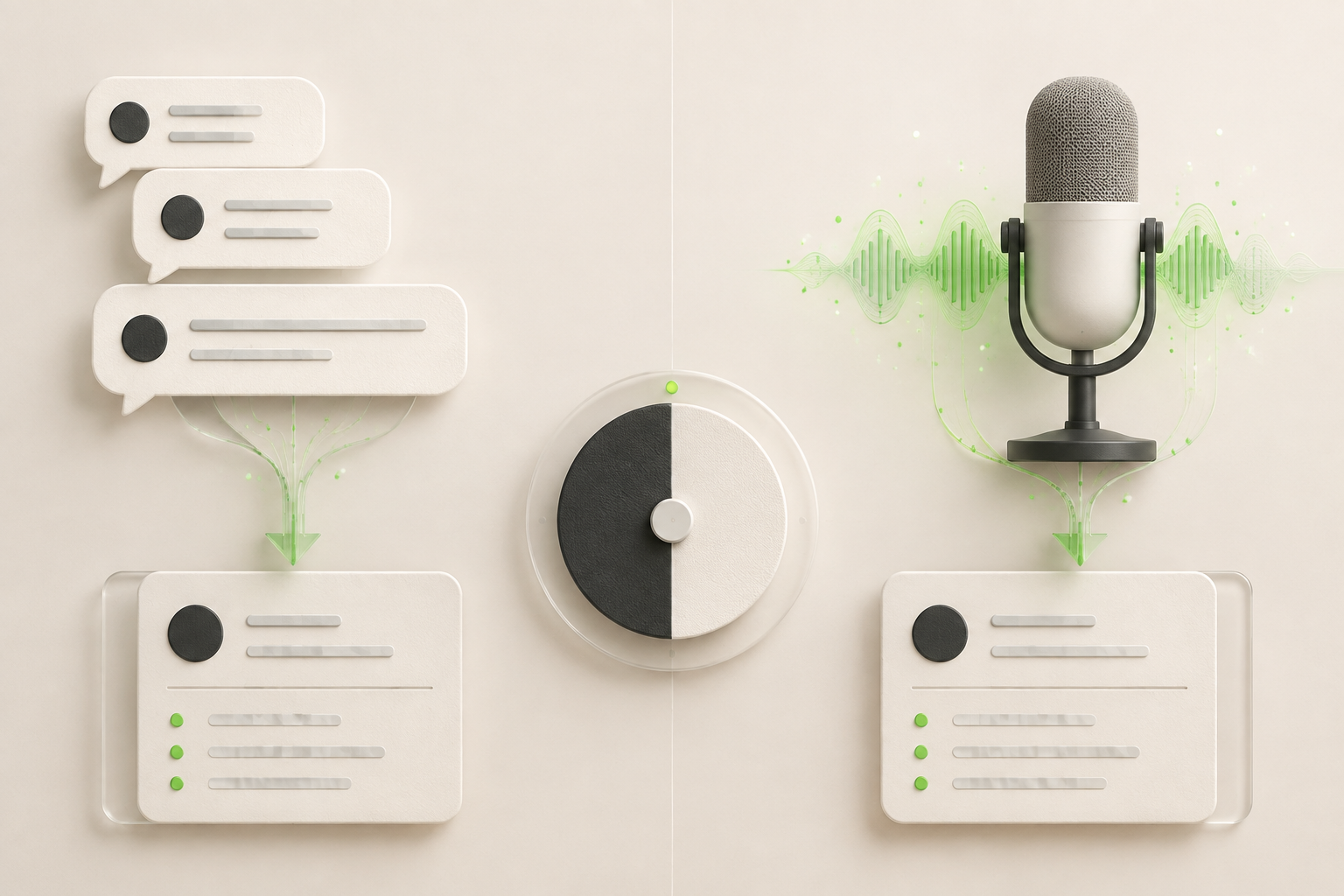
- Voice AI receptionists answer phone calls with a synthetic voice; chat-based AI receptionists answer typed messages on your website, WhatsApp, Instagram DM, and Facebook Messenger. They solve the same underlying problem — missed inquiries — for two different channels, and most search results for "AI receptionist" are voice-heavy even though a growing share of SMB inquiries now start as a typed message.
- Voice fits phone-first trades (emergency home services, some medical practices) and older or less tech-comfortable customer bases best; chat fits businesses whose customers research online, message across time zones, or write in a non-English language.
- Cost structures differ fundamentally: voice AI typically bills per minute of call time, which scales up during your busiest (and most valuable) periods; chat-first platforms like Hyperleap AI bill a flat monthly rate for a set volume of AI responses, with no per-conversation metering.
- Hyperleap AI is chat-first and does not answer phone calls today — voice is on our roadmap, not a shipped capability. If your inbound demand is phone-dominant, a dedicated voice AI vendor or a live answering service is the honest recommendation for that channel.
- Many small businesses run both: a voice product or answering service for the phone line, and a chat-first AI receptionist for website, WhatsApp, Instagram, and Facebook — covering both doors into the business rather than forcing one tool to do a job it wasn't built for.
Search "AI receptionist" today and the results skew heavily toward voice: synthetic phone agents that pick up your business line and talk back in a human-sounding voice. That's a real and useful category — but it's also only half the picture, and treating it as the whole picture leads plenty of small businesses toward the wrong tool. A dental practice getting most of its new-patient inquiries through Instagram DMs gains little from a voice product that only answers the phone. A 24-hour emergency plumbing service that lives on inbound calls gains little from a chat widget alone.
This is an honest, non-cherry-picked comparison of the two approaches — where each genuinely excels, where each fails, what they actually cost, and how to combine them if your business needs both. We'll say plainly where Hyperleap AI (chat-first) isn't the right fit, and point you toward the voice category when that's the honest answer. For the full product walkthrough of what a chat-first AI receptionist does, see our complete AI receptionist guide; for the deeper mechanics of how it works step by step, see how does an AI receptionist work; and for a full cost breakdown across both categories, see AI receptionist cost in 2026. If you're still narrowing down what to buy at all, our buyer's checklist for choosing an AI receptionist walks through the decision in full.
What's the Difference Between a Chat and a Voice AI Receptionist?
A voice AI receptionist answers inbound phone calls with a synthetic voice that holds a real-time spoken conversation; a chat-based AI receptionist answers typed messages on digital channels like a website widget, WhatsApp, Instagram DM, or Facebook Messenger. The core difference isn't just "the same AI, different input" — the underlying technology, cost structure, and failure modes are genuinely different because speech and text are different problems to solve reliably.
Voice AI receptionists (a category that includes products like Dialzara and My AI Front Desk, and human-plus-AI services like Smith.ai and Ruby) work by:
- Answering an inbound call through your existing phone number or a forwarded line
- Converting speech to text, generating a response, and converting that text back to speech in real time
- Handling interruptions, hold requests, and natural conversational back-and-forth verbally
- Typically pricing per minute of call time, with an included allotment and overage rates beyond it
Chat-based AI receptionists (Hyperleap AI and similar chat-first platforms) work by:
- Answering typed messages on your website chat widget, WhatsApp Business API, Instagram DM, and Facebook Messenger
- Gating the conversation with a lead form that collects name and phone number before the back-and-forth begins
- Answering from your own uploaded documents via retrieval-augmented generation (RAG)
- Typically pricing flat, per month, for a set volume of AI responses — "one AI reply = one response, no model-credit math"
Who this comparison is for
This is written for business owners deciding between adding a phone-answering AI product, a chat-based one, or both — home services, dental and medical practices, salons, real estate, legal and professional services. It assumes no prior familiarity with either category.
Where Voice AI Excels
Voice AI receptionists solve a specific, real problem well: businesses whose customers overwhelmingly prefer to call rather than type, and whose phone line is genuinely the primary point of contact.
Phone-first trades and emergency services. A homeowner with a burst pipe at 11 p.m. is far more likely to call three plumbers in a row than open a chat window on each one's website. Emergency home services, HVAC dispatch, and similar urgent-response trades see disproportionately high call volume, and a voice AI product (or a live answering service) that can pick up that ringing phone captures value a chat-only tool structurally cannot.
Older or less tech-comfortable customer demographics. Some patient and client bases — certain medical specialties, senior-focused services — skew toward customers who default to calling rather than messaging, sometimes regardless of what channels are available. A voice-first strategy meets that customer base where they already are.
Businesses with an existing phone number as their primary listing. If your Google Business Profile, yellow-pages-style directory listings, and word-of-mouth all point to a phone number, that number is likely your highest-volume entry point regardless of what you build elsewhere.
Regulatory or contractual requirements for live phone coverage. Some medical and legal intake workflows specifically require a live phone answering option, which narrows the choice toward voice products or live-agent services regardless of cost comparisons.
Where Chat Excels
Chat-based AI receptionists solve a different, equally real problem: the growing share of customer inquiries that never touch a phone at all.
Website, social, and messaging-first buyers. Customers researching a purchase — a home renovation quote, a dental consultation, a real estate listing — increasingly browse a website or message a business's Instagram before ever picking up the phone. A chat-based AI receptionist meets that inquiry at the moment it happens, rather than losing it to a contact form nobody checks until the next business day. See our data on how SMB customer messaging expectations have shifted for more on this trend.
Multilingual customer bases. A chat-based system can support 100+ languages from a diverse customer base using the same knowledge base, without hiring multilingual staff or a separate voice model per language; real-time multilingual voice conversation is a materially harder technical problem and less mature across the voice AI category generally.
Asynchronous, research-heavy inquiries. A customer comparing five service providers late at night doesn't want a phone conversation — they want to type a question, get an answer, and keep browsing without committing to a call. Chat fits that browsing behavior naturally; a voice product interrupts it.
Lower cost per interaction at volume. Because chat-first platforms typically price flat per month rather than per minute, a business fielding a high volume of short, simple questions ("what are your hours," "do you serve my area") doesn't see its bill climb with conversation count the way per-minute voice billing does.
Written records by default. Every chat conversation is already a text transcript — useful for reviewing what was said, training staff, or auditing lead quality — without a separate call-recording and transcription step.
Failure Modes: Where Each Approach Struggles
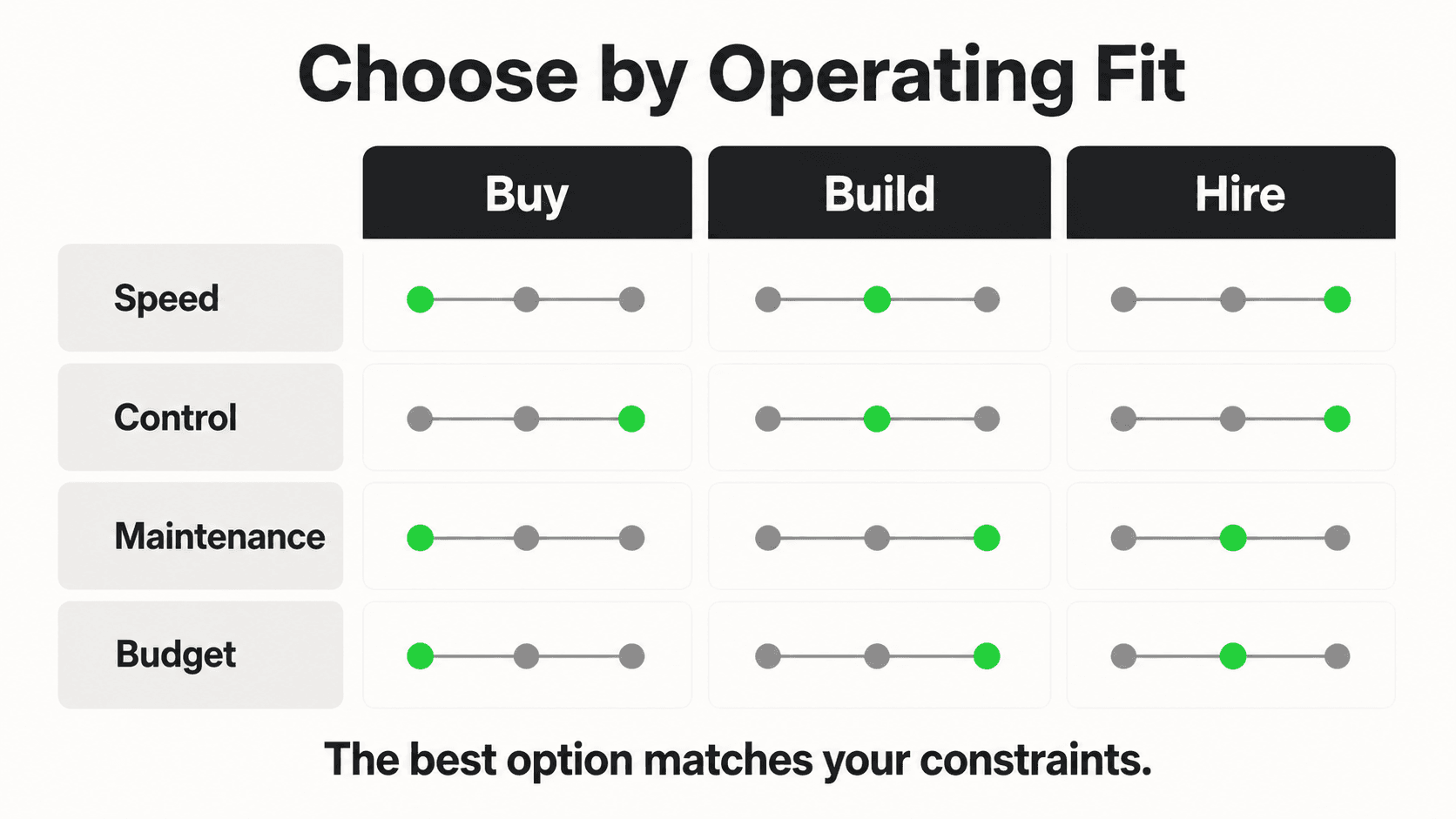
Neither category is universally better — each has structural weaknesses worth knowing before you commit budget to either one.
Voice AI failure modes
- Latency and unnatural pauses. Real-time speech generation still introduces noticeable delay in some implementations, which can read as awkward or robotic to a caller expecting instant human-like response.
- Accent and speech-recognition accuracy. Speech-to-text accuracy varies by accent, background noise, and call quality — a caller in a noisy environment (a job site, a moving car) may get misheard or misunderstood more often than a customer typing the same question.
- Interruption handling. Natural human conversation involves talking over each other, correcting mid-sentence, and non-linear back-and-forth; voice AI systems vary widely in how gracefully they handle a caller who interrupts or changes their question mid-stream.
- Caller trust and disclosure. Some callers react negatively upon realizing they're speaking with an AI rather than a person, particularly for sensitive or high-stakes calls, which can affect completion rates depending on how transparently the system discloses itself.
- Per-minute cost scaling with your busiest periods. A voice AI plan that looks affordable at low volume can get expensive fast during a surge — exactly when your business is busiest and can least afford a surprise bill.
Chat failure modes
- Requires the customer to type. A customer who strongly prefers calling, or who's in a situation where typing is impractical (driving, using gloves on a job site), won't engage with a chat widget at all — that inquiry is lost, not converted.
- Can't cover your phone line. A chat-based AI receptionist does nothing for a customer who picks up the phone and dials your number; if phone calls are a meaningful share of your inbound volume, chat alone leaves that channel fully uncovered.
- Text can under-convey urgency. A distressed customer typing "my basement is flooding" may not read with the same immediate urgency a shaking voice would convey to a live human — good escalation rules and keyword triggers matter more to compensate.
- Adoption depends on channel visibility. A chat widget or WhatsApp number customers don't know to look for won't get used; unlike a phone number that's often the default contact method customers already expect.
Cost Structures Compared
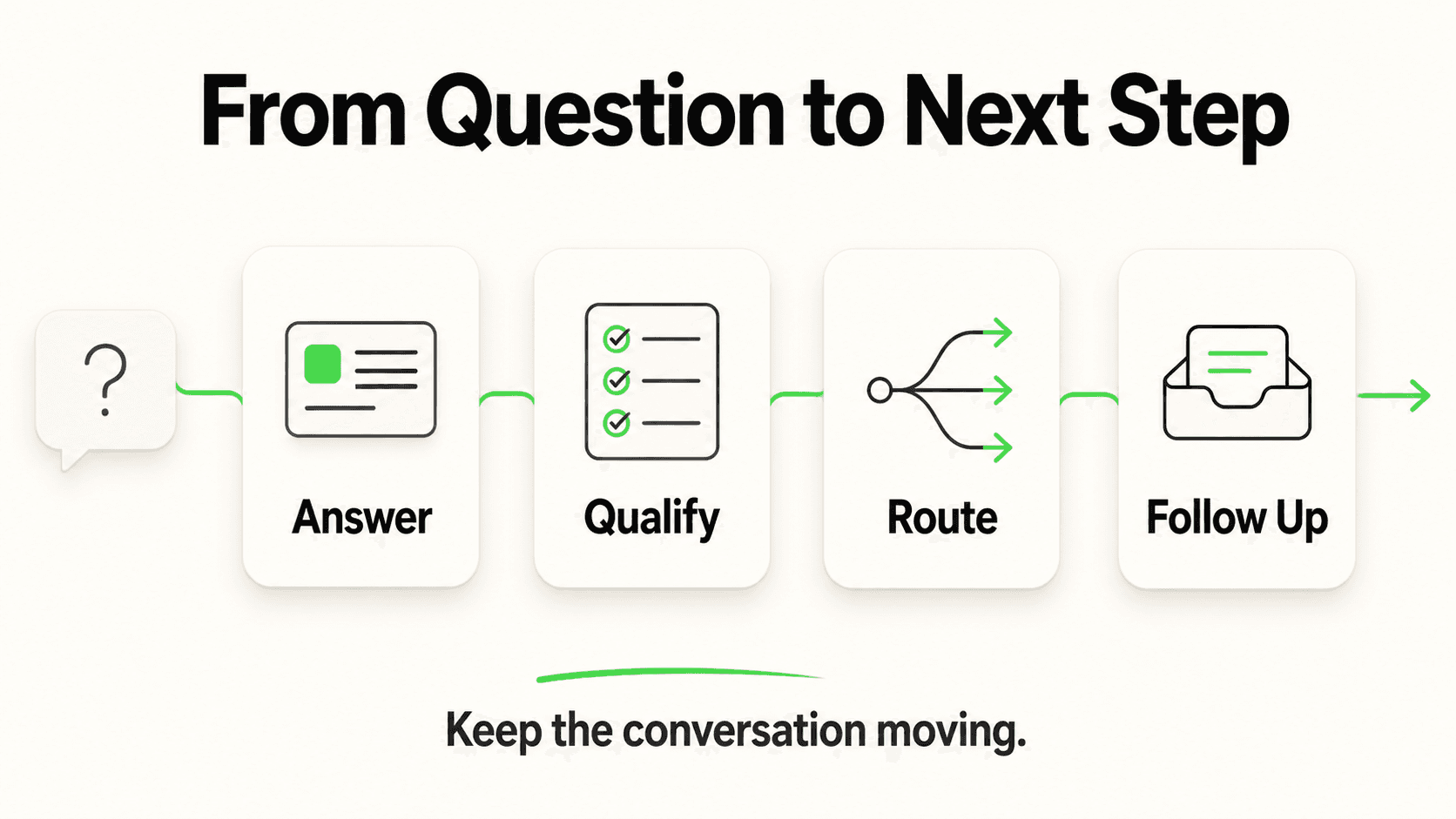
Voice and live-agent pricing per current published vendor tiers as referenced in our best AI receptionist software comparison; verify directly with each vendor, since pricing changes frequently. Hyperleap pricing is Hyperleap's own published plan pricing.
The cost comparison isn't just about which number is smaller — it's about which pricing model matches how your demand actually behaves. Per-minute and per-call billing (most voice AI, live-agent services) means your bill scales with usage: busier months cost more, in some cases significantly more once you exceed an included allotment. Flat per-response billing (Hyperleap AI's model) means a predictable monthly cost within your plan's response limit regardless of how many conversations happen or how long any single one runs — see our full breakdown in AI chatbot pricing models compared and AI receptionist cost in 2026 for the complete sourced numbers across every category.
See flat chat-first pricing for yourself
Hyperleap's AI receptionist runs $40-$200/month flat across website, WhatsApp, Instagram, and Facebook Messenger — no per-minute meter running in the background.
See pricingSetup Effort Compared
Voice AI setup typically involves porting or forwarding your business phone number, selecting or scripting call flows, and testing how the system handles a range of spoken phrasings for the same question — a process that can take from a few days to a couple of weeks depending on the vendor and how much custom scripting you want.
Chat-first setup with Hyperleap AI can go live in under 5 minutes for a basic configuration: point it at your website URL, and it reads your site, imports your branding, detects your industry, and generates a starting prompt automatically — the remaining step is adding one script tag to your site and connecting WhatsApp, Instagram, and Facebook if you want those channels too. Attaching additional documents and writing custom guardrails afterward is tuning, not a blocker to going live.
Neither setup process is inherently harder — they're just different kinds of work. Voice setup leans toward scripting spoken interactions; chat setup leans toward curating written knowledge sources.
Lead-Record Quality Compared
A voice call typically produces a recording or a transcript (if the vendor offers transcription) plus whatever structured data the vendor's system extracts from the conversation — name, callback number, reason for calling. Quality varies by vendor and depends on how accurately speech-to-text captured the call.
A chat-based system with a lead form gating the conversation — Hyperleap AI's approach — produces structured data by design: name, phone number, and a qualifying answer are collected through a form before the conversation starts, so the lead record doesn't depend on extraction accuracy at all. That's a meaningful, mechanical difference in reliability, not just a stylistic one — see the full mechanics in how does an AI receptionist work.
Compliance and Recording Considerations
Voice AI and live-agent phone products that record calls need to account for call-recording consent laws, which vary by state and country — some jurisdictions require all-party consent before recording a phone conversation. This is a real compliance consideration specific to voice that doesn't apply the same way to chat, where the written transcript is inherently visible to the customer as they type it.
Chat-based systems still carry data-handling obligations — where transcripts are stored, how long, and whether customers are informed their conversation may be reviewed — but avoid the specific all-party-consent recording question that voice systems must navigate. Confirm your specific state or country's recording consent requirements with legal counsel before deploying any voice AI or live-agent phone product that records calls.
Decision Table by Business Type
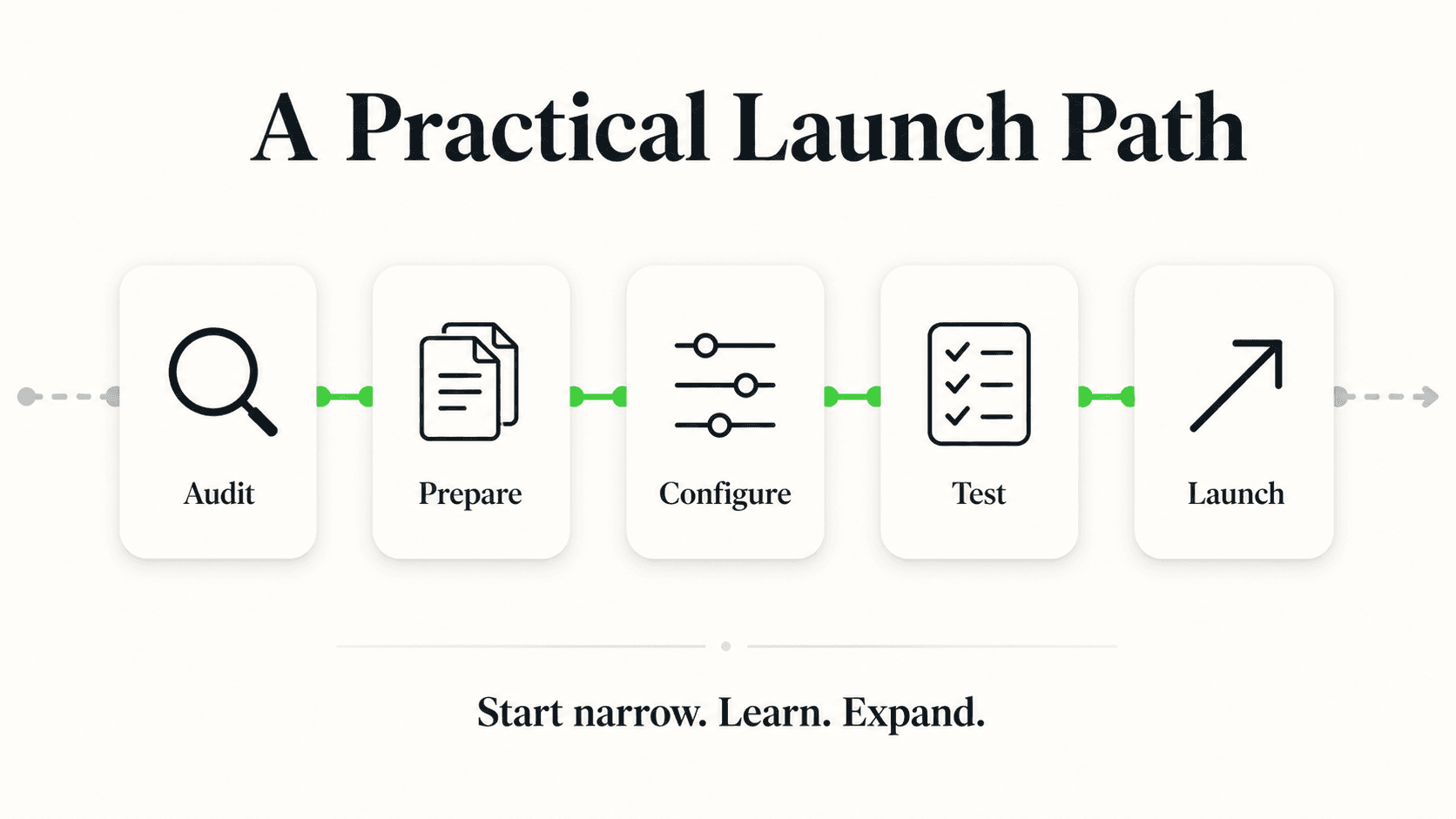
| Business type | Recommended primary channel | Why |
|---|---|---|
| Emergency home services (plumbing, HVAC dispatch) | Voice AI or live answering service | Phone-first, urgent, often after-hours calls |
| Dental / medical practice (routine + emergency mix) | Both — voice for urgent, chat for scheduling/FAQ | Split demand across calls and messaging |
| Real estate agents / brokerages | Chat-first | Buyers research and message before calling |
| Salons, med spas, wellness | Chat-first | Booking questions increasingly arrive via Instagram/WhatsApp |
| Law firms, professional services | Voice-leaning or both | Some intake workflows require live phone; also see research-heavy chat inquiries |
| E-commerce-adjacent local retail | Chat-first | Product and availability questions rarely need a call |
| Multilingual customer base | Chat-first | 100+ language chat coverage is more mature than real-time multilingual voice |
| Older, phone-preferring customer base | Voice AI or live answering service | Matches existing customer behavior |
The Combination Pattern: Using Both
For many SMBs, the honest answer isn't "chat or voice" — it's "cover both doors into the business with the tool built for each one." A common, workable pattern:
- Keep or add phone coverage through a voice AI vendor or a live answering service (see AI receptionist vs. answering service for the full phone-side comparison) for the share of demand that's genuinely phone-first.
- Add a chat-first AI receptionist — Hyperleap AI — for your website, WhatsApp, Instagram DM, and Facebook Messenger, covering the growing share of inquiries that never touch your phone line at all.
- Route overflow between them. Some businesses forward after-hours voicemail transcripts into the same team notification flow the chat AI already uses, giving the team one place to see everything, even if the two systems aren't natively integrated.
This isn't a compromise — it's matching each channel to the tool actually built for it, rather than stretching one product to cover a job it wasn't designed for.
Audit before you buy either one
Before choosing a voice product, a chat product, or both, spend 30 days tracking where your inquiries actually arrive — phone, website, WhatsApp, Instagram, Facebook. Most owners assume they know their channel split and are wrong by a wide margin once they actually count it.
Frequently Asked Questions
Does Hyperleap AI offer a voice AI receptionist?
No. Hyperleap AI is a chat-first AI receptionist covering your website chat widget, WhatsApp Business API, Instagram DM, and Facebook Messenger. Voice/phone call answering is on Hyperleap's roadmap but is not a current, shipped capability — if phone calls are your primary channel, a dedicated voice AI vendor or a live answering service is the right recommendation for that specific need.
Is voice AI or chat AI better for a small business?
Neither is universally better — it depends entirely on where your customers actually reach out. Phone-first trades (emergency home services, some medical practices, older customer bases) tend to see more value from voice AI or a live answering service. Businesses whose customers research online, message across time zones, or write in multiple languages tend to see more value from a chat-first AI receptionist. Audit your actual inbound channel mix before choosing.
Which is cheaper, voice AI or chat AI?
Chat-first platforms with flat monthly pricing (like Hyperleap AI at $40-$200/month) are typically more predictable and often cheaper at volume than per-minute voice AI billing, which scales up during busy periods. Live-agent-backed phone services (Smith.ai, Ruby) are the most expensive category because you're paying for staffed human hours behind the AI tooling. See AI receptionist cost in 2026 for the full sourced comparison.
Can I use a voice AI receptionist and a chat AI receptionist together?
Yes, and it's a common pattern for businesses that see meaningful inquiry volume through both phone and messaging channels. A voice product or live answering service covers the phone line while a chat-first AI receptionist like Hyperleap AI covers website, WhatsApp, Instagram, and Facebook — the two complement rather than compete when your demand genuinely spans both.
Why does chat handle multiple languages more easily than voice?
Text-based systems can retrieve and generate responses in 100+ languages from the same underlying knowledge base without needing a separate real-time speech model per language. Real-time multilingual voice conversation — accurately recognizing spoken input and generating natural-sounding spoken output across many languages simultaneously — remains a harder and less mature technical problem across the voice AI category generally.
Does a voice AI receptionist require call-recording consent?
Often yes, depending on your state or country's call-recording consent laws, some of which require all parties to be informed before a call is recorded. This is a compliance consideration specific to voice AI and live-agent phone products; confirm your specific jurisdiction's requirements with legal counsel before deploying any product that records calls.
If my business is phone-first today, should I skip chat entirely?
Not necessarily — even phone-first businesses often have a meaningful, growing share of inquiries arriving through a website contact form, Instagram, or WhatsApp that a phone-only setup simply never captures because nobody's checking those inboxes. A 30-day channel audit typically reveals more chat volume than owners expect, even in traditionally phone-heavy trades.
Choosing Isn't About Which Technology Is Better — It's About Matching the Channel
Voice AI and chat-based AI receptionists aren't competing for the same job. One answers a ringing phone; the other answers a typed message. The honest comparison isn't "which one wins" — it's "which one matches where your customers actually reach out today, and does your business need both."
Hyperleap AI is built chat-first, covering your website, WhatsApp, Instagram DM, and Facebook Messenger with a lead form that captures verified contact details before the conversation starts, flat pricing from $40/month, and no per-minute billing. It will not answer your phone. For the channels it does cover, it's built to close the specific gap that a phone-only strategy leaves wide open.
Cover the channels a phone line can't
Deploy Hyperleap's chat-first AI receptionist across your website, WhatsApp, Instagram, and Facebook Messenger — flat pricing from $40/month, 7-day free trial.
Start Your 7-Day Free TrialIndustry Solutions
See how AI chatbots work for these industries:
Related Articles
Small Business Answering Service Alternatives (2026)
8 small business answering service alternatives for 2026 compared on coverage, cost, and setup — from voice AI to chat-first AI receptionists.

How to Choose an AI Receptionist: A Buyer's Checklist
How to choose an AI receptionist: an 18-point buyer checklist covering channels, lead capture, pricing traps, data handling, and a 7-day trial plan.
AI Receptionist vs. Virtual Receptionist: Which to Hire?
Compare AI receptionists (chat-first, from $40/month) to human virtual receptionist services like Ruby and Smith.ai — cost, hours, and fit by business type.

AI Receptionist vs Answering Service: Which Fits?
Compare AI receptionist chatbots and traditional answering services on cost, channels, and speed to find the right fit for your small business.