AI Receptionist vs. Virtual Receptionist: Which to Hire?
Compare AI receptionists (chat-first, from $40/month) to human virtual receptionist services like Ruby and Smith.ai — cost, hours, and fit by business type.

TL;DR: "Virtual receptionist" traditionally means a company that staffs live human operators to answer your phone remotely — Ruby, Smith.ai, and Abby Connect are the best-known examples, priced by the minute or by call volume, typically $250–$2,100+/month. An "AI receptionist" like Hyperleap AI is software that answers, qualifies, and routes text-based conversations — website chat, WhatsApp, Instagram DM, Facebook Messenger — for a flat $40–$200/month, with no voice/phone channel today (that's on Hyperleap's roadmap). Neither replaces the other outright: a human virtual receptionist wins when live phone judgment and a warm human voice matter most; an AI receptionist wins on chat-channel coverage, consistency, and cost-per-conversation at scale. Many businesses that get inbound volume through both calls and chat end up running one of each.
A homeowner's water heater fails at 9 p.m. on a Tuesday. They call two plumbers and message a third on Instagram. The first call gets a live virtual receptionist who takes a detailed message and promises a callback "first thing tomorrow." The second call goes to voicemail. The Instagram message gets an instant, informed reply that answers the emergency-service question, collects a name and phone number, and lets the customer know someone will follow up — all before the caller on hold has hung up.
That scenario is why "AI receptionist" and "virtual receptionist" get confused constantly, even though they're solving different jobs. Both promise the same outcome — "never miss a customer inquiry" — but one is a staffed phone-answering service and the other is software that runs on your messaging channels. Picking the wrong one for your actual inquiry mix wastes budget and still leaves customers waiting.
This guide compares AI receptionists to human virtual receptionist services on the things that actually decide the outcome: what each one answers, their hours and cost structure, consistency and judgment, how they scale, setup time, and the quality of the handoff they leave your team. If you want the fuller product walkthrough of what an AI receptionist does first, see our complete AI virtual receptionist guide; for the answering-service-specific comparison (a narrower slice of the human-staffed category), see AI receptionist vs. answering service.
What Is a Virtual Receptionist vs. an AI Receptionist?
A virtual receptionist is a company that employs live human operators to answer your business phone remotely, following your intake script; an AI receptionist is software that automatically answers text-based customer conversations using your own business content. The core difference is not "human vs. robot" in the abstract — it's channel, staffing model, and pricing structure.
Virtual receptionist services (human-staffed):
- Ruby (formerly Ruby Receptionists) — live, US-based receptionists answering calls with warm, personalized greetings; also sells a separate live-chat plan
- Smith.ai — 24/7 live agents supported by AI tools for call screening, lead qualification, and CRM logging
- Abby Connect — live receptionists answering calls and, on some plans, live chat, with bilingual (English/Spanish) coverage and custom call scripts
All three staff real people to answer your phone (and in some cases your website chat) during the hours you've contracted for, typically billed by the minute or by call volume.
AI receptionists (software, chat-first):
- Hyperleap AI — an AI agent that answers, qualifies, verifies, and routes conversations across your website chat widget, WhatsApp Business API, Instagram DM, and Facebook Messenger, drawing its answers from your own uploaded content. It does not answer phone calls; voice is on Hyperleap's roadmap, not a current capability.
There are also voice-first AI receptionist products on the market that use synthetic voice to answer calls without a live human — a different category again from both the human-staffed services above and from a chat-first platform like Hyperleap. Our best AI receptionist software comparison covers those voice AI vendors directly if phone automation (not human staffing) is what you're evaluating.
Who this guide is for
This is written for owners and operators deciding between hiring a human virtual receptionist company, deploying an AI receptionist on their messaging channels, or running both. If your inbound volume is overwhelmingly phone calls today, read the "when a human virtual receptionist still wins" section closely.
Why Businesses Confuse the Two — and Why That's Expensive
The word "receptionist" implies a phone. That framing is outdated for a growing share of small businesses, and the mismatch costs real money when a business buys the wrong tool for where its inquiries actually arrive.
Customer inquiries no longer default to the phone
A generation ago, "contacting a business" meant calling it. Today, a customer researching a service is as likely to open your website chat or send a WhatsApp message first, especially for considered purchases — home services quotes, dental consultations, real estate inquiries — where they want an answer before committing to a phone call. A business that only budgets for a human virtual receptionist has full coverage on a channel that may not be where most of its volume actually lives anymore.
Per-minute and per-call pricing punishes exactly the weeks you need coverage most
Virtual receptionist services bill by call volume or minutes. Smith.ai's published entry plan, for example, includes 30 calls for $300/month with call overage priced at $11.50 per call beyond that — so a busy month costs more, right when the business can least afford surprises. Ruby's virtual receptionist plans run from $250/month (50 minutes) up to $1,725/month (500 minutes), a range that shows how directly the price scales with call volume. An AI receptionist's flat monthly pricing (Hyperleap starts at $40/month) doesn't carry that same overage risk within your plan's response allotment.
"Somebody answered" isn't the same as "the right question got answered correctly"
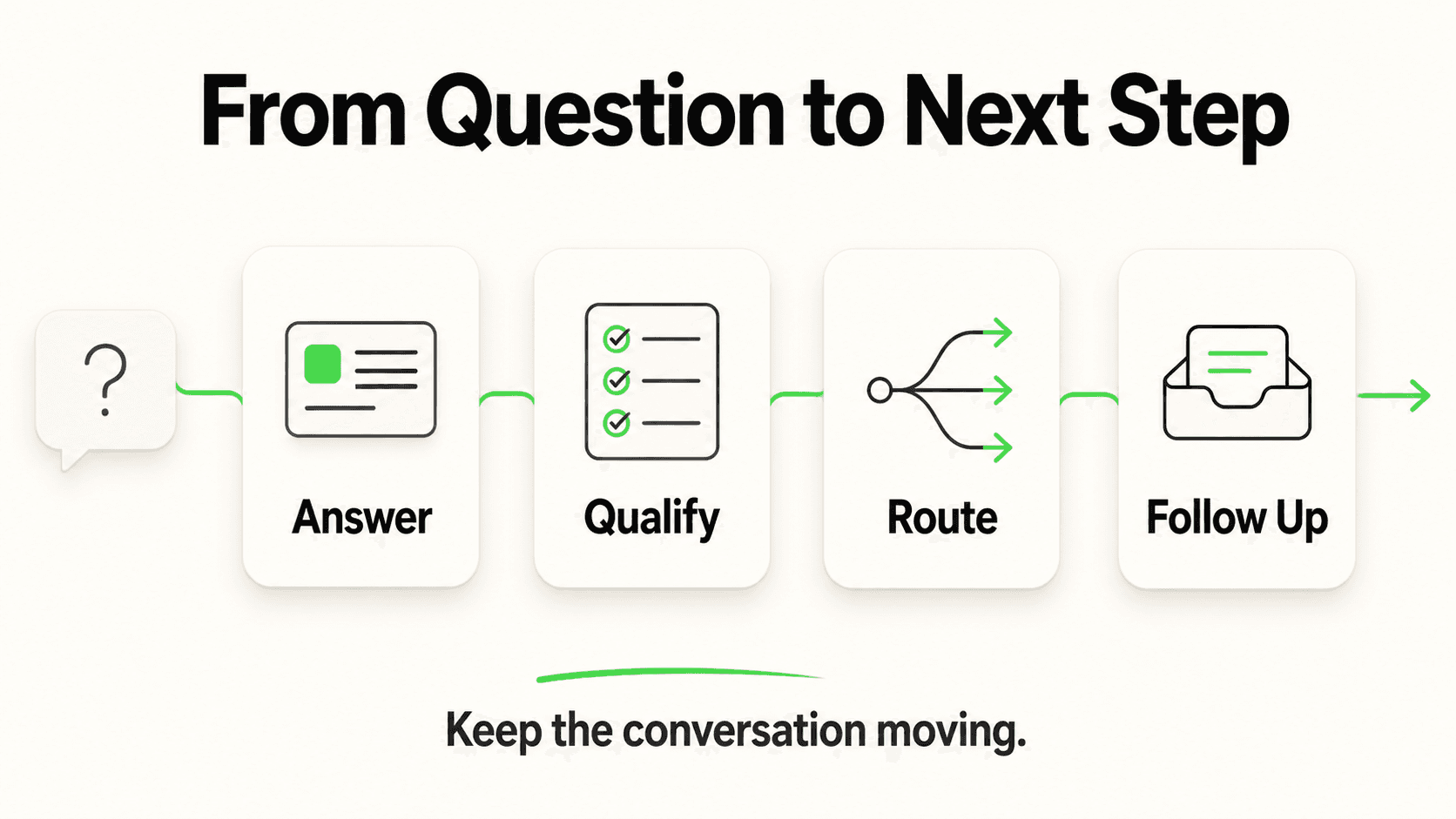
A live human operator can take a message and sound reassuring, but their answer quality depends entirely on how thoroughly they were trained on your specific business — your current pricing, your service area, your latest policy change. Outsourced or high-turnover receptionist teams mean that training decays over time. An AI receptionist answering from your uploaded documents gives the same accurate, current answer on the first call as the thousandth, updated the moment you update the source document.
7 Ways AI Receptionists and Human Virtual Receptionists Actually Compare
1. What each one answers
What this looks like in practice: A human virtual receptionist answers your phone and follows your intake script — greeting the caller, gathering basic details, and either transferring the call or taking a message. An AI receptionist answers text-based questions from your own business content — pricing, hours, service details, policies — through natural conversation on your website, WhatsApp, Instagram, or Facebook.
Real-world impact: A caller asking a live Ruby or Smith.ai receptionist a nuanced question about your service process gets an answer only as good as that operator's training that week. A visitor asking Hyperleap the same question gets an answer pulled directly from your current service pages and FAQs.
Why it works: Document-grounded answers stay accurate as your business changes; human training requires active, ongoing effort to keep current across every operator on a shift rotation.
2. Hours and channel coverage
What this looks like in practice: Both models can offer 24/7 coverage, but on different channels. Ruby, Smith.ai, and Abby Connect all offer around-the-clock live phone answering (often at a premium tier). Hyperleap's AI receptionist is 24/7 by default across Website, WhatsApp, Instagram DM, and Facebook Messenger — but it does not pick up a ringing phone.
Real-world impact: A business relying solely on a human virtual receptionist has zero coverage for the customer messaging its Instagram at 11 p.m. A business relying solely on an AI receptionist has zero coverage for the customer who prefers to call.
Why it works: Coverage is only as good as the channel it's built for — evaluating "24/7" without asking "24/7 on what channel" is the single most common buying mistake in this category.
3. Cost structure
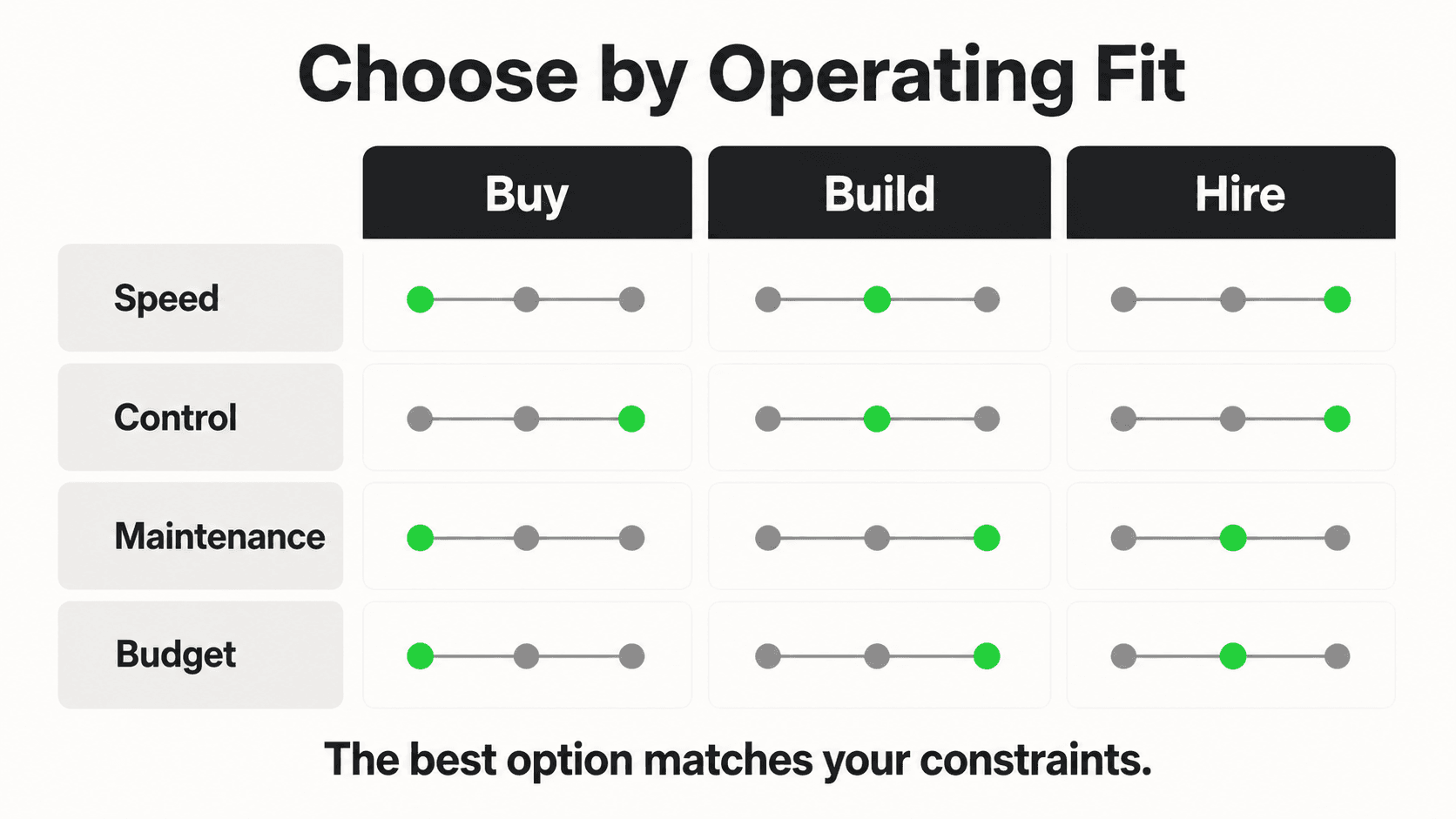
What this looks like in practice: Human virtual receptionist services price by the minute or by call-volume tier. Smith.ai runs $300/month (30 calls) to $2,100/month (300 calls) with per-call overage in between; Ruby runs $250–$1,725/month scaled by minutes, with live chat sold as a separate paid plan; Abby Connect similarly prices around live-agent minute or call bundles — check each vendor's current published pricing page for exact tiers, as these shift over time. Hyperleap's AI receptionist is flat: Plus at $40/month (3,000 AI responses), Pro at $100/month (12,000 responses), Max at $200/month (30,000 responses), with a 7-day free trial and a credit card required (no free plan).
Real-world impact: A business with unpredictable call volume can see a live-agent bill spike hundreds of dollars in a busy month. An AI receptionist plan holds steady inside its response allotment.
Why it works: Flat software pricing is inherently more predictable than variable labor-based billing — the tradeoff is that flat pricing only covers the channels the software supports.
Ruby and Smith.ai figures are each company's published plan pricing at time of writing; confirm current tiers directly with each vendor, as pricing changes.
4. Consistency across shifts and staff turnover
What this looks like in practice: Live virtual receptionist teams rotate operators across shifts. Each operator's familiarity with your business, tone, and current policies can vary — especially at outsourced firms with staff turnover. An AI receptionist gives every visitor the identical, on-policy answer regardless of the time of day or which "shift" is technically running.
Real-world impact: A customer calling a human virtual receptionist twice in one week might get two subtly different answers about the same policy if two different operators handled the calls. An AI receptionist's answer doesn't drift with staffing changes.
Why it works: Consistency is itself a trust signal — customers notice when a business has its story straight across every interaction.
5. Judgment, empathy, and complex situations
What this looks like in practice: This is where a live human genuinely outperforms software. A trained operator can pick up tone and urgency cues in a caller's voice in real time, de-escalate a frustrated customer, and exercise judgment in an ambiguous situation in a way current AI receptionists cannot fully replicate over text.
Real-world impact: A distressed caller with a complex, emotionally charged issue is often better served by Ruby's or Smith.ai's live-agent model — or by your own staff — than by an automated text conversation.
Why it works: An AI receptionist should be designed to recognize when a conversation needs a person and route it there — not clinical or legal assessment, just recognizing the limit and escalating with context attached. Hyperleap does this by design; treating any AI receptionist as a full substitute for human judgment in high-stakes conversations is where deployments go wrong. Our human handoff glossary entry covers what a well-designed escalation looks like.
6. Scalability without adding headcount
What this looks like in practice: A live virtual receptionist service scales by adding staffed capacity — more agents, more minutes purchased, higher-tier plans. An AI receptionist scales by simply handling more conversations against the response allotment on your existing plan (or a higher plan tier).
Real-world impact: A business whose inquiry volume doubles overnight (a viral social post, a seasonal spike) sees a live-agent bill jump with it; an AI receptionist absorbs that spike inside its existing response ceiling until it's exceeded, at which point upgrading a software plan is faster than staffing up a call center.
Why it works: Software scales horizontally without a proportional labor cost increase — the core economic argument for automating any high-volume, repetitive front-desk function.
7. Setup time and the quality of the handoff
What this looks like in practice: Setting up a live virtual receptionist service means writing an intake script, training the vendor's staff on your business, and porting or forwarding your phone number — typically one to two weeks. Setting up an AI receptionist means uploading your documents and connecting your channels — Hyperleap can be live in about 5 minutes for a quick-start deployment, with tuning (attaching more documents, refining guardrails) happening afterward, not blocking go-live.
Real-world impact: Both models, done well, leave your team with a clean handoff: a live receptionist relays a phone message or transfers the call; Hyperleap emails your team a summary of the conversation, the contact's details, and the suggested next step, with the lead form data captured before the deeper conversation even began.
Why it works: Faster setup means less time in the gap where inquiries go unanswered while you wait for either option to go live.
See what a chat-first AI receptionist actually answers
Try Hyperleap's demo AI receptionist across web and WhatsApp before deciding whether a human virtual receptionist, an AI receptionist, or both fit your business.
Try the demoDecision Matrix by Business Type
| Business Type | Best Starting Point | Why |
|---|---|---|
| Law firm, medical practice (phone-heavy, high-stakes calls) | Human virtual receptionist (Ruby, Smith.ai) | Live judgment and a warm human voice matter most on high-value or sensitive calls |
| Dental, med spa, salon with rising social/web inquiries | AI receptionist (Hyperleap) | Younger, digitally-native patient base messages before calling; flat pricing scales with growth |
| Home services (HVAC, plumbing) with mixed call and web volume | Both, in parallel | Phone dispatch for urgent calls, AI receptionist for web/WhatsApp quote requests outside business hours |
| Real estate agency fielding listing inquiries | AI receptionist (Hyperleap) | High volume of repetitive property questions arrive via website and Instagram; live agent cost scales poorly against that volume |
| Boutique consultancy prioritizing a polished caller experience | Human virtual receptionist (Ruby) | A warm, high-touch phone impression is part of the brand experience being sold |
| Multi-location franchise with unpredictable call spikes | Human virtual receptionist with per-minute tiers, monitored closely | Live staffing absorbs judgment-heavy calls; budget for overage during peak seasons |
| Solo operator or small team with tight budget and growing chat volume | AI receptionist (Hyperleap) | Flat $40/month entry point is a fraction of any live-staffed option's entry price |
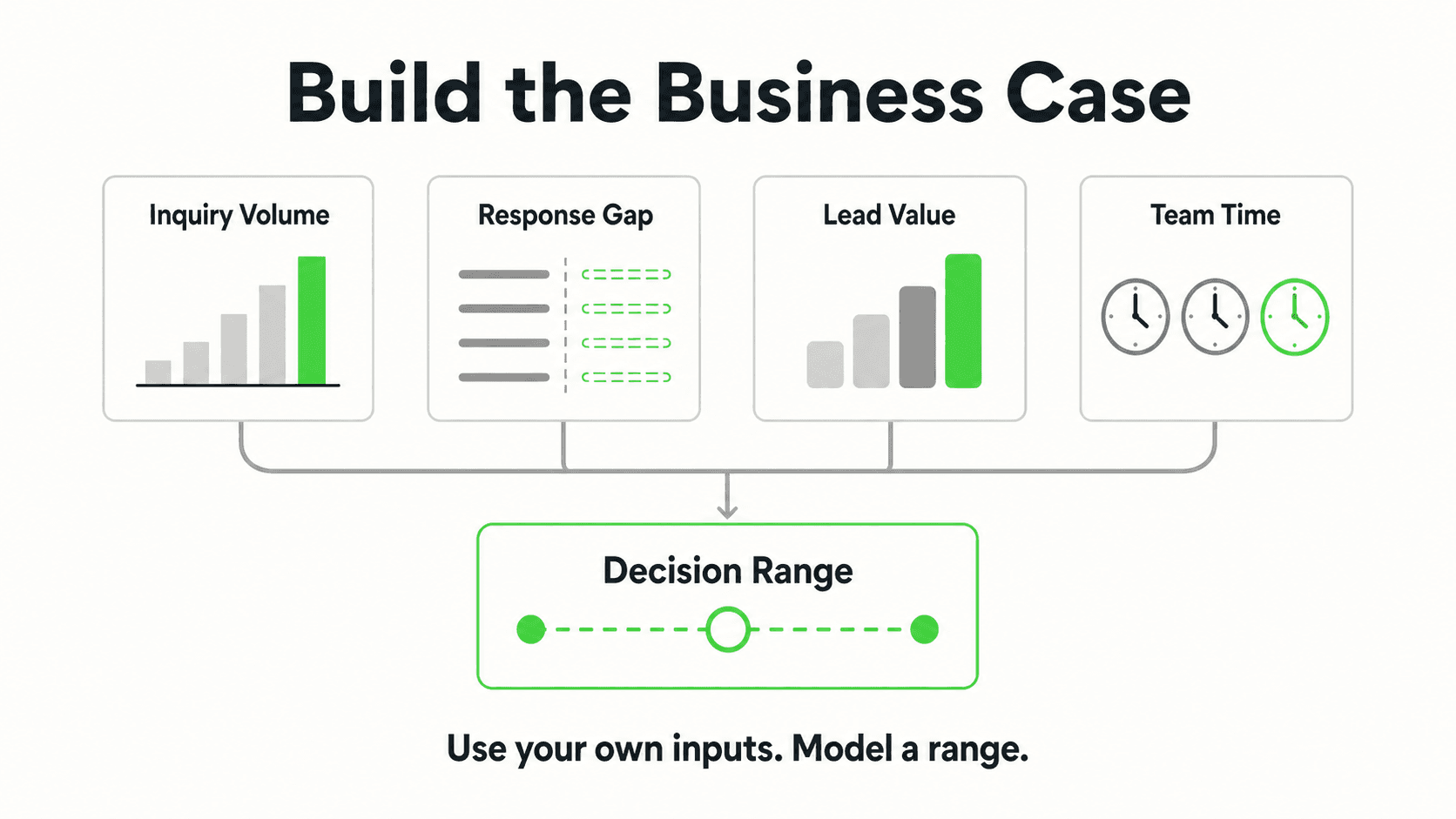
If you're unsure which row fits, audit 30 days of actual inbound contacts by channel before deciding — most owners are surprised by the real split between calls and messages once they count it.
When to Combine Both
Neither model is a complete solution on its own for a business with real inquiry volume on both calls and chat. A common, effective setup: keep a human virtual receptionist service (or your own staff) handling inbound calls, where live judgment and voice tone matter, and deploy an AI receptionist for the website, WhatsApp, Instagram, and Facebook conversations that a phone-only service was never covering in the first place.
This isn't a compromise — it's matching each tool to the channel it was actually built for. A law firm can keep Smith.ai's live agents screening calls while Hyperleap answers routine intake questions on the website chat widget after hours. A dental practice can keep a front-desk staff member answering the phone during the day while an AI receptionist handles the Instagram DMs and after-hours website chats that would otherwise go unread until morning.
For the deeper cost math on AI versus hiring a human receptionist outright (rather than a virtual receptionist service), see our AI chatbot vs. hiring a receptionist cost comparison; for a full breakdown of what AI receptionist pricing actually looks like across categories, see AI receptionist cost in 2026; and for the mechanics of how an AI receptionist actually works step by step, see how does an AI receptionist work.
How Hyperleap AI Fits This Decision
Hyperleap AI is built specifically for the messaging side of this equation — it does not compete with Ruby, Smith.ai, or Abby Connect on phone answering, because it doesn't answer phones. What it does is give a business the AI-front-desk loop — answer, qualify, verify, book, route, report — across the channels that increasingly carry the majority of first-touch inquiries for service businesses: Website chat, WhatsApp Business, Instagram DM, and Facebook Messenger.
Every conversation starts with a lead form that gates the chat, collecting name, phone, and a qualifying detail before the deeper conversation continues — so unlike a scribbled phone message, every captured lead arrives as structured, usable contact data. Answers are document-grounded from your uploaded content, so pricing, service details, and policies stay accurate as you update the source material, not a script that needs re-training with every staff change. When a conversation needs a person — a complex situation, a sensitive question, anything outside the knowledge base — it routes to your team with the full context attached, using routing language rather than clinical or legal judgment.
Hyperleap is a Meta Technology Provider and Business Partner, meaning WhatsApp, Instagram, and Messenger run on Meta's official Business APIs rather than a third-party relay — worth knowing if you're evaluating reliability alongside cost. CRM connectivity runs via REST API and webhooks (new lead, new message, reply, conversation started); native pre-built CRM connectors for platforms like HubSpot and Salesforce are in active development, not shipped today.
Pricing is flat: Plus at $40/month, Pro at $100/month, Max at $200/month, each with a 7-day free trial (credit card required, no free plan). Optional add-ons — Suite, OTP Verification, Multi-variant (locations, courses, etc), and Managed Setup (list price $299, offered Free) — are priced separately and never bundled into the base plan.
Frequently Asked Questions
Is an AI receptionist the same thing as a virtual receptionist?
No. "Virtual receptionist" traditionally refers to a company that staffs live human operators to answer your phone remotely — Ruby, Smith.ai, and Abby Connect are well-known examples. An "AI receptionist" is software that automates text-based conversations on channels like website chat, WhatsApp, and Instagram DM. Hyperleap AI is chat-first and does not answer phone calls; voice is on the roadmap, not a current capability.
Does Hyperleap's AI receptionist answer phone calls like Ruby or Smith.ai?
No. Hyperleap AI operates on Website chat, WhatsApp Business API, Instagram DM, and Facebook Messenger only. Ruby, Smith.ai, and Abby Connect all specialize in live, human-staffed phone answering. If your inbound volume is predominantly phone calls, a human virtual receptionist service (or a dedicated voice AI vendor) remains the better fit for that specific channel today.
Which is cheaper: an AI receptionist or a virtual receptionist service?
An AI receptionist is typically cheaper on a flat monthly basis — Hyperleap starts at $40/month regardless of message volume within plan limits. Human virtual receptionist services price by minute or call volume: Smith.ai runs $300–$2,100+/month depending on call tier, and Ruby runs $250–$1,725/month depending on minutes. But the comparison only makes sense once you know which channel — phone or chat — actually carries your inbound volume, since the two tools don't cover the same channel.
Can a human virtual receptionist and an AI receptionist work together?
Yes, and many small businesses run exactly this setup: a live virtual receptionist service (or in-house staff) handles inbound phone calls, while an AI receptionist covers website chat, WhatsApp, Instagram, and Facebook conversations that a phone-only service was never built to catch. The two complement rather than compete when your business genuinely receives meaningful inquiry volume through both types of channels.
Do virtual receptionist services offer live chat too?
Some do. Ruby sells a live-chat plan separately from its phone-answering plans (priced from roughly $143/month for 10 chats up to $520/month for 50 chats), and Abby Connect offers live chat on some plans alongside phone answering. These are staffed-human chat services, though — a different model from an AI receptionist that automatically answers unlimited conversations within its response allotment without per-chat staffing costs.
Which should a dental or medical practice choose?
It depends on where inquiries actually arrive and what's being asked. Front-desk questions — hours, insurance basics, appointment availability, directions — are well suited to an AI receptionist that routes anything sensitive to staff. Live phone triage involving symptoms or urgent patient concerns is better handled by trained staff or a live-agent virtual receptionist service with medical-context training; AI receptionists should never perform clinical assessment, only routing. Ruby specifically offers a HIPAA-compliant option for regulated phone handling.
How quickly can each option be set up?
A human virtual receptionist service typically takes one to two weeks to onboard — writing an intake script, training the vendor's staff, and porting or forwarding your phone number. An AI receptionist like Hyperleap can be live in about 5 minutes for a basic quick-start deployment (point it at your website, connect a channel), with additional tuning like attaching more documents or writing custom guardrails happening afterward rather than blocking launch.
The Right Answer Is Usually "Match the Channel, Not the Label"
"AI receptionist" and "virtual receptionist" sound like two versions of the same product, but they solve for different channels with different cost structures and different strengths. A live human virtual receptionist wins on phone-based judgment and a polished voice experience. An AI receptionist wins on chat-channel coverage, consistency, and flat, predictable cost as volume grows.
The right starting point is counting where your inquiries actually arrive this month — not assuming based on how the category is named. If a meaningful share is chat, see what a document-grounded AI receptionist looks like on your own content before adding another line item to a phone bill.
Stop losing chat and social inquiries to no response
Deploy an AI receptionist across your website, WhatsApp, Instagram, and Facebook Messenger — flat pricing from $40/month, no per-minute billing.
Start your 7-day free trialIndustry Solutions
See how AI chatbots work for these industries:
Related Articles
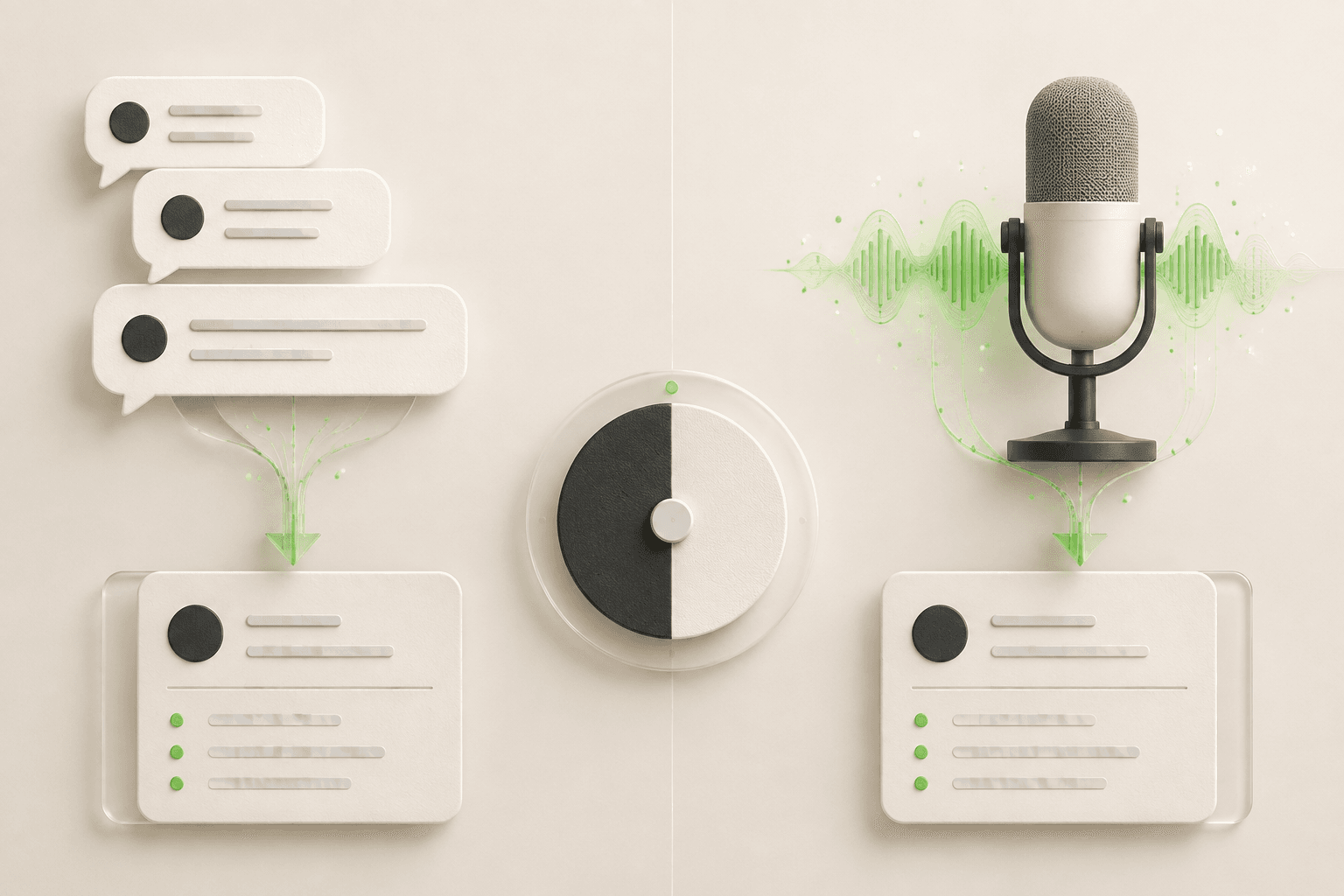
Chat vs Voice AI Receptionists: An Honest Comparison
Chat vs voice AI receptionists compared honestly: cost, setup, lead quality, and which fits phone-first vs message-first small businesses.
Small Business Answering Service Alternatives (2026)
8 small business answering service alternatives for 2026 compared on coverage, cost, and setup — from voice AI to chat-first AI receptionists.

How to Choose an AI Receptionist: A Buyer's Checklist
How to choose an AI receptionist: an 18-point buyer checklist covering channels, lead capture, pricing traps, data handling, and a 7-day trial plan.

AI Receptionist vs Answering Service: Which Fits?
Compare AI receptionist chatbots and traditional answering services on cost, channels, and speed to find the right fit for your small business.