AI Chatbot for Moving Companies: Win the Quote Race
A chatbot for moving companies qualifies quote requests instantly — origin, destination, home size, date — so you respond before rival estimates land.

TL;DR: Moving customers request quotes from 3–5 companies at once, and the mover who responds first with a real answer usually wins the booking. A chatbot for moving companies collects origin, destination, home size, move date, and stairs/elevator details the moment a lead lands — 24/7, including during the evening and weekend hours when most people actually plan a move. Leads contacted within 5 minutes convert dramatically better than leads contacted 30 minutes later (InsideSales.com). This guide covers the exact intake questions to automate, how to route local versus long-distance jobs, and how to handle deposit and insurance questions without tying up your office.
AI Chatbot for Moving Companies: Win the Quote Race
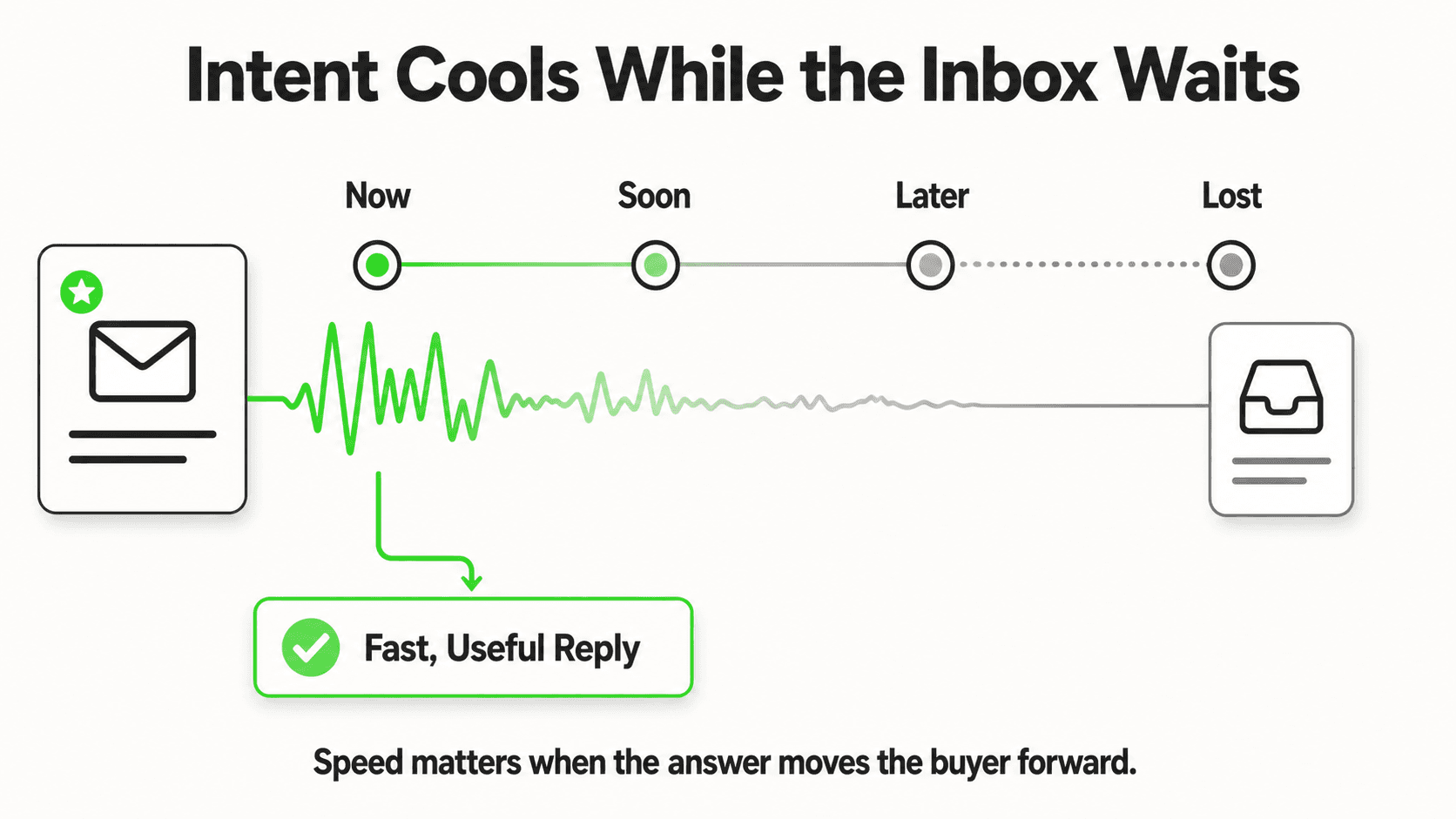
Every moving company is fighting the same battle: a customer fills out a quote form on your site, then fills out the same form on four competitor sites within the next ten minutes. Whoever calls back first with a real, specific answer — not just "thanks, we'll be in touch" — usually gets the job. Research from InsideSales.com found that leads contacted within 5 minutes are up to 100 times more likely to convert than leads contacted after 30 minutes. In moving, where the shopping window is measured in minutes, not days, that gap decides who wins the booking.
A chatbot for moving companies is an AI-powered intake tool that engages quote requests the instant they arrive, asks the structured questions your dispatcher would ask anyway, and hands your team a complete, bookable lead instead of a name and a phone number. It runs on your website, WhatsApp, Instagram, and Facebook Messenger — the channels people already use to shop for a mover — and it never goes to voicemail.
Who This Guide Is For
This guide is written for local and long-distance moving company owners and office managers who lose quote requests to faster-responding competitors. It covers what a moving chatbot should ask, how to route local vs. long-distance jobs, and how to handle the deposit and insurance questions that come up before a booking is confirmed.
What Is an AI Chatbot for Moving Companies?
An AI chatbot for moving companies is a document-grounded conversational assistant that qualifies quote requests in real time by asking the same structured questions your booking team asks — origin, destination, home size, move date, and access details — then delivers a complete lead record to your office instead of a partial form submission.
Unlike a generic web form that captures a name and email and stops there, a moving chatbot:
- Asks follow-up questions dynamically. If a customer says "3-bedroom house," the bot can ask about stairs, an elevator, or a long carry distance from the truck to the door — details that materially change your estimate.
- Distinguishes local from long-distance jobs automatically. A move across town and a move across three states have completely different pricing models, crew requirements, and lead times. The bot routes each to the right queue.
- Answers deposit, insurance, and process questions from your knowledge base. "How much is the deposit?" and "Are my items insured during the move?" are two of the most common pre-booking questions — and two of the most time-consuming for staff to answer by phone, over and over.
- Runs on every channel a customer might use. Website chat widget, WhatsApp Business, Instagram DM, and Facebook Messenger — with the same intake flow and knowledge base across all four.
This is fundamentally different from the rule-based "chat with us" widgets that ask one question and then dump the customer into a generic contact form. A moving chatbot built on document-grounded responses can explain your binding vs. non-binding estimate policy, your cancellation window, or what "long carry fee" means — pulled from your actual company policies, not a generic script.
Why Moving Companies Lose Quote Requests to Faster Rivals
Moving companies lose winnable jobs not because their pricing is uncompetitive, but because the response arrives too late to matter. Three structural patterns explain most of the lost business.
Comparison Shopping Is the Default, Not the Exception
Homeowners planning a move rarely request one quote. Industry pricing-comparison behavior for major purchases like moving services typically involves requesting multiple quotes before deciding — a pattern well documented across home service categories broadly, where customers routinely contact several providers before committing. A moving customer who submits five quote requests within the same hour will book with whichever company responds first with a specific, credible answer — not necessarily the lowest bidder. If your office doesn't call back until the next business day, you're not competing on price anymore. You've already lost.
Move Requests Arrive Outside Office Hours
People research and request moving quotes when they have free time to think about it — evenings after work, Sunday afternoons, the week after a lease is signed. Your booking office, meanwhile, keeps standard business hours. Every quote request that lands at 8 PM on a Tuesday sits untouched until 9 AM the next morning — by which point three competitors have already responded. Overall research on the value of instant response confirms that response time is one of the strongest predictors of conversion across service businesses, and moving is no exception.
Seasonal Peaks Overwhelm Small Offices
Moving demand is brutally seasonal. Month-end and month-start dates concentrate lease turnovers and closings into predictable spikes, and summer months (May through September) carry the heaviest volume of the year as families move around the school calendar. A two- or three-person booking office that can comfortably handle steady off-season volume gets buried during peak season — exactly when the most bookings, and the most revenue, are on the table. Quote requests that would have been answered promptly in February sit in a queue for hours in June.
Intake Calls Eat Staff Time That Should Go to Booking
Every quote call starts with the same five to seven questions: origin address, destination address, home size, move date, stairs or elevator access, and whether packing services are needed. A staff member spends 5–10 minutes gathering this information before they can even give a ballpark estimate — time that could be spent confirming bookings and coordinating crews instead of repeating intake questions on every incoming call.
7 Ways an AI Chatbot Wins the Quote Race for Moving Companies
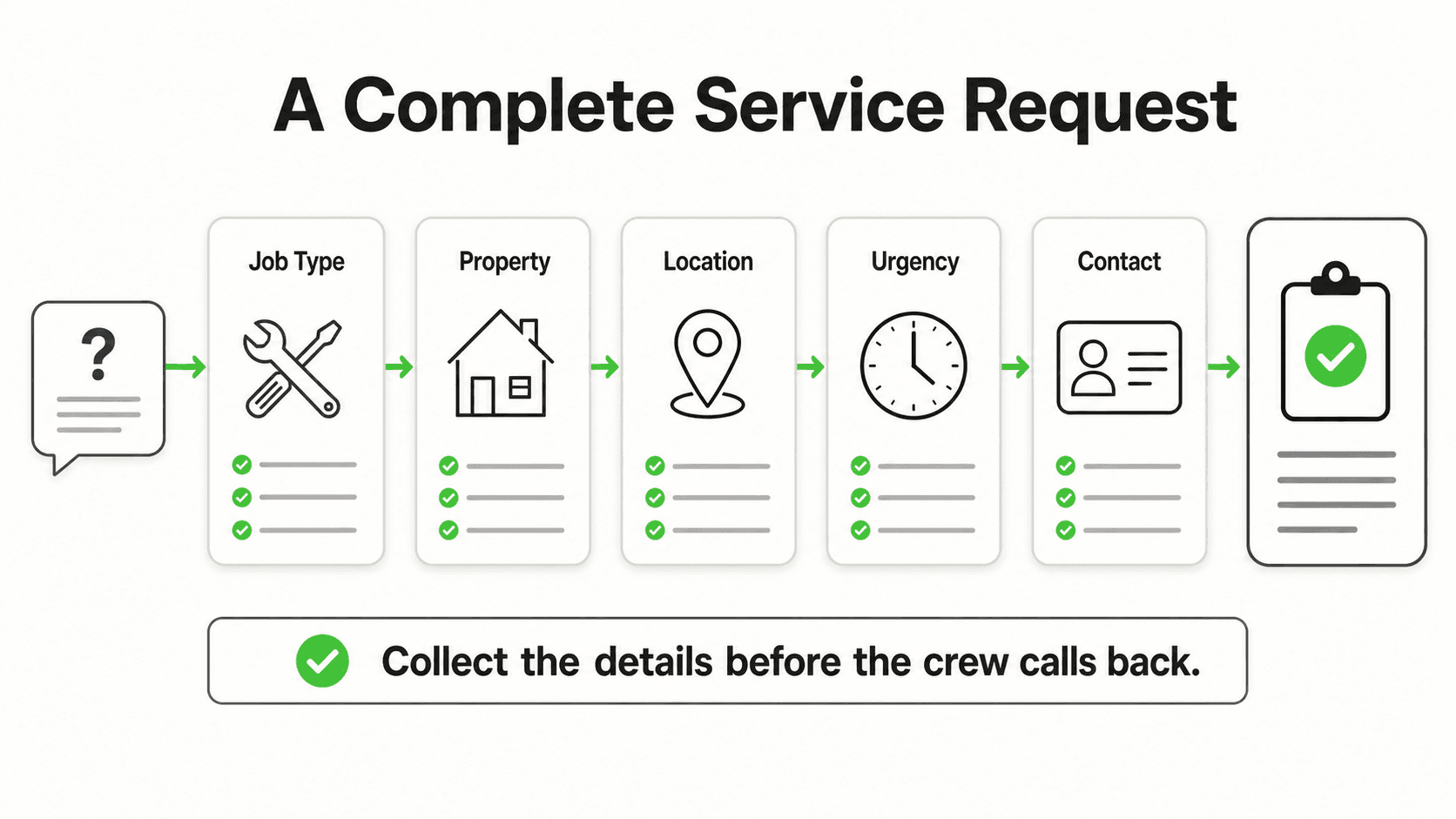
Here's what a well-configured chatbot actually does for a moving company, from the first message to the confirmed booking.
1. Captures Quote Requests the Instant They Arrive
What this looks like in practice: A customer visits your website at 9:45 PM after finally getting around to planning their move. Instead of a static contact form, the chatbot opens: "Hi! I can get you a moving quote in about 2 minutes — where are you moving from and to?" The conversation starts immediately, no waiting for office hours.
Real-world impact: Since leads contacted within 5 minutes convert dramatically better than leads reached even 30 minutes later (InsideSales.com), an instant automated response — even before a human follow-up — keeps your company in the running instead of out of it.
Why it works: The chatbot doesn't need to give a final quote to win the moment. It needs to acknowledge the inquiry, ask the right questions, and confirm someone will follow up with a real number soon. That alone beats silence.
2. Runs the Full Origin/Destination/Date Intake Flow
What this looks like in practice: The bot walks through a structured sequence: origin address and zip code, destination address and zip code, move date (and flexibility), home size (studio through 5+ bedroom), and whether the customer needs packing services. Each answer shapes the next question.
Real-world impact: Your team receives a complete lead record — not a name and a guess. No callback is needed just to figure out what the job even is.
Key fields to configure:
- Origin and destination (city/state minimum, full address ideal)
- Move date and date flexibility (fixed vs. "sometime in June")
- Home size or approximate item count/cubic footage
- Full-service packing vs. self-pack
3. Flags Stairs, Elevators, and Long-Carry Access Details
What this looks like in practice: After the customer confirms home size, the bot asks: "Are there stairs at either location, or is there elevator access? And roughly how far is the truck parking from the front door?" These details change crew size, truck positioning, and time estimates.
Real-world impact: Access details are one of the most common reasons an in-person estimate diverges from a phone quote. Capturing them upfront reduces surprise costs on move day and gives your estimator a far more accurate starting point.
Why it works: This is exactly the kind of structured, multiple-choice-friendly question a chatbot handles well — a human intake caller often forgets to ask it, especially during a busy call.
4. Routes Local vs. Long-Distance Jobs Automatically
What this looks like in practice: Based on the origin and destination zip codes or states, the bot automatically classifies the request as local (typically same metro area, hourly pricing) or long-distance (interstate, weight- or distance-based pricing) and routes it to the correct queue or team.
Real-world impact: Local and long-distance moves usually have entirely different pricing models, crew scheduling, and sometimes different regulatory requirements. Getting a long-distance lead into your local dispatch queue by mistake wastes time on both sides.
Why it works: This routing logic is simple for a chatbot to apply consistently, every time, without a staff member having to manually sort incoming requests during a busy morning.
5. Answers Deposit and Insurance Questions From Your Knowledge Base
What this looks like in practice: A customer asks, "How much is the deposit, and is my furniture insured during transport?" The chatbot answers directly from your company's actual policy documents — deposit amount or percentage, cancellation window, and what your standard valuation coverage includes versus optional full-value protection.
Real-world impact: These questions come up on nearly every booking conversation. Answering them instantly, correctly, and consistently — instead of "let me check and call you back" — removes a common point of hesitation before a customer commits.
Keep Policy Language Precise
Load your actual deposit policy, cancellation terms, and valuation/insurance coverage details into the chatbot's knowledge base verbatim. Document-grounded responses answer from what you've actually written — accurate source documents produce accurate answers.
6. Handles Repetitive FAQ Volume Without Tying Up Staff
What this looks like in practice: "Do you move pianos?" "Can you disassemble and reassemble furniture?" "Do you offer storage if my new place isn't ready?" "What's your cancellation policy?" Train the chatbot on these answers once, and it handles the volume 24/7 without a staff member repeating the same explanation on every call.
Real-world impact: Freeing staff from repetitive FAQ handling gives your office time to focus on confirming bookings, coordinating crews, and handling the complex or high-value moves that need a human's judgment.
7. Delivers a Complete Lead Record for Fast Human Follow-Up
What this looks like in practice: Once the intake flow is complete, the chatbot sends your team a structured summary — origin, destination, date, home size, access notes, and contact details — through your notification channel of choice, so a staff member can call back with a real quote instead of starting the conversation from zero.
Real-world impact: Your estimator's callback becomes a confirmation call, not an interrogation. That shorter, more confident follow-up call is itself part of why the fastest-responding company tends to win the booking.
See How a Moving Chatbot Handles Quote Intake
Watch an AI Agent qualify origin, destination, home size, and move date in real time — the same intake your booking team already does, running 24/7.
Start Free TrialReal Results: What Moving Companies Are Achieving
Moving companies that deploy structured chatbot intake report gains across three areas: response speed, staff time, and booking conversion.
Faster response, more competitive quotes:
- Instant acknowledgment on every channel — website, WhatsApp, Instagram DM, Facebook Messenger
- No quote request sits unanswered overnight or over a weekend
- Structured intake means the first human follow-up call is a confirmation, not a discovery call
Staff time returned to booking and coordination:
- Repetitive intake questions (origin, destination, date, size, access) handled automatically
- Deposit and insurance FAQs answered instantly and consistently, every time
- Local vs. long-distance routing removes manual sorting during peak season
Booking conversion:
- Customers who get an immediate, specific response are less likely to book with a competitor who answered first
- Complete lead records reduce the friction of the follow-up call, which shortens the path from quote request to signed booking
These figures reflect the general speed-to-lead research cited throughout this guide (InsideSales.com) and Hyperleap's shipped channel capabilities — not a guaranteed outcome for every moving company, which will vary by market, season, and existing follow-up process.
Implementation Roadmap for Moving Companies
Getting a chatbot live for your moving company follows a predictable sequence. Most self-serve setups go live within 3–5 days.
Step 1 — Write your intake question set. Decide the exact fields you need before booking: origin, destination, move date, home size, stairs/elevator, packing needs. Keep the flow to 6–7 questions maximum — every additional question past that reduces completion rates.
Step 2 — Build your knowledge base document. Write a clear, current FAQ covering deposit amount and terms, cancellation policy, insurance/valuation coverage, service area (local radius or states served for long-distance), and any add-on services (packing, storage, specialty items). This document is what the chatbot answers from — accuracy here matters more than anything else in setup.
Step 3 — Configure local vs. long-distance routing. Define the rule (by state, by mileage, or by zip code range) that separates local jobs from long-distance jobs, and set where each type of lead should be sent.
Step 4 — Deploy on your website first, then add WhatsApp. Start with your website chat widget, since that's where most quote requests originate. If customers already text or WhatsApp your office, connect that channel next so the same intake flow runs there too.
Step 5 — Set your seasonal capacity expectations. Before your peak season (typically May through September, plus every month-end), confirm your team's process for handling a higher volume of qualified leads coming through the chatbot, so bookings don't stall at the human handoff step even when intake itself is automated.
See the step-by-step guide to building a chatbot without code for the full walkthrough of knowledge base setup and channel configuration, and how lead routing rules work if you're sending local and long-distance leads to different teams or inboxes.
Data Sources
- InsideSales.com speed-to-lead research on response time and conversion likelihood
- Hyperleap AI shipped channel and product capabilities (Website, WhatsApp Business API, Instagram DM, Facebook Messenger)
Never Let a Quote Request Go Cold Again
Deploy a chatbot that qualifies moving leads — origin, destination, date, and access details — the moment they arrive, on every channel your customers already use.
Start Free TrialFrequently Asked Questions
Will a chatbot replace my booking office staff?
No. The chatbot handles quote intake — collecting origin, destination, move date, home size, and access details — and routes complete lead records to your team. Your staff still confirms pricing, schedules crews, and handles the judgment calls a structured intake flow can't make. Think of it as a 24/7 intake specialist, not a replacement for your booking team.
How does the chatbot know if a move is local or long-distance?
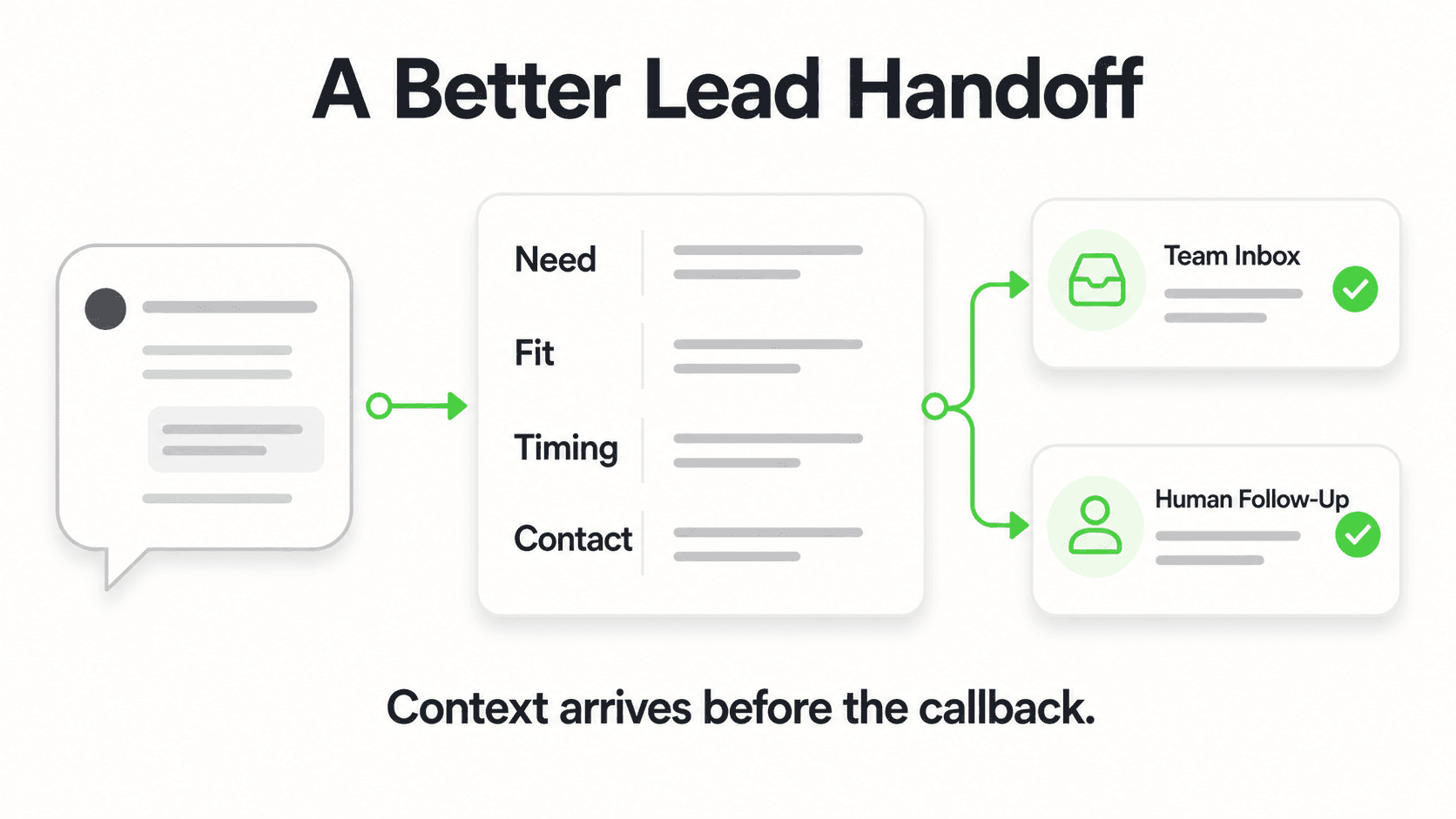
You configure a routing rule based on origin and destination — typically by state, mileage radius, or zip code range. Once a customer provides their origin and destination during the intake conversation, the chatbot automatically classifies the lead and routes it to the local or long-distance queue you've set up, so the right team follows up with the right pricing model.
Can the chatbot give an exact moving quote?
The chatbot can share estimate ranges or pricing structure based on the information you provide in its knowledge base (for example, "local moves are typically priced hourly based on crew size; long-distance moves are priced by weight and distance"). Final binding or non-binding quotes should still come from your team after reviewing the full intake details, since exact pricing depends on factors like specific item counts and access conditions that benefit from human confirmation.
How does it handle deposit and insurance questions?
Load your actual deposit terms, cancellation policy, and valuation/insurance coverage details into the chatbot's knowledge base. The chatbot answers these document-grounded — pulling directly from your written policies rather than guessing — so customers get consistent, accurate answers before they ever reach your booking team.
What happens during peak moving season when volume spikes?
The chatbot handles quote intake at the same speed whether it's receiving 5 inquiries a day or 50, since it isn't limited by staff headcount. This is particularly valuable during month-end dates and the May–September peak season, when inbound quote request volume typically outpaces what a small office can respond to promptly without automation.
How much does an AI chatbot for a moving company cost?
Plans start at $40/month (Plus plan) with a 7-day free trial; a credit card is required to start. See pricing details for plan comparisons based on chatbot count, response volume, and channel limits. For most moving companies, winning even one additional booking per month from faster response covers the subscription cost many times over.
Can it connect to my existing CRM or booking software?
Hyperleap AI connects via REST API and webhooks, which lets you route qualified leads into most CRM or dispatch tools your team already uses. For simpler setups, leads can also be delivered directly to your team inbox or exported as CSV — no integration required to get started.
Does the chatbot work on WhatsApp if customers message us there instead of the website?
Yes. Hyperleap AI Agents run on your website chat widget, WhatsApp Business API, Instagram DM, and Facebook Messenger with the same intake flow and knowledge base across all four — so a customer who messages you on WhatsApp gets the same structured quote intake as one filling out your website form.
Win Every Move Before the Truck Leaves the Lot
Moving is a business where the estimate almost never determines the winner — the response time does. A homeowner comparing five quotes doesn't wait for the best number; they book with whoever answers first with a real, specific answer. Right now, every quote request that lands after hours or during a Sunday-afternoon research session is a coin flip your competitor is more likely to win.
An AI chatbot for moving companies changes that math. It captures the quote request the moment it arrives, asks the exact intake questions your office would ask anyway, routes local and long-distance jobs to the right team, and answers the deposit and insurance questions that come up before every booking — all without adding headcount. Your team still closes the deal. The chatbot just makes sure you're in the room to close it.
If your moving company is losing quote requests to faster-responding rivals, start with the fundamentals covered in why home service businesses lose jobs to slow response and how a lead qualification chatbot should be structured, then deploy your own 7-day trial and make sure the next quote request gets an answer in minutes, not the next business day.
Industry Solutions
See how AI chatbots work for these industries:
Put this into practice
Related Articles
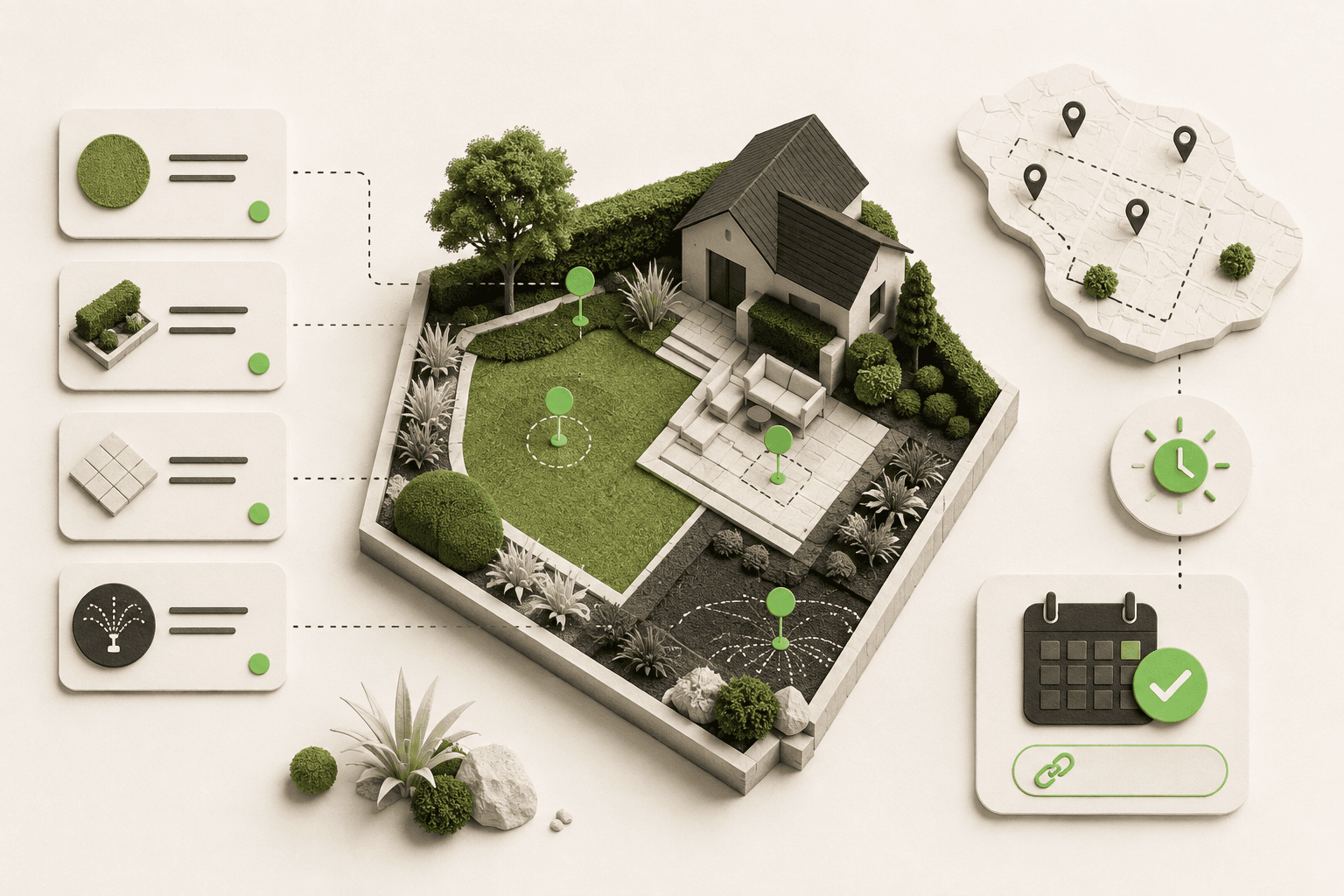
AI Receptionist for Landscaping Businesses
An AI receptionist for landscaping businesses answers quote and service questions 24/7, qualifies property details, and shares your booking link.
AI Receptionist for Roofing Companies: Never Miss a Lead
An AI receptionist for roofing companies answers storm-damage and estimate questions 24/7, qualifies homeowners, and routes leads to your team.

AI Chatbot for Electricians: Stop Losing Panel Jobs
A chatbot for electricians captures burning-smell emergencies and EV charger quote requests 24/7, routing urgent calls fast and qualifying leads.

AI Chatbot for Pest Control: Stop Losing Jobs to Silence
A pest control chatbot answers roach, rodent, and termite inquiries 24/7, books same-day service, and handles the calls your team can't pick up.