AI Chatbot for Pest Control: Stop Losing Jobs to Silence
A pest control chatbot answers roach, rodent, and termite inquiries 24/7, books same-day service, and handles the calls your team can't pick up.

TL;DR: A homeowner who just spotted a roach in the kitchen or heard something scratching in the attic wants two things fast — a private way to describe what they're dealing with, and a same-day appointment. A pest control chatbot answers on your website and WhatsApp 24/7, asks the right triage questions, and books the visit before the customer calls the next company on Google. This guide covers the discretion factor unique to pest control, seasonal demand spikes, recurring-treatment questions, and how to set one up without hiring a night shift.
AI Chatbot for Pest Control Companies: Stop Losing Jobs to Silence
Nobody wants to talk about their bedbug problem on the phone. A homeowner who just found evidence of roaches in the pantry, mice in the garage, or bedbugs in the guest room isn't in the mood for a phone tree, hold music, or a conversation a roommate might overhead through a thin apartment wall. They want to type it out, get a fast answer, and get someone scheduled — quietly. If your business can't offer that right now, they'll find a competitor who can, usually within minutes.
That's the core problem a pest control chatbot solves. It's a purpose-built chat assistant, live on your website and WhatsApp number, that answers pest questions, triages urgency, and books appointments around the clock — without requiring a customer to pick up the phone or wait for office hours. This guide walks through why pest control leads behave differently from other home-service categories, the seven jobs a chatbot should be doing for your business, and how to get one running in days, not months.
Who This Guide Is For
This guide is for pest control business owners and operators — from solo technicians to multi-truck regional companies — who want to capture more after-hours and weekend leads without adding headcount to answer phones. Setup typically takes 3–5 days and doesn't require a developer.
What Is a Pest Control Chatbot?
A pest control chatbot is an AI-powered chat assistant trained on your service area, treatment offerings, and pricing structure that engages website visitors and WhatsApp contacts in real time to answer questions, qualify leads, and book appointments. It runs on your existing chat widget and messaging channels, so a customer never has to leave the platform they're already using to get a scheduled visit.
Unlike a generic contact form that sits in an inbox until someone checks it, a chatbot responds the moment a customer types. It can:
- Answer common pest-identification questions from your knowledge base ("What does a bedbug bite look like?" "Are carpenter ants a sign of termites?") — routing customers toward the right service, not diagnosing an infestation
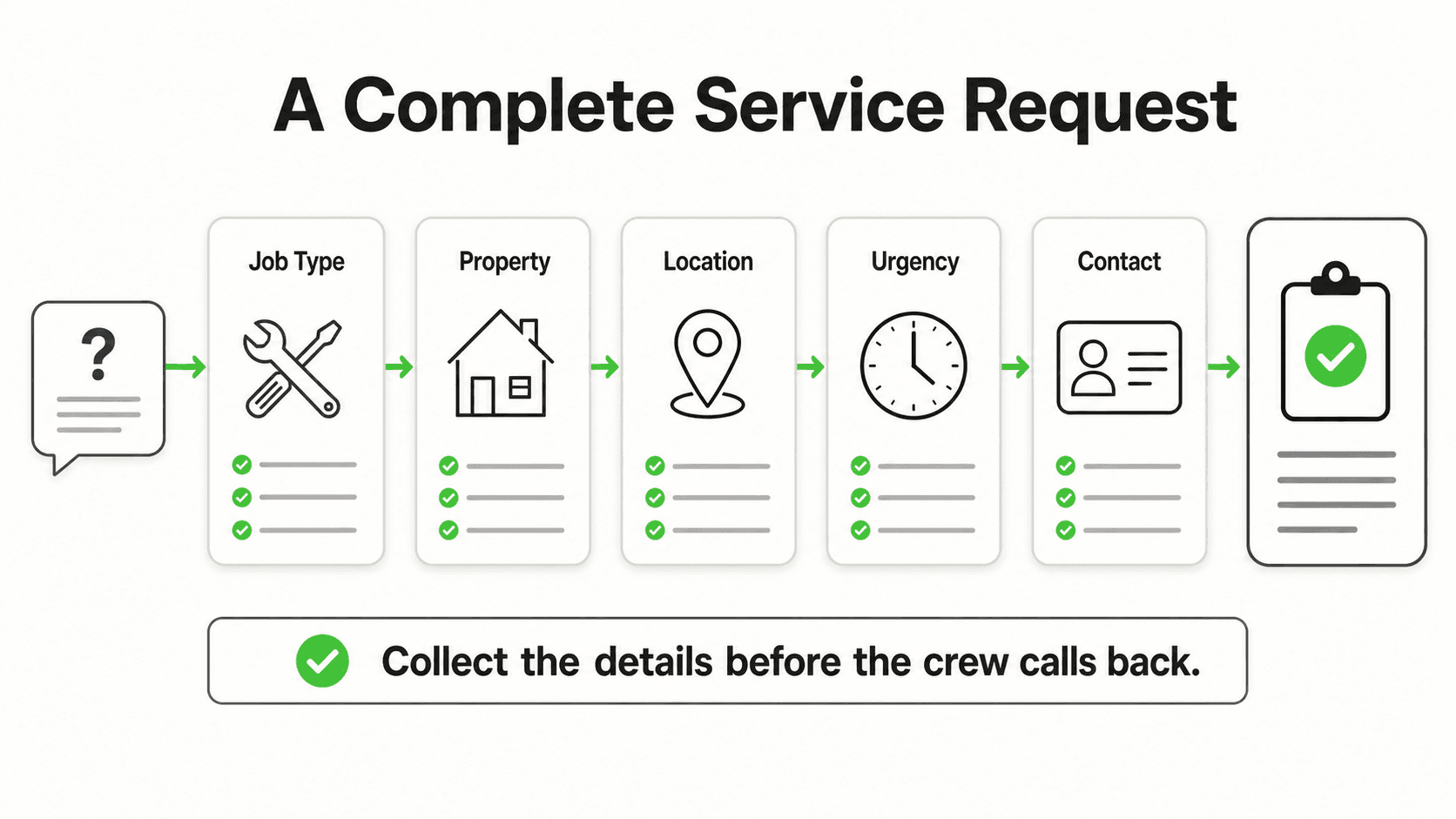
- Ask targeted triage questions (property type, pest observed, severity, location in the home) to build a complete lead record before your team calls back
- Confirm service-area coverage before a technician's time is spent on a call
- Offer available appointment windows and share your booking link for same-day or next-day service
- Explain the difference between a one-time treatment and a recurring quarterly plan
- Hand off complex or urgent cases (suspected termite structural damage, commercial accounts) to a human team member
This differs from the pest control chatbots of a decade ago, which were rigid decision trees ("Press 1 for ants, Press 2 for roaches"). A modern AI chatbot, grounded in your company's actual service documentation, understands natural language — a customer can type "there's something chewing through my baseboards" and the bot routes that toward rodent service without requiring exact keyword matches.
Why Pest Control Companies Lose Jobs They Never See
The most expensive lost lead in pest control is the one that never shows up in your CRM — the person who visited your site at 9 PM, found no way to get an immediate answer, and quietly closed the tab.
The Embarrassment Factor Nobody Talks About
Pest problems carry a stigma that most other home-service categories don't. A leaking faucet is an inconvenience; a roach infestation feels like a judgment on the household. Many customers actively prefer typing out "I have bedbugs in the guest bedroom" to a chat window over saying it out loud to a stranger on the phone, especially if family members or coworkers are within earshot. A chatbot gives customers the discreet, low-friction channel they're already looking for — qualitatively, this preference for text over voice on sensitive topics tracks with the broader shift toward messaging-first customer service that home-service and healthcare businesses have both observed in recent years. When your only intake option is a phone call, you're filtering out exactly the customers who need service most urgently but are least willing to make that call.
Same-Day Demand Is the Default Expectation, Not the Exception
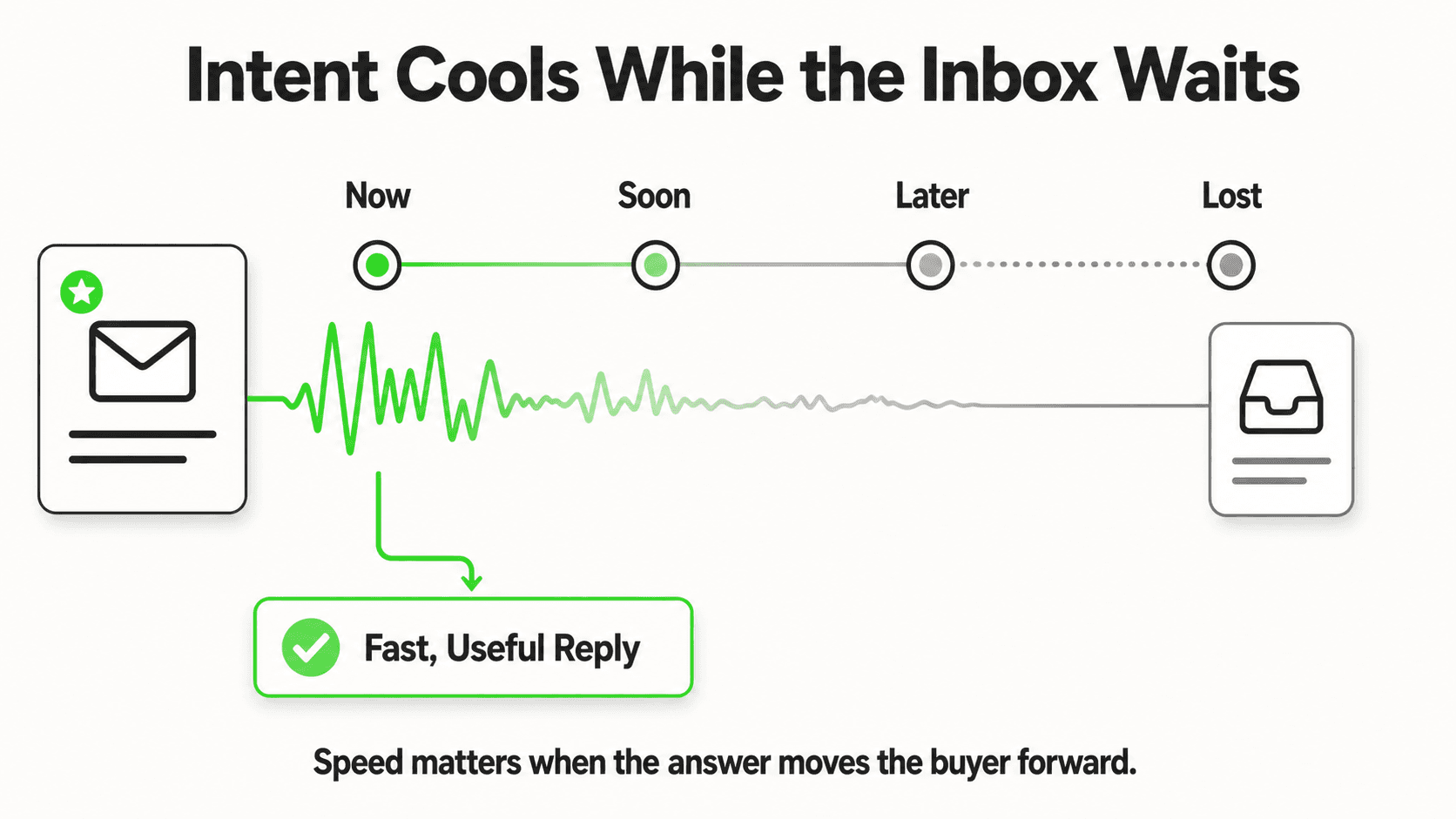
Pest sightings create urgency that doesn't wait for a callback. Someone who sees a rat in the kitchen at 7 AM wants a technician that day — not "someone from our office will call you within 24–48 hours." According to InsideSales.com research, leads contacted within five minutes convert at dramatically higher rates than leads reached even 30 minutes later. This pattern holds across home service categories broadly — plumbers, HVAC companies, and pest control all compete on the same speed-to-lead math. In a same-day-demand category like pest control, a delayed response doesn't just lower your odds — it often eliminates them entirely, because the customer has already called the next company on the search results page.
Seasonal Swarms Overwhelm Small Teams at the Worst Time
Pest control has some of the sharpest seasonal demand curves in home services:
- Spring termite swarm season floods phone lines with panicked calls the moment homeowners spot winged insects near windowsills
- Summer brings the ant and mosquito surge, plus wasp nests discovered on decks and near entryways
- Fall shifts demand toward rodents seeking warmth indoors — mice and rats moving into attics, garages, and wall voids
Each of these surges compresses weeks of demand into days. A two- or three-person office that handles routine call volume comfortably gets buried the moment a swarm event hits, and every unanswered call during that window is a customer who finds a competitor instead.
Recurring-Treatment Questions Eat Staff Time
Pest control is unusual among home services in that a large share of revenue comes from recurring quarterly or monthly plans, not one-time jobs. That means your team fields a constant stream of plan-related questions — "When is my next treatment?" "Can I skip a cycle?" "Does the quarterly plan cover wasps too?" — that have nothing to do with new-customer acquisition but still consume phone and email time your staff could spend on service calls or new bookings.
Residential vs. Commercial Screening Gets Skipped Under Pressure
A residential homeowner with an ant problem and a restaurant with a health-code-driven rodent issue need entirely different response times, documentation, and pricing. When staff are slammed, that screening step often gets skipped or rushed, leading to mismatched expectations and, in commercial cases, compliance risk if urgency isn't correctly triaged.
The Math on a Missed Swarm-Season Call
If your company typically gets 15 calls a day during peak termite season and misses even 20% of them because your two-person office is overwhelmed, that's 3 missed leads daily. At a conservative $350 average job value, that's over $1,000 a day in jobs going to competitors during the exact weeks your marketing spend is working hardest.
7 Ways a Chatbot Pays for Itself in Pest Control
1. Captures After-Hours and Weekend Sightings
What this looks like in practice: A customer spots mice droppings in the pantry at 10 PM on a Sunday. Your chatbot responds instantly on your website or WhatsApp, confirms the pest type and location, checks your service area, and either books a next-available appointment or flags the lead for first-thing-Monday follow-up with full context already captured.
Real-world impact: Pest sightings, like most home-service emergencies, cluster in the evenings and weekends — exactly when small teams have the least phone coverage. A chatbot means every one of those inquiries gets an immediate, professional response instead of a voicemail.
Why it works: The customer isn't waiting anxiously wondering if anyone got their message. They have confirmation and, ideally, a scheduled visit before they've even considered calling around. The same pattern shows up across home service businesses that capture emergency calls around the clock — availability, not price, is usually the deciding factor.
2. Gives Customers a Discreet, Low-Pressure Way to Describe the Problem
What this looks like in practice: Instead of forcing an embarrassed customer to describe a bedbug problem out loud, the chatbot lets them type it privately, at their own pace, with follow-up questions that feel like a form, not an interrogation.
Real-world impact: Lowering the friction on the most stigmatized part of your funnel — the initial disclosure — means more of those customers actually complete an inquiry instead of abandoning it.
Why it works: Text-based intake respects privacy in a way phone calls structurally can't, particularly for customers who aren't alone in the house when they're reaching out.
3. Answers Pest-Identification Questions from Your Knowledge Base
What this looks like in practice: A customer types "is this a flying ant or a termite?" Your chatbot, trained on your company's documentation and service descriptions, offers general identification guidance and routes the customer toward the appropriate service — always framed as routing toward professional inspection, never as a definitive diagnosis.
Real-world impact: Customers get useful, immediate information instead of bouncing to a generic search result (possibly landing on a competitor's site), while your team avoids fielding the same identification questions dozens of times a week.
Why it works: Grounding answers in your own service documentation keeps responses relevant to what you actually offer, and consistently steers the conversation toward booking an inspection rather than self-diagnosis or DIY treatment.
Routing, Not Diagnosing
A pest control chatbot should always route customers toward a professional inspection for confirmed identification and treatment planning — never present itself as making a definitive pest diagnosis or replacing a licensed technician's assessment.
4. Pre-Qualifies Leads Before Your Dispatcher Picks Up the Phone
What this looks like in practice: Before a human ever gets involved, the chatbot has already collected: pest type observed, property type (residential or commercial), approximate infestation location, how long it's been noticed, and the customer's address and contact details.
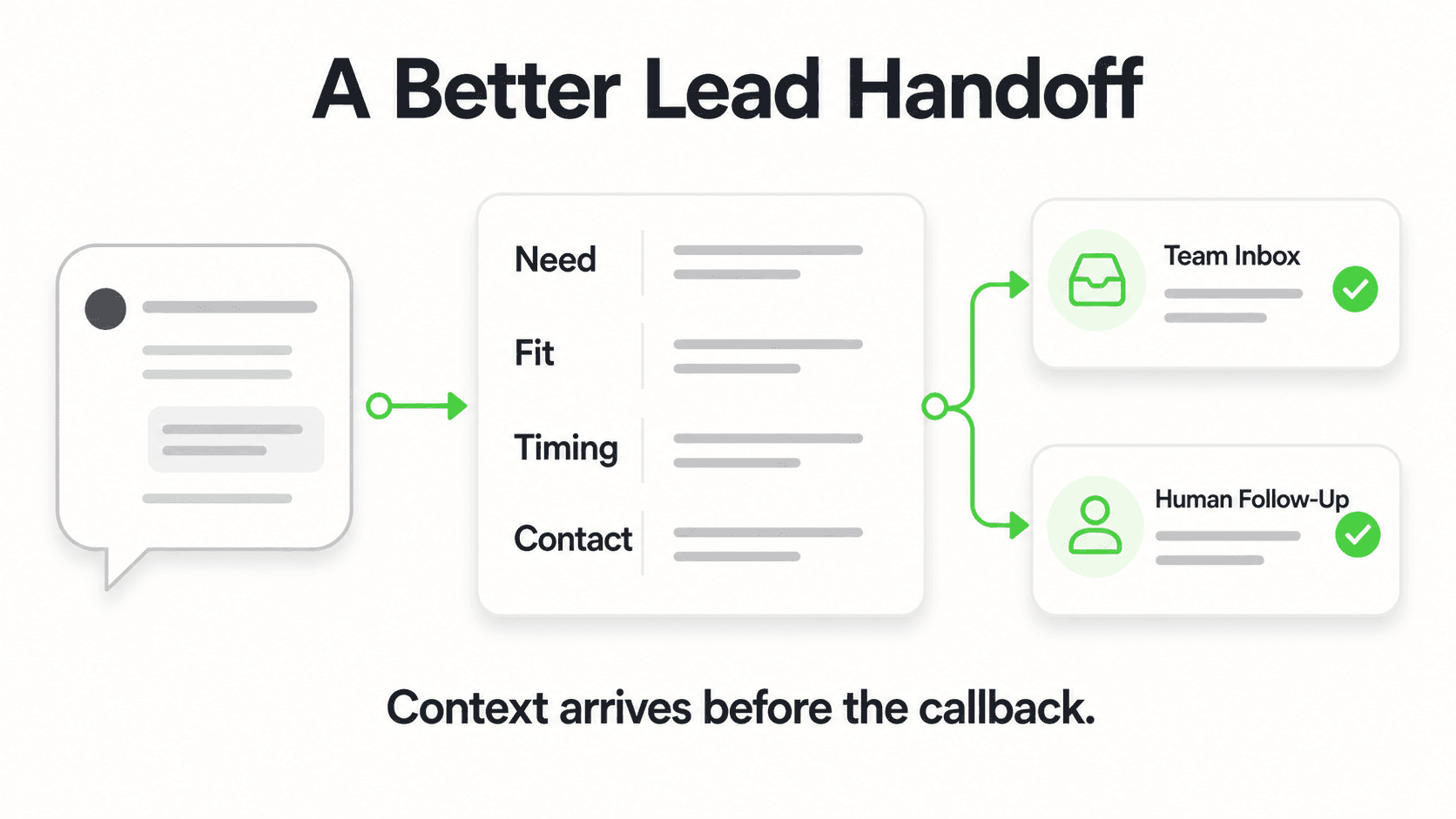
Real-world impact: Your team's confirmation call becomes a 2-minute scheduling conversation instead of a 5–8 minute intake call, because the qualifying questions are already answered.
Why it works: Every minute your office staff isn't spending on repetitive intake is a minute they can spend on service calls, follow-ups, or closing bigger commercial accounts.
5. Screens Residential vs. Commercial Automatically
What this looks like in practice: The chatbot asks early whether the inquiry is for a home or a business. Commercial leads — restaurants, warehouses, multi-family properties — get routed differently, often with faster follow-up given the compliance stakes involved for food-service and hospitality clients.
Real-world impact: Your team sees commercial leads flagged distinctly from residential ones, so a restaurant with a rodent sighting doesn't sit in the same queue as a routine quarterly ant treatment renewal.
Why it works: Commercial pest issues often carry health-code and inspection deadlines that residential issues don't — getting that lead in front of the right person fast matters more than for a routine home visit.
6. Handles Recurring-Treatment Plan Questions Without Staff Time
What this looks like in practice: A customer on a quarterly plan asks the chatbot when their next visit is scheduled, whether they can add wasp coverage, or how to pause service while traveling. The chatbot answers directly from your plan documentation or shares your booking link to reschedule.
Real-world impact: Recurring-plan questions are high in volume but low in complexity — exactly the kind of repetitive inquiry that eats staff time without generating new revenue. Automating them frees your office for new-customer acquisition.
Why it works: Existing customers get faster answers (improving retention) while your team's time gets redirected toward growth activities instead of account administration.
7. Smooths Seasonal Swarm-Season Surges
What this looks like in practice: During peak termite swarm season or the first hot week of ant season, inbound volume can triple. The chatbot absorbs that spike without requiring you to hire and train seasonal staff who'll be idle again in six weeks.
Real-world impact: Every inquiry during your highest-demand, highest-margin weeks gets an immediate response, instead of the overflow going straight to a competitor who happened to have capacity.
Why it works: Chat capacity doesn't have a shift schedule. It handles the 50th conversation of a swarm-season Tuesday exactly as fast as the first. Other home service businesses — HVAC companies bracing for the first heat wave, plumbers during freeze-thaw season — face the same surge pattern, and the same fix applies.
See how a pest control chatbot handles a midnight rodent sighting
Watch an AI agent triage a pest inquiry, screen for service area, and book a same-day visit — all before your office opens.
See It In ActionReal Results: What Pest Control Companies Are Achieving
Home-service businesses that close the response-time gap consistently report the same categories of improvement, whether the driver is a chatbot, an AI receptionist, or a restructured intake process.
Lead Capture
- More after-hours and weekend inquiries convert into booked appointments instead of going unanswered
- Fewer inquiries abandoned mid-form because a customer felt rushed or exposed describing a sensitive pest problem
- Swarm-season and surge-period leads get captured at the same rate as a normal Tuesday
Staff Efficiency
- Office staff spend less time on repetitive identification and plan-status questions
- Confirmation calls replace full intake calls, shortening the average booking cycle
- Commercial and residential leads arrive pre-sorted instead of requiring manual triage
Customer Experience
- Customers get an instant acknowledgment instead of silence, reducing the anxiety that drives them to call competitors
- Discreet, text-based intake respects privacy on a topic many customers find embarrassing to discuss aloud
- Recurring customers get faster self-service answers about their treatment schedule
The Underlying Economics
Industry research from InsideSales.com found that leads contacted within five minutes convert at dramatically higher rates than those reached even 30 minutes later. Home service businesses miss an average of 27% of inbound calls, according to Invoca — and pest control's after-hours, embarrassment-sensitive demand pattern makes that miss rate especially costly. Results vary by market, service mix, and existing response process; treat these as directional benchmarks, not guarantees.
Implementation Roadmap for Pest Control Companies
Getting a chatbot live doesn't require a developer or a months-long rollout. Here's a realistic phase-by-phase plan.
Phase 1: Foundation (Days 1–2)
- Upload your service documentation: treatment types, service-area zip codes, pricing tiers, and plan structures into the chatbot's knowledge base
- Define your core triage questions (pest type, property type, urgency, location)
- Set up your website chat widget and connect your WhatsApp Business number
Phase 2: Routing and Escalation (Days 2–3)
- Configure escalation rules for commercial accounts, suspected termite structural damage, or any case requiring immediate human review
- Set up automated team notifications so a new lead reaches your dispatcher or on-call staff in real time
- Connect your booking link so the chatbot can offer available appointment windows directly in the conversation
Phase 3: Testing and Refinement (Days 3–5)
- Run test conversations covering your most common scenarios: a residential roach sighting, a commercial rodent complaint, a recurring-plan question, and a termite swarm inquiry
- Review the first week of real conversations and refine your knowledge base based on questions the chatbot couldn't fully answer
- Confirm the lead-capture form fields match what your dispatcher actually needs to schedule a visit
Common Mistake
Don't skip defining clear escalation triggers before launch. A customer describing what sounds like a serious termite infestation or a commercial health-code issue should be flagged for immediate human attention, not left in a standard queue waiting for the next available slot.
Must-Have Features Checklist
- 24/7 availability on website and WhatsApp
- Document-grounded answers trained on your actual services and pricing
- Residential vs. commercial screening
- Lead capture with contact details collected via a form before the chat conversation continues
- In-chat booking (Calendly or Cal.com) or booking-link sharing for same-day and next-day scheduling
- Automated team notifications for new leads
- Escalation path for urgent or complex cases
If you're evaluating options beyond pest control, the same speed-to-lead and 24/7 coverage logic applies to plumbing businesses and HVAC companies fielding after-hours emergency calls, and to any home service business that runs on inbound inquiries.
Data Sources
- InsideSales.com, lead response time and conversion research
- Invoca, home service business call-handling data (cited via Why Home Service Businesses Lose Jobs to Faster Rivals)
- Hyperleap AI Jungle Lodges case study (2024), first-party deployment data
Frequently Asked Questions
Will an AI chatbot replace my office staff?
No. A pest control chatbot handles the repetitive, high-volume work — after-hours triage, identification questions, plan-status inquiries — so your office staff can focus on scheduling, closing commercial accounts, and building customer relationships. Think of it as extending your team's coverage to 24/7, not replacing the people on it.
Can the chatbot actually identify what pest a customer has?
The chatbot can offer general identification guidance based on a customer's description and your company's service documentation, but it should always route toward a professional inspection for confirmed identification and treatment planning. It's a triage and routing tool, not a substitute for a licensed technician's on-site assessment.
How does the chatbot handle emergency situations, like a suspected termite infestation?
You configure escalation rules during setup. When a customer describes symptoms consistent with an urgent case — visible termite swarms, structural damage signs, or a commercial food-service account — the chatbot flags the conversation for immediate human review and notifies your team, rather than routing it into a standard next-available queue.
Does it work for both residential and commercial pest control?
Yes. The chatbot can be configured to ask early whether an inquiry is residential or commercial and route each differently, since commercial accounts often carry compliance deadlines and different urgency profiles than routine home visits.
What channels does the chatbot support?
Hyperleap AI's pest control chatbot deploys on your website chat widget, WhatsApp Business, Instagram DM, and Facebook Messenger. Voice and SMS support are on the product roadmap but not yet available.
How long does setup take, and do I need technical skills?
Most pest control companies are live within 3–5 days. If you can write out your service descriptions, pricing, and service area the way you'd explain them to a new hire, you have what you need to configure the chatbot — no coding or developer required.
How much does a pest control chatbot cost?
Hyperleap AI's plans start at $40/month (Plus), with Pro at $100/month and Max at $200/month, each with a 7-day free trial (credit card required to start). Pricing scales with response volume and the number of chatbots and channels you need — most single-location pest control companies start on the Plus or Pro plan.
Can the chatbot connect to my existing CRM or scheduling software?
Yes, via REST API and webhooks — new leads, messages, and conversation events can be pushed into your CRM or scheduling system as they happen. Connect Calendly or Cal.com and the chatbot also offers your real open slots and books the visit right in the conversation (Calendly needs the Standard plan or higher for in-chat booking); with any other scheduling tool, it shares your booking link.
Silence Is the Most Expensive Response
Every pest control company loses jobs it never finds out about — the customer who found no way to get an immediate answer at 9 PM and just moved on to the next search result. Closing that gap doesn't require hiring a night shift or forcing your office staff to be reachable around the clock. It requires giving customers a channel that's already open when they need it: fast, discreet, and available whether it's a routine ant treatment renewal or a termite swarm at 11 PM on a Saturday.
An AI chatbot for pest control services closes that gap without adding headcount. It captures the after-hours sighting, triages the emergency, screens residential from commercial, and books the visit — so the only jobs you lose are the ones you decide to turn down.
Ready to stop losing pest control jobs to silence?
See how Hyperleap AI captures, triages, and books pest control leads around the clock — with no missed calls and no night shift required.
Get Started FreeIndustry Solutions
See how AI chatbots work for these industries:
Related Articles
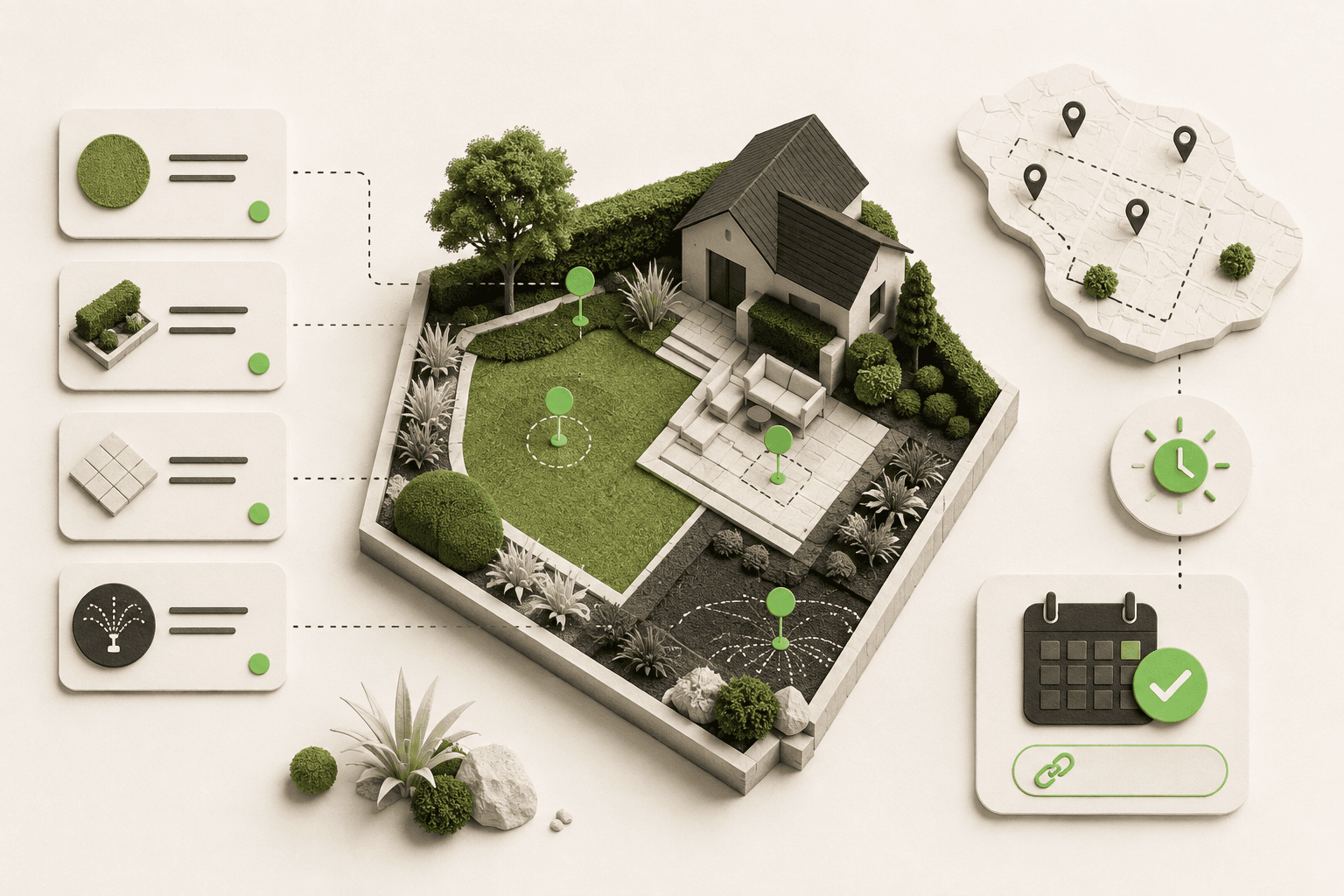
AI Receptionist for Landscaping Businesses
An AI receptionist for landscaping businesses answers quote and service questions 24/7, qualifies property details, and shares your booking link.
AI Receptionist for Roofing Companies: Never Miss a Lead
An AI receptionist for roofing companies answers storm-damage and estimate questions 24/7, qualifies homeowners, and routes leads to your team.

AI Chatbot for Moving Companies: Win the Quote Race
A chatbot for moving companies qualifies quote requests instantly — origin, destination, home size, date — so you respond before rival estimates land.

AI Chatbot for Electricians: Stop Losing Panel Jobs
A chatbot for electricians captures burning-smell emergencies and EV charger quote requests 24/7, routing urgent calls fast and qualifying leads.