AI Chatbot for HVAC Companies: Capture Service Calls 24/7
How AI chatbots capture HVAC leads after hours, qualify emergency jobs, and book service calls before competitors respond.
TL;DR: When a homeowner's AC fails at 9 PM in July, they don't leave one voicemail and wait until morning. They search Google, find three HVAC companies, and book with whoever responds first. An AI chatbot for HVAC companies captures those calls 24/7, qualifies the job type, and schedules service visits — while your technicians are already on other jobs or off the clock.
AI Chatbot for HVAC Companies: Capture Service Calls 24/7
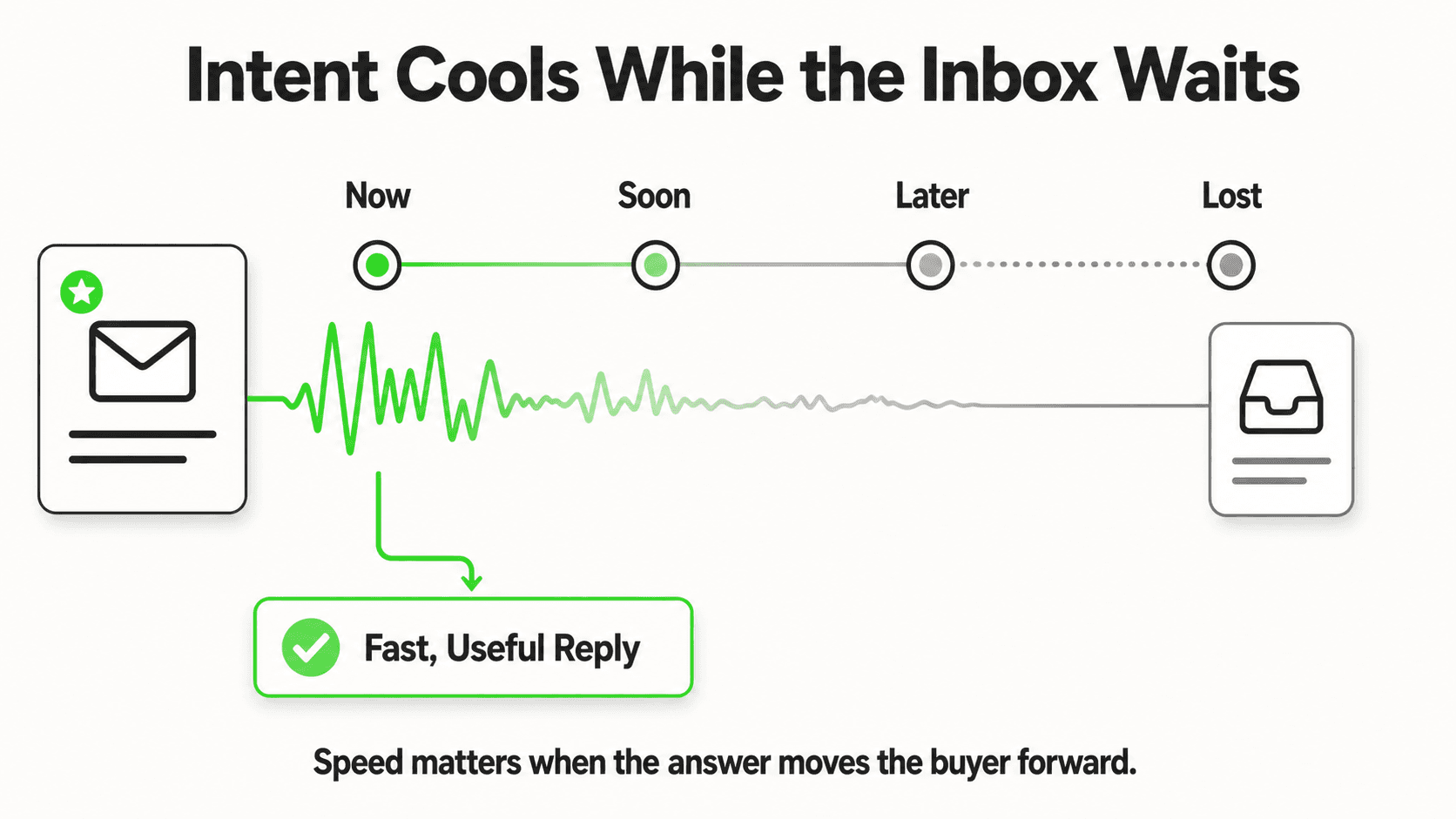
A broken furnace in January doesn't wait for business hours. Neither do your potential customers. When a homeowner searches "emergency HVAC repair near me" at 11 PM, they're not browsing — they're ready to book. The first HVAC company to respond with availability, pricing guidance, and a confirmed appointment window wins the job. According to a lead response study by InsideSales, leads contacted within five minutes are dramatically more likely to convert than those reached hours later. Every unanswered after-hours call is a job that goes to the competitor who had a chatbot running while your phones were forwarded to voicemail.
This guide covers exactly how an AI chatbot for HVAC companies works, what it handles, and how to deploy one without disrupting your existing dispatch workflow.
What HVAC Leads Look Like at Night (And Why You're Missing Them)
HVAC demand is inherently time-critical and unpredictable. Equipment fails during the hottest week of summer and the coldest night of winter — precisely when homeowners are most motivated to book immediately and least tolerant of a slow response.
Here's what a typical after-hours lead cycle looks like without automation:
- Homeowner's AC stops working at 8:45 PM
- They search Google and find your website
- They fill out your contact form or call your business line
- Voicemail picks up — or the call just rings
- They move to the next result and book with a competitor
- Monday morning: you have a voicemail you never converted
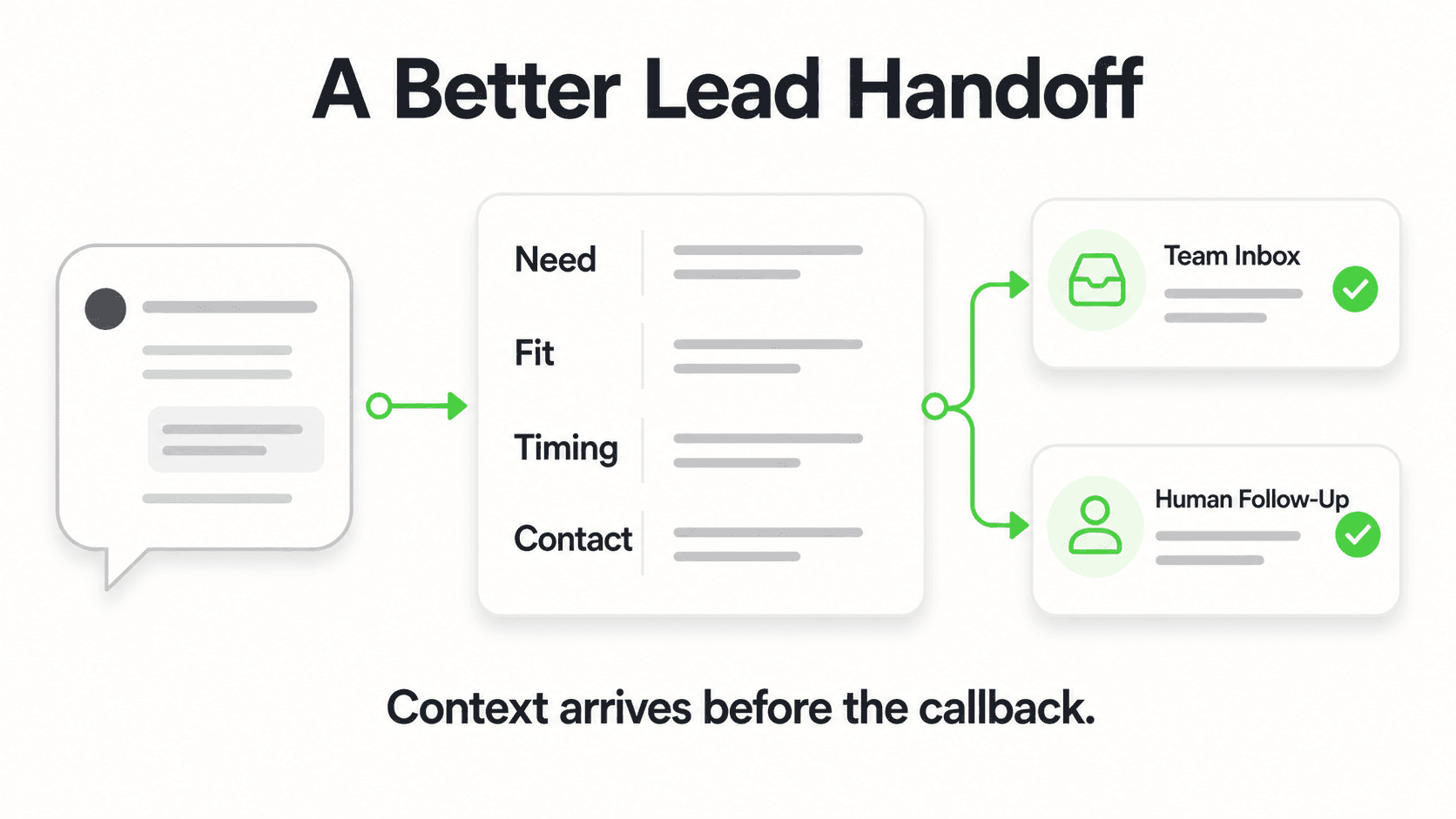
An AI chatbot interrupts this cycle at step 3. When the homeowner lands on your site or messages your WhatsApp number, the chatbot greets them immediately, asks about the issue (AC not cooling, furnace not igniting, strange noise), collects their address and availability, and shares your booking link for a service window. The lead is captured, qualified, and ready for your dispatcher the next morning — or routed to your on-call tech if you offer true 24/7 emergency service.
Who This Guide Is For
This guide is written for HVAC business owners and office managers at companies with 2–30 technicians who want to capture more leads without adding administrative staff. If you run a larger operation with a dedicated call center, the principles still apply — but the ROI framing will be different.
Why HVAC Companies Lose Jobs They Never Knew They Had
The most painful leads are the ones you never see. No missed call notification, no voicemail, no form submission — just a homeowner who found your website, saw no instant response option, and moved on.
After-hours demand is the norm, not the exception. Homeowners discover HVAC problems when they're home — evenings, weekends, and holidays. Industry patterns consistently show that a significant share of service inquiries arrive outside standard business hours for trades businesses. Your availability window doesn't match your customers' urgency window.
Emergency framing inflates customer acquisition cost. When equipment fails, homeowners don't price-compare the way they would for a planned tune-up. They want confirmation and commitment — fast. The company that responds in two minutes gets the job at full price. The company that calls back four hours later often finds the customer already booked or negotiates from a weaker position.
Seasonal spikes overwhelm office staff. The week temperatures spike above 95 degrees, your phone rings off the hook. Your CSR can only handle one call at a time. Every call she can't get to becomes a lead for your competitor two blocks away. A chatbot handles 20 simultaneous conversations with the same quality of response.
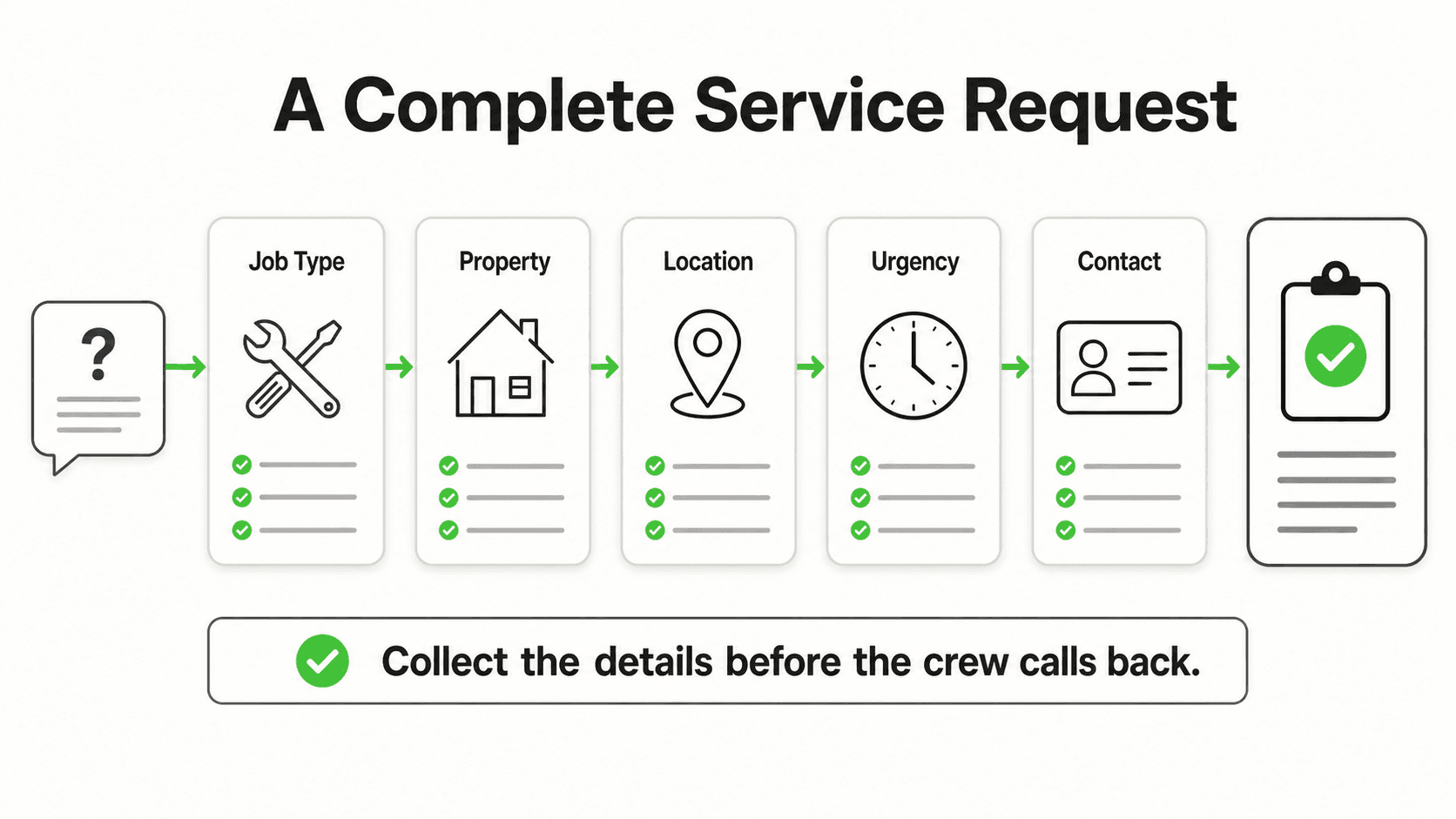
Qualification takes time your dispatcher doesn't have. "Is this a repair or a replacement?" "What brand and model?" "How old is the system?" "Do you have a service contract with us?" These questions take 3–5 minutes per call. A chatbot asks them automatically, stores the answers, and delivers a complete job ticket to your dispatcher — no intake call required.
Capture Every HVAC Lead After Hours
See how Hyperleap AI handles service requests, qualifies jobs, and books appointments while your team sleeps.
See It in Action5 Things an AI Chatbot Handles for HVAC Companies
1. After-Hours Lead Capture and Qualification
The chatbot's primary job is to be present when your office isn't. A homeowner contacts you through your website widget, WhatsApp, Instagram DM, or Facebook Messenger — and immediately gets a response that feels professional, not robotic.
The chatbot collects: the nature of the problem, equipment type and approximate age, address and service area confirmation, preferred service window, and contact information. That's a complete lead record ready for dispatch — without a single staff member involved.
For emergency jobs (no heat, no AC during extreme temperatures), you can configure the chatbot to flag the conversation for immediate review or provide your emergency line number. The chatbot handles qualification; your team handles the decision to dispatch.
2. Service Scheduling and Booking
Once a lead is qualified, the chatbot gets the customer into a service window. If you schedule with Calendly or Cal.com, it offers real open slots from your live availability and books the one the customer picks in the conversation. If you use ServiceTitan or Housecall Pro, it shares your booking link so the customer self-selects a window. Either way, it removes the back-and-forth of "when are you available?" that eats dispatcher time.
The chatbot doesn't have direct access to field-service dispatch calendars like ServiceTitan or Housecall Pro — there, it shares your booking link and collects the customer's preferred window, which your dispatcher confirms.
3. FAQ Handling for Common Customer Questions
"Do you service my area?" "How much does an AC tune-up cost?" "What brands do you work with?" "Do you offer financing?" These questions consume significant phone and email time without generating any new revenue.
Train your chatbot on your service area, pricing ranges, brands serviced, and financing options, and it handles these questions instantly — every hour of the day. Your office staff is freed from repetitive inquiry handling and can focus on dispatch coordination and customer follow-up.
4. Maintenance Agreement Inquiries and Upsell
Homeowners who reach out for repairs are often candidates for annual maintenance agreements. A chatbot can present your service plan options after handling the initial inquiry, capturing an upsell opportunity that a busy dispatcher often doesn't have time to mention.
Configure the chatbot to mention your maintenance plan after booking a repair appointment. Some customers will click through on their own. That's incremental revenue with no additional labor.
5. Reputation and Review Routing
After a completed service visit, your chatbot can follow up via WhatsApp or web to ask about the experience and, for satisfied customers, direct them to your Google Business Profile for a review. For HVAC companies where local SEO is a primary source of new business, review volume matters significantly.
The chatbot handles the timing and routing — you benefit from a higher review volume without adding follow-up calls to your CSR's workload.
The ROI Math for a Typical HVAC Company
Here's an illustrative scenario — not a guarantee, but a realistic framework using conservative assumptions:
Assumptions:
- 10 after-hours inquiries per week that currently go unanswered
- 40% would have converted to booked jobs at an average ticket of $350
- Current conversion on those: 0 (they call a competitor)
Weekly missed revenue (illustrative): 10 × 40% × $350 = $1,400/week = $72,800/year
Against that, a Hyperleap AI Plus plan runs $40/month. Even if the chatbot only captures 10% of those lost leads, the math still works dramatically in your favor. The point isn't the exact percentage — it's that the baseline (zero capture) makes any improvement pure incremental revenue.
This framework applies the InsideSales Lead Response Management principle: speed to respond determines conversion rate. For HVAC, the urgency is even higher because the customer's problem is uncomfortable and immediate.
Getting Started: HVAC Chatbot Implementation in a Week
Day 1–2: Build your knowledge base. Document your service area (zip codes), brands serviced, pricing ranges for common jobs (tune-up, diagnostic fee, typical repair ranges), emergency service availability, and financing options. This becomes the chatbot's training material.
Day 3: Configure intake questions. Set up your qualification flow: problem type → equipment type → address → preferred window → contact info. Keep it under 5 questions — enough to qualify the lead without feeling like an interrogation.
Day 4: Set up your channels. Deploy the widget on your website (embed on the homepage and service pages). If you use WhatsApp for customer communication, connect it as a channel. Instagram DM and Facebook Messenger are optional but useful if you run social ads.
Day 5–7: Test and refine. Run test conversations covering your most common scenarios: AC not cooling, furnace not igniting, water heater question, maintenance plan inquiry. Adjust responses that feel off. Launch.
The Hyperleap AI setup process is designed for non-technical users — no developer needed. If you want hands-on help building the chatbot, the Managed Setup add-on pairs you with a setup specialist who builds the initial configuration for you.
One Unique Element to Add
Add a quick "Is this an emergency?" branch at the top of your chatbot flow. If the customer selects yes, route them immediately to your emergency line or flag the conversation in your inbox for urgent review. This single branch can convert your most valuable (and most urgent) leads.
Frequently Asked Questions
Will a chatbot replace my office staff?
No. A chatbot handles repetitive, after-hours, and high-volume inquiry tasks — it doesn't replace the judgment, relationship, and dispatch coordination that your CSR handles. Think of it as a 24/7 intake specialist that pre-qualifies leads and delivers clean job tickets to your team. Your office staff handles the work that requires human judgment; the chatbot handles the volume that doesn't.
How does the chatbot handle a customer who needs emergency service right now?
You configure how emergencies are handled. Options include: displaying your emergency phone number prominently when the customer indicates urgency, flagging the conversation for immediate review in your inbox, or sending an automated alert to your on-call dispatcher. The chatbot identifies urgency through the customer's responses; your team decides whether to dispatch.
What if the chatbot gives a customer wrong pricing information?
Train the chatbot with ranges, not specific quotes. "Diagnostic fees typically run $X–$Y; your technician will confirm the exact amount on-site" is accurate and sets expectations correctly. The chatbot is not a quoting tool — it's a lead capture and qualification tool. Final pricing always comes from your tech.
How long does setup take?
Most HVAC companies can deploy a working chatbot in 3–5 business days. The main time investment is writing your knowledge base (service area, FAQs, pricing ranges, brands). The Hyperleap AI Managed Setup add-on is available if you want a specialist to handle the build.
Which channels should I prioritize?
Start with your website widget — that's where customers are already searching for you. If you run Google Ads or LSA, make sure the chatbot is live on those landing pages. WhatsApp is valuable if you serve a customer base that prefers messaging. Instagram and Facebook Messenger are worth adding if you run social ads.
Does the chatbot work on mobile for technicians?
The chatbot is a customer-facing tool, not a technician app. Your technicians interact with the leads through your existing dispatch system — the chatbot delivers qualified lead records to your team; your team manages the rest. No app install required for your techs.
How much does it cost?
Hyperleap AI plans start at $40/month (Plus plan). The 7-day free trial lets you test with real inquiries before committing. A credit card is required for the trial. See full pricing details.
The First HVAC Company to Respond Wins
HVAC is a response-speed business. The homeowner with a broken AC in August has exactly one priority: getting someone on-site fast. They'll call the first company that answers. They'll message the first company that responds. Right now, that company might not be yours — not because your service is worse, but because your phones are off at 9 PM.
An AI chatbot for your HVAC company closes that gap. It answers at 9 PM, at 2 AM, on Thanksgiving, during the busiest week of summer when your CSR is handling 40 calls a day. Every lead that would have gone to voicemail instead becomes a qualified job ticket in your inbox.
Can the chatbot dispatch a technician?
It captures the job details (problem, address, urgency, preferred time window) and routes to your dispatcher or scheduling tool. The bot does not directly assign technicians — it removes the inbound-call bottleneck so your team can dispatch faster.
Does it handle emergency calls outside business hours?
Yes. The bot runs 24/7, captures emergency calls when your team is asleep, and routes urgent jobs to your on-call number based on rules you configure. After-hours capture is one of the most-cited reasons home service operators deploy a chatbot.
How long does it take to set up an AI chatbot with Hyperleap?
Most SMBs go live in 3–5 days for self-serve setup. With Managed Setup ($299 Free, available on every plan), Hyperleap builds the bot for you on your content and channels. A 7-day free trial is included on every plan.
Further Reading
Authoritative external sources used and recommended for further research on this topic:
Ready to Capture Every Service Call?
Start your 7-day trial and deploy a chatbot that captures HVAC leads around the clock — no developer required.
Start Free TrialRelated Articles

AI Receptionist for HVAC: Handle Summer Call Surges
How an AI receptionist for HVAC companies covers seasonal call surges, qualifies emergency vs. maintenance requests, and books jobs 24/7.
AI Receptionist for Landscaping Businesses
An AI receptionist for landscaping businesses answers quote and service questions 24/7, qualifies property details, and shares your booking link.
AI Receptionist for Roofing Companies: Never Miss a Lead
An AI receptionist for roofing companies answers storm-damage and estimate questions 24/7, qualifies homeowners, and routes leads to your team.

AI Chatbot for Moving Companies: Win the Quote Race
A chatbot for moving companies qualifies quote requests instantly — origin, destination, home size, date — so you respond before rival estimates land.