AI Chatbot for Electricians: Stop Losing Panel Jobs
A chatbot for electricians captures burning-smell emergencies and EV charger quote requests 24/7, routing urgent calls fast and qualifying leads.

TL;DR: A homeowner smelling burning plastic behind an outlet at 9 PM isn't going to wait for your office to open — they're calling the first electrician who answers. A chatbot for electricians captures that message immediately, routes the ones that sound genuinely dangerous to your on-call number, and qualifies the panel upgrades and EV charger requests that make up your planned-work pipeline. It never gives electrical safety advice — it collects details and routes to a licensed human, full stop.
AI Chatbot for Electricians: Stop Losing Panel Jobs
The call comes in at 9:40 PM: a homeowner smells something burning near an outlet and there's a faint scorch mark on the plate. They're not calling to compare quotes — they're calling because they're scared, and they'll hire whoever picks up. According to research from InsideSales, leads contacted within five minutes convert dramatically better than those reached hours later. For an electrical emergency, "hours later" usually means the job already went to a competitor.
Meanwhile, during business hours, a different kind of lead is stacking up in your inbox: homeowners asking what a 200-amp panel upgrade costs, or whether you install Level 2 EV chargers. These aren't emergencies — they're planned work with real margin, and they deserve a fast, accurate answer just as much as the burning-smell call deserves a fast, urgent one.
An AI chatbot for electricians handles both ends of that spectrum without requiring you to staff a night line or interrupt a job to answer a text. It doesn't diagnose electrical problems or tell a homeowner what to do with a live wire — it asks the right questions, routes urgent situations to a human immediately, and captures everything else as a qualified lead for your team to follow up on.
What the chatbot never does
The chatbot does not give electrical safety advice, DIY troubleshooting steps, or any instruction about touching wiring, breakers, or panels. For anything that sounds like an active hazard — burning smell, sparking, smoke, a breaker that won't reset — it tells the customer to stay away from the area and routes the conversation to your team immediately. It routes; it never diagnoses.
What Is an AI Chatbot for Electricians?
An AI chatbot for electricians is a document-grounded conversational tool that answers incoming website, WhatsApp, Instagram, and Facebook Messenger inquiries, separates emergency calls from planned work, and hands off every conversation as a structured lead your dispatcher can act on immediately. It runs on your own service-area rules, your own FAQ content, and your own urgency definitions — not a generic script.
For electrical contractors specifically, that means:
- Emergency-vs-planned triage by routing, not advice. The bot asks clarifying questions ("Do you smell burning? Is there visible sparking or smoke?") and routes based on the answers — it never tells the customer what to do about a live electrical hazard.
- Panel upgrade and EV charger intake. Homeowners researching a panel upgrade or an EV charger install get a structured quote-request flow instead of a dead-end contact form.
- Service-area screening. A quick zip code or address check filters out-of-territory leads before your team spends time calling back jobs you can't take.
- Licensing and insurance answers from your knowledge base. "Are you licensed and insured?" is one of the first questions a new customer asks — the bot answers it instantly from documentation you provide, instead of that lead sitting unanswered until morning.
This differs from a generic web form or a answering service in one important way: it's a two-way conversation that qualifies while it captures, then hands your dispatcher a complete record instead of a name and a vague message.
Why Electricians Lose Jobs They Never See
The most expensive leads for an electrical contractor are the ones that never make it into your CRM at all — the homeowner who called after hours, got voicemail, and dialed the next electrician on the search results page. You'll never know that job existed. It happens more than most owners realize.
Electrical leads are expensive, and a missed one is wasted spend. According to industry data from LocaliQ and WebFX, the average cost per lead for electrical contractors runs $35–$70. If you're spending $3,000/month on Google Ads or local search marketing to generate those leads, every one that goes unanswered is money you already paid for and never converted.
Missed calls are an industry-wide problem, not a you problem — but that doesn't make them cheap. Home service businesses miss roughly 27% of inbound calls on average, according to Invoca, with some sources citing miss rates as high as 62%. Each missed call represents an estimated $300–$1,200 in lost revenue depending on job size. And 85% of callers who reach voicemail simply hang up and call the next contractor — they don't call back (Invoca / Dialzara).
Emergencies and planned work require different speed, but both lose to silence. A burning-smell call needs a response in minutes. A panel-upgrade inquiry can wait an hour or two — but if it waits until tomorrow, the homeowner has often already booked with whoever replied first. Both categories die the same way: silence.
Intake calls eat dispatcher time your business doesn't have to spare. Every new inquiry your team answers by phone — "What's the issue? What's your address? Is this urgent? Are you licensed?" — takes several minutes of back-and-forth. A chatbot delivers a pre-qualified, structured lead instead, so your team makes one confirmation call rather than a full intake conversation.
The Four Lead Types Your Chatbot Should Separate
| Lead Type | Example | Routing |
|---|---|---|
| Active hazard | Burning smell, sparking, smoke, tripped breaker won't reset | Immediate route to on-call tech, no advice given |
| Urgent but stable | No power to one room, flickering lights, dead outlet | Same-day dispatch queue |
| Planned project | Panel upgrade, EV charger install, rewiring quote | Sales follow-up queue with project details captured |
| General question | Licensing, service area, pricing range, availability | Answered instantly from knowledge base |
This four-way split means your dispatcher opens a prioritized list instead of a flat inbox of undifferentiated messages.
Who This Guide Is For
This guide is written for electrical contractors with 2–25 employees who want to stop losing after-hours emergencies and daytime panel/EV quote requests to faster-responding competitors. Self-serve setup typically takes 3–5 days and requires no coding.
7 Ways an AI Chatbot Pays for Itself for Electrical Contractors
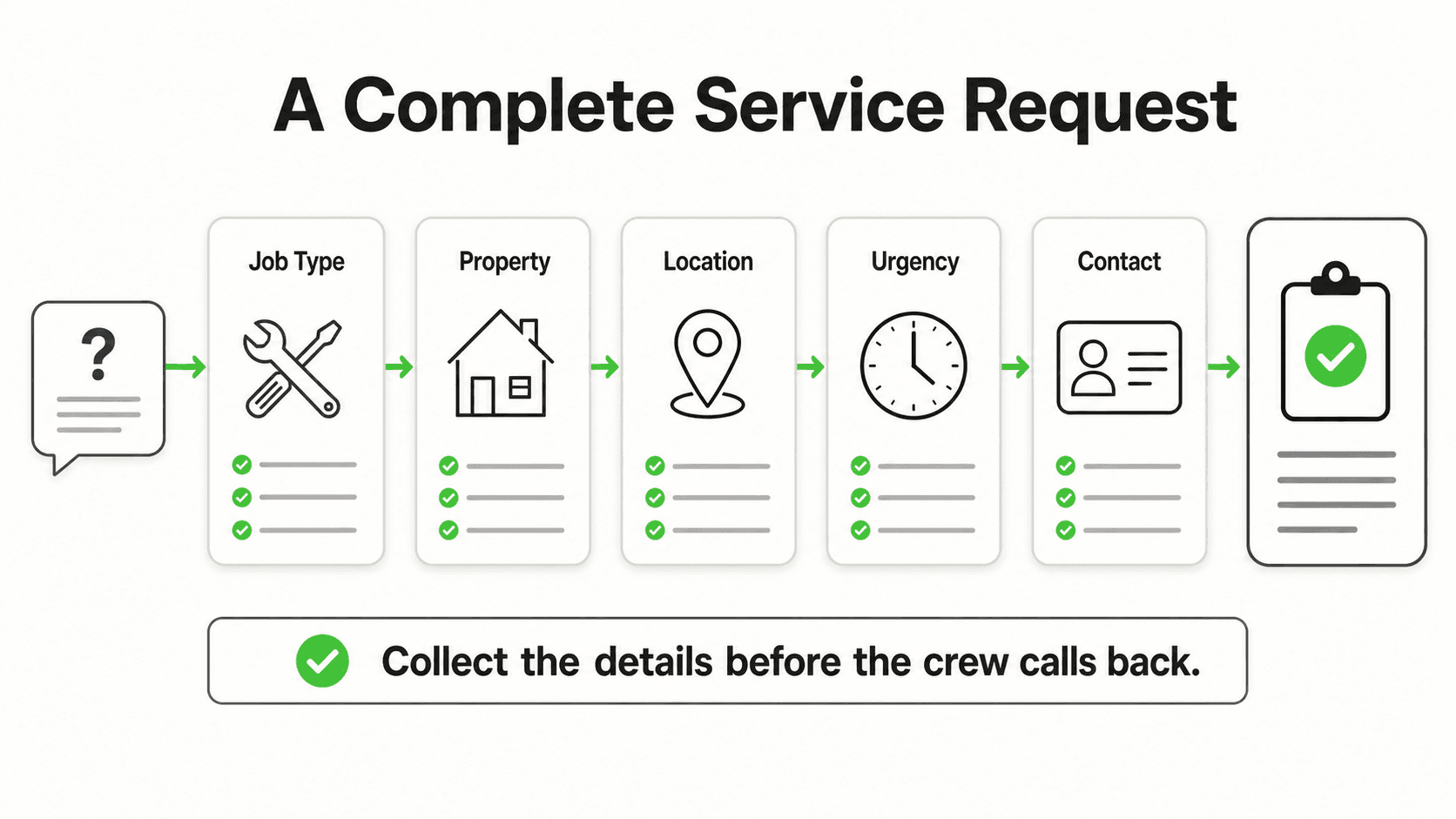
1. Routes Active Hazards to a Human — Fast, Never With Advice
What this looks like in practice: A homeowner messages at 9:40 PM describing a burning smell near an outlet. The chatbot asks two or three clarifying questions — is there visible smoke, has the breaker tripped, is anyone in immediate danger — then tells the customer to stay clear of the area and flags the conversation for your on-call number.
Real-world impact: With cost per electrical lead running $35–$70, an unanswered emergency lead is money already spent and lost, on top of the job itself going to a competitor.
Why it works: Speed of acknowledgment, not speed of diagnosis, is what an anxious homeowner needs in the first sixty seconds. The chatbot provides that acknowledgment instantly while a licensed human handles everything electrical.
Key features:
- Configurable hazard-detection keywords and question flow
- Immediate routing to your on-call number or dispatch inbox
- Zero DIY or safety instructions — routing language only
2. Qualifies Panel Upgrade and EV Charger Requests
What this looks like in practice: A homeowner asks about upgrading from a 100-amp to a 200-amp panel, or wants a Level 2 EV charger installed in the garage. The chatbot asks about the home's current panel size, approximate age, whether an EV is already owned or on order, and preferred install timeline — then captures it as a structured quote request.
Real-world impact: Panel upgrades and EV charger installs are among the highest-margin jobs in residential electrical work, and demand for EV charger installation has grown steadily as EV adoption increases — a trend electrical contractors are increasingly building service lines around.
Why it works: A structured intake means your estimator walks into the first call already knowing the scope, instead of starting from zero.
Key features:
- Project-specific question flows for panel upgrades vs. EV chargers
- Photo upload support for panel or breaker box images
- Automatic routing to your estimating or sales queue
3. Pre-Qualifies Every Lead Before Your Team Picks Up the Phone
What this looks like in practice: The chatbot asks the same handful of questions your dispatcher would ask by phone: what's the issue, is it urgent, what's the address, is it inside your service area, what's the best callback number and time.
Real-world impact: Instead of a five-to-eight-minute intake call for every inquiry, your team receives a complete lead record and makes one confirmation call.
Why it works: Qualification is repetitive and rules-based — exactly the kind of work a chatbot handles reliably at any hour, freeing your team for the calls that need a licensed electrician's judgment.
Key features:
- 5-question maximum intake flow to minimize drop-off
- Service-area/zip code screening built in
- Complete lead record delivered to your inbox or CRM via webhook (webhooks on Pro and Max)
4. Screens Out-of-Territory Leads Before They Waste Dispatcher Time
What this looks like in practice: A prospect outside your service radius messages your chatbot. It checks the address against your configured service area and lets them know upfront, saving your team a callback that would have gone nowhere.
Real-world impact: Every out-of-area callback your dispatcher makes is time not spent on jobs you can actually take.
Why it works: This is a simple rules check, but it's one most contact forms and answering services skip entirely.
Key features:
- Configurable zip code or radius-based service area rules
- Automatic polite decline with referral language you control
5. Answers Licensing, Insurance, and Pricing-Range Questions Instantly
What this looks like in practice: "Are you licensed and insured?" "Do you offer free estimates?" "What's your service call fee?" The chatbot answers from a knowledge base you provide, any time of day.
Real-world impact: These trust-building questions often decide whether a homeowner books at all. Answering them at 11 PM instead of the next business morning keeps the conversation moving instead of stalling out.
Why it works: Licensing and insurance answers don't require judgment — they require accuracy and availability, which is exactly what a document-grounded chatbot delivers.
Key features:
- Knowledge base trained on your license number, insurance status, and standard fees
- Consistent, accurate answers with no staff time required
- Fallback to human handoff (Pro and Max) for anything outside the knowledge base
6. Runs Across the Channels Homeowners Actually Use
What this looks like in practice: The same qualification flow works whether a customer messages through your website widget, WhatsApp, Instagram DM, or Facebook Messenger — with rich cards available on all four channels on Pro and Max (swipeable carousels on Instagram DM and Messenger).
Real-world impact: Homeowners increasingly reach out through the channel that's already open on their phone rather than picking up to dial. Meeting them there instead of forcing a phone call reduces the friction between "I have a problem" and "I sent a message."
Why it works: Consistency across channels means no lead falls through the cracks because it arrived somewhere your team wasn't watching.
Key features:
- Website, WhatsApp, Instagram DM, Facebook Messenger — full channel parity
- Voice is not currently supported (Roadmap)
- Same qualification logic and lead record regardless of channel
7. Books the Visit Instead of Playing Phone Tag
What this looks like in practice: Once a lead is qualified for a scheduled visit — a planned panel upgrade site assessment, for example — a chatbot connected to Calendly or Cal.com offers real open times from your live availability and books the slot the homeowner picks, right in the conversation.
Real-world impact: This removes a full round of back-and-forth scheduling messages for non-urgent work, so your team spends that time on estimates and jobs instead of calendar coordination.
Why it works: The booking lands in the calendar you already use, and the homeowner gets the invite by email — no new scheduling system to adopt. (In-chat booking is on Pro and Max and needs Calendly Standard or higher.)
Key features:
- Native booking with Calendly or Cal.com on Pro and Max; on Plus, or with any other booking tool, the link gets shared instead
- Reserved for planned work, not emergencies — hazards always route to a human immediately
Stop Losing Emergency and Panel-Upgrade Leads
Deploy a chatbot that routes burning-smell calls to your on-call tech and captures EV charger and panel upgrade requests — starting tonight.
Start Free TrialReal Results: What Electrical Contractors Are Achieving
Faster response, more captured jobs
- After-hours emergency messages get an instant acknowledgment instead of going to voicemail
- Planned-work inquiries (panel upgrades, EV chargers) arrive as structured leads your estimator can act on same-day
- Out-of-area leads are filtered automatically, saving dispatcher time
Lower cost per booked job
- With electrical leads averaging $35–$70 (LocaliQ/WebFX), converting a higher share of the leads you're already paying for directly improves the return on your ad spend — no ad budget increase required
- Fewer intake calls means less dispatcher time spent per lead, whether or not it converts
Trust built before the truck rolls
- Licensing, insurance, and pricing-range questions are answered consistently, any hour
- Safety-conscious routing language during hazard calls ("please stay clear of the area, help is on the way") builds trust without giving instructions the company could be liable for
Illustrative Example
A two-truck electrical contractor spending $2,500/month on lead generation at roughly $50/lead generates about 50 leads monthly. If a chatbot helps capture just two additional jobs a month that would otherwise have gone to voicemail — one emergency call and one panel-upgrade quote — that alone can cover the subscription cost several times over. This is an illustrative scenario, not a guaranteed outcome; actual results vary by market and call volume.
Implementation Roadmap for Electrical Contractors
Before you start: Write a one-page reference document covering your service area (list zip codes or towns), license number, insurance status, standard service call fee, hours, and whether you offer 24/7 emergency response. This becomes your chatbot's knowledge base — the more specific, the better the answers.
Week 1 — Build the knowledge base and intake flow. Load your FAQ document, licensing details, and service-area rules. Configure two intake flows: a short hazard-triage flow (is there smoke, sparking, a smell — route immediately) and a slightly longer planned-work flow for panel upgrades and EV chargers (panel age/amperage, EV ownership status, timeline).
Week 1 — Set your urgency routing rules. Decide exactly what counts as an emergency for your business and what happens next: Does the bot display your emergency line? Does it alert your on-call tech directly? Does it flag the conversation for immediate dispatcher review? Configure this before launch.
Week 1–2 — Deploy across channels. Start with your website widget, since that's where most Google Ads and organic traffic lands. Add WhatsApp if customers already text you there, and Instagram or Facebook Messenger if you run local social ads.
Week 2 — Test the hazard-routing flow specifically. Walk through the burning-smell scenario yourself to confirm the bot routes correctly and never slips into giving instructions about touching wiring or breakers. This is the single most important flow to verify before going live.
Ongoing — Review and refine. Check weekly which questions the chatbot couldn't answer and add them to the knowledge base. This is also a good time to review the step-by-step chatbot setup guide if you want a broader implementation walkthrough.
See how home service businesses across HVAC, plumbing, and electrical lose jobs to slow response times for the industry-wide data behind this playbook, and compare the full cost of a chatbot versus hiring a receptionist if you're weighing your options. For broader industry benchmarks on response time and lead conversion, see our AI chatbot statistics roundup. Electrical contractors running multiple trucks or crews may also want to review multi-channel deployment strategy for coordinating website, WhatsApp, and social channels together.
Trades like HVAC companies and plumbers face similar after-hours emergency dynamics — the triage logic in this guide applies with minor adjustments across the home services category broadly.
Data Sources
- InsideSales, Lead Response Management study — leads contacted within five minutes convert dramatically better than delayed responses
- LocaliQ / WebFX industry cost-per-lead data — electrical leads average $35–$70
- Invoca — home service businesses miss roughly 27% of inbound calls on average; up to 62% per some sources
- Invoca / Dialzara — 85% of callers who reach voicemail do not call back
- U.S. Small Business Administration
- BLS Occupational Outlook Handbook — Electricians
Frequently Asked Questions
Will the chatbot give safety advice or tell a customer how to fix an electrical problem?
No. The chatbot never provides electrical safety advice, troubleshooting steps, or instructions about touching wiring, breakers, or panels. For anything that sounds like an active hazard, it tells the customer to stay away from the area and routes the conversation to your on-call electrician immediately. It only collects information and routes it — a licensed human handles every actual electrical decision.
How does the chatbot tell the difference between an emergency and a routine question?
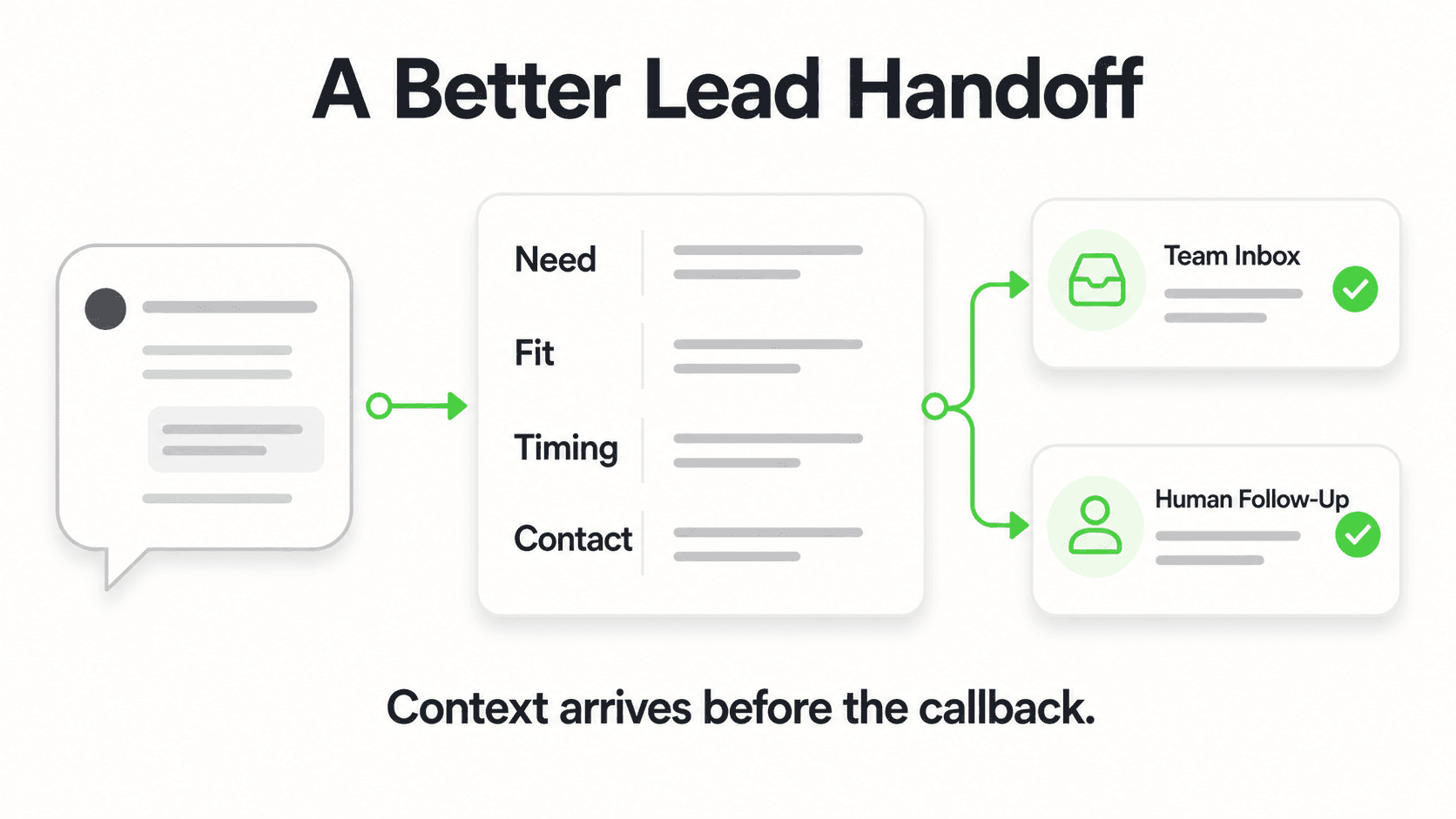
You configure the routing rules. Typically, keywords and answers indicating smoke, sparking, burning smell, or a breaker that won't reset trigger immediate routing to your on-call number. Questions about panel upgrades, EV chargers, pricing, or licensing route to a standard sales or FAQ flow instead. You define what counts as urgent for your business before launch.
Can it handle EV charger installation quote requests specifically?
Yes. You can configure a dedicated intake flow that asks about the homeowner's current panel capacity, whether they already own or are ordering an EV, and their preferred installation timeline, then routes the qualified lead to your estimating team. Demand for EV charger installs has grown as EV adoption increases, making this a common planned-work category for residential electricians.
Does the chatbot replace my dispatcher or on-call technician?
No. It handles intake and qualification — collecting the problem description, urgency level, address, and service-area check — and routes urgent conversations to a human immediately. Your dispatcher and technicians still make every scheduling and technical decision. It's an always-on intake layer, not a replacement for licensed staff.
What channels does the chatbot work on?
Website chat widget, WhatsApp Business, Instagram DM, and Facebook Messenger. On Pro and Max, the agent can also share rich cards on all four for showing service options (swipeable carousels on Instagram DM and Messenger). Voice and SMS are not currently supported channels (Roadmap).
How much does it cost, and is there a free trial?
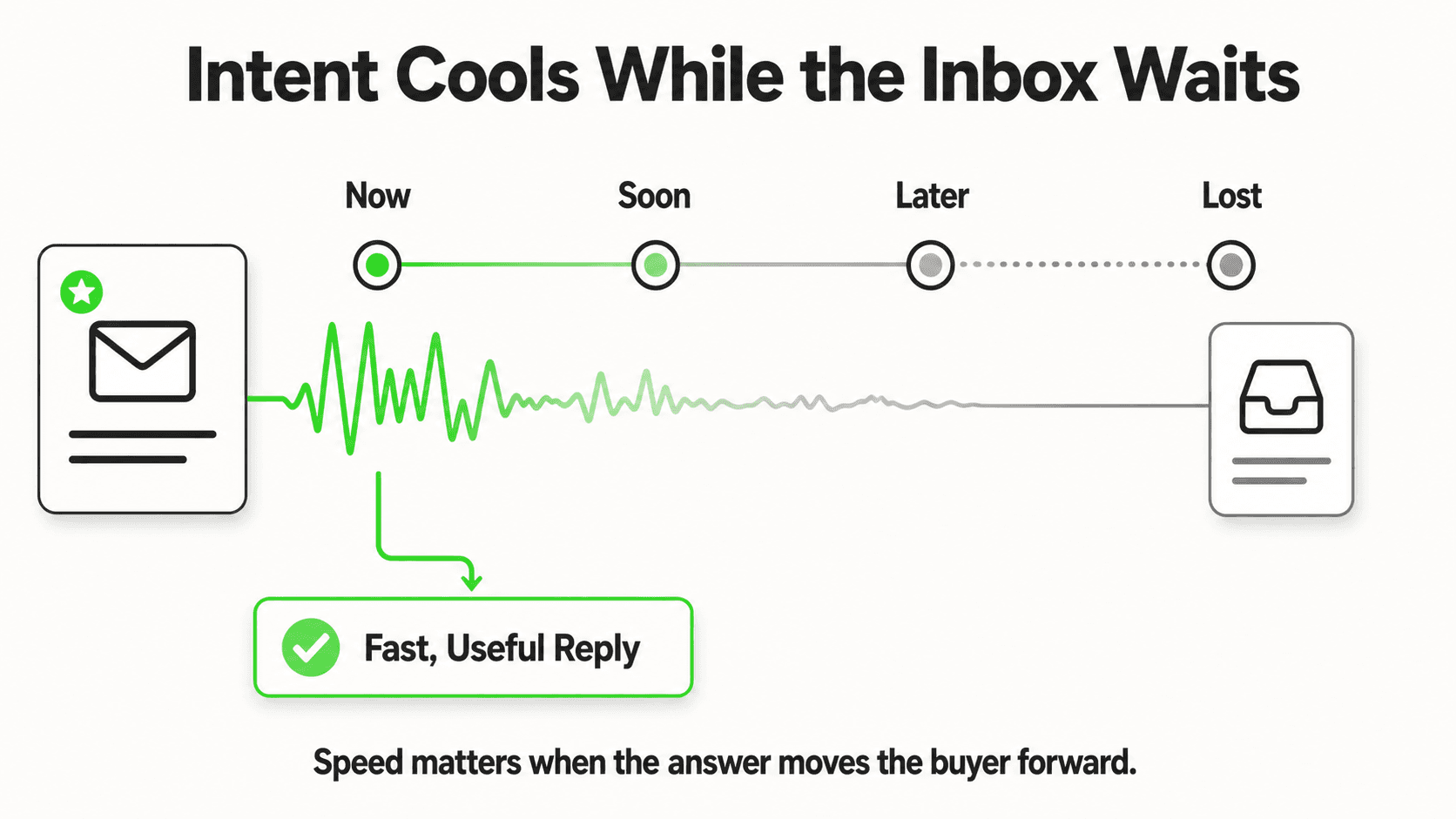
Plans start at $40/month (Plus plan), with a 7-day free trial on all plans. A credit card is required to start the trial. See pricing details for full plan comparisons. Given that electrical leads average $35–$70 in ad spend, capturing even one additional job in the first month typically covers several months of the subscription.
Can it connect to my existing CRM or scheduling software?
Hyperleap AI connects via REST API and webhooks, so you can route captured leads into whatever CRM or job-management tool you already use. For simpler setups, leads can also be delivered directly to your email or team inbox with no integration required. For scheduling on Pro and Max, connect Calendly or Cal.com and the chatbot books new appointments in the conversation from your live availability; on Plus, or with any other scheduling tool, it shares your booking link.
Is customer information collected through the chatbot secure?
Customer information — contact details, job description, and address — is stored securely and accessible only to your team. For electrical contractors, this is standard CRM-type data with no special regulatory handling required beyond normal data security practices.
The Electrician Who Answers at 9:40 PM Gets the Job
An electrical business runs on trust and speed in roughly equal measure. The homeowner who smells something burning isn't comparing your reviews to a competitor's — they're calling, texting, or messaging whoever responds first, and they need to hear back in minutes, not hours. The homeowner researching a panel upgrade is a little more patient, but not infinitely so.
An AI chatbot for electricians closes that gap on both ends. It routes genuine hazards to your on-call technician immediately, without ever stepping into advice it has no business giving. It qualifies panel upgrades and EV charger requests into complete, structured leads your estimator can act on the same day. And it answers the licensing and pricing questions that decide whether a new customer books at all — at 9:40 PM, on a Sunday, whenever the message actually arrives.
It doesn't replace your electricians. It makes sure your electricians never find out about a job after it already went to someone else.
Ready to Stop Losing Jobs to Slow Response?
See how a chatbot routes hazard calls to your team and captures panel upgrade and EV charger leads around the clock.
Get StartedIndustry Solutions
See how AI chatbots work for these industries:
Related Articles

AI Chatbot for Plumbers: Stop Losing Emergency Jobs
Plumbing emergencies don't wait for business hours. An AI chatbot captures and qualifies burst pipe calls, drain backups, and water heater failures 24/7.
AI Receptionist for Landscaping Businesses
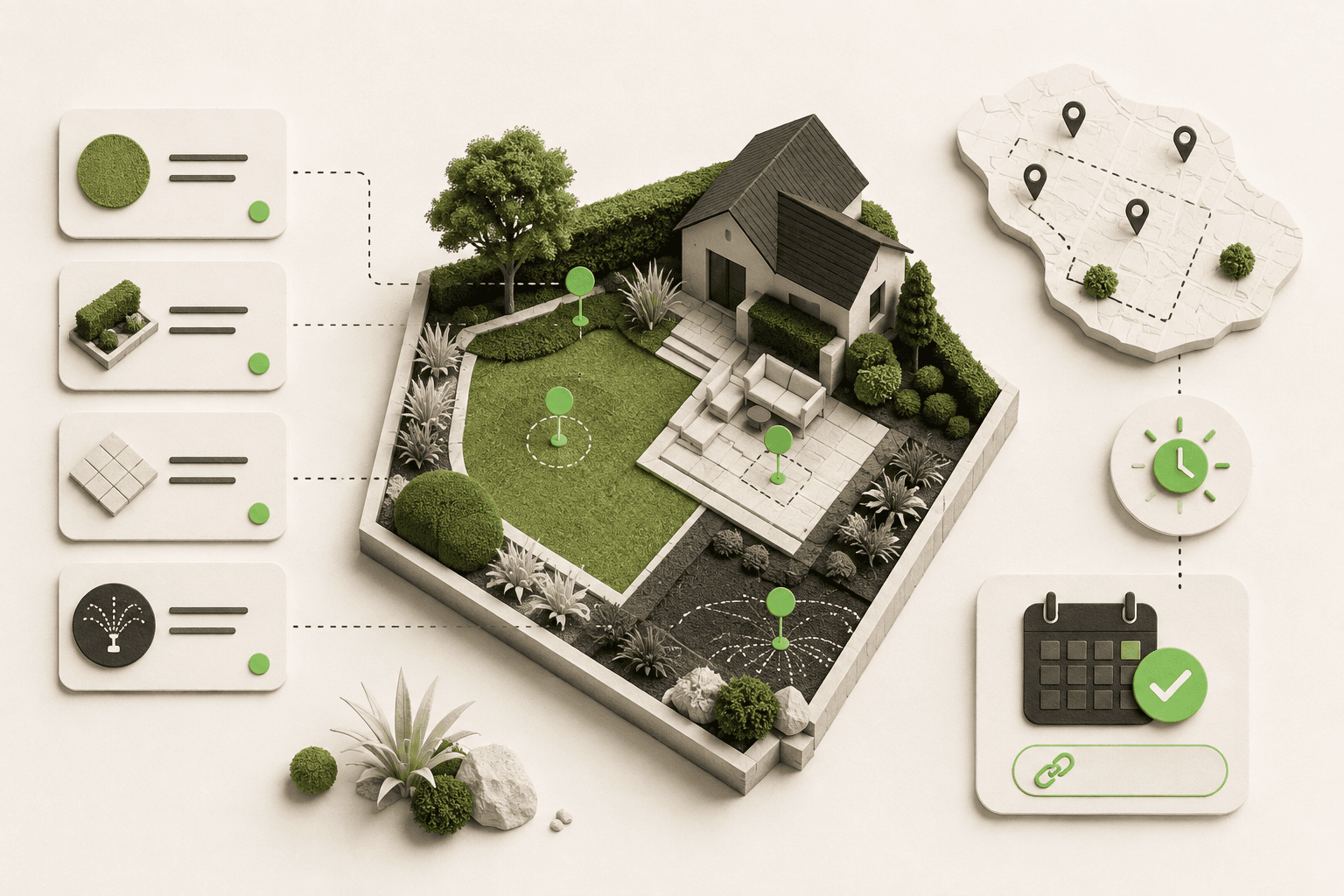
An AI receptionist for landscaping businesses answers quote and service questions 24/7, qualifies property details, and shares your booking link.
AI Receptionist for Roofing Companies: Never Miss a Lead
An AI receptionist for roofing companies answers storm-damage and estimate questions 24/7, qualifies homeowners, and routes leads to your team.

AI Chatbot for Moving Companies: Win the Quote Race
A chatbot for moving companies qualifies quote requests instantly — origin, destination, home size, date — so you respond before rival estimates land.