AI Chatbot for Real Estate: Capture Leads 24/7
An AI chatbot for real estate qualifies buyers and sellers around the clock, capturing leads before agents ever pick up the phone.

TL;DR
- An AI chatbot for real estate answers property questions from your own listings and FAQs, collects contact details through a short lead form before the conversation starts, then routes the qualified lead to the right agent — on Website, WhatsApp, Instagram DM, and Facebook Messenger.
- 78% of homebuyers work with the first agent who responds to their inquiry (Source: NAR, 2024), and leads contacted within 5 minutes are 21x more likely to convert than those contacted after 30 minutes (Source: InsideSales.com / MIT).
- Over 60% of real estate inquiries arrive after standard business hours (Source: NAR / Zillow Group) — nights, weekends, and time zones your team isn't staffing.
- A real estate chatbot does not replace MLS access, listing data feeds, or a licensed agent's judgment. It handles the first response and the qualification step, then hands a warm lead to a human.
- Hyperleap AI Agents start at $40/month (Plus plan, 7-day free trial, credit card required) and deploy across four channels with document-grounded answers drawn from your listings and process docs.
Every property inquiry that arrives at 9 PM on a Tuesday has the same fate as one that arrives at 9 AM: it goes to whichever agent answers first, or it goes nowhere. The problem isn't that real estate teams don't work hard — it's that buyers and sellers don't shop during business hours, and no five-person brokerage can staff a phone line around the clock.
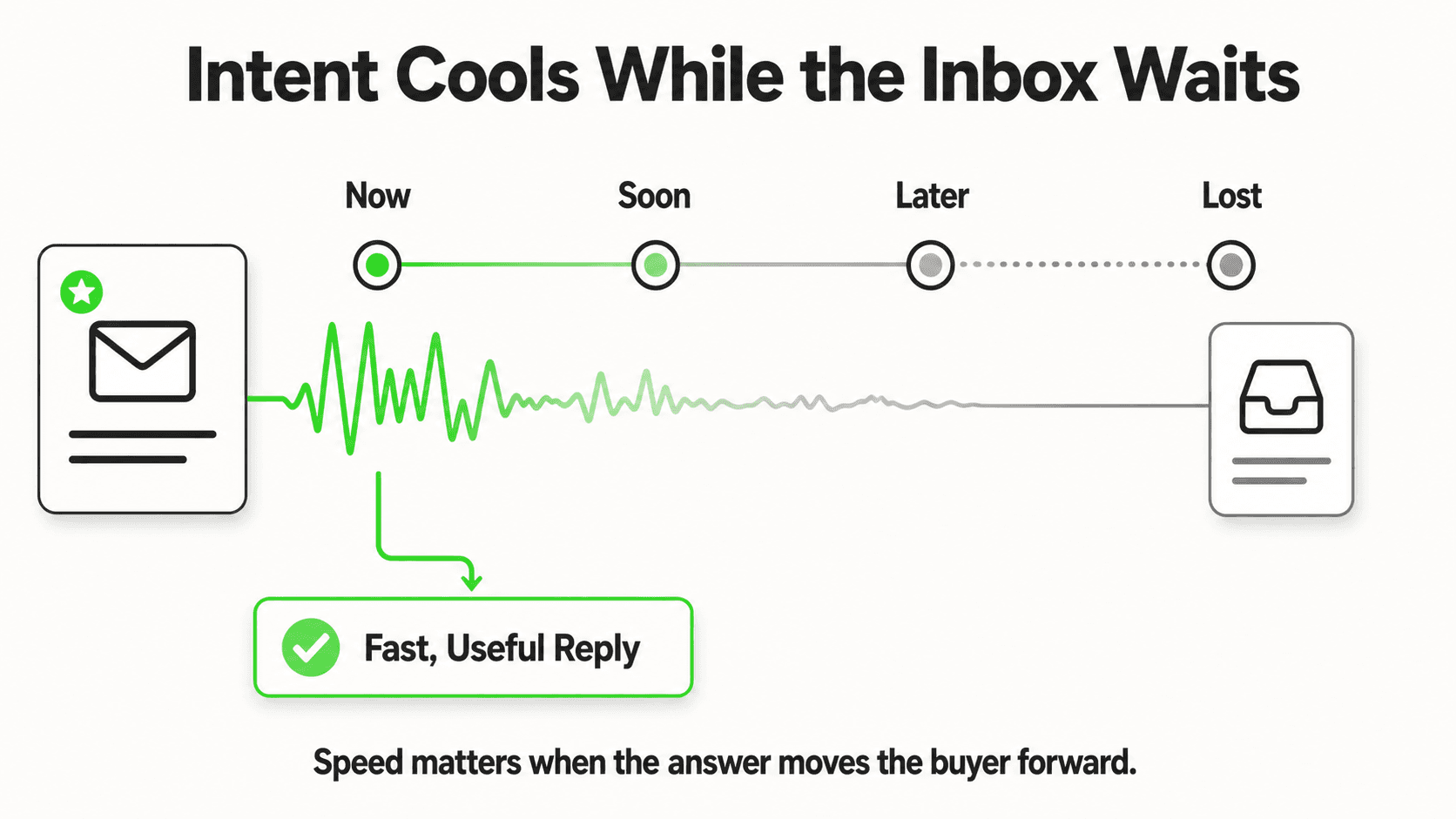
Research from the National Association of Realtors backs up what every top-producing agent already knows instinctively: speed decides who wins the client. 78% of buyers work with the first agent who responds to their inquiry (Source: NAR, 2024), and the MIT/InsideSales.com Lead Response Management Study found that contacting a lead within 5 minutes makes you 21 times more likely to qualify it than waiting 30 minutes (Source: InsideSales.com). The agent who's still asleep, showing another property, or simply hasn't checked their phone loses the deal to whoever answered first — even if that agent's listing was a worse fit.
This is where an AI chatbot for real estate earns its place in the stack. Instead of a form that sits in an inbox until Monday, an AI agent answers the question, collects the lead's contact information, and gets a qualified prospect in front of a human agent within minutes — at 2 AM on a Saturday just as reliably as 2 PM on a Tuesday.
What Is an AI Chatbot for Real Estate?
An AI chatbot for real estate is a messaging-based assistant that answers property and process questions from your own knowledge base, captures buyer and seller contact details through a lead form before the conversation begins, and routes the resulting lead to your team — automatically, 24 hours a day.
It sits on your website, WhatsApp Business number, Instagram DM, and Facebook Messenger, and it answers from documents you provide: listing sheets, HOA fee summaries, neighborhood FAQs, buyer and seller process guides, and your standard qualifying questions. It is not a general-purpose chat window that improvises answers — it's grounded in your content, which is what makes its answers usable instead of a liability.
Capabilities a real estate AI chatbot handles well:
- Answering repetitive listing questions ("Is this still available?", "What's the square footage?", "Are pets allowed?")
- Collecting name, phone, email, and budget range through a short lead form before the chat begins
- Asking qualifying questions (timeline, financing status, must-have features, preferred areas)
- Sharing your booking link so a qualified prospect can pick a showing time that works for them
- Notifying the right agent instantly when a new lead comes in
- Answering process questions for first-time buyers and sellers (how offers work, what "under contract" means, typical closing timelines)
- Operating in the buyer's language — Hyperleap AI Agents support 100+ languages, useful for markets with international or relocating buyers
Capabilities it does not handle, and shouldn't claim to:
- It does not pull live inventory from the MLS or sync automatically with Zillow, Realtor.com, or any listing portal — those integrations aren't shipped, and any vendor claiming otherwise deserves scrutiny.
- It does not generate a CMA (comparative market analysis) or price a home.
- It does not replace the judgment call a licensed agent makes on negotiation strategy, disclosure requirements, or contract terms.
- It does not process payments or earnest money.
The honest scope: a real estate chatbot is a first-response and qualification system, not a virtual agent that closes deals on its own.
Lead capture works differently than you might expect
Hyperleap's lead form gates the conversation — a visitor provides their name, phone, and a qualifying detail or two before the chat starts answering their question, not after a back-and-forth. That's a deliberate trade-off: it means every lead the AI hands your team already has contact information attached, instead of an anonymous chat thread you have to chase down. It is not a "no forms, just talk" experience — it's a short form followed by a real, useful conversation.
Why Real Estate Agents Lose Leads Without One
The after-hours gap is larger than most agents assume
More than 60% of real estate inquiries are submitted outside traditional business hours, according to NAR and Zillow Group research (Source: NAR / Zillow Group) — with peak activity on weekday evenings from 6 PM to 11 PM and weekends throughout the day. That's precisely when most agents are off-duty, showing another property, or having dinner with their family. Every inquiry that lands in that window and waits until the next business day has already had a full evening to be answered by a competitor.
First response wins the relationship, not the best listing
The NAR data on agent selection is blunt: 78% of buyers end up working with the first agent who responds, and 70% only interview one agent before deciding (Source: NAR, 2024). This means a well-qualified, highly experienced agent can lose a client purely on timing — not because their pitch was weaker, but because they were the second person to reply.
The math on delayed response is measurable, not theoretical
If a brokerage receives 40 portal leads a month at roughly $250 each (a common per-lead cost across major real estate portals), that's $10,000 in monthly lead spend. At a 15-hour average response time — the industry norm cited in our analysis of real estate response times — a large share of those leads have already connected with a faster-responding agent before your team ever calls back. Even shaving that response window from hours to minutes recovers leads that were already paid for.
Manual routing breaks down as inquiry volume grows
For team leads and broker-owners, the bottleneck often isn't any single agent's speed — it's the routing step. If every inbound message flows through one person who manually assigns it, response time is capped by that person's availability, and there's no accountability trail for who responded and when. An AI chatbot removes that single point of failure by routing every qualified lead automatically, the moment it's captured.
International and out-of-area buyers compound the timing problem
International buyers purchased $56 billion worth of US homes between April 2024 and March 2025, a 33% year-over-year increase (Source: NAR, 2025). Buyers researching from a different time zone — whether relocating from another country or another coast — are asking questions when your office is closed by definition. A chatbot that answers in their language, at their hour, closes a gap no local staffing schedule can cover.
See how a real estate chatbot handles after-hours inquiries
Watch an AI agent answer a listing question, capture a qualified lead, and share a showing link — all without an agent lifting a finger.
See It in Action7 Ways an AI Chatbot Helps Real Estate Teams Capture and Qualify Leads
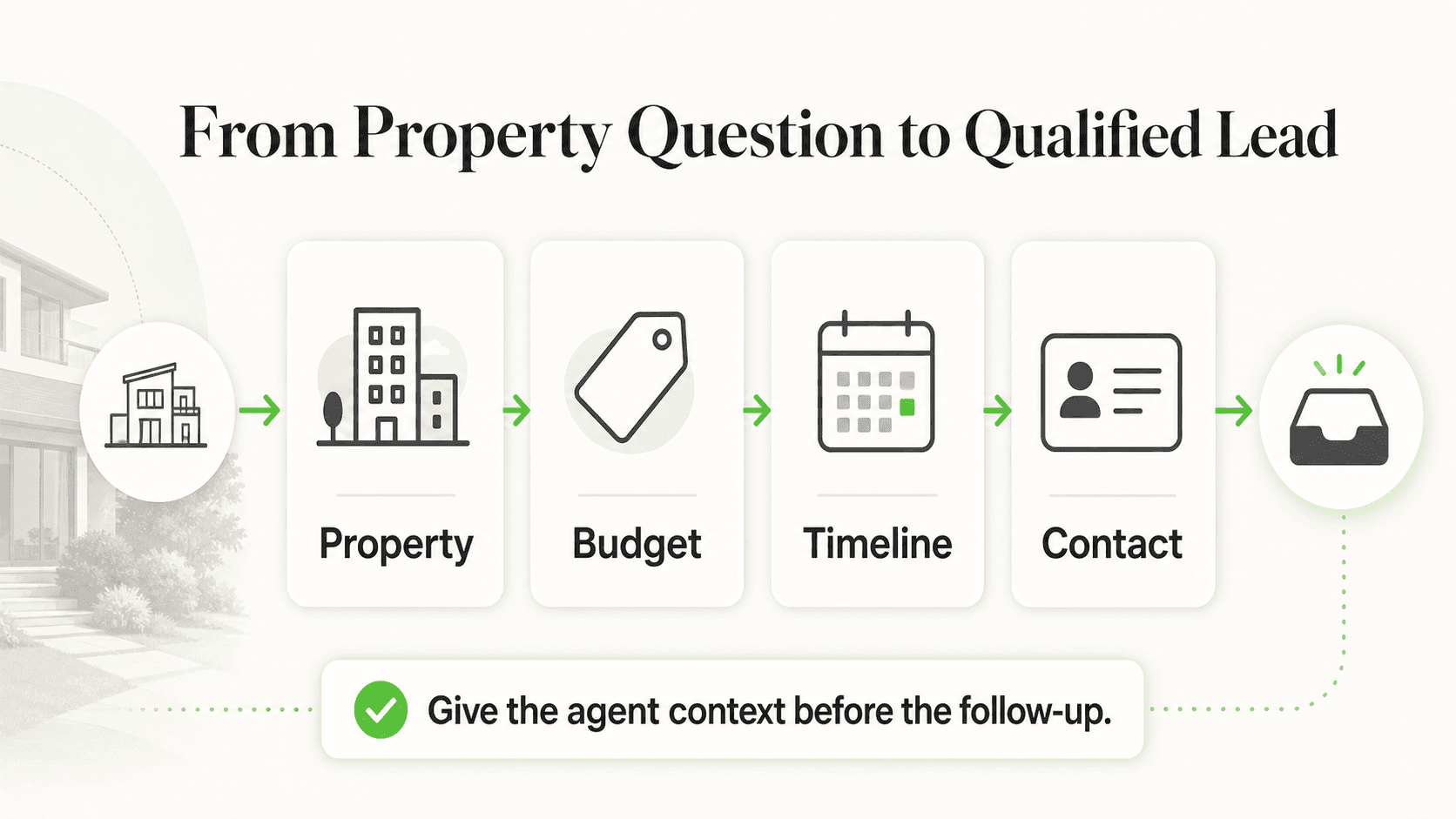
1. Instant answers to repetitive listing questions
What this looks like in practice: A prospect messages your WhatsApp number at 11 PM asking whether a listing is still active, what the HOA fee covers, and whether the seller will consider a home warranty. The AI answers from the listing sheet and FAQ documents you've uploaded, in seconds.
Real-world impact: Every question answered instantly is a question your team doesn't field the next morning — freeing agents to focus on showings, negotiations, and relationship-building instead of repeating the same five answers all week.
Why it works: The AI is document-grounded — it answers from content you control, not from a generic web search, which keeps responses accurate to your actual listings and process.
Key features:
- Trained on listing sheets, neighborhood guides, and process FAQs
- Answers consistently across Website, WhatsApp, Instagram DM, and Facebook Messenger
- Escalates anything outside its knowledge base to a human instead of guessing
2. Lead capture before the conversation, not after
What this looks like in practice: Before the chatbot answers a single question, it collects the visitor's name, phone number, and a qualifying detail (budget range, timeline, or buying vs. selling) through a short form.
Real-world impact: Every lead that reaches your team already has verified contact information attached — no chasing an anonymous chat session to find out who was asking.
Why it works: Gating the conversation behind a lead form is a deliberate design choice, not a workaround. It ensures the qualification data exists at the moment the conversation starts, which is exactly the information an agent needs to prioritize follow-up.
Key features:
- Customizable lead form fields (budget, timeline, area of interest, buyer or seller)
- OTP-verified phone capture available as an add-on for higher lead quality
- Works identically across all four supported channels
3. Buyer and seller qualification questions, asked consistently
What this looks like in practice: The AI asks the same qualifying questions every top agent wishes their intake process asked automatically: pre-approval status, target move-in date, must-have features, and preferred neighborhoods.
Real-world impact: Agents spend their limited hours on leads that are already qualified, instead of discovering three calls into a relationship that the buyer isn't pre-approved or is six months from being ready.
Why it works: Consistency matters more than cleverness here — the AI asks the same structured questions every time, which produces comparable data across every lead your team receives.
Key features:
- Configurable qualification script per listing type (buyer, seller, renter, investor)
- Structured data passed to your team, not a wall of unstructured chat text
- Works the same way whether the lead comes from a Facebook ad or organic website traffic
4. Instant team notification and routing
What this looks like in practice: The moment a lead completes the qualification flow, the assigned agent (or the whole team, depending on your setup) gets notified — so follow-up can happen in minutes, not the next business day.
Real-world impact: This directly targets the 5-minute response window that the InsideSales.com/MIT study found makes leads 21x more likely to convert (Source: InsideSales.com) — for a deeper look at how response speed affects conversion across industries, see response time and conversion rates by industry.
Why it works: Automated notification removes the single-point-of-failure problem where all leads flow through one person's inbox before anyone follows up.
Key features:
- Real-time notifications via the platform's webhook system to your existing tools
- One-click CSV export of captured leads for reporting or CRM upload
- CRM connectivity via REST API and webhooks — not a native one-click integration, but a documented path for teams with development resources
- OTP verification available as an add-on when you need higher-confidence phone numbers — see OTP-verified lead capture for how it works
5. Showing scheduling inside the chat
What this looks like in practice: Once a lead is qualified and interested, the AI checks your connected Calendly or Cal.com calendar, offers real open showing times, and books the one the prospect picks right in the conversation — while their interest is at its peak, not after a phone-tag delay.
Real-world impact: Booking momentum matters. A prospect who schedules a showing themselves, in the same conversation where their interest peaked, is more likely to actually show up than one who has to wait for a callback to coordinate a time.
Why it works: It books straight into the Calendly or Cal.com calendar you already use, and the prospect gets the invite by email, so there's no new booking system to learn. (In-chat booking needs Calendly Standard or higher; with any other scheduling tool, the AI shares your booking link instead.)
Key features:
- Works with any booking tool that generates a shareable link
- Deployable per-agent or per-team depending on how showings are assigned
- No additional software for prospects to install
6. Multi-channel coverage where buyers actually are
What this looks like in practice: A buyer messages a listing question through Instagram DM after seeing a property photo in your feed. A seller messages on WhatsApp after finding your number on a flyer. Both get the same quality of answer, on the channel they already prefer.
Real-world impact: Buyers and sellers don't consolidate onto one channel — meeting them on Website, WhatsApp, Instagram DM, and Facebook Messenger means fewer inquiries slip through simply because they arrived somewhere your team wasn't watching.
Why it works: Consistent AI coverage across channels means no channel becomes a blind spot, which matters most for teams juggling social media marketing, a website, and a WhatsApp Business presence simultaneously.
Key features:
- One knowledge base powers answers across all four channels
- Rich cards and carousels (listing photo, price, and a button) render consistently on every channel
- Consistent lead-capture flow regardless of entry point
7. Multilingual coverage for international and relocating buyers
What this looks like in practice: A relocating buyer from another country messages in Spanish, Portuguese, or Mandarin, and gets an accurate answer in that language — not a broken auto-translation of an English FAQ.
Real-world impact: With international buyers accounting for a growing share of US home purchases (Source: NAR, 2025), and relocation buyers arriving from every part of a country, language shouldn't be the reason a qualified lead goes cold.
Why it works: Answering in the buyer's own language at the moment they're asking removes a friction point that a "we'll get back to you with a translator" response can't fix.
Key features:
- 100+ languages supported out of the box
- No separate setup per language — the AI detects and responds in kind
- Useful for global relocation agencies as well as local brokerages in diverse markets
78%
Buyers Pick First Agent to Respond
21x
Better Conversion Within 5 Minutes
60%+
Inquiries Arrive After Hours
24/7
Chatbot Coverage, Every Channel
Sources: NAR, 2024; InsideSales.com / MIT; NAR / Zillow Group.
Real Results: What Real Estate Teams Are Achieving
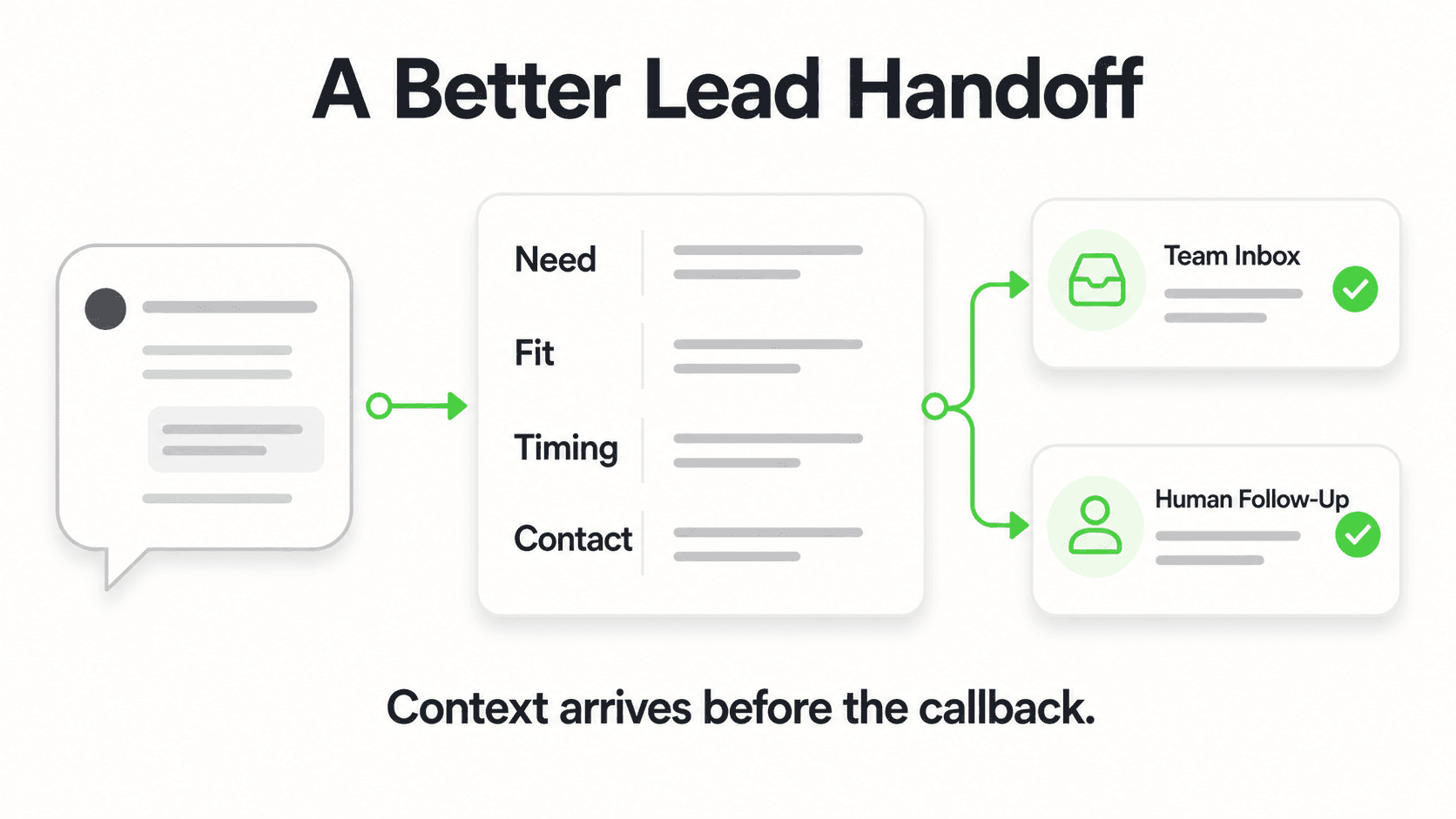
Faster response, more captured leads
- Teams that automate first response report recovering a meaningful share of the after-hours inquiries that previously went unanswered until the next business day — the exact window NAR/Zillow data shows accounts for over 60% of inquiries (Source: NAR / Zillow Group)
- Structured, always-on qualification means fewer unqualified leads reaching an agent's calendar, since budget and timeline are captured up front
- Results vary meaningfully by market, price point, and lead source — treat any specific percentage from a vendor case study as illustrative, not a guarantee for your business
Time returned to agents and team leads
- Every listing FAQ answered by the AI is a phone call or email an agent didn't have to personally handle
- Team leads no longer act as a manual routing bottleneck for every inbound lead, since qualified leads are notified automatically
- Time saved compounds during high-volume periods (spring buying season, a hot new listing, a viral social post) when inquiry spikes would otherwise overwhelm a small team
A more consistent first impression
- Every prospect gets an answer within the same conversation, regardless of what time they reach out — no "we'll call you back" leaving a bad first impression
- Consistent qualifying questions mean agents walk into every follow-up call already knowing budget, timeline, and intent
- Multilingual support removes a friction point that otherwise turns into "we're waiting on a translator" delays for relocation and international buyers
A defensible edge against faster competitors
- In a market where 78% of buyers choose the first agent who responds (Source: NAR, 2024), being structurally faster than competing agents is a durable advantage, not a one-time trick
- Smaller teams and independent agents can offer the same instant-response experience as much larger brokerages without hiring night-shift staff
Implementation Roadmap for Real Estate Chatbots
Rolling out an AI chatbot doesn't require a multi-month project. A focused 30-day rollout works well for most independent agents and small teams:
Week 1 — Gather your knowledge base. Pull together your most-asked FAQs, current listing sheets, neighborhood guides, and buyer/seller process explainers. This is the content the AI will answer from — the better organized it is, the better the AI's answers will be.
Week 2 — Configure lead capture and qualification. Decide what fields your lead form should collect (budget, timeline, buyer vs. seller, preferred areas) and write the qualifying questions you'd normally ask on a first call (the free lead qualification questions generator gives you a starting list to edit). Connect your booking link for showing scheduling.
Week 3 — Deploy across channels and test. Add the chat widget to your website, connect your WhatsApp Business number, and link Instagram DM and Facebook Messenger. Run test conversations from a buyer's perspective — ask the questions a real prospect would ask, and check the answers.
Week 4 — Set up team notifications and review. Confirm the right agent (or team) gets notified when a lead comes in, export a sample lead list to check the data quality, and review any conversations the AI escalated to see what knowledge gaps to fill next.
Start with one or two listings
Rather than uploading your entire inventory on day one, start with your two or three most active listings and your core FAQ set. Watch how the AI handles real questions for a week, refine the knowledge base based on what it struggled with, then expand to your full portfolio.
Must-have features to look for when evaluating a real estate chatbot:
- Lead form that captures contact details before the conversation begins (not after)
- Document-grounded answers so responses stay accurate to your actual listings
- Multi-channel deployment — Website, WhatsApp, Instagram DM, Facebook Messenger, at minimum
- Instant team notifications so speed-to-lead actually improves
- In-chat showing booking (Calendly or Cal.com) or booking-link sharing
- REST API and webhooks for connecting to whatever CRM or spreadsheet your team already uses
For a broader look at what a fully staffed AI front desk covers beyond chat — call routing, FAQ handling, and lead intake together — see our guide on AI receptionists for real estate. If your team specifically wants a myth-free breakdown of what these tools can't do (MLS sync, CRM auto-integration), read what a real estate AI chatbot can and can't do.
Frequently Asked Questions
Will an AI chatbot replace my real estate agents?
No. An AI chatbot handles first response, answers repetitive questions, and qualifies leads — it doesn't negotiate offers, advise on contract terms, or replace the judgment a licensed agent brings to a transaction. Think of it as clearing the volume so your agents spend their time on relationship-building and closing, not repeating the same FAQ answers all week.
How much does an AI chatbot for real estate cost?
Hyperleap AI Agents start at $40/month on the Plus plan (3,000 AI responses, 1 chatbot, 4 channels), with Pro at $100/month and Max at $200/month for higher volume and multiple chatbots. All plans include a 7-day free trial, and a credit card is required to start the trial. There's no free plan. Add-ons like OTP-verified lead capture and Multi-variant (locations, courses, etc) are priced separately; Managed Setup is offered $299 Free — see the pricing page for full details.
Can the chatbot pull listings directly from the MLS or Zillow?
No. There is no live MLS sync or Zillow/Realtor.com integration — no vendor should claim this without evidence, since it isn't standard in the category. What the chatbot does is answer from listing sheets and content you upload manually, which keeps information accurate to what you've actually shared, even if it requires updating the knowledge base when a listing changes status.
Does the chatbot integrate with my CRM?
Connectivity to your CRM happens via REST API and webhooks, which lets your development team (or a technical partner) push captured leads into whatever system you use. This is not a native one-click integration for every CRM — treat it as "connectable with some setup," not "plug and play."
How long does it take to set up a real estate chatbot?
Most independent agents and small teams can go live within a week if they already have listing FAQs and a booking link ready. A more thorough rollout — refining the knowledge base, testing multi-channel deployment, and tuning qualification questions — typically takes about 30 days, as outlined in the implementation roadmap above.
Will leads feel like they're talking to a robot?
The goal is a conversation that feels responsive and useful, not a maze of rigid menu options. Because the AI answers from your actual listing content and asks natural qualifying questions, most prospects experience it as a fast, helpful first response rather than an obviously automated one — though it should never pretend to be a licensed agent giving legal or financial advice.
Does the chatbot work for both buyers and sellers?
Yes. Qualification flows can be configured separately for buyer inquiries (budget, timeline, must-haves) and seller inquiries (property details, timeline to list, reason for selling), so the questions asked match the type of lead coming in.
What channels does a real estate chatbot support?
Website chat widget, WhatsApp Business, Instagram DM, and Facebook Messenger — the four channels where property inquiries actually arrive today. SMS and voice are not currently supported channels; if a competitor claims otherwise, verify before trusting it.
The First Response Wins — Every Time
The economics here are not complicated: 78% of buyers work with whoever answers first, most inquiries arrive after your office closes, and the agents who respond within minutes convert dramatically better than those who respond hours later. An AI chatbot doesn't change any of those facts — it changes whether your brokerage is positioned to act on them.
For a small team or independent agent, that's the difference between competing against brokerages with dedicated call centers and matching their response speed without the headcount. For a growing team, it's the difference between a lead-routing bottleneck that caps your growth and a system that scales with inquiry volume automatically.
Hyperleap AI Agents deploy across Website, WhatsApp, Instagram DM, and Facebook Messenger, answer from your own listing content, capture qualified leads through a structured form, and notify your team the moment a prospect is ready to talk. See how it fits your listings and process on the real estate agents page, or explore the full feature set before you commit.
Never let a listing inquiry go unanswered again
Deploy an AI chatbot trained on your listings and process docs — capturing and qualifying leads on Website, WhatsApp, Instagram, and Facebook, 24/7.
Get StartedIndustry Solutions
See how AI chatbots work for these industries:
Related Articles

How to Add an AI Chatbot to Squarespace (Step by Step)
Step-by-step guide to adding an AI chatbot to Squarespace via Code Injection, plus plan requirements, troubleshooting, and a pre-launch checklist.

Facebook Messenger Chatbot for Local Businesses
A Facebook Messenger chatbot helps local businesses answer FAQs, capture leads, share booking links, and route inquiries 24/7 — without a human watching the queue.

Lead Qualification Chatbot: Questions, Fields, and Handoff Rules
A lead qualification chatbot turns raw contacts into ranked, routed leads — before a rep wastes the first call. Here's the question stack, scoring, and handoff logic that works.

AI Lead Capture Chatbot: Convert Website Visitors Into Qualified Leads
An AI lead capture chatbot does what forms can't: qualify intent, capture contacts, and hand clean leads to your team — across four channels, 24/7.