AI Chatbot for Roofing Companies: Win the Storm Rush
A chatbot for roofing companies answers storm-surge leads instantly, collects damage photos, and routes insurance questions before competitors call back.

TL;DR: After a hailstorm, every roofer in the same zip code gets slammed with inquiries in the same 48-hour window — response speed, not reputation, decides who gets the job. A chatbot for roofing companies answers every storm-damage inquiry instantly, collects address and photos for the estimate, routes insurance-claim questions without giving coverage advice, and screens leads by service area before your office ever picks up the phone. Roofing leads run $50–$95 each (LocaliQ), among the highest-cost-per-lead of any home service trade — which makes an unanswered inquiry one of the most expensive mistakes a roofing company can make.
AI Chatbot for Roofing Companies: Win the Storm Rush
A hailstorm rolls through on a Tuesday afternoon. By Wednesday morning, every roofing company within 20 miles has the same 200 homeowners searching "roof storm damage repair near me" — and most of them are messaging three or four roofers at once. The company that answers first, looks legitimate, and gets a photo-backed estimate on the calendar wins the job. The other three roofers never even find out they lost it; the lead just goes cold.
This is the defining economic reality of roofing: demand doesn't trickle in evenly. It arrives in floods, tied to weather events, and every roofer in the affected area is competing for the same homeowners at the same moment. An AI chatbot for roofing companies exists to solve exactly this problem — it answers the surge the instant it hits, not whenever your office staff gets through the backlog.
What Is a Chatbot for Roofing Companies?
A chatbot for roofing companies is an AI-powered messaging assistant, deployed on your website and social channels, that answers homeowner inquiries, collects storm-damage details and photos, and routes qualified leads to your sales team — all without a human on the other end during the first response. It is not a substitute for your estimator or crew; it is the always-on front door — an AI receptionist for your roofing business — that makes sure no inquiry sits unanswered while your team is on a roof or fielding twenty other calls.
For roofing specifically, this looks like:
- Instant response to storm-damage inquiries on your website, WhatsApp, Instagram DM, or Facebook Messenger, any hour of the day
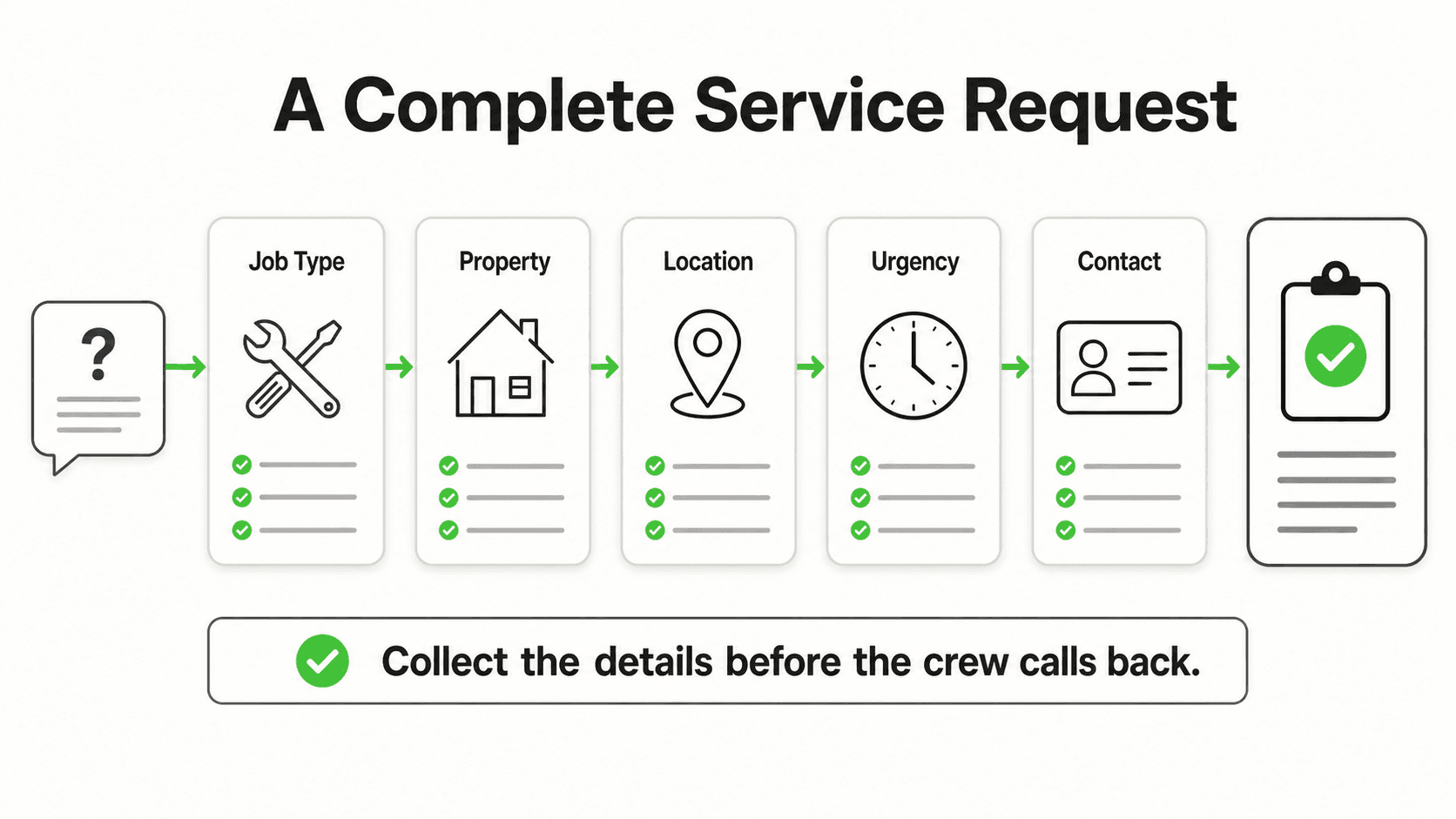
- Structured intake that captures address, roof age, damage type, and whether an insurance claim is already filed
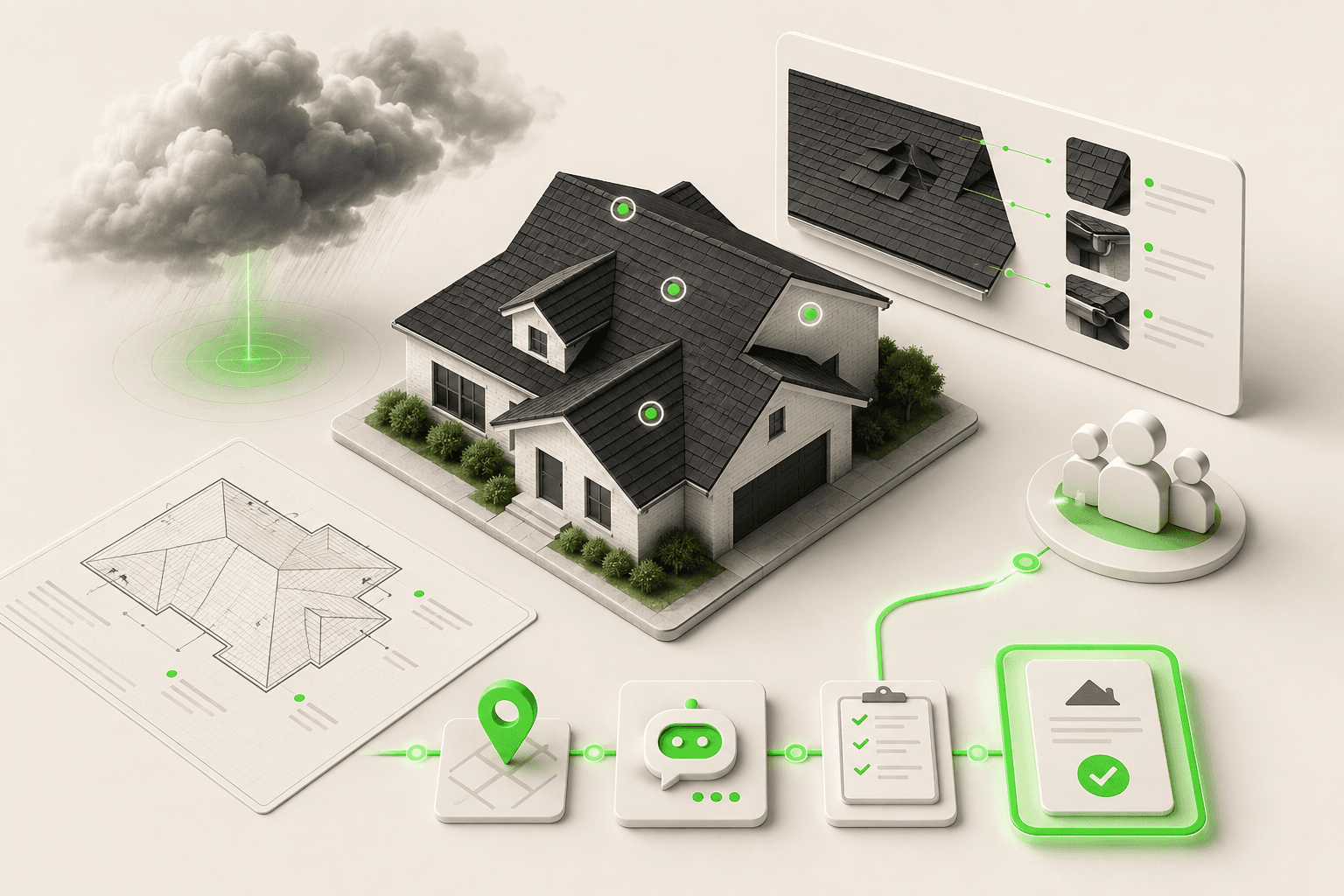
- Photo collection so your estimator has visual context before the first site visit
- Service-area screening that filters out homeowners outside your coverage radius before your office wastes a callback
- Insurance-claim routing that collects claim context and connects the homeowner to your team — without giving coverage or claim-approval advice
- Financing and estimate FAQs answered consistently, 24/7, without tying up staff time
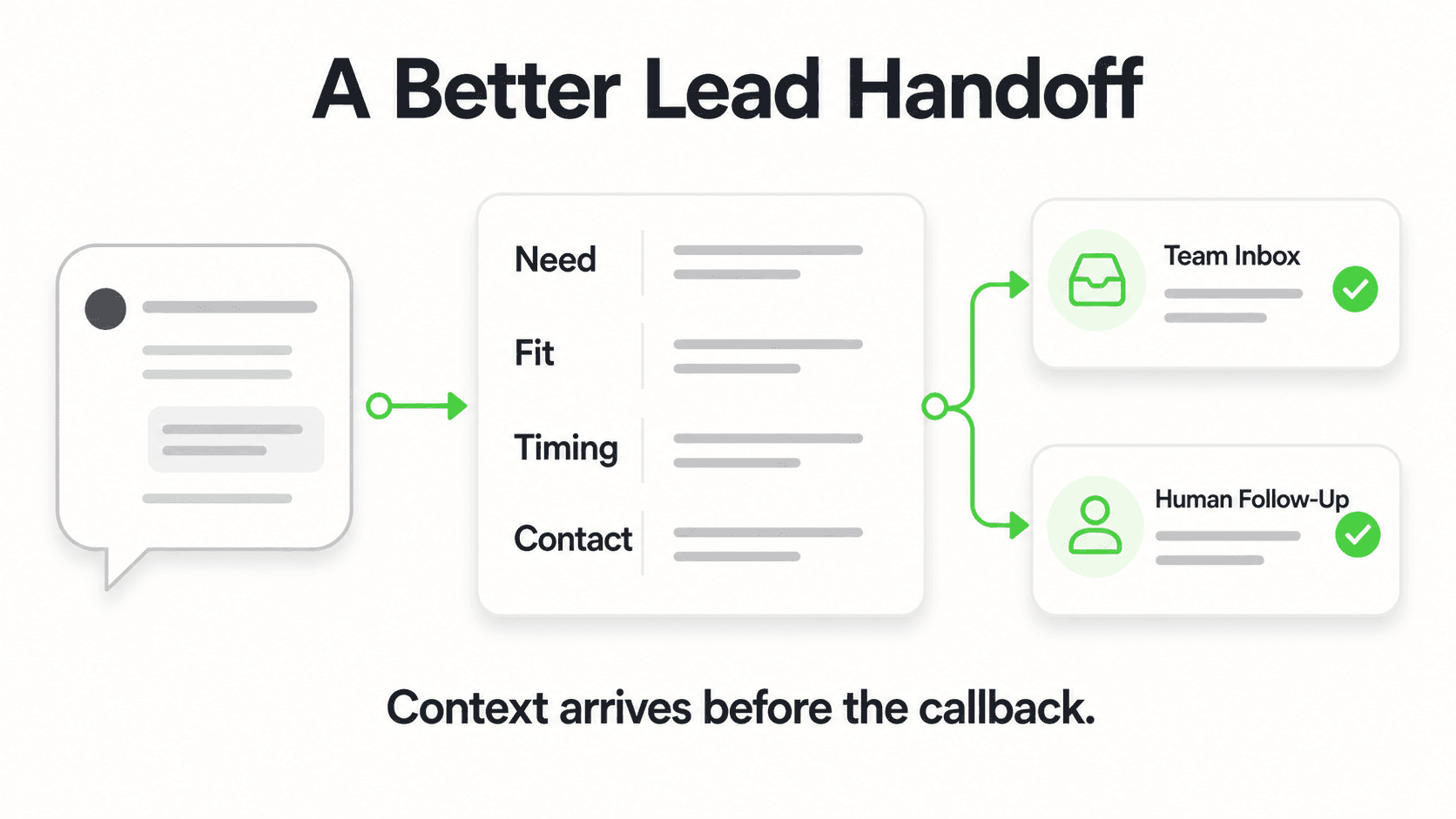
This differs from a traditional "contact us" form in one critical way: a form is silent. It captures data and gives nothing back. A chatbot responds in real time, confirms receipt, sets expectations on next steps, and keeps the homeowner engaged instead of letting them open a second browser tab to search for your competitor.
Who This Guide Is For
This guide is for residential and commercial roofing companies with 3–50 employees who want to capture more storm-surge and everyday leads without adding office staff. Setup typically takes 3–5 days and requires no technical background.
Why Roofing Companies Lose Jobs They Never Knew Existed
The most expensive missed leads in roofing are invisible. The homeowner who filled out a form at 9 PM and never heard back doesn't show up as a "lost deal" in your CRM — they just never respond to your follow-up call three days later, because they already signed with someone else.
Storm surges compress the entire buying decision into 48–72 hours. After a major hail or wind event, homeowners aren't casually researching — they're comparing responsiveness in real time, often messaging multiple roofers within the same hour. Whoever replies first with a clear next step (a scheduled inspection, a confirmed callback window) gets the meeting. The rest get ignored, even if their eventual bid would have been lower.
The trust problem is real, and it cuts against slow responders. Storm-chasing roofing outfits — crews that show up after a weather event, sign contracts fast, and disappear before the work is done well — have made homeowners understandably cautious. A local, established roofer's advantage is legitimacy: a real business, a real address, a real team that will be there for the warranty claim next year. But that advantage only matters if the homeowner actually gets to see it. If your response is slower than a storm-chaser's aggressive door-knock, you never get the chance to demonstrate you're the safer choice.
High ticket size raises the stakes of every missed lead. A full roof replacement runs from several thousand dollars into the tens of thousands, and roofing carries some of the highest cost-per-lead figures in home services — $50–$95 per lead, per LocaliQ's home-services benchmark data, referenced in our analysis of why home service businesses lose jobs to slow response. At that price, a lead that goes unanswered isn't just a missed job — it's wasted ad spend on top of it.
Insurance-claim questions eat office time your staff doesn't have. "Will my insurance cover this?" "How does the claims process work?" "Do you deal directly with my adjuster?" These questions arrive constantly, especially after storms, and answering them one by one on the phone pulls your estimator away from actually estimating.
The Four Lead Types Your Chatbot Should Distinguish
| Lead Type | Example | Routing Priority |
|---|---|---|
| Active storm damage | Hail dents, missing shingles after a named storm | Same-day inspection scheduling |
| Suspected damage, unconfirmed | "Not sure if I have damage, want an inspection" | Standard inspection queue |
| Insurance claim in progress | Adjuster already scheduled or claim filed | Route to team with claim-context notes |
| Non-storm estimate | Aging roof, leak, remodel, new construction | Sales follow-up queue |
This routing means your office isn't triaging every inbound message by hand — the chatbot has already sorted urgent storm work from routine estimate requests before a human looks at it.
7 Ways a Chatbot Pays for Itself in Roofing
1. Captures Storm-Surge Leads the Moment They Hit
When a hailstorm or high-wind event drives a spike in inquiries, your chatbot doesn't get overwhelmed the way a two-person office does. It responds to every website visitor and every WhatsApp or Facebook message instantly, confirms the address is in your service area, and gets an inspection request on the books — all while your phone lines are still ringing off the hook.
Real-world impact: Even one additional roof replacement captured during a storm surge — jobs that commonly run into five figures — covers a chatbot subscription many times over.
2. Collects Photos and Damage Details Before the First Call
Homeowners can send photos of visible damage directly through the chat. Your chatbot prompts for the basics: roof age, damage type (missing shingles, hail dents, visible leaks), and location on the roof. Your estimator walks into the first conversation already informed, instead of starting from zero.
Key features:
- Photo upload prompts built into the intake flow
- Structured damage-type categories your team defines
- Address and roof-age capture for faster scheduling decisions
3. Routes Insurance-Claim Questions — Without Giving Insurance Advice
This is where discipline matters. Your chatbot should collect claim context — has a claim been filed, is an adjuster scheduled, what's the homeowner's insurance carrier — and route that information to your team. It should never assess whether damage qualifies for coverage, estimate a claim payout, or advise on the claims process itself. That's a licensed adjuster's job, not the chatbot's. Configure clear boundaries: the bot gathers facts and routes; your team handles anything that touches coverage determination.
Insurance Language Matters
Configure your chatbot to say "I'll connect you with our team to walk through your insurance claim" — never "your insurance will cover this" or any statement that implies coverage approval. The AI routes claim questions to your staff; it does not adjudicate claims.
4. Screens Leads by Service Area Before Office Time Is Spent
Storm coverage areas can span dozens of zip codes, but your crews don't cover all of them. A quick address or zip check in the chat flow filters out homeowners outside your radius before your office calls back a lead you can't actually service — saving hours of wasted follow-up during your busiest weeks.
5. Handles Financing and Estimate FAQs Around the Clock
"Do you offer financing?" "How much does a full replacement typically run?" "Do you work with my insurance company directly?" Train your chatbot on your standard answers — including range guidance rather than firm quotes — and it handles this volume without pulling your estimator off a job site to answer the same five questions repeatedly.
6. Establishes Legitimacy Fast — Countering the Storm-Chaser Problem
A homeowner who has heard warnings about storm-chasing contractors wants reassurance they're dealing with a real, local business. A chatbot that responds instantly, confirms your service area and licensing details, and sets a clear next step (a scheduled inspection with a named team) signals professionalism in a way a missed call or a generic voicemail never can. Speed and clarity are themselves a trust signal.
7. Frees Your Office Staff for Scheduling and Follow-Through
Once the chatbot handles first response, intake, and FAQ volume, your office team's time shifts from answering the same questions on repeat to confirming appointments and managing the crew schedule — the work that actually requires a human.
Respond First, Win the Job
Your customers don't wait, and after a storm they're messaging your competitors at the same time they're messaging you. The roofing company that answers first — with a clear next step, not just a "someone will call you back" — wins the inspection, and usually the job.
Real Results: What Roofing Companies Are Achieving
Revenue Recovery
- Storm-surge inquiries captured and scheduled the same day, instead of sitting in an overwhelmed voicemail box
- Fewer wasted ad-spend dollars on the $50–$95-per-lead roofing leads that go cold after a slow response (Source: LocaliQ)
- Faster path from "inquiry" to "scheduled inspection" during peak season, when the highest-value jobs are decided in days, not weeks
Operational Efficiency
- Office staff spend less time on repetitive FAQ calls and more time confirming appointments and managing crews
- Estimators arrive at first inspections with photos and damage details already on file
- Insurance-claim inquiries arrive at the sales team pre-sorted with claim status, instead of buried in a general inbox
Trust and Conversion
- A consistent, professional, instant response helps differentiate an established local roofer from door-knocking storm chasers
- Homeowners get a clear next step immediately, reducing the chance they keep shopping after the first message
- Financing and process questions get the same accurate answer every time, instead of varying by whoever happens to pick up the phone
- Repeat and referral business improves when the same instant-response experience carries through routine maintenance and follow-up inquiries, not just emergency storm work
None of this requires replacing how your business already operates. The chatbot sits in front of your existing intake process — it just makes sure that process starts the moment an inquiry arrives instead of whenever staff availability allows.
Implementation Roadmap for Roofing Companies
Before you start: Write a one-page reference covering your service area (zip codes or counties), licensing and insurance details, standard financing options, and a plain-language description of how you handle insurance claims (routing, not advising). This becomes your chatbot's knowledge base.
Phase 1 — Week 1: Set up your intake flow. Keep it to 5–6 questions: damage type → address/zip → roof age → photos (optional upload) → insurance claim status → best contact number. More than that adds friction and drops completion rates during a storm surge, when speed matters most.
Phase 2 — Weeks 1–2: Deploy your channels. Start with your website widget, since that's where storm-surge traffic from Google searches and Local Services Ads lands first. Add WhatsApp and Facebook Messenger if homeowners in your market already use them — during a regional storm event, having more than one channel live matters, because not every homeowner defaults to your website.
Phase 3 — Weeks 2–3: Configure claim and financing boundaries. Write out exactly what the chatbot should and should not say about insurance coverage, and load your standard financing FAQ answers. Review this with whoever handles your insurance-claim liaison work today, so the bot's language matches how your team already talks to homeowners.
Phase 4 — Ongoing: Review storm-season performance. After your next weather event, check how many inquiries the chatbot captured versus your historical missed-call rate, and refine the intake questions based on what homeowners actually ask.
See the step-by-step no-code chatbot setup guide for the full walkthrough of building a knowledge base and connecting channels.
Stop Losing Storm-Surge Roofing Leads
Deploy a chatbot that answers every homeowner inquiry instantly, collects damage photos, and routes insurance questions — before your competitor calls back.
Start Free TrialThe Roofer Who Answers First Gets the Inspection
Roofing is a business where the biggest jobs arrive in waves, and the waves don't wait for your office to catch up. The homeowner staring at hail damage on their roof isn't going to sit patiently while you work through a backlog of voicemails — they're messaging the next roofer on the list, and in a storm-surge window, that next roofer might answer in under a minute.
An AI chatbot for your roofing company closes that gap. It answers at midnight after a storm, screens leads by service area before your office wastes a callback, collects photos and claim context your estimator needs, and keeps insurance questions routed correctly instead of turning into coverage promises you can't back up. It doesn't replace the trust your crew builds on the roof — it makes sure you get the chance to build it in the first place.
The competitive gap compounds the same way it does across home services generally: the roofer who responds fastest books the most inspections, closes the most jobs, and racks up the reviews that win the next storm cycle before it even happens. Meanwhile the roofer who takes three days to call back is still wondering why their close rate has been sliding — the broader home-service response-time data says the answer is almost always speed, not price.
Start your 7-day free trial and make sure your roofing company is the one that answers first the next time a storm rolls through.
Data Sources
- LocaliQ home services cost-per-lead benchmarks (roofing: $50–$95/lead), cited via our home service response-time analysis
- InsideSales.com, lead response time and conversion research
- U.S. Small Business Administration
- BLS occupational outlook (construction and home services trades)
Once you've got the front-desk basics down, see how an AI receptionist for roofing companies handles storm-surge intake and dispatch routing specifically.
Frequently Asked Questions
Will an AI chatbot replace my estimators or office staff?
No. The chatbot handles first response, intake, and FAQ volume — the repetitive work that eats office time. Your estimators still perform inspections, price jobs, and close sales, and your staff still makes scheduling and dispatch decisions. Think of it as the always-on front desk that makes sure no storm-surge inquiry goes unanswered while your team is out on roofs.
Can the chatbot tell a homeowner whether their insurance will cover the repair?
No, and it shouldn't try to. The chatbot collects claim context — whether a claim is filed, the insurance carrier, adjuster scheduling status — and routes that information to your team. Coverage determinations and claims advice come from your staff and the homeowner's insurer, never from the AI.
How does the chatbot handle a storm-surge volume spike?
It responds to every inquiry at the same speed whether it's the first message of the day or the two-hundredth during a post-storm rush. There's no hold queue, no busy signal, and no backlog — every homeowner gets an immediate acknowledgment and a next step, which is the main reason roofing companies deploy this during storm season specifically.
Does the chatbot collect photos of roof damage?
Yes. The chat flow can prompt homeowners to upload photos of visible damage, which your estimator can review before the first site visit. This doesn't replace an in-person inspection, but it gives your team useful context up front.
How much does an AI chatbot for a roofing company cost?
Plans start at $40/month (Plus plan) with a 7-day free trial; a credit card is required to start. See full pricing details. Given that a single full roof replacement often runs into five figures, capturing even one additional storm-surge job typically covers the subscription cost many times over.
Can it connect to the CRM or job-management software we already use?
Hyperleap AI connects via REST API and webhooks, so you can route qualified leads into your existing CRM or job-management tool. For simpler setups, leads can also be delivered straight to your team's email or shared inbox — no integration required to get started.
How long does setup take before storm season?
Most roofing companies go live in 3–5 days for self-serve setup, which is enough runway to be ready before peak storm months. If you want it built for you, Managed Setup ($299 Free, available on every plan) has Hyperleap configure the bot on your service area, FAQs, and channels directly.
Does the chatbot only help with storm damage, or also everyday estimate requests?
Both. Storm surges are where the speed advantage is most visible, but the same instant-response, photo-collection, and service-area-screening flow works for routine estimate requests — aging roofs, leaks, remodels, and new construction — year-round.
Ready to Capture Every Storm-Surge Lead?
Hyperleap AI answers roofing inquiries instantly across your website, WhatsApp, and Facebook Messenger — 24/7, storm season or not.
Get StartedIndustry Solutions
See how AI chatbots work for these industries:
Related Articles
AI Receptionist for Roofing Companies: Never Miss a Lead
An AI receptionist for roofing companies answers storm-damage and estimate questions 24/7, qualifies homeowners, and routes leads to your team.
AI Receptionist for Landscaping Businesses
An AI receptionist for landscaping businesses answers quote and service questions 24/7, qualifies property details, and shares your booking link.

AI Chatbot for Moving Companies: Win the Quote Race
A chatbot for moving companies qualifies quote requests instantly — origin, destination, home size, date — so you respond before rival estimates land.

AI Chatbot for Electricians: Stop Losing Panel Jobs
A chatbot for electricians captures burning-smell emergencies and EV charger quote requests 24/7, routing urgent calls fast and qualifying leads.