What Is Ticket Deflection and How to Measure It
Ticket deflection defined: how it differs from containment and self-service rate, the formula, a worked example, and how to measure it without a helpdesk.
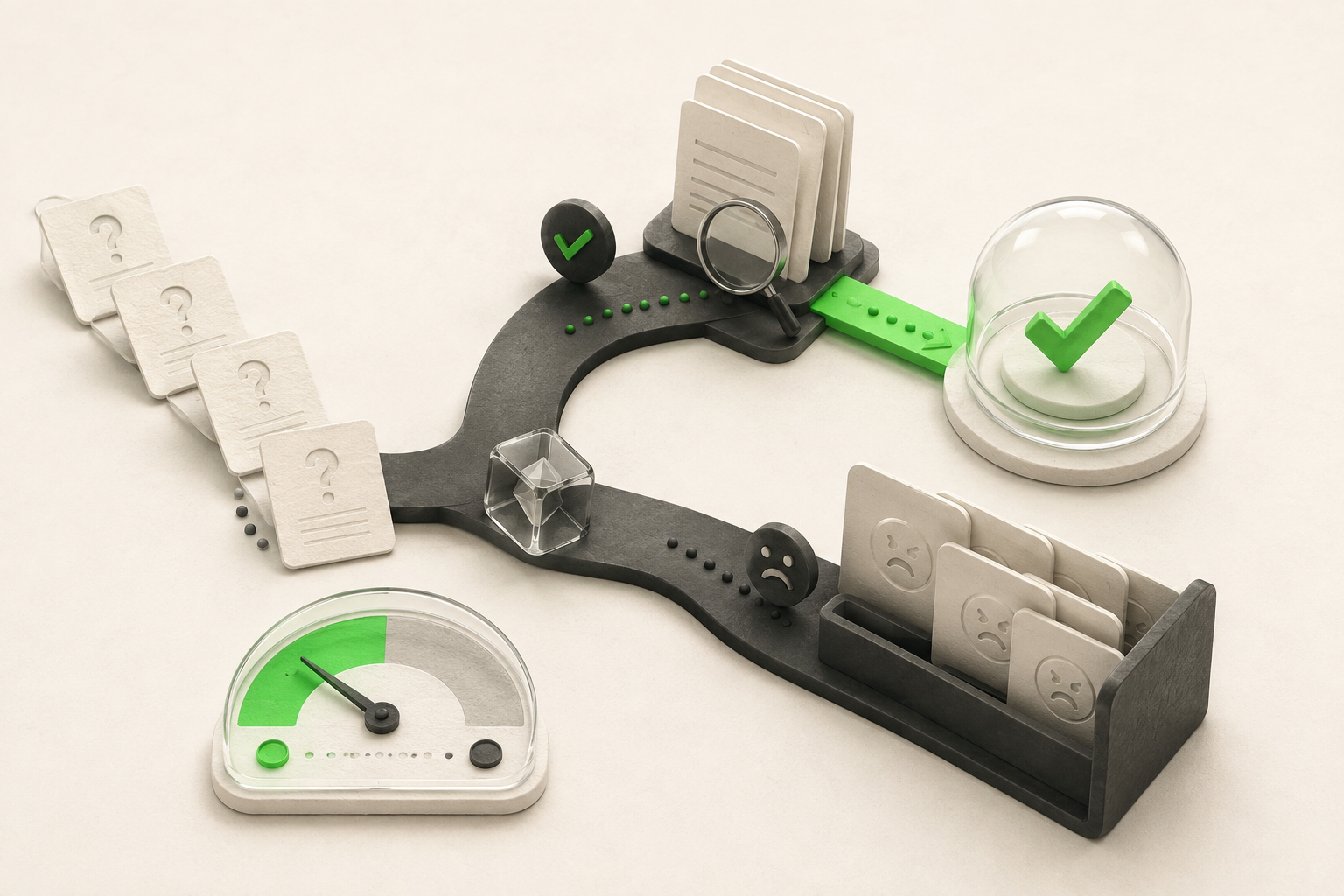
TL;DR: Ticket deflection is the practice — and the resulting metric — of resolving a customer's question before it becomes a support ticket a human has to work, typically by having an AI agent or self-service resource answer it directly. The formula is Deflected Conversations / Total Conversations × 100, but the honest version of that math only counts a conversation as deflected if the customer actually got a correct, satisfying answer — not simply that no ticket was logged. Deflection is closely related to but distinct from containment (which measures whether the AI kept the conversation, not whether it resolved it) and self-service rate (which measures usage of self-serve resources broadly, AI or not). Realistic deflection for a document-grounded AI agent on well-covered topics generally lands in the 30-70% range — not the 90%+ numbers sometimes seen in vendor marketing — and deflection should never be the target on billing disputes, safety issues, or regulated topics, where getting a human involved quickly is the better outcome, not a failure to automate.
Where this fits
This post defines and measures deflection as a standalone metric. For the operational design of what happens to the conversations that aren't deflected, see chatbot-to-human handoff best practices and the base definition in what is human handoff. For the full seven-KPI measurement framework deflection sits inside, see chatbot KPIs.
"Our chatbot deflects 80% of tickets" is one of the most common claims in AI customer service marketing, and one of the least scrutinized. Deflection sounds simple — a ticket that didn't get created — but the way it gets measured varies enormously between vendors, and a badly measured deflection number can make a genuinely unhelpful AI look like a huge success. This guide defines the metric precisely, shows the actual formula with a worked example, and covers the honesty problem that determines whether your deflection number means anything at all.
What Is Ticket Deflection?
Ticket deflection is the resolution of a customer inquiry through an automated channel — most commonly an AI agent, but also a help center article or FAQ page — before it requires a human support agent to open and work a ticket. The core idea is straightforward: every question an AI agent answers correctly and completely is one less ticket sitting in a queue, one less interruption to a human agent's day, and, for the customer, a faster answer than waiting for a reply.
The metric that measures this — the deflection rate — is calculated as:
Deflection Rate = (Deflected Conversations / Total Conversations) × 100
That formula looks clean, but "deflected" is doing a lot of work in that numerator, and how strictly you define it determines whether your deflection rate reflects reality or flatters your dashboard. The section on the honesty problem below covers exactly where that definition tends to get stretched.
Deflection vs. Containment vs. Self-Service Rate
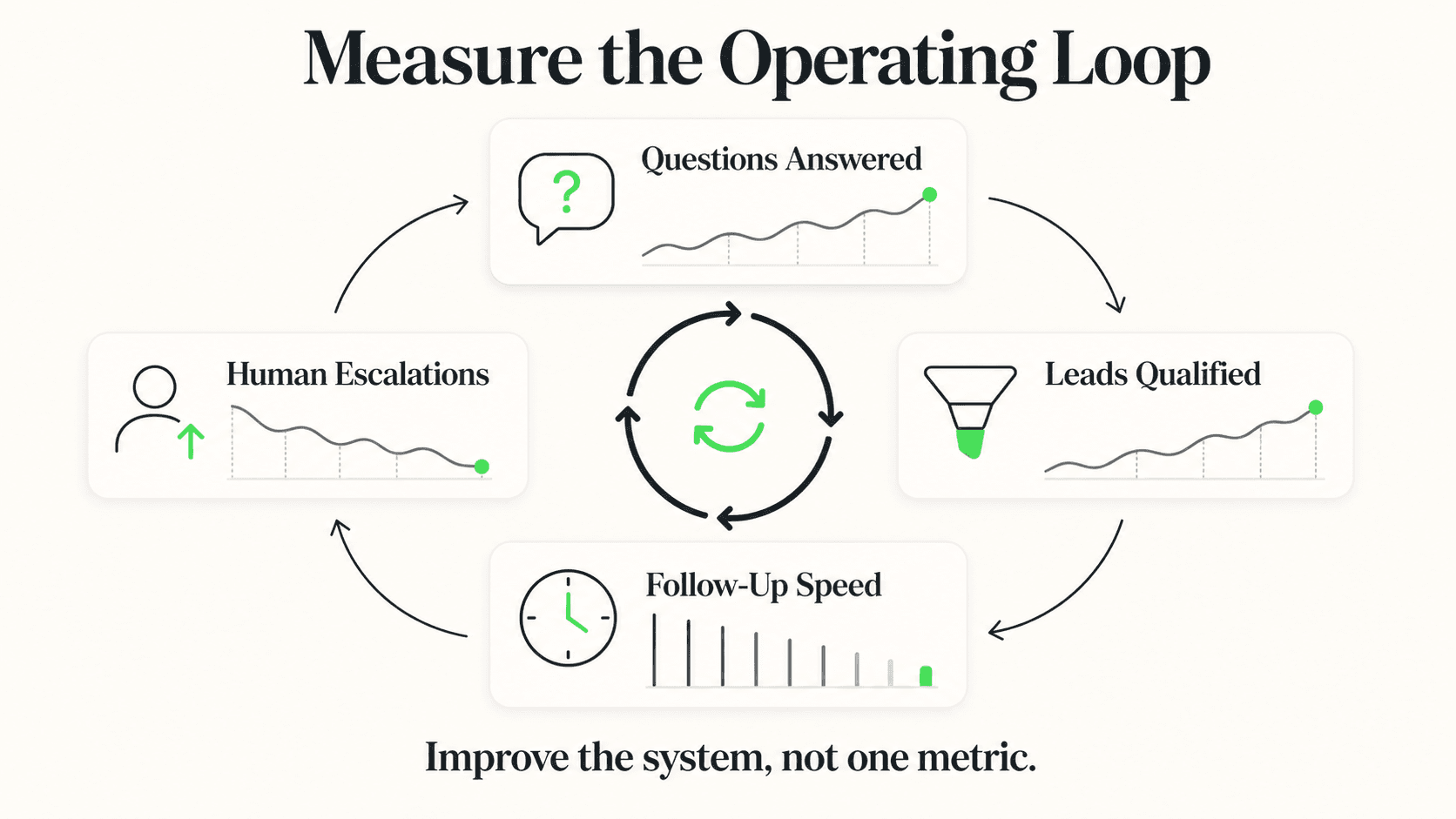
Deflection, containment, and self-service rate are three related but distinct metrics that get used interchangeably in vendor marketing, and conflating them is one of the easiest ways to misread your own numbers.
Containment rate measures whether a conversation stayed with the AI rather than escalating to a human — it answers "did the AI keep this conversation," not "did it actually resolve it." A conversation can be contained (the AI handled every message, no handoff occurred) while still ending in a customer who didn't get what they needed and simply gave up. Containment is a necessary condition for deflection, but it isn't sufficient on its own.
Self-service rate is the broader category: the share of customer needs met through any self-serve resource — a help center article, an FAQ page, a knowledge base search, or an AI agent — without contacting the business directly at all. Deflection is the AI-specific slice of self-service; a customer who found their answer in a static FAQ page contributed to self-service rate but not to AI deflection specifically.
Deflection rate, properly measured, sits on top of containment: it's the share of contained conversations that also resolved the customer's actual question, correctly, in a way that didn't require them to come back or escalate afterward. The distinction matters because a business optimizing purely for containment can inadvertently reward an AI for simply not escalating — regardless of whether it actually helped.
| Metric | What it measures | What it misses on its own |
|---|---|---|
| Containment rate | AI kept the conversation, no human involved | Whether the answer was actually correct or helpful |
| Self-service rate | Any self-serve channel resolved the need | Doesn't isolate AI's specific contribution |
| Deflection rate | Contained and genuinely resolved | Requires an honest definition of "resolved" (see below) |
The Deflection Formula: A Worked Illustrative Example
The deflection formula is Deflected Conversations / Total Conversations × 100, and applying it to real numbers shows exactly why the definition of "deflected" changes the outcome so much. The example below is a hypothetical, illustrative scenario for a small service business — not a specific customer's real data — meant to show the mechanics of the calculation.
Illustrative scenario: A 15-person home services business runs an AI agent that handles 400 customer conversations in a month.
- 400 total conversations that month
- 310 were contained by the AI (no human involved at any point) — a 77.5% containment rate
- Of those 310, a manual review of a sample found that 265 gave the customer a complete, correct answer that didn't require a follow-up contact
- The remaining 45 contained conversations technically avoided escalation, but the customer either asked a vague follow-up that went unanswered or never confirmed the answer resolved their need
Deflection Rate = 265 / 400 × 100 = 66.3%
Containment Rate = 310 / 400 × 100 = 77.5%
The gap between those two numbers — 77.5% containment versus 66.3% deflection — is the honesty problem in miniature. A business (or a vendor) reporting only the containment number would claim a stronger result than the conversations actually delivered. This illustrative range (roughly 60-70% deflection against a higher containment number) is a reasonable planning assumption for a well-configured, document-grounded AI agent on well-covered topics; results vary by knowledge base quality, industry, and how strictly "resolved" is defined.
Always ask which number a vendor is reporting
When a vendor states a deflection percentage, ask directly whether it's measuring contained conversations or a manually or automatically verified subset that customers actually confirmed as resolved. The two numbers can differ by ten or twenty percentage points on the same dataset.
The Honesty Problem: Real Deflection vs. a Customer Who Gave Up
The honesty problem in deflection measurement is that "no escalation happened" and "the customer got a real answer" are not the same event, and most automated deflection counters can't tell the two apart without deliberate design. A conversation where the AI gave a vague, technically-on-topic response and the customer simply left — never confirming the answer worked, never coming back, never escalating — looks identical in most systems to a conversation that was genuinely and completely resolved.
This matters because the failure mode is invisible by default. Unlike a wrong answer that generates a complaint, a customer who quietly gives up produces no signal at all — no ticket, no escalation, no bad review necessarily, just a silent drop-off that a naive deflection count happily records as a win.
A few practical ways to close this gap without a full helpdesk analytics stack:
- Sample and review manually. Pull 30-50 "deflected" conversations a week and read them. Did the customer's actual question get answered, or did the conversation just end after a plausible-sounding reply? This is the single most reliable check, and it costs 20-30 minutes.
- Add a lightweight post-conversation prompt. A simple "did this answer your question?" at the natural end of a conversation gives you a direct confirmation signal instead of inferring resolution from silence.
- Watch for return visits on the same topic. If the same customer (or the same broad question) comes back within a day or two, the earlier conversation likely didn't actually resolve anything, regardless of how it was logged.
- Cross-reference with handoff rate. As covered in chatbot-to-human handoff best practices, deflection and escalation rate should always be read together — a rising deflection number alongside a shrinking handoff rate is worth scrutinizing, not celebrating outright, if it isn't backed by resolution checks.
How to Measure Deflection Without a Full Helpdesk Stack
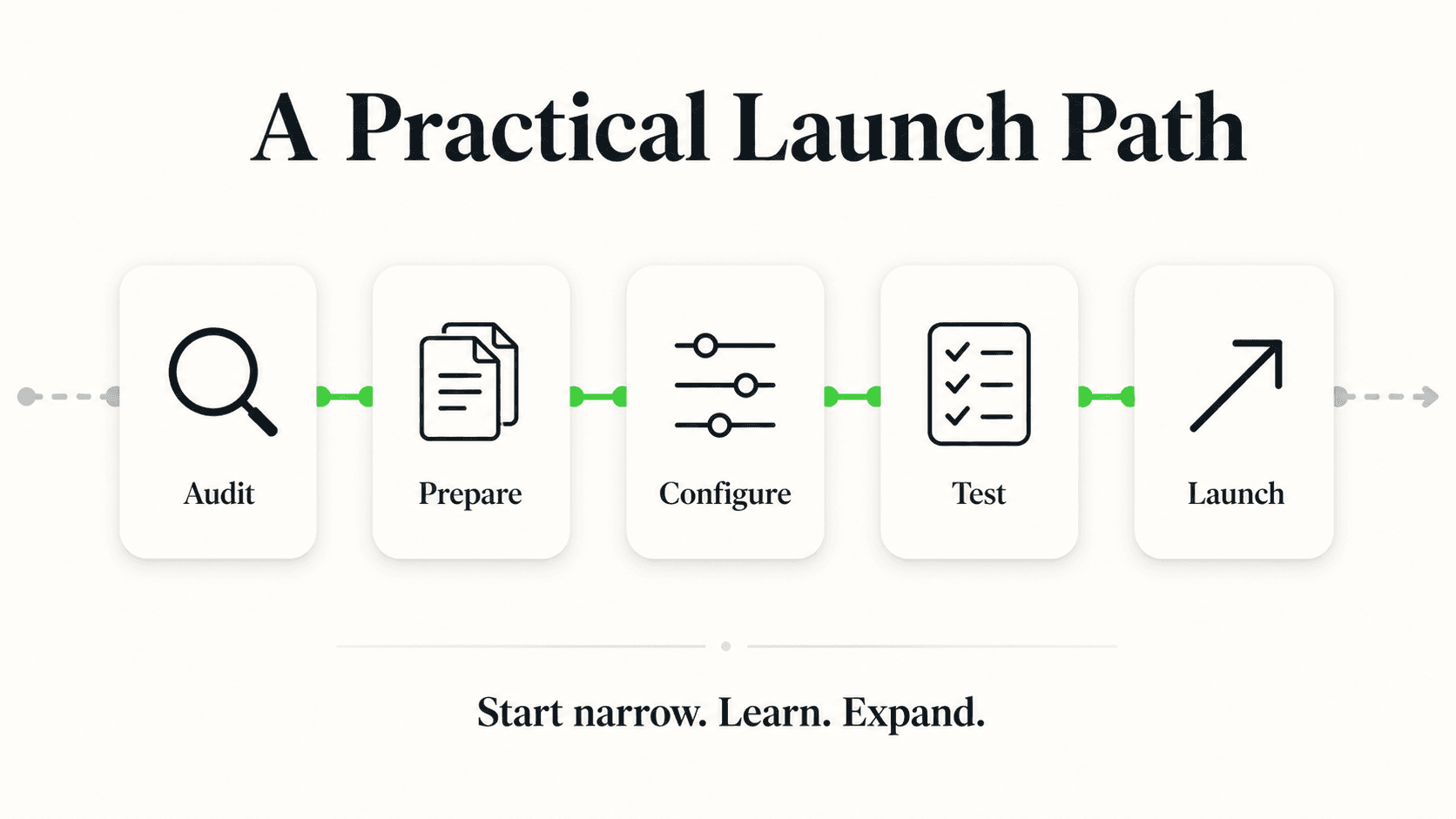
A small team without a dedicated helpdesk platform can measure deflection reasonably well using conversation logs, a manual review cadence, and a simple satisfaction prompt — a full ticketing system is not a prerequisite for honest measurement, just for the most automated version of it.
The practical setup:
- Start from your AI platform's conversation logs. Every deployment worth using should let you export or review a list of conversations, whether they were contained or escalated, and roughly how long they ran.
- Calculate containment first — it's the easy number. Divide conversations with no human involvement by total conversations. This is your starting point, not your final answer.
- Layer in a weekly manual sample. Read 30-50 contained conversations and mark each as genuinely resolved, ambiguous, or clearly unresolved. This gives you a real deflection rate, not just a containment proxy.
- Add a simple CSAT-style prompt if your platform supports it. Even a one-question "was this helpful?" after the AI's final message gives you a direct signal that doesn't require manual review of every conversation.
- Track the trend, not a single snapshot. A single week's deflection number is noisy. Track it over a month and look for direction — improving, flat, or declining — tied to specific knowledge base changes you made.
This is the same discipline covered in more depth in our chatbot KPI guide, which frames human escalation rate, response accuracy, and lead capture rate as the fuller picture deflection sits inside.
See deflection measured honestly, not just claimed
A document-grounded AI agent with conversation logs you can actually review — see what real deflection looks like on your own questions.
See It In ActionHow Document-Grounded Answers Raise Deflection Without Raising Complaints
Document-grounded AI answers raise deflection specifically because they reduce the two failure modes that make deflection numbers dishonest in the first place: a confidently wrong answer, and a vague non-answer the customer doesn't push back on but also doesn't accept. When an AI agent answers strictly from a business's own uploaded policies, pricing, and FAQs — rather than improvising from general training data — the resulting answers are designed to minimize hallucinated or fabricated details, which is what makes a rising deflection number trustworthy rather than a mask for a rising rate of quiet customer frustration.
This is the mechanism covered in depth in our guide to generative AI for customer service: retrieval-augmented generation (RAG) retrieves the most relevant passages from a business's actual documents before the AI generates anything, constraining the response to what those documents actually say. The practical effect on deflection specifically is that a well-grounded system is more likely to either give a correct, specific answer or recognize it doesn't have one and escalate — rather than the worst outcome, a fluent, plausible-sounding, wrong answer that quietly reduces trust while still counting as "contained" in a naive metric.
None of this makes deflection self-verifying. Even a well-grounded system needs the manual-review discipline described above, because grounding reduces the rate of bad silent outcomes — it doesn't eliminate the need to check.
Where Deflection Should NOT Be the Goal
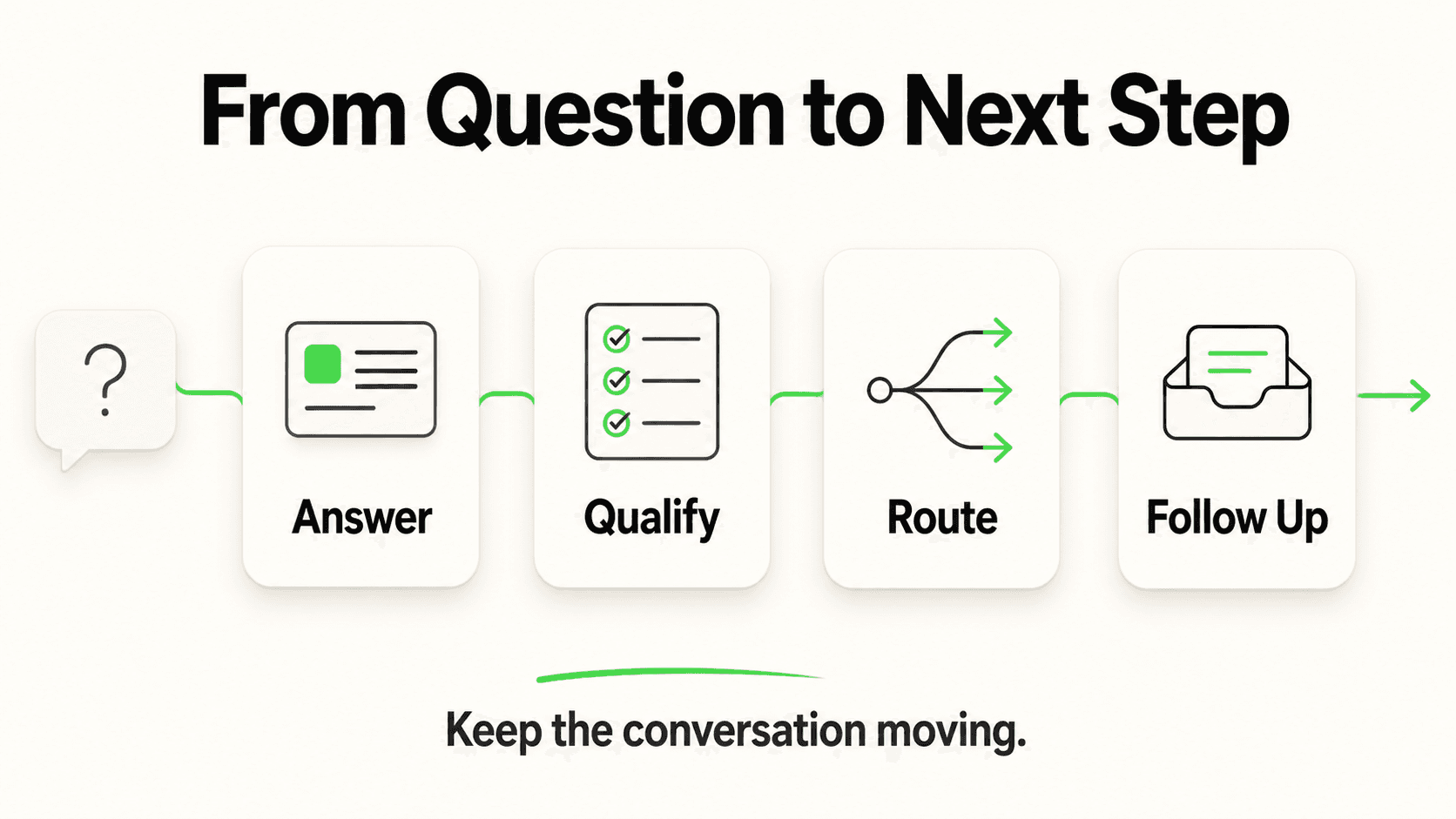
Deflection is the wrong optimization target for billing disputes, safety-related issues, and regulated topics — in each of these categories, getting a human involved quickly is the better outcome, and a high deflection rate on these categories is a warning sign, not a success metric.
Billing disputes and refund exceptions. A customer disputing a charge needs a person with the authority to investigate and adjust an account, not an AI-generated explanation of the standard policy. Deflecting these conversations by giving a generic policy answer instead of routing to a human is a fast way to convert an annoyed customer into an actively hostile one.
Safety-related issues. Anything touching product safety, a service incident, or a situation with potential harm needs immediate human attention. An AI agent should route these conversations, not attempt to resolve or reassure — this is routing language, not clinical or legal judgment, and the distinction matters in regulated categories like healthcare and legal services specifically.
Regulated topics. Healthcare questions that edge toward clinical assessment, legal questions that edge toward advice, and financial questions that edge toward specific recommendations should escalate by design, independent of how confident the AI's answer sounds. See chatbot-to-human handoff best practices for how to configure a hard-coded, always-escalate list for these categories rather than relying on a confidence threshold.
The broader principle: deflection is a tool for absorbing high-volume, low-judgment, repetitive questions — not a target to maximize universally across every category of inbound conversation. Reducing customer support costs with AI works because deflection concentrates on the right slice of volume, not because it drives every category toward automation regardless of the stakes.
Building a Deflection-Friendly Knowledge Base
A knowledge base written for deflection needs to answer questions the way customers actually phrase them, not the way your team documents them internally — and that single reframing does more for a deflection rate than almost any model or platform choice. A retrieval system can only ground an answer in content that exists and is phrased close enough to the question to be found; a technically accurate policy document written in internal language can sit in your knowledge base untouched while the same question gets escalated or, worse, guessed at.
A few practical habits that consistently raise genuine deflection:
- Write FAQ entries as questions, not headings. "What happens if I cancel mid-month?" retrieves better than "Subscription Lifecycle Policy" for a customer asking exactly that, even though both describe the same underlying content.
- Cover the follow-up questions, not just the first one. If customers who ask about your return window almost always ask about restocking fees next, put both in the same document — retrieval works better when related context sits together.
- Keep pricing and policy documents current the moment they change. A document-grounded AI answering from a stale price sheet will confidently quote the wrong number, and that specific failure mode erodes trust faster than an honest "I don't know."
- Revisit the questions surfaced by your weekly escalation review. Every conversation that got escalated for a knowledge gap is a direct signal of what to add next — this is the same review discipline covered in chatbot-to-human handoff best practices, applied in reverse to strengthen deflection over time.
This is also where the two metrics in this article reinforce each other in practice: a well-maintained knowledge base raises genuine deflection and, at the same time, narrows what actually needs to escalate — so the handoffs that do happen are the ones that truly need a human, not ones a better FAQ entry could have resolved.
Deflect the right conversations — and route the rest
Deploy a document-grounded AI agent that resolves repetitive questions correctly and escalates billing, safety, and regulated topics automatically. 7-day free trial, all plans.
Start Free TrialFrequently Asked Questions
What is a good ticket deflection rate?
There is no universal benchmark, because "deflection" is measured inconsistently across vendors and businesses. As a planning range, a well-configured, document-grounded AI agent on well-covered topics can reasonably target 30-70% deflection on the questions it's designed to handle — closer to the lower end in year one, improving as the knowledge base matures. Treat any vendor-claimed number above that range with the same scrutiny this article applies: ask whether it's measuring genuine resolution or simply the absence of escalation.
What's the difference between deflection and containment?
Containment measures whether a conversation stayed with the AI without escalating to a human. Deflection measures whether the conversation was also genuinely resolved — the customer got a correct, complete answer and didn't need to come back. A conversation can be contained without being deflected if the AI's response was vague, incomplete, or simply didn't address what the customer actually needed.
How do you calculate ticket deflection rate?
The formula is Deflected Conversations divided by Total Conversations, multiplied by 100. The rigor is in the numerator: a conversation should only count as "deflected" if a human reviewer (or a direct customer confirmation) verified the answer actually resolved the question — not simply that no human agent got involved.
Can you measure deflection without a helpdesk platform?
Yes. Start with your AI platform's conversation logs to calculate containment, then layer in a weekly manual review of 30-50 conversations to check for genuine resolution, and add a simple "was this helpful" prompt if your platform supports one. A dedicated helpdesk analytics suite makes this more automated, but it isn't required to measure deflection honestly at small scale.
Should deflection rate ever be 100%?
No, and a deflection rate approaching 100% across all conversation types is itself a warning sign rather than a goal. Certain categories — billing disputes, safety issues, regulated topics — should route to a human by design regardless of how confident the AI's answer is. A healthy deployment deflects the repetitive, low-judgment majority of inquiries while consistently escalating the categories that need human authority or judgment.
Does a higher deflection rate always mean lower support costs?
Generally yes, but only if the deflection is real. A high deflection rate built on vague or incomplete AI answers can quietly increase costs elsewhere — customers who give up without resolution, come back frustrated later, or churn without ever filing a complaint you'd notice. Our guide on reducing customer support costs with AI covers deflection as one of five cost levers, alongside self-serve, tier-1 automation, agent assist, and shift-left — pulling on genuine deflection compounds with the others; a fake deflection number doesn't.
How is deflection different from self-service rate?
Self-service rate is the broader measure of how many customer needs are met through any self-serve resource — help center articles, FAQ pages, or an AI agent — without contacting the business directly. Deflection specifically isolates the AI agent's contribution to that broader self-service outcome. A business can have a high self-service rate driven mostly by a well-organized FAQ page with comparatively low AI-specific deflection, or vice versa.
Industry Solutions
See how AI chatbots work for these industries:
Related Articles

Customer Service Automation: The Complete Guide (2026)
Customer service automation done right: what to automate, what to keep human, which tools to evaluate, and how to roll it out without breaking what already works.

Conversational AI for Customer Service: An Operational Guide for SMBs
Where conversational AI actually creates value in customer service, how to operationalize it without breaking your support team, and the failure modes that sink most deployments.

When Customers Ask for a Person: Reply Examples
Use respectful replies for customers who ask for a person, with clear availability wording, honest handoff status and a practical copy-review pack.

Real Estate Lead Handoff: The Agent-Ready Checklist
Use a real estate lead handoff checklist to preserve buyer intent, property context, unanswered questions and the next action without inventing certainty.