AI Receptionist for Pharmacies: The Non-Clinical Front Desk
An AI receptionist for pharmacies answers hours, services, and insurance questions 24/7 — and routes every medication question straight to your pharmacist.
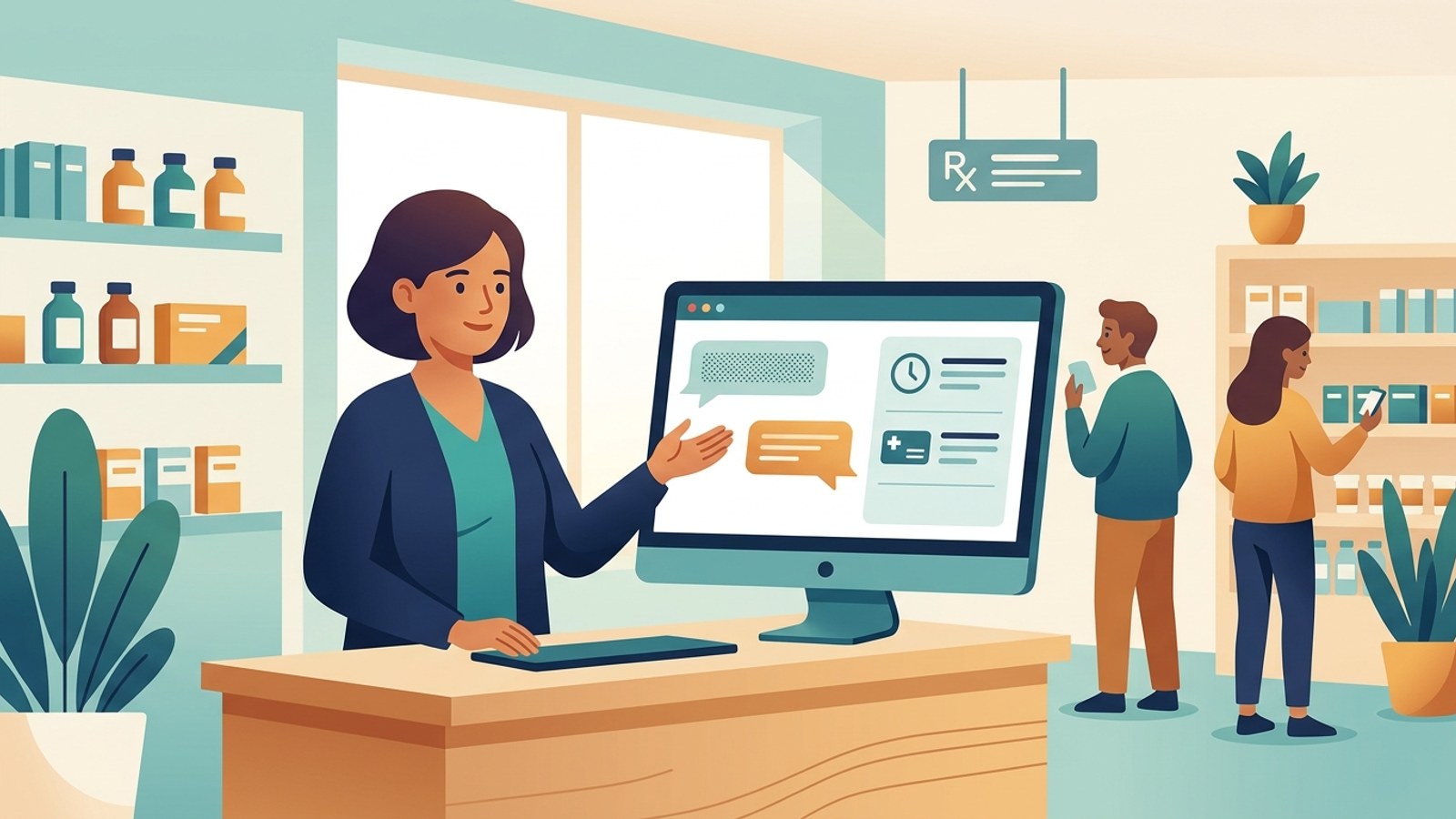
TL;DR: An AI receptionist for pharmacies is a chat-based front desk — running on your website, WhatsApp, Instagram DM, and Facebook Messenger — that answers store hours, service availability, insurance-accepted questions, OTC category guidance, and delivery-policy questions around the clock. It is deliberately built to stay out of prescription and medication territory: any question about refill status, dosage, interactions, or a specific patient's medication gets routed straight to your pharmacist, not answered by the AI. That boundary isn't a limitation bolted on after the fact — it's the design, because pharmacies are HIPAA-covered entities and Hyperleap AI does not offer a Business Associate Agreement.
A patient searches "is the flu vaccine available at [pharmacy name]" at 9 PM on a Sunday. Your pharmacy is closed until 9 AM Monday. They find your website, see a chat widget, and type the question. If nothing answers, they check the pharmacy two blocks over — the one whose website tells them right away.
That is the entire case for an AI receptionist at a pharmacy's front desk: most of what patients ask before they ever reach the counter has nothing to do with their prescription. It's whether you're open, whether you carry a product, whether you take their insurance plan, whether you deliver to their zip code. Those are front-of-house questions with document-based answers — the kind a well-trained AI agent can answer instantly, 24 hours a day, without ever touching a patient record.
The harder and more important part of this guide is the boundary. A pharmacy is not a generic retail storefront — it is a HIPAA-covered entity, and the moment a chatbot starts answering questions about a specific patient's prescription, dosage, or medication history, it is handling Protected Health Information (PHI). Hyperleap AI does not sign a Business Associate Agreement, which means it is not built — and should never be positioned — to touch that layer. This guide covers exactly what an AI agent for pharmacies can responsibly handle, where the line sits, and why routing instead of answering is the safer and more useful design for a pharmacy's front desk. If you're comparing this approach against the broader landscape of AI agents for healthcare practices, the non-PHI framing here is the same design pattern applied specifically to a pharmacy counter.
What the Front Desk Actually Handles
Strip away the marketing language and an AI receptionist for a pharmacy is a document-grounded chat agent that answers a specific, bounded set of questions from content your pharmacy has already written down: your hours, your service list, your accepted insurance plans, your delivery policy, and your general product categories. It runs on your website's chat widget, WhatsApp Business, Instagram DM, and Facebook Messenger — the same channels a patient already uses to message friends and other businesses.
Here's the practical job list:
- Store hours and locations. "Are you open on Sunday?" "What time does the pharmacy counter close vs. the front store?" — answered instantly from your posted hours, including holiday exceptions if you've documented them.
- Services offered. "Do you offer the flu vaccine?" "Can I get a blood pressure check here?" — this is a service listing, not a booking into a clinical scheduling system. The AI confirms the service is offered and, where you provide one, shares a general link or contact point for scheduling — it does not reserve a clinical appointment slot itself.
- Insurance-accepted questions. "Do you take [insurance plan]?" — answered from a documented list of accepted plans. General coverage confirmation, not a claims or eligibility check on a specific patient's plan.
- OTC product category guidance. "Do you carry allergy medicine?" "Where would I find cold remedies?" — the AI points to the aisle or product category. It never recommends a specific over-the-counter product for a symptom, and it never compares OTC options against a patient's health situation — that reads as medical advice, and it's explicitly out of scope.
- Delivery-service policy. "Do you deliver?" "What's the delivery fee and how long does it take?" — answered from your documented delivery policy: coverage area, cost, and timing. Not a live courier-tracking integration.
- General lead and contact capture. A visitor asking about a new-customer account, a corporate account, or "can someone call me back" is collected through a lead form before the conversation even starts, so your team has a name and a way to reach them regardless of how the chat ends.
- Multilingual coverage. Pharmacies often serve neighborhoods where English isn't every patient's first language. A multilingual AI agent responds in the patient's own language automatically across 100+ languages — a real accessibility gain for communities where a language barrier has historically meant a phone call nobody answers correctly.
Every one of those categories is answerable from a document you already have — a hours sheet, a services flyer, an insurance list, a delivery policy page. None of them requires opening a patient's prescription record. That's what makes this a genuinely safe starting point: the AI is grounded entirely in your own front-of-house content, the same knowledge-base grounding approach behind a good FAQ chatbot in any industry, and the same underlying AI agent platform Hyperleap runs across its other industry deployments.
Why Pharmacy Front Desks Get Overloaded
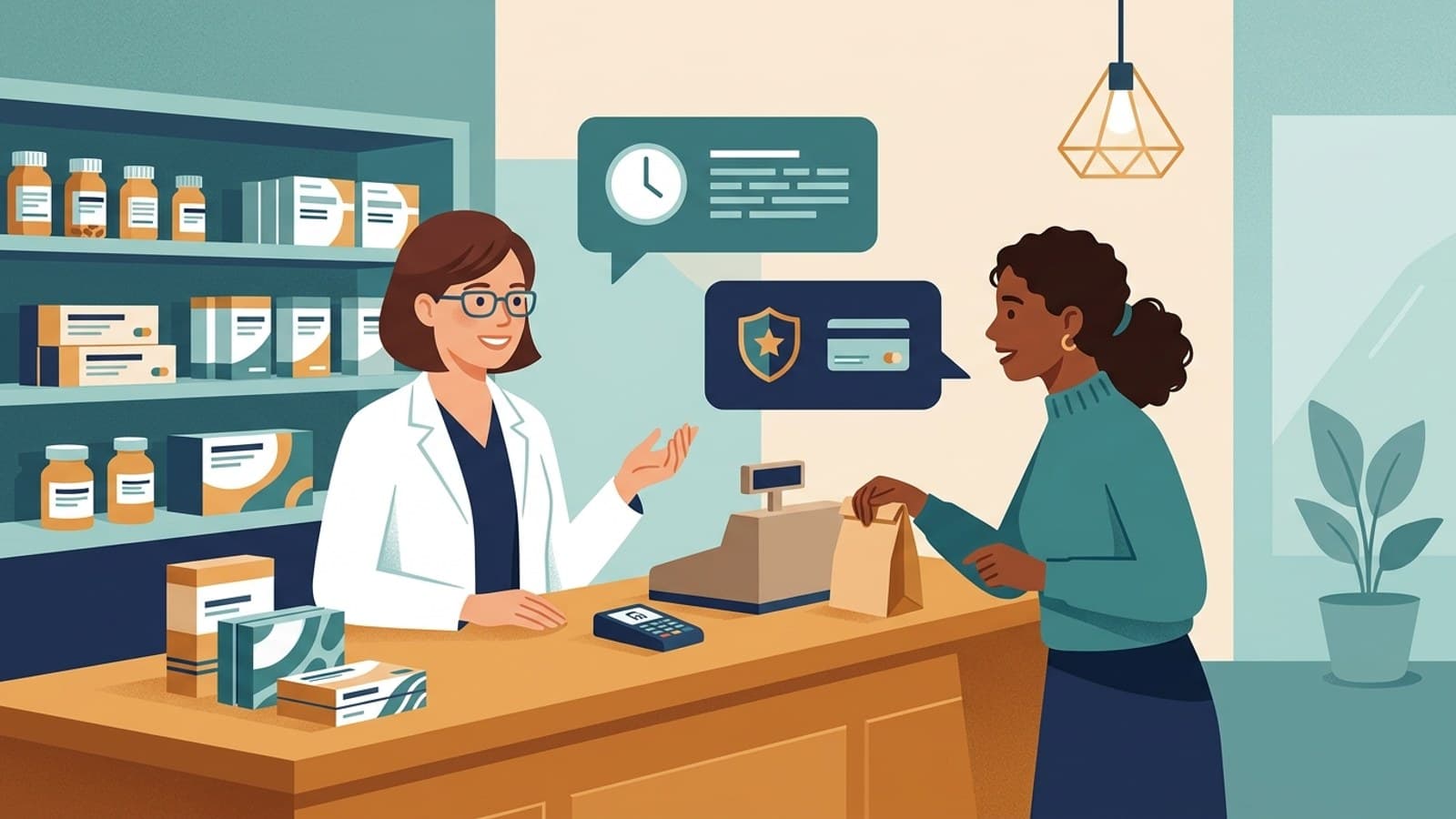
Pharmacy staff field an enormous volume of repeat questions on top of an already dense clinical workload — counseling patients, verifying prescriptions, managing inventory, and staffing the register. The questions that eat the most time are rarely the hard clinical ones; they're the same handful of operational questions asked dozens of times a day.
The phone rings during counseling. A pharmacist or technician mid-consultation with a patient at the counter has to stop to answer "are you open tomorrow?" That interruption cost is real even when the question itself takes ten seconds to answer — it breaks focus on the patient standing in front of them.
After-hours demand doesn't stop when the store closes. Patients searching for vaccine availability, hours, or delivery options at night or on weekends get nothing if the only channel is a phone that rings to voicemail. Some fraction of that demand converts to "call the next pharmacy" rather than "wait until morning."
Insurance and service questions are asked before a patient ever walks in. A patient deciding which pharmacy to use for a new prescription transfer often checks "do they take my insurance" and "are they close and do they deliver" before making a choice — questions your website could answer instantly if something were there to answer them.
Multilingual patients hit a harder wall. If front-desk staff aren't fluent in a patient's language during the hours they happen to call, the question either goes unanswered or takes several rounds of clarification. A chat channel that responds correctly in the patient's language the first time removes that friction entirely.
None of this requires more staff or longer hours. It requires moving the repetitive, non-clinical questions to a channel that can answer them without waiting for a human to be free — which is exactly what a properly scoped AI receptionist does. The pattern is the same one that shows up across AI medical receptionist deployments more broadly: the volume problem and the clinical-judgment problem are different problems, and only the first one belongs to the AI.
The Hard Line: What Never Touches the Chatbot
This is the part of the guide that matters most, and it deserves to be stated plainly rather than buried in a disclaimer.
Pharmacies are HIPAA-covered entities. The moment a conversation touches a specific patient's prescription status, a refill, a dosage, a drug interaction, or any combination of patient identity plus health information, that conversation is handling PHI. Hyperleap AI does not offer a Business Associate Agreement, and it is not designed, marketed, or configured to process PHI. That is not a gap to work around — it's the design boundary that keeps a pharmacy's front-desk deployment both useful and safe.
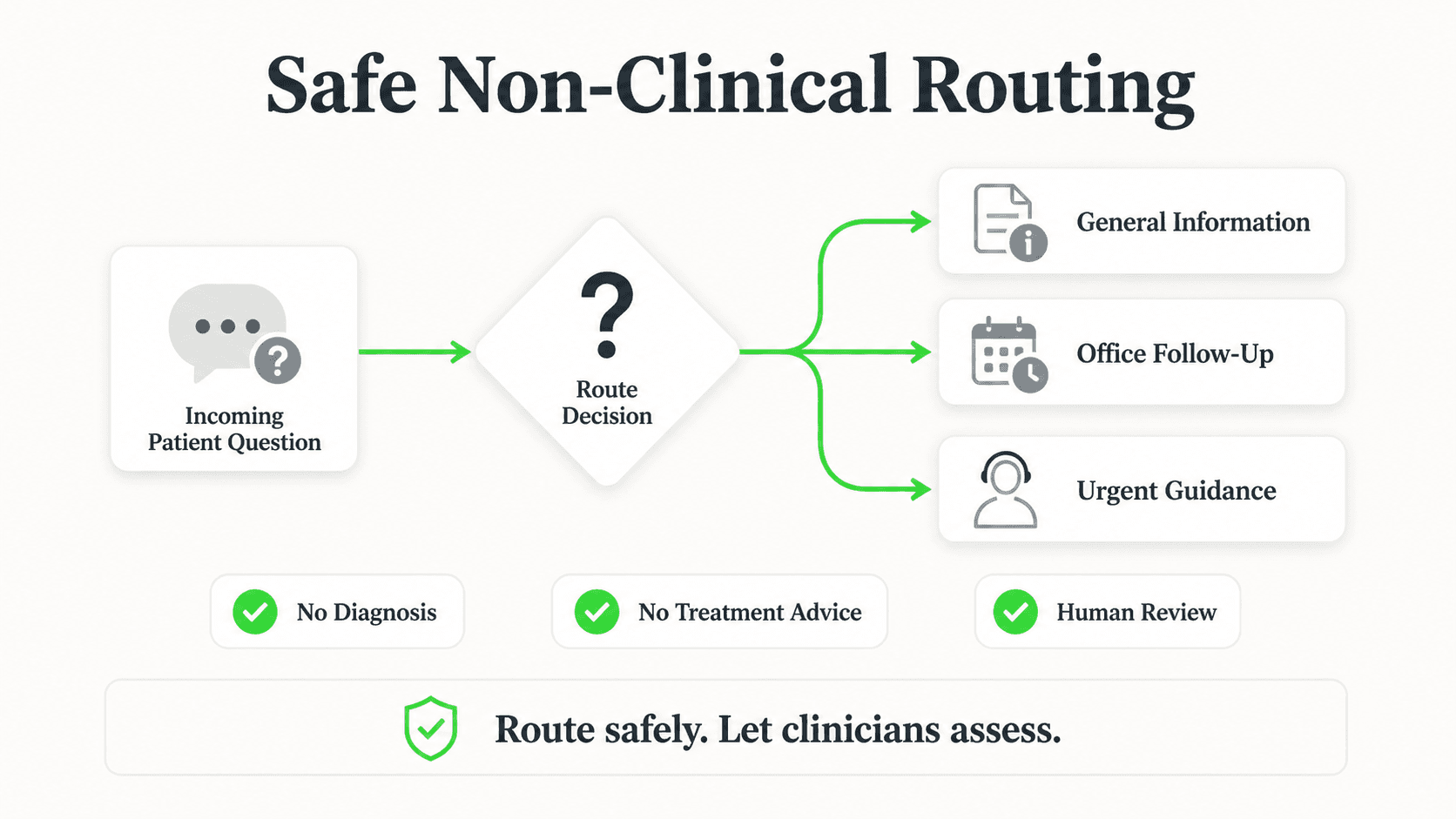
In practice, this means the AI is built to route, never advise, on anything clinical:
The Clinical Boundary
Any question about a prescription's status, a refill, a specific medication, a dosage, a drug interaction, or a patient's health situation gets routed immediately to your pharmacist — the AI never answers it, hedges an answer to it, or attempts to look "close enough." The same is true for vaccine appointment booking into a clinical scheduling or EHR system: the AI can tell a patient a vaccine service is offered, but it does not write that patient into a clinical record.
Framed as patient safety rather than a product limitation, this design choice is the right one on its own terms — a chatbot guessing about a drug interaction is a genuine risk to a patient, not a convenience. Routing that question to a licensed pharmacist in seconds is a better outcome for the patient than a plausible-sounding wrong answer from a machine, and it's a better outcome for the pharmacy than the liability of having tried.
Here's the practical split, side by side:
| Question type | Front desk (AI handles) | Pharmacist-only (AI routes) |
|---|---|---|
| Store hours & holiday hours | ✅ Answered from documented hours | — |
| Service availability ("do you offer the flu shot?") | ✅ Confirmed as a service listing | — |
| Insurance plans accepted | ✅ Answered from documented plan list | Specific claim/eligibility check → routed |
| OTC product category ("where's the allergy aisle?") | ✅ Points to aisle/category | Which OTC to take for symptoms → routed |
| Delivery policy (fee, coverage area, timing) | ✅ Answered from documented policy | Where a specific delivery is right now → routed |
| Prescription refill status | — | ✅ Always routed to pharmacist |
| Medication questions / interactions | — | ✅ Always routed to pharmacist |
| Dosage or "is this normal" questions | — | ✅ Always routed to pharmacist |
| Vaccine appointment booking into clinical system | — | ✅ Routed; AI shares that the service exists only |
| Patient identity + health info together | — | ✅ Always routed to pharmacist |
Every row in the left column is answerable from a document. Every row in the right column requires a license, a patient record, or clinical judgment — and a well-scoped AI receptionist should recognize the difference and hand off immediately, the same way conversational AI for customer service is designed to hand off anything outside its documented scope in any industry.
For pharmacies specifically weighing whether any AI vendor is a fit for anything beyond this front-of-house layer, the fuller breakdown of what a HIPAA-compliant chatbot deployment actually requires — signed BAAs, encryption, audit logging — is worth reading before you evaluate further. The short version: if your use case requires PHI to flow through the chatbot itself, you need a vendor built for that, and Hyperleap AI is explicit that it isn't one.
Independent Pharmacy vs. Multi-Location Chain
A single independent pharmacy and a chain running a dozen locations both need the same non-clinical front-desk coverage — the difference is how location-specific the answers need to be.
Independent pharmacies run one knowledge base: one set of hours, one services list, one delivery policy, one insurance list. Setup is straightforward — upload the documents, configure the channels, go live.
Multi-location chains face a harder version of the same problem: hours differ by location, some stores offer vaccination services and others don't, delivery coverage areas vary by store, and a patient asking "are you open" needs an answer for their store, not a generic company-wide answer. This is where Multi-variant (locations, courses, etc) — a paid add-on ($40/mo plus 2x credits per request, available on Pro and Max plans) — becomes relevant: it answers from the store the patient asked about rather than blending answers across every store in the chain, and asks which store when the question doesn't say. A chain deploying this way still runs a single chatbot configuration.
Either way, the clinical boundary in the table above doesn't change based on pharmacy size. A ten-location chain routes medication questions to its pharmacists exactly as strictly as a single independent store does — scale changes the retrieval complexity, not the safety design.
After-Hours Question Capture
The single highest-leverage use of a pharmacy AI receptionist is coverage during the hours nobody is at the counter. A patient asking about vaccine availability, insurance, or delivery at 10 PM gets an immediate, accurate answer instead of a closed-sign message — and if their question falls outside what's documented, or touches anything clinical, the lead-capture form ahead of the chat still collects their name and contact details so a pharmacist can follow up first thing the next business day.
That capture step matters as much as the answering step. A patient who messages at night and gets nothing back rarely tries again in the morning — they've already moved to the next pharmacy's website. A patient who gets an immediate answer to their non-clinical question, or a clear "a pharmacist will follow up with you" for anything clinical, stays in your funnel either way.

Getting Started
Rolling out a pharmacy AI receptionist follows the same low-friction path as any Hyperleap deployment:
- Point Studio at your pharmacy's website. Paste the URL and the platform reads your site, imports your branding, and generates a starting configuration automatically — live in under 5 minutes for the initial setup. This is the same no-code chatbot setup path used across every industry Hyperleap serves; no engineering resources required.
- Upload your documents. Hours sheets, service lists, insurance-accepted lists, and delivery policy pages become the knowledge base the AI answers from. Write these the way you'd explain them out loud — the answer quality is only as good as the source document.
- Set the clinical guardrails explicitly. Configure the AI to recognize prescription, medication, dosage, and interaction language and route it to a pharmacist contact — don't rely on default behavior alone; state the boundary in the prompt and the knowledge base both.
- Turn on your channels. Website chat is the baseline; add WhatsApp, Instagram DM, and Facebook Messenger for the channels your patients already use.
- Test with real front-desk questions before going live. Ask it your actual top twenty questions, and specifically test that a prescription or medication question gets routed rather than answered — that's the check that matters most before launch.
If you'd rather have this configured for you, Managed Setup ($299 Free, available on all plans) has the Hyperleap team build the initial deployment, including the clinical-boundary configuration, on your behalf.
How Hyperleap AI Fits
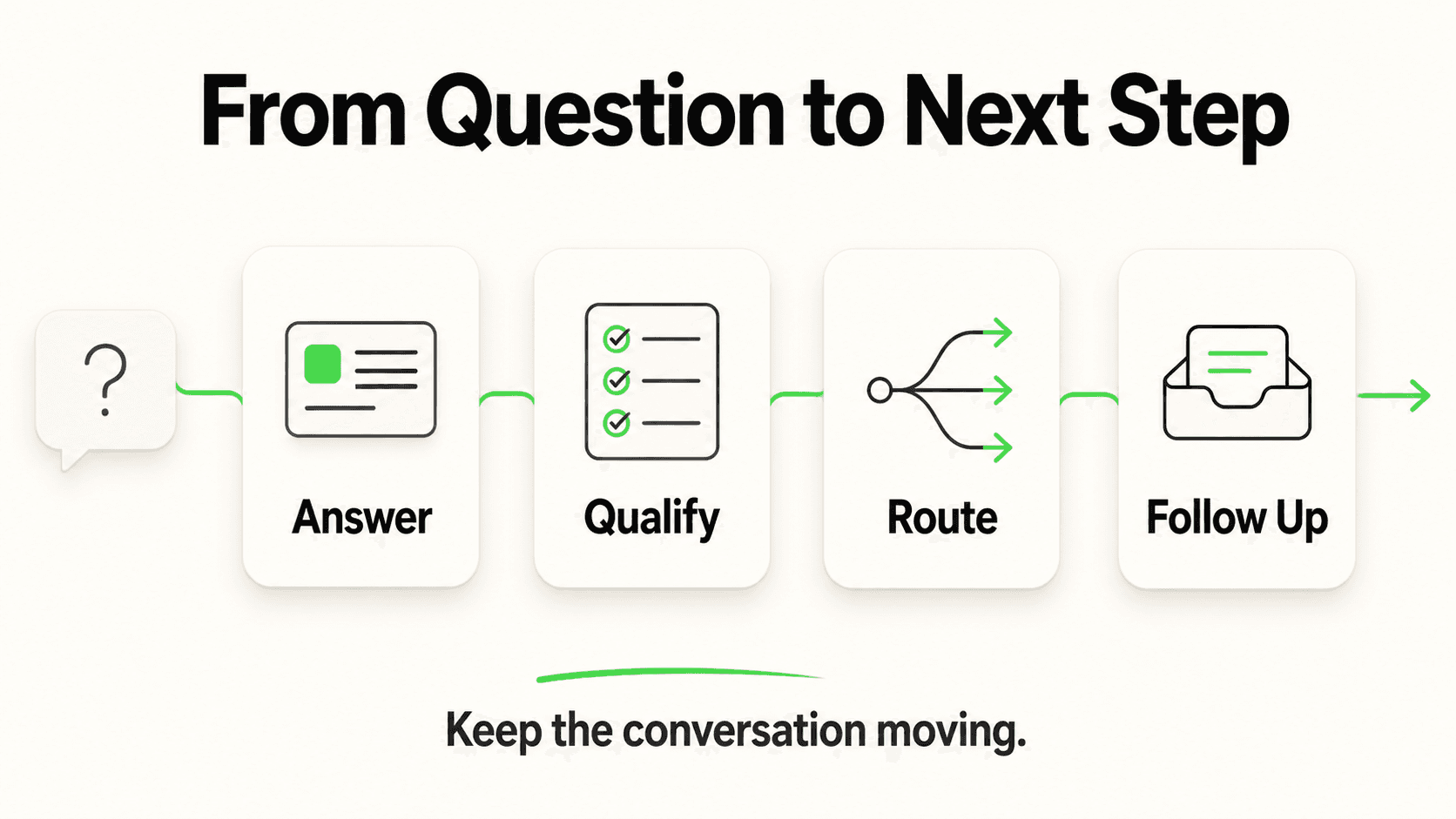
Hyperleap AI is built for SMB pharmacies that want front-of-house coverage without taking on PHI risk. The AI receptionist answers from your own documents — hours, services, insurance, delivery policy — across Website chat, WhatsApp, Instagram DM, and Facebook Messenger from one configuration. Every conversation begins with a lead form, so a name and contact detail are captured even when the chatbot can't fully resolve a question.
The design is deliberately non-PHI: no prescription lookups, no medication advice, no patient-identity-plus-health-info handling, and no signed BAA, because that combination is the safest and most honest fit for a pharmacy's front desk. What patients get is a fast, accurate answer to everything that isn't clinical — and an immediate, clear handoff to a pharmacist for everything that is.
Plans start at $40/month (Plus) with a 7-day free trial (credit card required). For chains running multiple storefronts, the Multi-variant add-on scopes answers to the right location. See the full pricing breakdown, the pharmacy AI agent overview, or start a free trial to see the routing behavior in action before you commit to anything. For a side-by-side look at how different platforms handle the healthcare space, the best AI chatbots for healthcare 2026 comparison is a useful second read.
See how the routing boundary works, live
Watch a demo of a pharmacy AI receptionist answering hours and insurance questions — and routing a medication question straight to a pharmacist contact, exactly as it would in production.
Schedule a DemoFrequently Asked Questions
Can the chatbot answer prescription questions?
No. Any question about a prescription's status, a refill, a specific medication, a dosage, or a drug interaction is routed directly to your pharmacist — the AI does not answer it, approximate it, or attempt clinical judgment of any kind. This is a deliberate design boundary, not a gap: pharmacies are HIPAA-covered entities, and Hyperleap AI does not offer a Business Associate Agreement, so it is built to stay out of that territory entirely.
Is an AI receptionist for pharmacies HIPAA compliant?
The non-clinical use cases described in this guide — hours, services, insurance-accepted questions, OTC categories, delivery policy — don't involve Protected Health Information, so they don't require a Business Associate Agreement to operate safely. If your use case requires PHI to flow through the chatbot itself (prescription lookups, health-history intake, clinical Q&A), you need a vendor that signs a BAA, and Hyperleap AI is explicit that it is not that vendor. The full breakdown is in the HIPAA-compliant chatbot guide.
Can the AI book a vaccine appointment?
The AI can confirm that a vaccination service is offered and share your general scheduling link or contact point — it does not book, hold, or confirm the appointment inside a clinical scheduling or EHR system. Think of it as a service listing, not a booking integration.
What happens if a patient shares prescription details in the chat anyway?
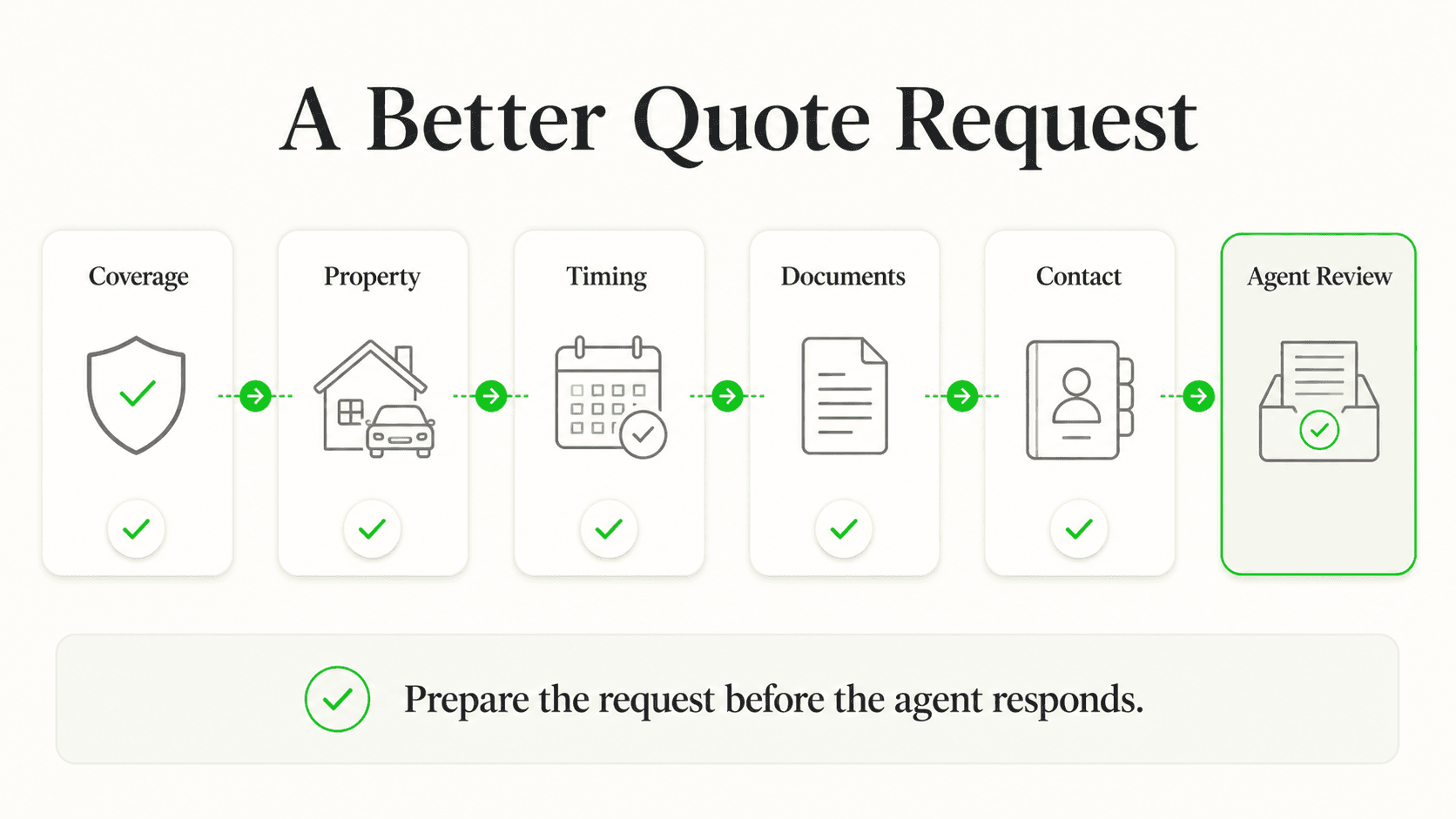
Patients will sometimes volunteer prescription or health details even when the chatbot is scoped to non-clinical questions. The AI is configured to recognize that language, avoid engaging with the clinical content, and route the patient to your pharmacist or front-desk staff rather than storing or responding to the specifics.
Does this work for a pharmacy chain with multiple locations?
Yes. A single independent pharmacy runs one knowledge base. A multi-location chain adds the Multi-variant add-on (Pro/Max plans) so each answer comes from the store the patient asked about — different hours, different services, different delivery coverage — rather than blending answers across every location, and the agent asks which store when they don't say.
Does the AI support patients who don't speak English?
Yes. The AI detects and responds in the patient's language automatically across 100+ languages, which matters for pharmacies serving neighborhoods where a language barrier has historically meant an unanswered call. See the multilingual AI agent overview for how the detection works.
Industry Solutions
See how AI chatbots work for these industries:
Related Articles
AI Receptionist for Med Spas: What It Actually Handles
An AI receptionist for med spas answers treatment and pricing questions, captures consultation requests on Instagram DM, and routes anything clinical to staff.

AI Receptionist for Daycares and Preschools
An AI receptionist for daycares answers parent enquiries, shares tour links, captures waitlist leads, and routes sensitive questions to the director.

AI Virtual Receptionist: Your Messaging-Based Digital Front Desk
An AI virtual receptionist handles your website chat, WhatsApp, Instagram DM, and Facebook Messenger 24/7 — greeting visitors, answering questions, capturing leads, and routing to your team.

AI Real Estate Receptionist: What It Does and Why It Wins
An AI real estate receptionist answers property questions, captures buyer and seller leads 24/7, and books showings instantly — on Website, WhatsApp, Instagram, and Facebook.