AI Receptionist for Veterinary Clinics: A Guide
An AI receptionist for veterinary clinics answers intake and pricing questions, routes emergencies to your team, and shares your booking link 24/7.
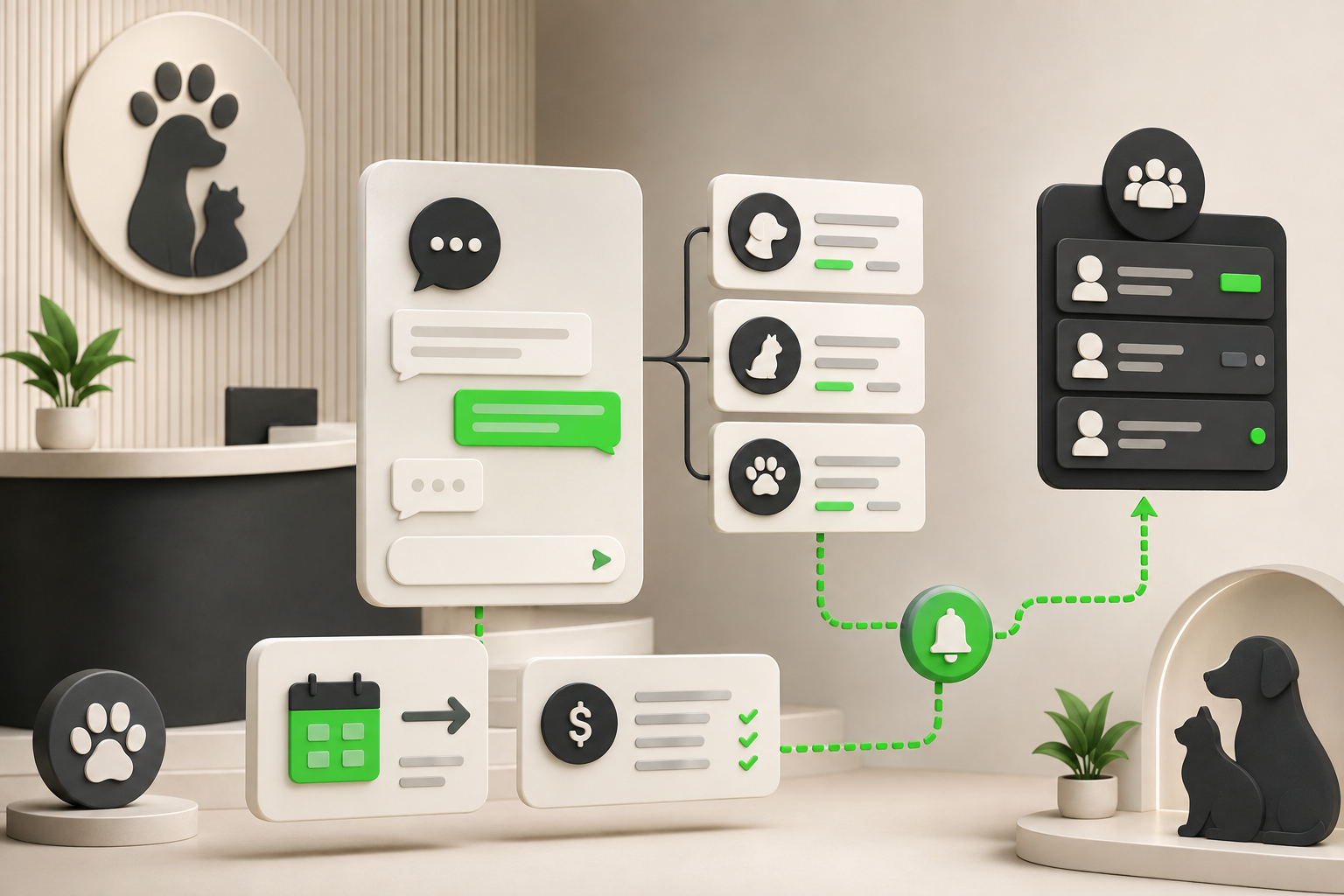
An AI receptionist for veterinary clinics answers new-client intake questions, hours, and pricing-range questions from your own content, shares your booking link, and routes prescription-refill requests to your staff — on your website, WhatsApp, Instagram DM, and Facebook Messenger. It is chat-first, not a phone system, and it never assesses a pet's condition: when an owner describes anything that sounds urgent, it gives your emergency line or the nearest emergency animal hospital immediately and routes the details to your team. Your veterinarians make every clinical decision — the AI never does.
A worried pet owner messaging at 9 PM about a limping dog isn't looking for a diagnosis from a chatbot — they're looking for the fastest possible path to a human who can help. Most veterinary front desks close at 6 PM, but pets don't get sick on a schedule, and a meaningful share of client questions — new-patient intake, pricing, boarding availability, refill requests — arrive after the phones stop ringing.
This guide covers what an AI receptionist actually automates for a veterinary clinic, and just as importantly, what it deliberately does not do: it does not assess symptoms, does not diagnose, and does not decide how urgent a case is. It routes. For the deeper walkthrough of after-hours chatbot conversation design specifically, see AI chatbot for veterinary clinics after hours; for the broader deployment across a veterinary practice's front desk, AI agents for veterinary practices covers the full picture, and AI agents for pet services businesses covers the adjacent category of boarding, grooming, and daycare operators handling similar intake volume — including the booking-related questions covered in pet services front-desk booking questions. The underlying mechanics of how any AI receptionist works are covered in how does an AI receptionist work, and the cost comparison against staffing options is in AI receptionist cost. Other service businesses run the same after-hours pattern — see AI chatbot for wedding venues and AI receptionist for restaurants.
What Is an AI Receptionist for Veterinary Clinics?
An AI receptionist for veterinary clinics is a chat-based AI agent that handles the front-desk information job — answering new-client questions, hours, pricing ranges, and service details — around the clock, on the channels clients already use outside of a phone call: your website's chat widget, WhatsApp Business, Instagram DM, and Facebook Messenger.
For a veterinary practice specifically, the AI needs to do a narrow set of things well, and stay strictly within its lane on everything else:
- Answer new-client intake questions — what species and services you see, what records transfer requires, what a first visit involves.
- Book or share your booking link for appointment requests — live booking in the chat if you schedule through Calendly or Cal.com, your booking link for any other scheduler.
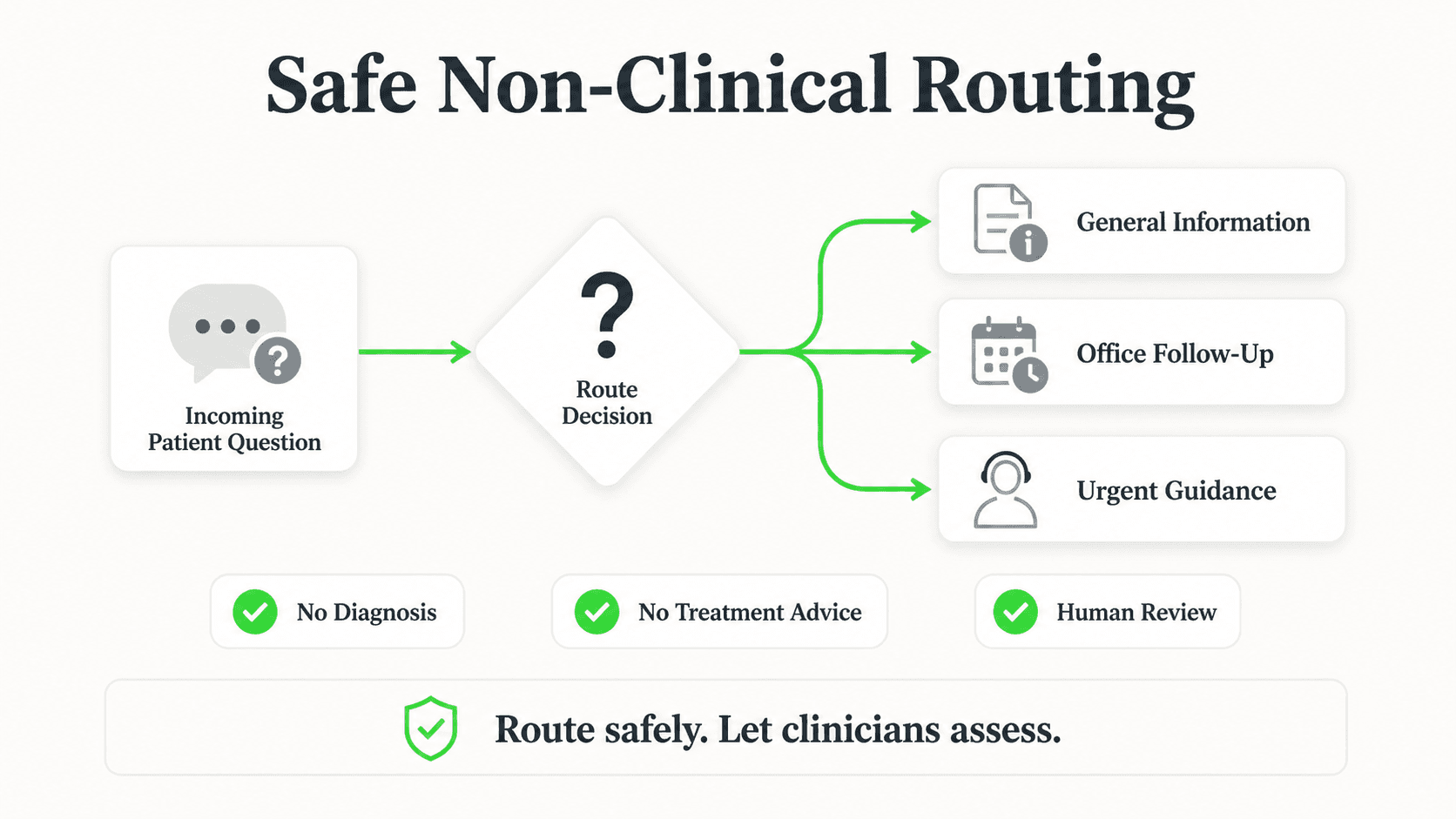
- Route emergencies immediately — no symptom assessment, ever. It surfaces your emergency contact or the nearest emergency animal hospital and gets the owner's callback details to your team fast.
- Capture prescription-refill requests and hand them to staff, who verify against records before confirming anything.
- Answer hours, pricing-range, and payment-policy questions from your own documents.
It routes; it does not assess
This is the single most important design principle for a veterinary AI receptionist. Hyperleap's AI does not evaluate how serious a symptom is, does not offer a diagnosis, and does not tell an owner whether something can wait until morning. When an owner describes a pet emergency, the AI gives your emergency line — or the nearest emergency animal hospital after hours — first, then offers to capture the owner's name and number so your on-call team can call back. Your veterinarians make the clinical call every time.
Why Veterinary Clinics Lose Clients to Slower Response
The after-hours anxiety window
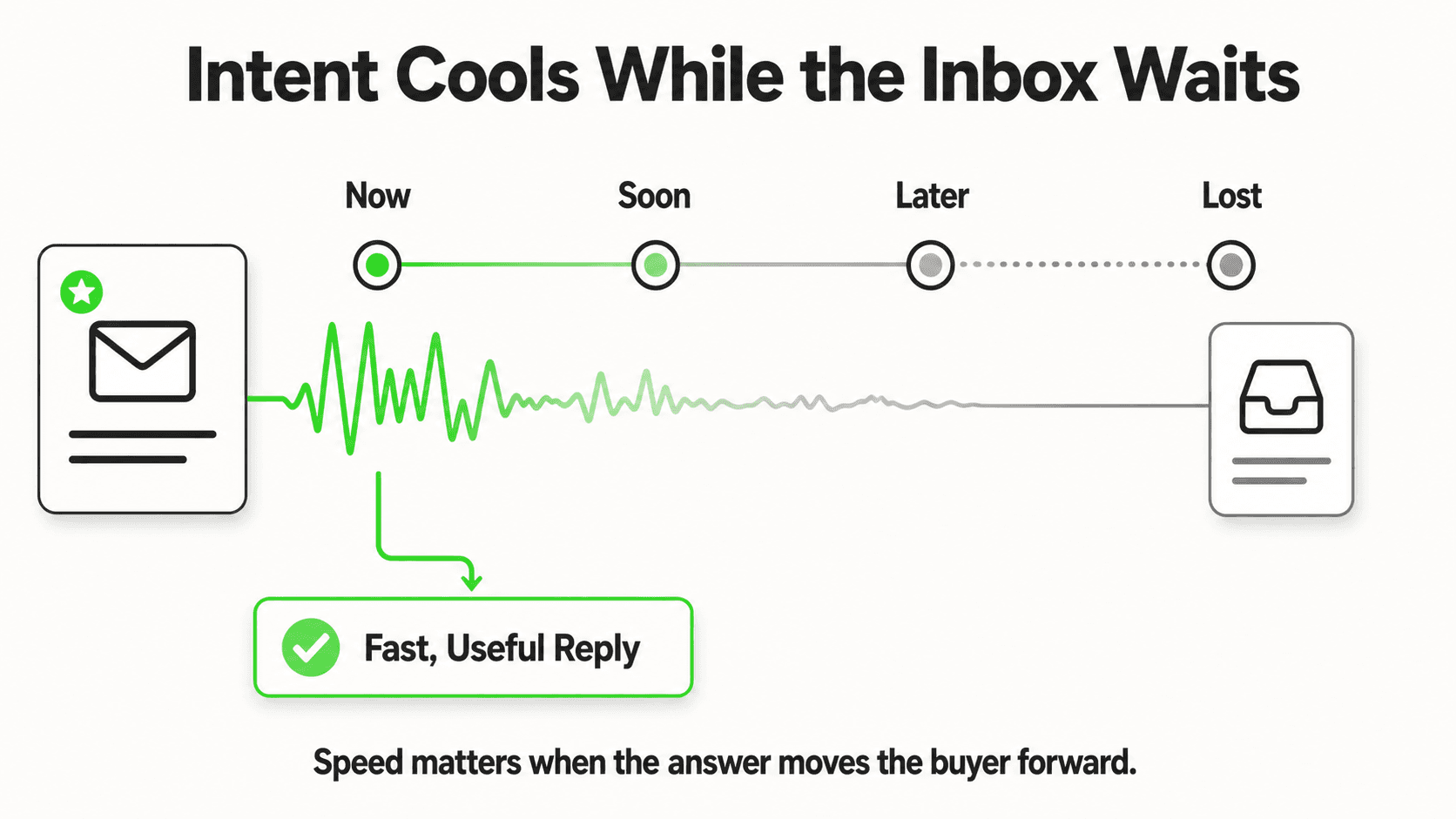
A pet owner noticing something wrong in the evening wants an answer now, not a voicemail greeting. A clinic with no coverage after closing time either loses that client to a competing practice or an emergency clinic that answers faster — even for questions that could have waited for a regular appointment if someone had simply responded.
New-client intake questions pile up
Prospective clients ask the same handful of questions before booking a first appointment: do you see exotic pets, what does a new-patient exam cost, do you require records from a previous vet. Answering these one at a time by phone consumes front-desk time that could go to clients already in the building.
Refill requests interrupt clinical staff
A prescription-refill message that lands in a general inbox often waits until someone has a free moment to notice it, verify the prescription, and call the pharmacy or client back. Left unmanaged, this becomes a steady stream of small interruptions throughout the day.
Boarding and grooming add-on questions compete for the same phone line
Clinics that also offer boarding or grooming get a mix of medical and non-medical inquiries on the same line, and the non-medical questions (does boarding include walks, what vaccines are required for grooming) often wait behind more urgent medical calls.
7 Ways an AI Receptionist Handles Veterinary Clinic Inquiries
1. Answering New-Client Intake Questions
What this looks like in practice: A prospective client asks whether you see rabbits, what a new-patient exam costs, and whether they need to bring records from their previous vet. The AI answers from your intake and services documentation immediately.
Why it works: These questions are the first filter before a new client books — answering them accurately and instantly removes friction at the exact moment a clinic is trying to win a new patient.
Key features:
- Species and service-scope answers drawn from your documents
- Records-transfer process explained clearly
- New-patient exam pricing ranges, where you've published them
2. Sharing Your Booking Link for Appointment Requests
What this looks like in practice: An owner wants to schedule a routine wellness visit. If you schedule through Calendly or Cal.com, the AI offers real open times and books the visit in the conversation; with your practice's own scheduler, it shares your booking link. Either way it captures the owner's name, phone number, and pet's name for your front desk.
Why it works: It moves the owner toward an actual appointment immediately, while giving your staff the context they need to follow up without asking the owner to repeat themselves.
Key features:
- In-chat booking with Calendly (Standard or higher) or Cal.com; booking-link sharing for anything else — it does not write into your practice-management system, and there is no PMS integration
- Owner and pet name captured for a fast staff follow-up
- Works identically across website, WhatsApp, and Instagram DM
3. Routing Emergencies Without Assessing Them
What this looks like in practice: An owner messages describing a dog that ate chocolate, or a cat that hasn't eaten in two days. The AI does not judge how serious this is or offer any assessment. It immediately surfaces your emergency line — or the nearest emergency animal hospital if it's after hours — and offers to capture the owner's name and number so your on-call team can call back right away.
Why it works: The single riskiest thing an AI receptionist could do in this vertical is imply it has evaluated a pet's condition. Routing immediately, with zero clinical judgment attached, protects both the pet and the practice.
Key features:
- No symptom evaluation, no urgency scoring, no diagnosis — ever
- Emergency contact or nearest emergency clinic surfaced first, before anything else
- Owner's callback details captured and routed to your on-call team in real time
4. Capturing Prescription-Refill Requests
What this looks like in practice: An owner messages asking to refill their dog's heartworm medication. The AI captures the pet's name, the medication requested, and the owner's contact details, emails it to your team, and tells the owner your staff will confirm once it's ready.
Why it works: The AI never advises on dosage or approves a refill — it simply routes the request so your team can verify against records and prescriptions before confirming anything.
Key features:
- Structured capture of pet name, medication, and owner contact
- No dosage advice or refill approval from the AI, ever
- Staff verification against records happens before any refill is confirmed
5. Answering Hours, Pricing-Range, and Payment-Policy Questions
What this looks like in practice: A client asks whether you're open on Saturdays, what a typical wellness visit costs, and whether you accept payment plans or pet insurance. The AI answers from your published policies.
Why it works: These are high-volume, low-complexity questions that don't need a licensed staff member's time to answer, and getting them right consistently builds trust before a client ever visits.
Key features:
- Hours and holiday schedule from your content
- Pricing ranges for common services, where you've published them
- Payment policy and insurance-acceptance questions covered clearly
6. Capturing After-Hours Non-Emergency Inquiries
What this looks like in practice: A client messages at 8 PM about scheduling a routine dental cleaning — not urgent, but they want it handled before they forget. The AI answers what it can and captures the request for your front desk to follow up first thing the next morning.
Why it works: Non-emergency after-hours messages shouldn't be treated with the same urgency as a true emergency, but they also shouldn't go unanswered until someone happens to check messages. Capturing them cleanly means nothing falls through overnight.
Key features:
- Clear distinction in handling between emergency and non-emergency after-hours messages
- Structured handoff to your morning front-desk workflow
- No urgency inflation — routine requests are treated as routine
7. Answering Boarding and Grooming Add-On Questions
What this looks like in practice: A client asks whether your boarding service includes daily walks, what vaccines are required, and what the cancellation policy is. The AI answers from your boarding and grooming policy documents, separately from any medical conversation.
Why it works: Clinics offering these add-on services get a real volume of non-medical questions that don't need a veterinarian's time, and answering them consistently frees up the phone line for actual patient care conversations.
Key features:
- Boarding and grooming policies answered from your documents
- Vaccine-requirement questions handled clearly
- Kept separate from medical/emergency conversation flows
Integration Requirements to Evaluate
Clinics researching this category often ask whether an AI receptionist connects directly to their practice-management software (PMS) — writing appointments into Cornerstone, ezyVet, AVImark, or similar systems, or pulling patient records automatically. As of today, it does not, and no PMS integration should be assumed or claimed by any vendor without direct verification, since practice-management data is sensitive and a broken sync creates real clinical risk. What Hyperleap does offer is a REST API and webhooks, so a clinic's own IT resource or a technical partner can build a connection where one is genuinely needed. For most clinics, the simpler and safer pattern is what's described throughout this guide: the AI captures structured requests (appointment, refill, new-client) and your staff verify against the PMS before confirming anything — a deliberate human checkpoint, not a workaround.
What a Phone Answering Service Still Covers
A chat-based AI receptionist does not answer your clinic's phone line. Some client segments — particularly older pet owners or those calling from the road during an active emergency — will always prefer to call, and a phone answering service or an in-house on-call rotation still matters for that volume. The two aren't in competition: the AI receptionist covers the growing share of client contact that arrives as a message rather than a call — the owner texting a photo of a swollen paw, the DM asking about boarding rates, the late-night message about a refill — while your phone system continues to handle voice calls, including true emergencies where a live human voice is often what an owner needs most. Look at your actual mix of calls versus messages before deciding how much weight to put on each channel.
Response speed
- New-client and pricing questions get answered instantly instead of waiting for a callback the next business day
- After-hours emergency messages get routed to your on-call team or the nearest emergency clinic within seconds, not whenever someone checks a shared inbox
Staff time
- Front-desk staff spend less time answering repetitive intake and pricing questions
- Refill requests arrive as structured, verifiable requests instead of scattered messages across channels
- One inbox in Studio covers website, WhatsApp, Instagram DM, and Messenger
Client experience
- Anxious pet owners get an immediate, clear next step during an emergency instead of silence
- New clients get consistent, accurate answers about services and pricing before their first visit
Illustrative example, not a guarantee
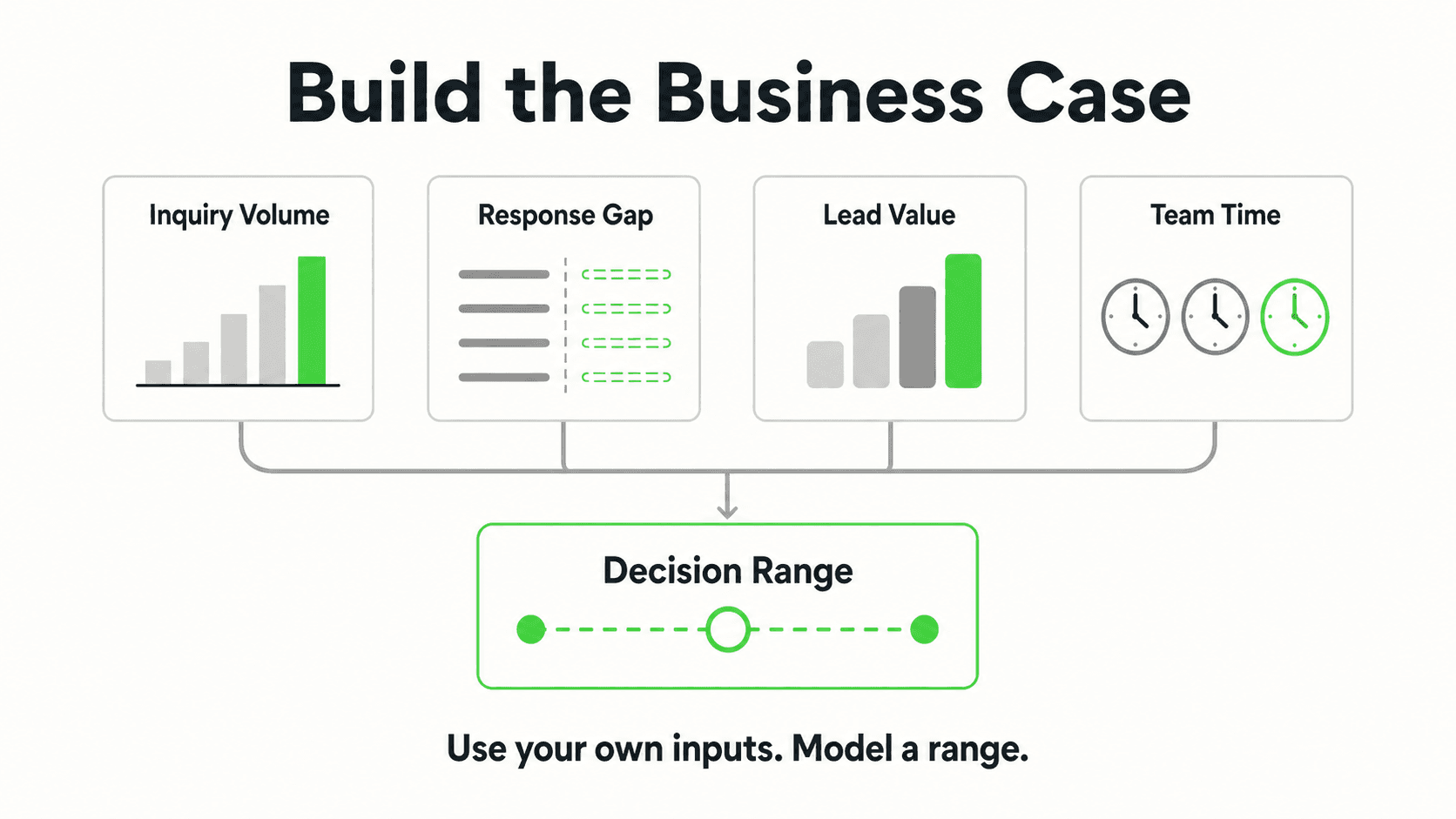
A clinic that currently has no after-hours messaging coverage can expect a portion of client inquiries to arrive outside business hours — the exact share varies by practice and region. The value is in capturing those inquiries and routing true emergencies fast, not in a specific percentage lift in bookings. Treat any framing like this as illustrative, not a promised outcome.
Real Talk: Where a Chat-Based Receptionist Has Limits
Clinics evaluating this category should go in with clear eyes about what a chat-based AI receptionist does not solve. It does not reduce the number of staff needed to actually treat animals, it does not replace a licensed veterinary technician's judgment, and it will not catch an emergency that an owner describes vaguely or downplays in a text message rather than calling. Its job is narrower and more mechanical than that: answer what's documented, capture what's needed, and route anything ambiguous or urgent to a human immediately rather than guessing. Clinics that treat it as a full front-desk replacement will be disappointed; clinics that treat it as a way to stop losing after-hours messages and repetitive questions to silence tend to see the value quickly.
Implementation Roadmap for Veterinary Clinics
Days 1–2: Gather your core content. Services and species list, new-patient intake process, hours, pricing ranges, payment/insurance policy, emergency contact or nearest emergency animal hospital, and your booking link.
Day 3 (under 5 minutes for the quick-start path): Set up the AI. Paste your website URL into Studio; it reads your site, imports branding, detects your industry, and drafts a starting prompt automatically. Add one script tag to go live.
Days 4–7: Connect WhatsApp, Instagram DM, and Messenger. Route all channels into one Studio inbox.
Week 2: Write your emergency-routing guardrails explicitly. Confirm the AI never offers symptom assessment and always surfaces your emergency line or the nearest emergency clinic first, before anything else, when a client describes anything urgent.
Week 3: Attach boarding, grooming, and refill-request policies. Add any add-on services and set up the refill-request capture flow for your staff to verify.
Ongoing: Review handoffs monthly. Check the email summaries your team receives for refill requests and emergencies, and refine what details get captured.
See emergency routing in action
Paste your clinic's website and see how the AI routes an urgent message to your emergency line — without ever assessing the pet's condition.
Try It FreeFrequently Asked Questions
Does the AI diagnose or assess how serious a pet's symptoms are?
No, never. It does not evaluate symptoms, offer a diagnosis, or judge urgency. When an owner describes anything that sounds like an emergency, it immediately surfaces your emergency line or the nearest emergency animal hospital, then offers to capture the owner's callback details for your on-call team. All clinical judgment stays with your veterinarians.
Does it book appointments directly into our scheduling system?
Only if that system is Calendly or Cal.com: connect either and the AI shows live availability and books the appointment in the chat, and the owner gets a calendar invite by email (in-chat booking needs Calendly Standard or higher). With any other scheduler it shares your booking link and captures the owner's name, phone number, and pet's name so your front desk can follow up. It does not write into your practice-management system — there is no PMS integration.
Can it handle prescription refill requests?
It captures the request — pet's name, medication, and owner's contact details — and emails it to your team, telling the owner your staff will confirm once it's ready. It never advises on dosage or approves the refill; your team verifies against records and prescriptions first.
Does it answer the clinic's phone line?
No. It is chat-first — website chat widget, WhatsApp, Instagram DM, and Facebook Messenger. Voice is on Hyperleap's roadmap, not shipped today. Keep your existing phone setup for calls; the AI receptionist covers the messaging channels a phone line doesn't reach.
What channels does an AI receptionist for veterinary clinics cover?
Your website, WhatsApp, Instagram DM, and Facebook Messenger, all in one inbox in Studio. WhatsApp, Instagram, and Messenger run on Meta's official Business APIs — Hyperleap AI is a Meta Technology Provider and Business Partner.
How long does it take to set up for a veterinary clinic?
Live in under 5 minutes for the quick-start path: paste your website URL, and Studio imports your branding, detects your industry, and writes a starting prompt automatically, then add one script tag. Attaching your price list, vaccine schedules, and boarding or grooming policies — and writing explicit emergency-routing guardrails — is tuning you do afterward.
What does an AI receptionist for a veterinary clinic cost?
Hyperleap AI plans start at $40/month (Plus), with Pro at $100/month and Max at $200/month, each on a 7-day free trial that requires a credit card. See pricing for response volume, chatbot count, and channel limits at each tier.
The Front Desk That Never Guesses on a Pet's Health
Veterinary clinics can't staff a 24/7 phone line, but pet owners don't stop worrying at 6 PM. An AI receptionist closes that gap the only way it responsibly can: by answering the questions it actually knows the answers to, and routing everything else — especially anything that sounds urgent — straight to a human, immediately and without guessing.
It's not a replacement for your veterinarians or your front-desk team. It's the layer that makes sure no message sits unanswered overnight, that emergencies reach your on-call staff in seconds, and that routine questions stop consuming your team's time between appointments.
Route emergencies faster, answer everything else instantly
See how the AI front desk for veterinary clinics handles intake, refills, and after-hours messages — while routing anything urgent straight to your team.
Get Started FreeIndustry Solutions
See how AI chatbots work for these industries:
Related Articles
AI Receptionist for Home Services: The Complete Guide
An AI receptionist for home services answers overflow inquiries in chat, qualifies emergencies by trade, and routes jobs 24/7 across every service line.

AI Receptionist for Plumbers: Never Miss a Call Again
An AI receptionist for plumbers answers burst-pipe calls at 2am, qualifies emergencies, and routes jobs to your on-call tech — no night-shift hire needed.

24/7 Customer Support for Small Business: 5 Real Options
Compare 5 ways small businesses offer 24/7 customer support — realistic costs, coverage, and what each option actually handles at 3am.

AI Receptionist for Dental Clinics: Safe Emergency Routing
How dental clinics use AI receptionists to answer FAQs, book appointments, and route emergencies to the on-call team — without clinical triage.