AI Front Desk for Insurance Agencies: Quoting & Compliance
How an AI front desk handles insurance quoting, lead qualification, and multiple lines of business — and exactly where a licensed agent takes over.

TL;DR: An AI front desk for an insurance agency answers policy and process questions from your agency's own content, collects quote-request details across auto, home, life, and commercial lines, and routes every conversation that requires a license — quoting a premium, binding coverage, recommending a policy — to a producer. It runs on your website, WhatsApp, Instagram DM, and Facebook Messenger, and it answers the same handful of after-hours questions that currently cost your agency quotes: "Do you write home insurance in my state?" "How much would auto coverage run for a 30-year-old?" "I just filed a claim, what happens next?" The AI never gives insurance advice. It gets the right information to the right producer, fast, at every hour a prospect happens to be shopping.
An insurance shopper rarely fills out one quote form. They fill out four or five, on four or five different agency and carrier websites, on a Saturday afternoon while they're actually thinking about it. Whoever replies first — with something more useful than "we'll be in touch" — gets the first real conversation. Everyone else is competing for a callback slot the prospect may never pick up.
That single dynamic is why insurance is one of the categories where an AI front desk earns its keep fastest, and also one of the categories where getting the configuration wrong creates real problems. Insurance is licensed, regulated at the state level, and full of language that sounds like advice even when it isn't meant to be. A chatbot that improvises a coverage recommendation or quotes a premium off the cuff isn't a convenience — it's exposure on your agency's E&O policy.
This guide covers both halves of that: what an AI front desk should actually do for an insurance agency — across chatbots for insurance agencies generally, quoting, and lead qualification — and where the line to a licensed producer has to sit, every time, without exception.
Who This Guide Is For
Independent agency principals, multi-line agency owners, and operations leads evaluating AI-powered chat for inbound quote requests, FAQ handling, and after-hours coverage. If you're comparing platforms rather than deciding whether to add one at all, our insurance agents page covers plan-level detail; this guide covers the configuration questions that determine whether a deployment works.
Chatbots for Insurance Agencies: What Changed
"Chatbot" undersells what a modern insurance front desk actually does. A basic chatbot matches keywords to pre-written answers. What agencies are deploying now — an AI agent grounded in the agency's own documents — reads a prospect's actual question, answers it from content the agency has approved, collects the details a producer needs to run a quote, and hands off cleanly the moment a conversation needs a license.
The shift matters because insurance shoppers behave differently than shoppers in most other categories. They ask specific, jurisdiction-aware questions ("do you write commercial auto in Texas?"), they compare multiple agencies in parallel, and they expect an answer that sounds like it came from someone who actually knows the business — not a script. An AI front desk that's grounded in your agency's real content clears that bar. A generic FAQ chatbot built for a different industry usually doesn't, and the difference between an AI agent and a basic chatbot shows up fastest on exactly this kind of jurisdiction-specific question.
Three things distinguish a chatbot built for insurance from a generic customer-service bot:
- Line-of-business awareness. The very first question in most conversations should be which line the prospect needs — auto, home, life, commercial — because the qualifying questions diverge immediately after that.
- A hard boundary against advice. The bot needs to know, structurally, that "should I get whole life or term?" and "how much coverage do I need?" are producer questions, not bot questions.
- Claim sensitivity. A prospect mentioning an active claim needs urgency and a human handoff, not a cheerful FAQ answer.
Get those three right, and chatbots for insurance agencies stop being a novelty widget and become the first, fastest, most consistent touchpoint a prospect has with your agency — the same shift that shows up in insurance chatbot adoption data across the industry.
How AI Handles Insurance Lead Inquiries
Most insurance lead inquiries arrive as some version of the same short message: a coverage type, a rough situation, and an implicit "can you help me and how fast." How the AI handles that inquiry determines whether it turns into a producer's morning lead list or a bounce to a competitor's site.
Here's the sequence a well-configured AI front desk follows on a typical inbound inquiry:
- Greets and identifies the line of business. "Auto, home, life, or commercial?" — or the AI infers it directly if the prospect already said "I need renters insurance."
- Answers any immediate question from the agency's own content. If the prospect asks "do you write in Ohio?" or "what's the difference between liability and full coverage?", the AI answers from documentation the agency has approved — not from general web knowledge.
- Collects the quote-request details for that specific line. Different fields for auto versus home versus life (more below).
- Captures contact information before or during the conversation, so even a prospect who drops off mid-chat leaves a usable lead.
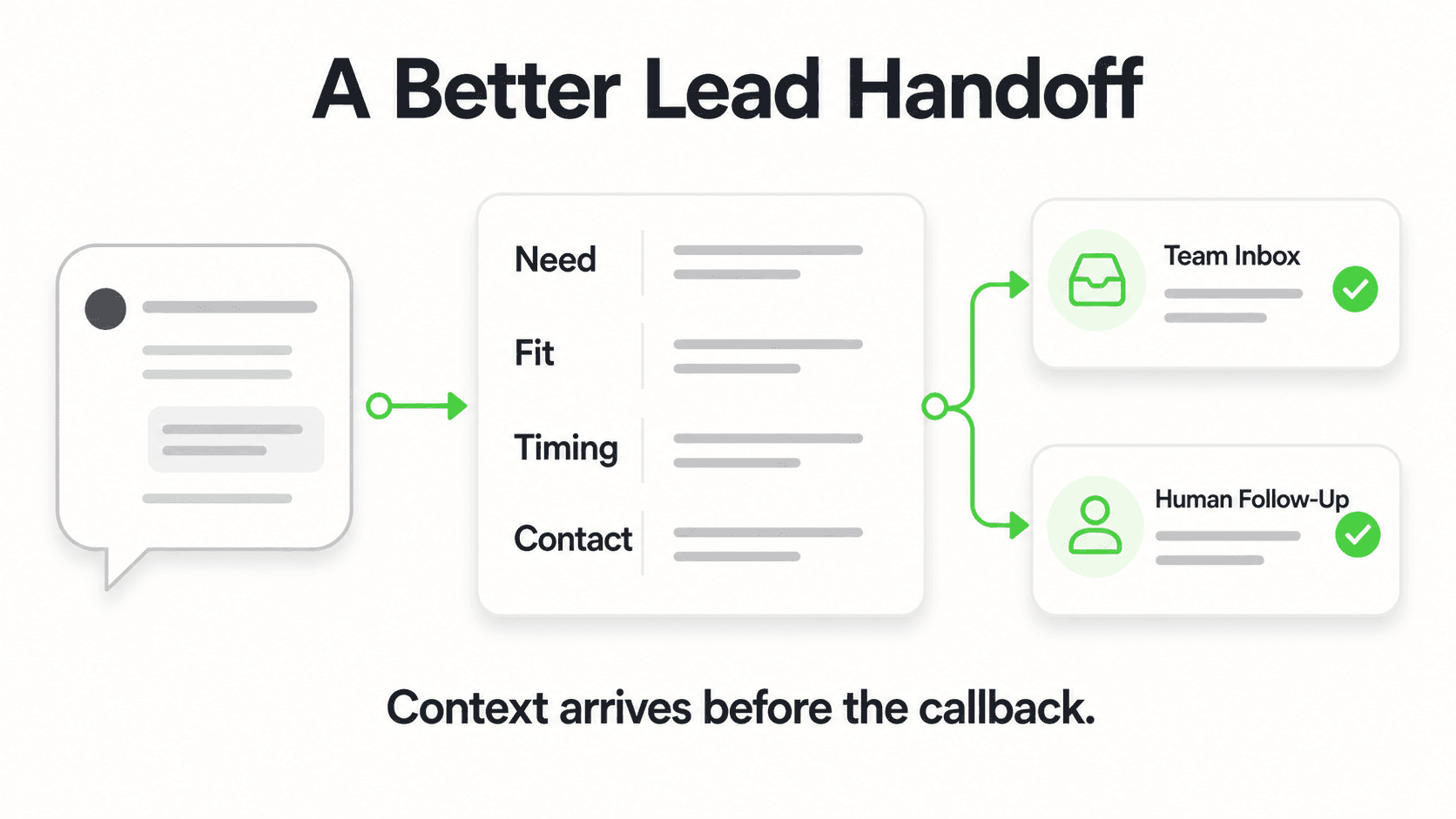
- Sends a clean summary to the agency — who asked, what line, what was collected, what (if anything) needs a producer's attention right away.
- Flags anything that needs immediate human attention — an active claim, a request that sounds urgent, a question that edges into advice — rather than attempting to resolve it itself.
The result for the agency is not a fully automated sales pipeline. It's a consistently staffed first response, at every hour, that leaves the producer with a warm, informed lead instead of a cold voicemail to return — the same 24/7 customer support pattern that shows up across small-business categories, applied to insurance's specific compliance boundary. Everything past step 3 — quoting the actual premium, recommending coverage, binding the policy — stays with your licensed team, covered in more detail below.
How Does Conversational AI Qualify Insurance Leads?
Lead qualification in insurance means separating the prospects worth a producer's time from the ones that aren't a fit — before anyone picks up the phone. Conversational AI does this by asking the same structured questions a trained CSR would ask, consistently, on every single inquiry, at any hour.
A qualifying conversation typically establishes:
- Line of business — auto, home, life, commercial, or a specific specialty product.
- Location — because licensing, carrier appetite, and even the specific questions that matter (flood zone, wildfire risk, state minimum coverage) vary by state.
- Basic risk profile — vehicle year/make/model for auto; property age, square footage, and construction type for home; age and coverage goal for life; entity type and revenue for commercial.
- Current coverage status — insured elsewhere, lapsed, first-time buyer, or triggered by a life event (new home, new baby, new business).
- Timeline and intent — shopping now versus researching for later, which changes how a producer should prioritize the follow-up.
- Contact preference and best time to reach them.
None of this is underwriting. It's the same intake conversation a knowledgeable CSR has on the phone, just available at 11pm on a Sunday instead of only between 9 and 5.
What makes it "qualification" rather than just data collection is the filtering: a prospect outside the agency's licensed states, asking about a coverage type the agency doesn't write, or clearly outside the agency's minimum policy size, gets a clear, honest answer about that rather than being pushed into a producer's queue. That keeps the agency's producers spending time on prospects who can actually become clients, and it keeps the prospect from waiting on a callback that was never going to lead anywhere.
The qualification-to-quote handoff
Qualification tells a producer who's on the line and what they need. It is not a substitute for the quote itself. The AI's output is a complete, organized submission — the producer still runs the actual number. See the lead generation chatbot playbook for the broader qualification mechanics this borrows from.
How Do Chatbots Handle Multiple Insurance Lines (Auto, Home, Life)?
Multi-line agencies are the norm, not the exception, and a chatbot that treats every line the same way produces a worse experience than one that doesn't handle multiple lines at all. The right approach is a separate, purpose-built intake flow per line, all routed from a single first question.
Here's how that typically breaks down:
Auto. The conversation collects vehicle year/make/model, primary use (commute, business, pleasure), drivers on the policy, current carrier and expiration date, and any recent incidents or violations the prospect volunteers. The AI does not attempt to price the policy — it explains that a licensed producer will review the details and follow up with an actual quote.
Home. The conversation asks about property address (for state and risk-zone context), approximate square footage, year built, construction type, and whether the prospect is purchasing, refinancing, or renewing existing coverage. Home lines often carry the most jurisdiction-specific questions — flood zones, wildfire exposure, wind/hail deductibles — which the AI answers from the agency's own state-specific content rather than guessing.
Life. The conversation is more sensitive and shorter by design: age, general coverage goal (income replacement, mortgage protection, final expense), and whether the prospect is exploring term or has a more complex situation. Life is the line where the AI should be quickest to say "this is a conversation for one of our licensed agents" — coverage amount and product type are advice-adjacent questions almost immediately.
Commercial. Typically the most varied: entity type, industry, revenue or payroll (for pricing basis), number of employees, and any existing commercial policies. Commercial prospects usually expect a consultative process rather than an instant number, so the AI's job here is mostly clean intake and fast routing to a commercial-lines producer. This is also where chatbot lead generation infrastructure — routing rules, notifications, CRM handoff via REST API and webhooks — starts to matter more than the conversation script itself.
Each line routes to the right producer or team once the intake is complete — an agency with separate auto and commercial specialists doesn't want a commercial inquiry sitting in the personal-lines queue. This is where a platform's routing and notification setup matters as much as the conversation script itself.

| What happens | Handled by the AI | Handled by a licensed agent |
|---|---|---|
| Answering "what's the difference between liability and full coverage?" | ✅ From agency content | — |
| Collecting vehicle, property, or coverage-goal details | ✅ | — |
| Capturing contact info and quote-request intent | ✅ | — |
| Quoting an actual premium | — | ✅ Always |
| Recommending a coverage amount or policy type | — | ✅ Always |
| Binding or modifying a policy | — | ✅ Always |
| Answering a claim status or filing question | Acknowledges + routes | ✅ Handles the claim |
| Discussing another carrier's specific product | — | ✅ Or not discussed at all |
| Multilingual first response | ✅ 100+ languages | — |
How to Ensure Chatbots Comply With Insurance Regulations
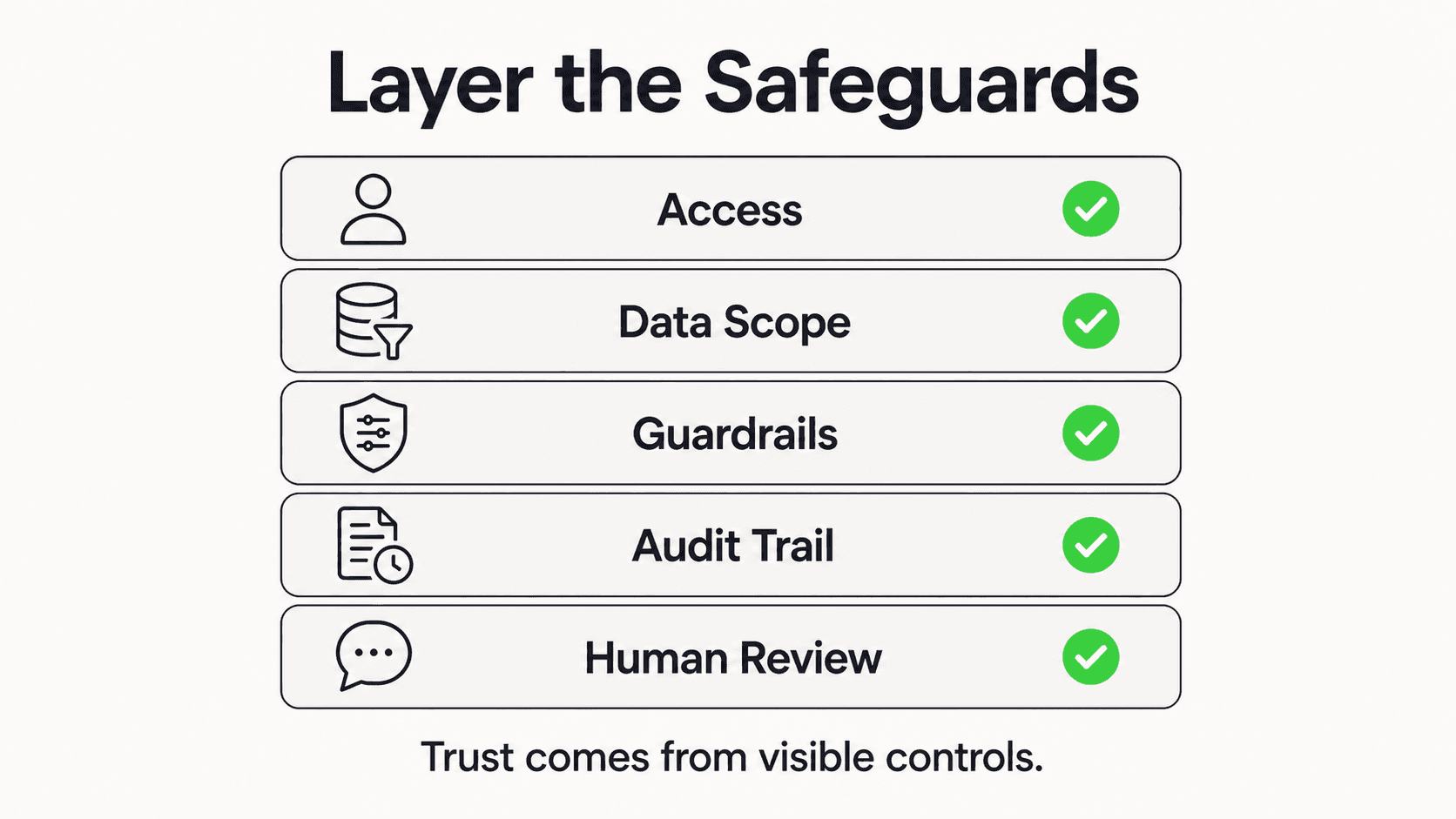
There is no universal "insurance-compliant chatbot" certification, and any vendor claiming one should raise a flag. Insurance is regulated state by state, and compliance is a function of what the bot is configured to say — not a property of the software itself. What an agency can control, and should insist on, are the structural safeguards that keep an AI front desk on the information side of the line.
Keep the AI grounded in agency-approved content only. The bot should answer from documents the agency has reviewed and approved for customer use — not from a general-purpose model's open-ended knowledge. If a question falls outside that approved content, the bot should say so and route to a producer rather than improvising an answer.
Build an explicit "not a licensed agent" disclosure into the conversation. The AI should be upfront, when relevant, that it's an automated assistant that can't bind coverage or give licensed advice — and that a licensed team member handles those conversations.
Separate information from recommendation, structurally. "Here's the difference between term and whole life" is informational. "You should get term life" is a recommendation that requires a license. The bot's configuration should draw that line explicitly rather than leaving it to chance in how the model responds.
Route claims immediately, without any assessment. A prospect or customer mentioning a claim should get your claims process and emergency contact — not an AI opinion on coverage or fault.
Review state-specific content separately. What's true about coverage requirements, minimums, and disclosures in one state often isn't true in the next. Agencies operating across multiple states should build state-aware content rather than a single generic knowledge base.
Log and review conversations regularly. Regulatory risk tends to show up in edge cases — an unusual question the bot answered awkwardly, a claim mention that got missed. Weekly conversation review catches these before they compound.
Regulatory obligations vary by state and by license, and this guide is not legal advice — an agency's compliance officer or counsel should review the specific configuration against the jurisdictions the agency operates in. What a platform can offer is the structural tooling — document-grounded answers, explicit escalation rules, claim-routing logic — that makes staying compliant a configuration decision rather than a hope. For the fuller list of what an insurance AI agent should never attempt, see what an insurance AI agent should never do.
What Setup Actually Looks Like
Agencies often assume adding an AI front desk means a multi-month IT project. In practice, most of the work is content preparation, not software configuration.
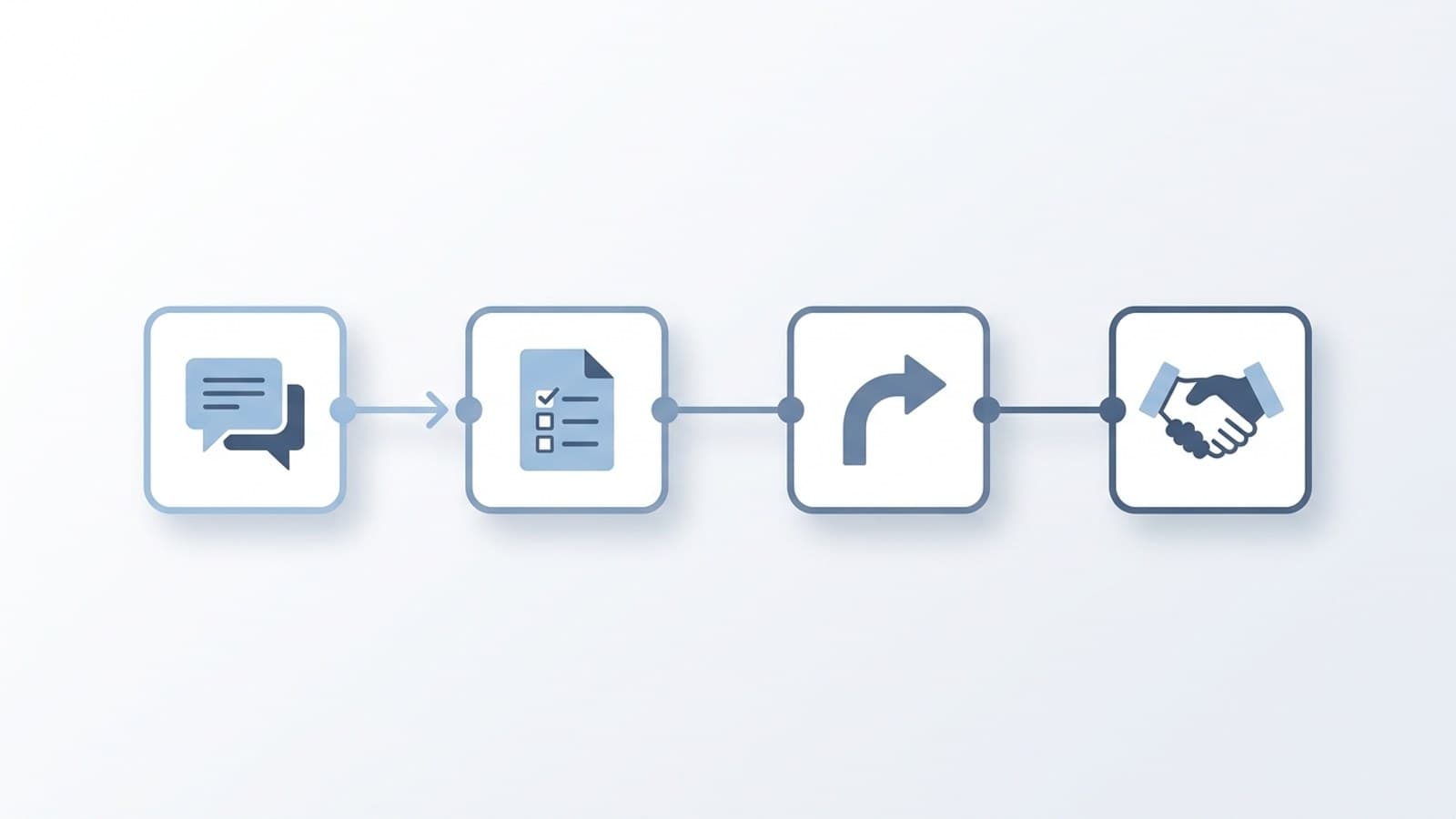
Step 1: Gather your approved content. FAQ documents, coverage explainers, your states-licensed list, your claims process, and anything else you're comfortable having a prospect read verbatim. This becomes the AI's knowledge base.
Step 2: Build per-line intake flows. Decide what information the bot collects for auto versus home versus life versus commercial, and where each line routes once intake is complete.
Step 3: Write the escalation and disclosure language. The "not a licensed agent" disclosure, the claim-routing message, and the specific phrases that should immediately trigger a human handoff.
Step 4: Deploy across channels. Website chat is the starting point for most agencies; WhatsApp, Instagram DM, and Facebook Messenger extend the same grounded conversation to wherever prospects already are, in 100+ languages if your book of business needs it.
Step 5: Test against your actual FAQs. Run the real questions your CSRs field every week through the bot before it goes live, and fix any gap in the source content — not in the bot's behavior directly.
Step 6: Review weekly for the first month. Conversation logs are the fastest way to find content gaps and edge cases that need an explicit escalation rule.
For agencies that want the build handled for them, Managed Setup ($299 Free, available on every plan) has the Hyperleap team configure the agent from your existing materials.
Get every after-hours quote request into your morning queue
Hyperleap answers insurance FAQs from your own content, collects quote-request details by line of business, and routes anything that needs a license straight to your producers. 7-day free trial.
Start Free TrialWhere the Line to a Licensed Agent Always Sits
The single most important design decision in an insurance AI front desk isn't a feature — it's a boundary. Everything the AI does should sit clearly on the "information and intake" side of that boundary, and everything on the "advice and licensure" side should route to a human, every time, without exception.
The AI answers questions with documentable answers. Hours, states licensed, general coverage-type explanations, the agency's process for quotes and claims — anything a knowledgeable CSR could answer by reading from approved materials.
The AI collects information a producer needs. Vehicle details, property details, coverage goals, current insurance status, contact preferences. This is the difference between a producer starting a callback from zero and starting from a complete submission.
The AI never quotes a premium, recommends a policy, or binds coverage. Those require underwriting judgment, carrier-specific data, and a license. No configuration should attempt to shortcut this, regardless of how confident the underlying model sounds.
The AI never assesses a claim. It routes claim mentions to the agency's existing claims process immediately, with urgency, and without attempting to characterize coverage or fault.

Agencies that hold this line get a genuinely useful tool: faster first response, cleaner intake, and producers who spend their time on conversations that actually require them. Agencies that blur it risk a compliance problem dressed up as a convenience feature. The configuration is a choice, and it's one worth getting right before the bot goes live — not after a prospect asks a question no one thought to route. If you're still evaluating whether a chatbot is right for your agency at all, five questions to ask before adding a chatbot is the right starting point.
How AI Handles Insurance Lead Inquiries and Quoting: Related Reading
For a deeper look at specific parts of this workflow: automating quote collection covers the intake process step by step, why agencies lose quotes to slow response covers the speed-to-lead economics, and what an insurance AI agent should never do covers the compliance boundary in more depth. If you're comparing an AI agent to a basic chatbot more broadly, see AI agent vs. chatbot. And for the wider customer-service context beyond insurance, conversational AI for customer service covers the full stack, with a no-code chatbot builder as the practical starting point for a first deployment.
FAQ
How Can Agencies Automate Insurance Quoting?
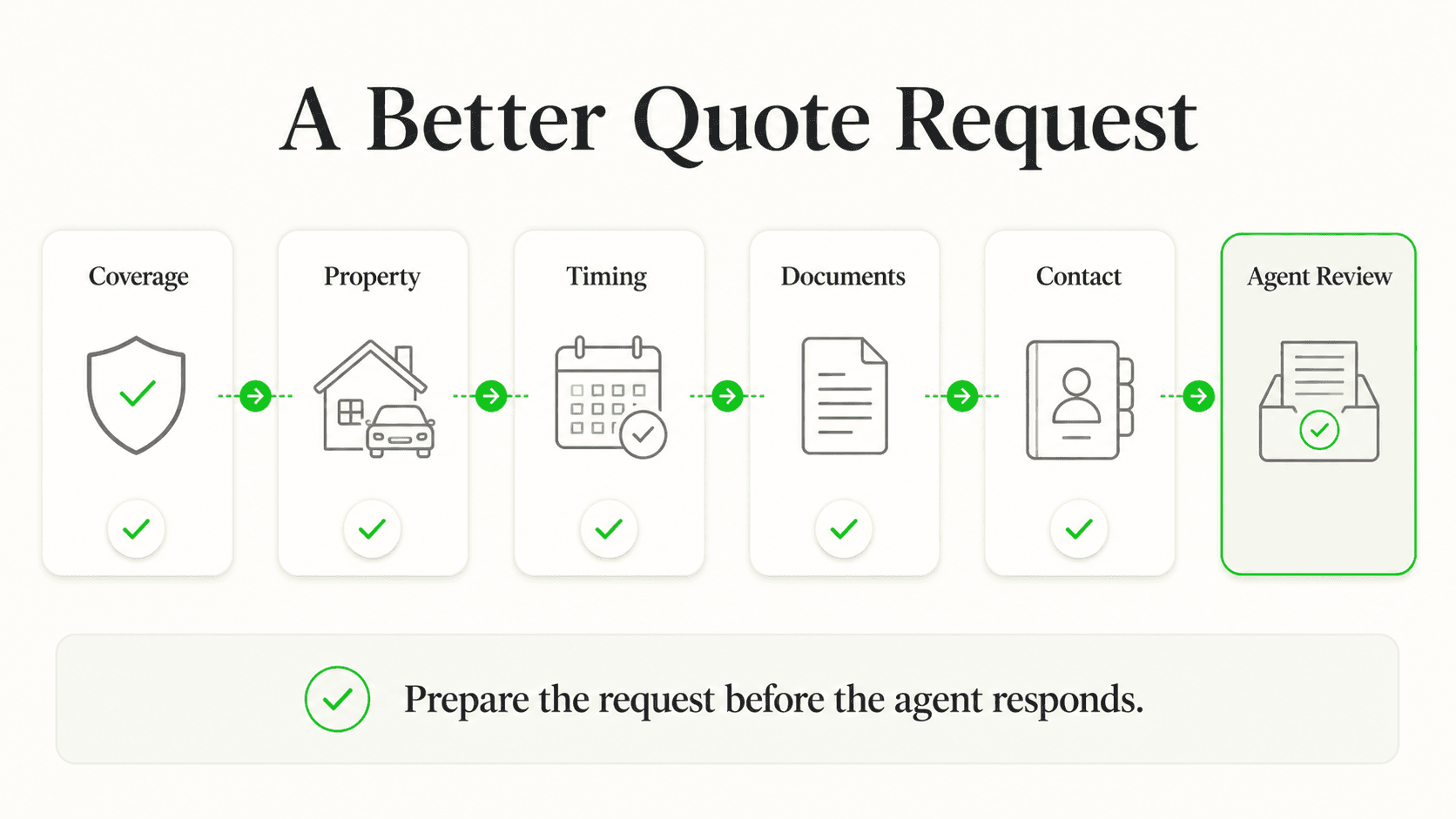
Agencies don't automate the quote itself — pricing a policy requires underwriting and a license. What they automate is quote collection: gathering the coverage type, risk details, and contact information a producer needs before they can run the actual number. An AI front desk handles that intake step across auto, home, life, and commercial lines, 24/7, and hands the producer a complete submission instead of a partially filled web form.
How to Automate Insurance Quote Requests?
Deploy an AI agent on your website and messaging channels that asks the same structured intake questions a CSR would ask — line of business, risk details, current coverage status, contact preference — and routes the completed request to the right producer or team. The setup work is mostly content preparation: your states-licensed list, per-line intake questions, and routing rules. Most agencies go from zero to a tested, live intake flow in a few days to a week.
How AI Handles Insurance Lead Inquiries?
The AI identifies the line of business, answers any immediate question from the agency's approved content, collects the quote-request details specific to that line, captures contact information, and sends the agency a clean summary. Anything that needs a producer — an active claim, a coverage recommendation, an actual quote — gets flagged and routed rather than handled by the AI.
How to Ensure Chatbots Comply With Insurance Regulations?
There's no single certification that makes a chatbot "insurance compliant" — compliance depends on how the bot is configured. Ground it strictly in agency-approved content, build in an explicit "not a licensed agent" disclosure, route every claim mention immediately without assessment, and review conversations regularly for edge cases. Because rules vary by state and by license, an agency's compliance officer or counsel should review the specific configuration against the jurisdictions the agency operates in — this guide is not legal advice.
Chatbots for Insurance Agencies: What's Actually Different From a Generic Bot?
A generic chatbot answers from whatever it was trained on. A chatbot built for insurance agencies is grounded in the agency's own approved content, structured around lines of business (auto, home, life, commercial), and configured with an explicit boundary against giving advice or quoting premiums. That combination — document-grounded answers, per-line intake, and a hard compliance boundary — is what separates a useful insurance front desk from a liability.
What Hyperleap Plan Fits a Small Insurance Agency?
Hyperleap Plus, at $40/month, covers a single chatbot with 3,000 AI responses and four channels (website, WhatsApp, Instagram DM, Facebook Messenger) — enough for most independent agencies to start. Pro ($100/month) and Max ($200/month) add more chatbots, responses, and white-label branding for larger or multi-location agencies. Every plan includes a 7-day free trial; a credit card is required to start.
Answer every quote request before a competitor calls back
Grounded in your agency's own content, scoped to stay off the advice side of the line. See plans and start your 7-day free trial.
See Plans and PricingIndustry Solutions
See how AI chatbots work for these industries:
Related Articles
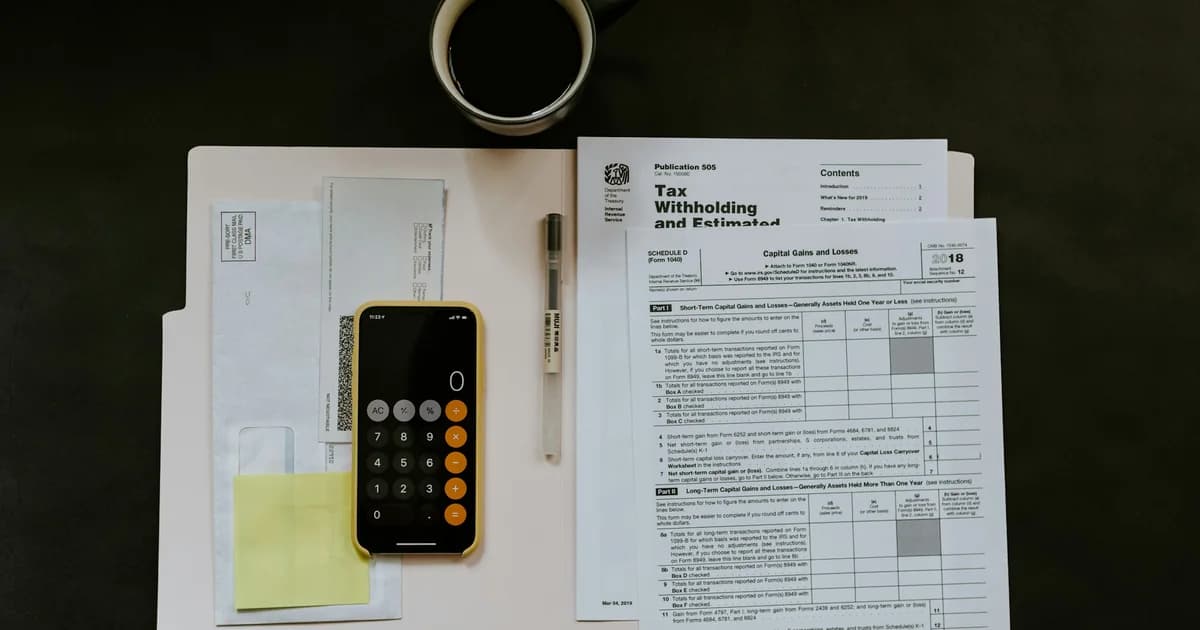
Insurance AI Agent: Handling FAQs and Quote Requests Safely
How insurance agencies use AI agents to answer policy questions, capture quote requests, and route complex conversations to licensed producers.

5 Questions Insurance Agencies Must Ask Before a Chatbot
Insurance isn't like other industries. Here are the 5 questions that separate the right chatbot from an expensive mistake for your agency.

Automate Insurance Quote Collection Without Losing Quality
A step-by-step guide to automating your agency's quote intake across auto, home, life, and commercial lines — while keeping lead quality high.
Fitness Studio Scheduling: An AI Front Desk Guide
How an AI front desk handles class-schedule and pricing questions, captures trial-class leads, and shares your booking link — for fitness studios and gyms.