Conversational AI for Hotels: From Enquiry to Booking
How conversational AI moves a hotel guest from a website or WhatsApp question to a booked room — and what it honestly doesn't do with your PMS or Cloudbeds.
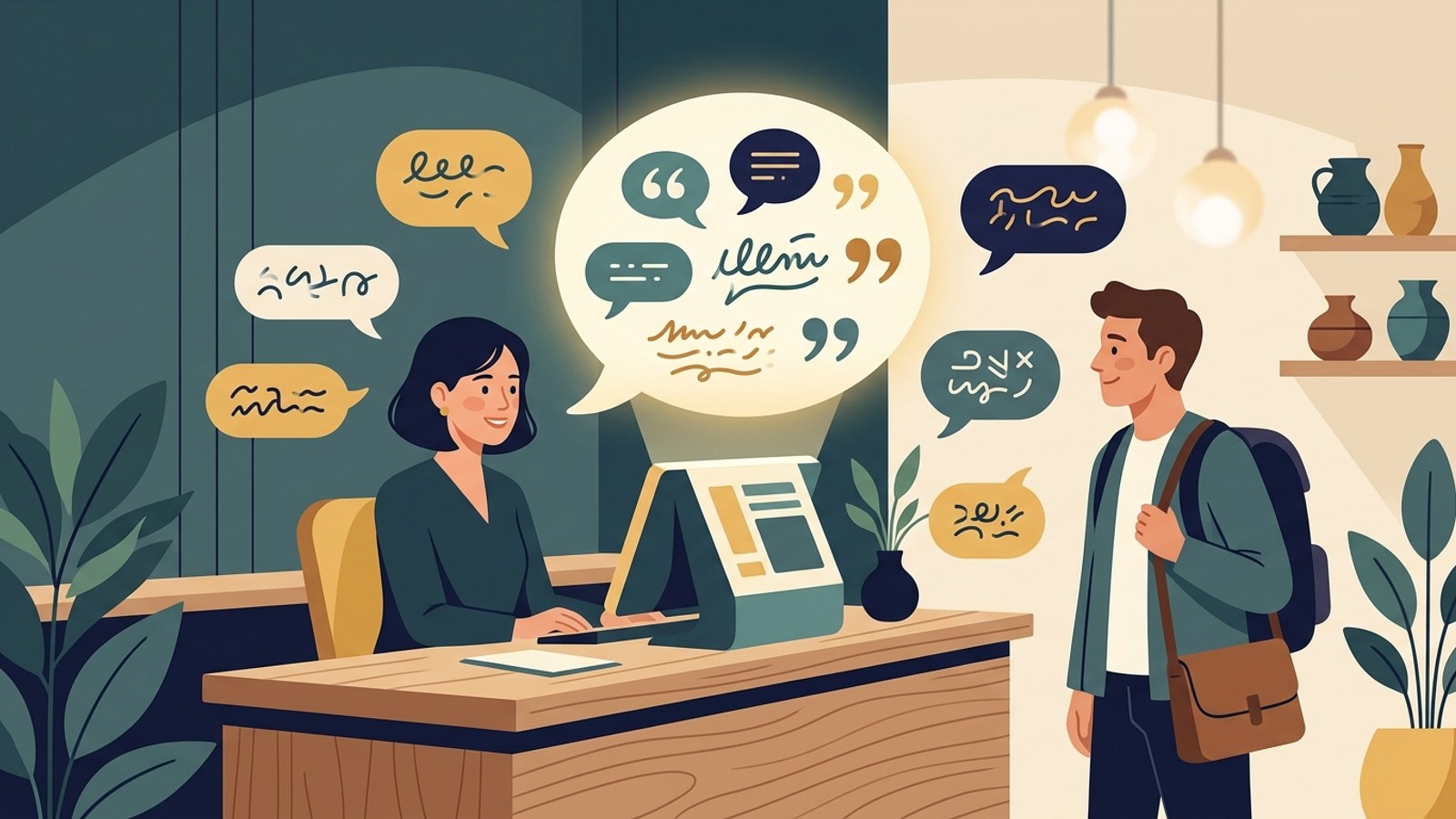
TL;DR: Conversational AI for hotels is a messaging-based front desk — website chat, WhatsApp, Instagram DM, and Facebook Messenger — that answers a guest's questions instantly, qualifies dates and party size, shares your direct-booking link at the moment of interest, and routes anything unusual to your team. It does not book, hold, or confirm a room itself, and it does not write into Cloudbeds, Mews, Opera, or any other PMS or channel manager — those systems keep doing what they already do. What changes is the minutes between a guest typing a question and getting an answer that moves them toward your booking page instead of an OTA's.
A guest is scrolling hotels for a weekend in six weeks. They land on your website at 9:40 PM, or they message the number on your Instagram bio, and they type something like "do you have a room for two, Aug 21–23, and is breakfast included?" Nobody on your team is at a screen. The guest waits, gets nothing, and opens the next tab — usually an OTA that answers by not needing to answer at all, because the price and the room type are already sitting in front of them.
That gap — between the question arriving and a human being free to answer it — is the single biggest reason direct-booking guests end up on a booking platform you're paying commission on. Conversational AI closes that specific gap. It does not replace your reservations desk, your PMS, or your channel manager. It sits in front of all three, on the channels guests already use, and makes sure the question gets an answer in seconds instead of hours.
This guide walks through exactly what that looks like end to end: what the AI front desk answers, how it moves a guest from a question to your booking link, what it explicitly does not touch (your PMS, Cloudbeds included), and how to set it up without turning it into another system your front desk has to babysit.
For the property-type playbooks (airport hotels, budget properties, family resorts, wedding venues, luxury), see 5 Ways Hotels Use AI to Increase Direct Bookings. For the WhatsApp-specific guest journey — pre-arrival to post-stay — see WhatsApp Automation for Hotels & Resorts. This piece focuses narrowly on the enquiry-to-booking moment and answers the two questions we hear most often: can a guest book directly through WhatsApp, and does any of this work with Cloudbeds.
What "Conversational AI for Hotels" Actually Means
The phrase gets used loosely enough that it's worth being precise. Conversational AI for hotels, in the sense this guide means it, is a chat-based AI agent — not a phone system, not a voice bot — that talks to guests across the messaging channels they already use: your website's chat widget, WhatsApp Business, Instagram DM, and Facebook Messenger. It reads and answers from a knowledge base your property controls: your FAQ, your room descriptions, your policies, your local-area guide. It is not pulling generic answers off the internet, and it is not a hospitality-specific booking engine wearing a chat interface.
Two things distinguish a useful implementation from a gimmick. First, it's document-grounded — every answer traces back to something your property uploaded, so a guest asking about your cancellation policy gets your actual policy, not a plausible-sounding guess. Second, it's a lead-capture layer before it's a conversation layer — a lead form collects the guest's name and contact details at the start, so even a guest who asks two questions and closes the tab has left your team something to follow up on.
This sits alongside — not instead of — your existing stack. Your PMS still manages rooms and rates. Your channel manager still pushes inventory to OTAs. The AI's job is narrower and specific: be the always-on layer that answers the question and gets the guest to your booking link before they go looking elsewhere — the same conversational AI for customer service approach that works across other service businesses, adapted to a hotel's front desk.

The Enquiry-to-Booking Loop
The shape of a useful conversation follows the same loop across every industry Hyperleap AI serves, adapted here for a hotel front desk: answer, qualify, share the booking link, route what needs a human, and report back to your team.
| Step | What happens for a hotel guest |
|---|---|
| Answer | The guest's question — hours, room types, pet policy, parking, breakfast — gets answered instantly from your property's own knowledge base, not a generic web search. |
| Qualify | The AI asks the follow-up questions a front desk would ask: check-in/check-out dates, number of guests, room preference, any special requests. |
| Verify | For high-intent leads, an optional OTP step confirms the guest's phone number before your team spends time following up (Pro/Max add-on — see pricing). |
| Book | The AI shares your direct-booking link — your booking engine or Calendly/Cal.com page — at the exact point the guest signals intent, so the click happens while interest is highest. |
| Route | Anything the AI can't answer confidently, or that needs a judgment call (a group booking, a complaint, a special-occasion request), gets flagged for your team instead of guessed at. |
| Report | A clean summary — who asked, what they wanted, what was answered, what's pending — lands in your team's inbox after the conversation ends. |
The word to notice is shares. The AI shares your booking link; it does not hold inventory, generate a confirmation number, or write a reservation into your PMS. That distinction matters enough that it's worth its own section below, because it's also the honest answer to the two most common questions about this category.
A Guest Messages at 11 PM: What Actually Happens
Take the scenario from the opening and walk it through step by step, across whichever channel the guest picked.
On your website. The chat widget is already visible. The guest types their question. The AI answers from your knowledge base — room availability language, breakfast inclusion, cancellation terms — then asks the two or three qualifying questions your reservations team would ask, and offers the booking link once dates and party size are clear.
On WhatsApp. Same knowledge base, same qualifying flow, but no lead form — WhatsApp already gives the AI the guest's phone number and profile, so the conversation starts immediately with no extra friction. This is one reason WhatsApp converts well for hospitality: the guest is already in the channel they check constantly, and there's no context-switch to a website.
On Instagram DM. A guest who found your property through a reel or a post messages the account directly. Same grounded answers, same qualification, same booking link — the channel someone discovers you on doesn't have to be a dead end just because your team is asleep.
On Facebook Messenger. Same pattern for guests who reach out through your Page. The channels page and the Instagram channel page cover setup specifics for each.
In every case, the guest gets an answer inside seconds, not by morning. Jungle Lodges & Resorts and Campinground, both Hyperleap AI customers, found that a large share of inquiries arrive specifically in the hours a front desk isn't staffed — evidence that this isn't a marginal edge case for hospitality, it's a predictable slice of demand that a staffed-hours-only setup structurally cannot see. For the broader case on why speed matters this much, see why hotels lose revenue to slow after-hours inquiries, how response time correlates with conversion across industries, and how hotels use AI to increase direct bookings.
Can a Guest Book a Room Directly Through WhatsApp?
This is worth answering plainly, because the honest answer is more useful than the vague one most vendors give.
No — and here's exactly where the line sits. The AI can answer every question a guest has on WhatsApp, qualify their dates and party size, and share your booking link the moment they're ready. What it does not do is hold a room, generate a confirmation, or complete a reservation inside the WhatsApp thread itself. The guest still completes the booking on your booking engine, your PMS's guest-facing booking page, or through a human on your team — wherever your actual reservation system lives.
That's not a limitation unique to Hyperleap; it reflects how WhatsApp Business API and hotel reservation systems are architected generally. WhatsApp is a messaging channel, not a payments-and-inventory system, and no chatbot vendor writes a live reservation into a PMS through a chat message without a real integration behind it — which is a different (and much heavier) engineering commitment than a chat widget. What conversational AI changes is everything before that final booking step: the guest doesn't wait until morning to get an answer, doesn't have to hunt for your booking page, and gets the link handed to them at the exact moment they've said yes to dates and a room type. For many properties, that's the difference between a guest who books directly and one who books an OTA out of pure convenience three minutes later.
If your property wants the full WhatsApp guest journey — pre-arrival reminders, in-stay concierge requests, post-stay feedback — that's covered in depth in WhatsApp Automation for Hotels & Resorts. And remember: WhatsApp is one channel your front desk covers, alongside your website, Instagram, and Messenger — not the whole strategy.

Does This Work With Cloudbeds (or Any PMS/Channel Manager)?
The short, honest answer: it works alongside Cloudbeds, not inside it. Hyperleap AI does not have a native integration with Cloudbeds, Mews, Opera, or any other property management system or channel manager today. There's no live sync that checks Cloudbeds availability from inside the chat, and no write-back that creates or modifies a Cloudbeds reservation.
What this means in practice, and why it's less of a problem than it sounds: the AI's job is the front-door conversation, not the rates-and-availability engine. It answers the guest's question, qualifies what they want, and hands them your booking link — the same booking page your PMS or channel manager already powers. The guest completes the actual reservation on that page, where Cloudbeds' own availability and rate logic runs exactly as it does today. Nothing about your existing Cloudbeds setup changes, and nothing the AI does can create a double-booking or a rate mismatch, because it never writes into your inventory in the first place.
For teams that want to connect lead data or conversation summaries into their own systems, Hyperleap AI exposes a REST API and webhook events (lead created, new message, conversation started, reply sent) that a developer or an integration platform can use to push that data into a CRM or a PMS-adjacent workflow. That's a build-your-own-connection path, not a plug-and-play Cloudbeds integration — and we'd rather say that clearly than let a page imply an integration that doesn't exist.
If a native PMS integration matters enough to your evaluation to be a deciding factor today, that's a fair reason to keep looking, and worth knowing before you set up a trial rather than after. The hospitality agents overview walks through the same PMS boundary in the context of the full product, if that's useful alongside this guide.
Multilingual Guests: One Front Desk, Every Language
International guests research and message in their own language more often than hotel websites are built to handle. A guest messaging in Spanish, Arabic, German, or Portuguese on your website widget or WhatsApp gets the same grounded answers a native English speaker does — the AI detects the language and responds in kind across all 100+ supported languages, without your team building a separate flow per language or hiring multilingual staff to cover it.
This matters most for properties near airports, near international attractions, or anywhere a meaningful share of guests aren't searching in your primary market's language. The lead your team receives still shows which language the guest used, so whoever follows up can match the right team member to the conversation. For the fuller case on multilingual guest communication, see multi-language AI chatbots for diverse customers and the property-type breakdowns in ways hotels use AI to increase direct bookings.

Setting It Up: What a Property Actually Does
Hotel teams reasonably worry that "AI system" means ongoing technical maintenance they don't have staff for. In practice, setup looks closer to briefing a new front-desk hire than deploying software.
Step 1 — Build the knowledge base. Upload what you already have: room descriptions, rates language (or a note that rates are quote-on-request), amenities, policies (cancellation, pet, check-in/out times), local-area recommendations, and your FAQ. The AI answers only from what you give it.
Step 2 — Configure the lead form. Decide what your website widget collects before a conversation starts — name, contact detail, dates, party size. WhatsApp, Instagram, and Messenger skip the form since the platform already provides contact identity.
Step 3 — Connect your channels. Deploy the same knowledge base and the same AI to your website, WhatsApp Business, Instagram DM, and Facebook Messenger — no separate bot per channel, no separate knowledge base to maintain in four places. See the full channels overview or the WhatsApp channel page for setup specifics, and the multi-channel strategy guide for how to sequence the rollout.
Step 4 — Add your booking link. Whatever your guests currently click to book — your booking engine's guest-facing URL, or a Calendly or Cal.com event for smaller properties — goes into the AI's configuration so it can share it at the right moment. Calendly and Cal.com connect natively, so for things like property tours or spa slots the AI can offer live times and book them in the chat; room reservations still complete on your booking engine.
Step 5 — Set routing rules. Decide what should always go to a human: group bookings above a certain size, complaints, special-occasion requests, anything ambiguous. The AI routes rather than guesses.
Step 6 — Test with real guest questions, then launch. Run the questions your front desk actually fields through the AI before going live. Gaps in the answers are knowledge-base gaps, not code — you fix them by adding a document, not by filing a support ticket.
Ongoing maintenance is mostly knowledge-base upkeep: update it when rates language, seasonal policies, or amenities change. Properties that want the team to handle the build can use Managed Setup ($299 Free) instead of doing it themselves.
Hyperleap AI vs. Hospitality-Specific Tools
HiJiffy and Asksuite are built specifically for the hotel booking funnel, and they're genuinely polished at it. Hyperleap AI takes a different position: the same underlying platform runs hotels, restaurants, spas, real estate, and a dozen other verticals — the hospitality-specific knowledge is what your property uploads, not what's baked into the product. What you get in exchange is the same channel coverage (website, WhatsApp, Instagram, Messenger with full rich-card parity across all four), 100+ languages, and pricing that starts lower than most dedicated hospitality tools, without being locked into a single-industry roadmap.
Neither approach is universally "better" — a property that only ever needs hotel-specific workflows may prefer a purpose-built tool's deeper hospitality feature set; a property that wants one platform across multiple business lines, or simply wants to control cost, may prefer the general-purpose route. The detailed side-by-side breakdowns are in Hyperleap AI vs. HiJiffy and Hyperleap AI vs. Asksuite if a direct comparison helps your evaluation.
Pricing for Hotels
Hyperleap AI has no free plan; every plan includes a 7-day free trial (credit card required).
| Plan | Price | Chatbots | Channels per bot | Best for |
|---|---|---|---|---|
| Plus | $40/month | 1 | 4 (Website, WhatsApp, Facebook — no Instagram) | Single boutique property |
| Pro | $100/month | 2 | 4, incl. Instagram | Independent hotel or small group, most popular |
| Max | $200/month | 5 | 4, incl. Instagram | Multi-property hotel chains |
All plans include 100+ languages, document-grounded answers, lead capture with email summaries, and an analytics dashboard. OTP verification (from $100 usage-based) and Multi-variant (locations, courses, etc) for multi-property knowledge management ($40/month + 2x credits) are Pro/Max add-ons — never bundled into a base plan. Suite ($99 one-time, adds internal AI tools and API access) is available on every plan as a separate purchase. Full detail on pricing.
For a chain managing multiple properties with shared brand standards but property-specific details — local attractions, individual amenities, distinct policies — the Multi-variant add-on makes sure each answer comes from the property the guest asked about, and asks which property when they don't say, without a separate platform setup per property.
Frequently Asked Questions
Is there an AI that books hotel rooms directly through WhatsApp?
Not in the sense of completing a reservation inside the chat thread itself. Conversational AI on WhatsApp answers guest questions, qualifies dates and party size, and shares your booking link at the right moment — but the guest completes the actual booking on your booking engine or PMS booking page, or with a human on your team. No mainstream chatbot vendor books a room end-to-end inside a WhatsApp message without a dedicated, heavier PMS integration behind it. What changes is the speed and ease of getting the guest to that final step.
What's the best WhatsApp AI tool for hotels using Cloudbeds?
There is currently no chatbot vendor, Hyperleap AI included, with a native Cloudbeds integration that syncs live availability or writes reservations from inside a WhatsApp chat. What Hyperleap AI does offer is a WhatsApp AI front desk that works alongside Cloudbeds: it answers guest questions and shares your Cloudbeds-powered booking link, without touching your Cloudbeds inventory or rates. If a live Cloudbeds sync is a hard requirement, confirm directly with any vendor whether they mean a real API integration or a demo mockup — this is an area where marketing claims tend to run ahead of what's actually shipped across the category.
Does the AI replace our reservations team or our booking engine?
No. It sits in front of both. The AI captures and qualifies guest inquiries from your website, WhatsApp, Instagram, and Messenger, then hands your team a clean reservation brief — dates, party size, requests — and shares your existing booking link. The final availability check and booking still happens in your booking engine or PMS. Hyperleap AI addresses the front-door response-time problem, not the rates-and-inventory problem.
Can it handle group bookings or wedding block inquiries?
It can capture and qualify the initial inquiry — dates, approximate room block size, event type — and then route it directly to your sales or events team, since group and wedding bookings usually need a human for rate negotiation and contract terms. You configure the routing rule so these inquiries never sit in a generic queue waiting for someone to notice them.
What languages can guests use?
Guests can write in any of 100+ supported languages, and the AI detects the language automatically and responds in kind — no separate setup per language. This applies across the website widget, WhatsApp, Instagram DM, and Facebook Messenger equally.
How long does setup actually take?
The platform itself can be live in under 10 minutes for a basic configuration. What takes longer, and varies by property, is assembling a complete knowledge base — room details, policies, local guide content — worth doing properly rather than rushing, since the AI's answers are only as good as what you give it. Properties that want the team to build it can use Managed Setup instead.
The Property That Answers at 11 PM Keeps the Booking
None of this makes your rooms, your rates, or your location any more compelling than they already are. What it changes is whether the guest who's already interested — the one typing a question into your chat widget or your WhatsApp at an hour your front desk is asleep — gets an answer that moves them toward your booking page, or silence that moves them toward the next tab.
Conversational AI for hotels isn't a booking engine, and it isn't a replacement for your PMS or your reservations team. It's the layer that makes sure every one of those after-hours questions gets answered fast enough to still end in your booking link, not someone else's.
Industry Solutions
See how AI chatbots work for these industries:
Put this into practice
Related Articles

AI Chatbot for Luxury Hotels: Service at Scale
Luxury city hotels use AI chatbots to deliver personalized concierge experiences at scale, handle VIP inquiries, and maintain white-glove service 24/7.

AI Chatbot for Golf Resorts: Tee Time Guide
Golf resorts use AI chatbots to handle tee time inquiries, membership questions, and high-net-worth guest service without response delays.

AI Chatbot for Serviced Apartments (2026 Guide)
Serviced apartments use AI chatbots to handle extended-stay inquiries, corporate account questions, and self-check-in coordination 24/7.

AI Chatbot for Hotels in Marbella: Implementation Guide
How Marbella luxury hotels use AI chatbots to deliver five-star digital concierge service and capture high-value direct bookings on the Costa del Sol.