Do Chatbots Work for Med Spas? An Honest Look
Yes, with limits — chatbots handle booking, pricing, and lead capture well, but should never touch treatment suitability or medical advice.
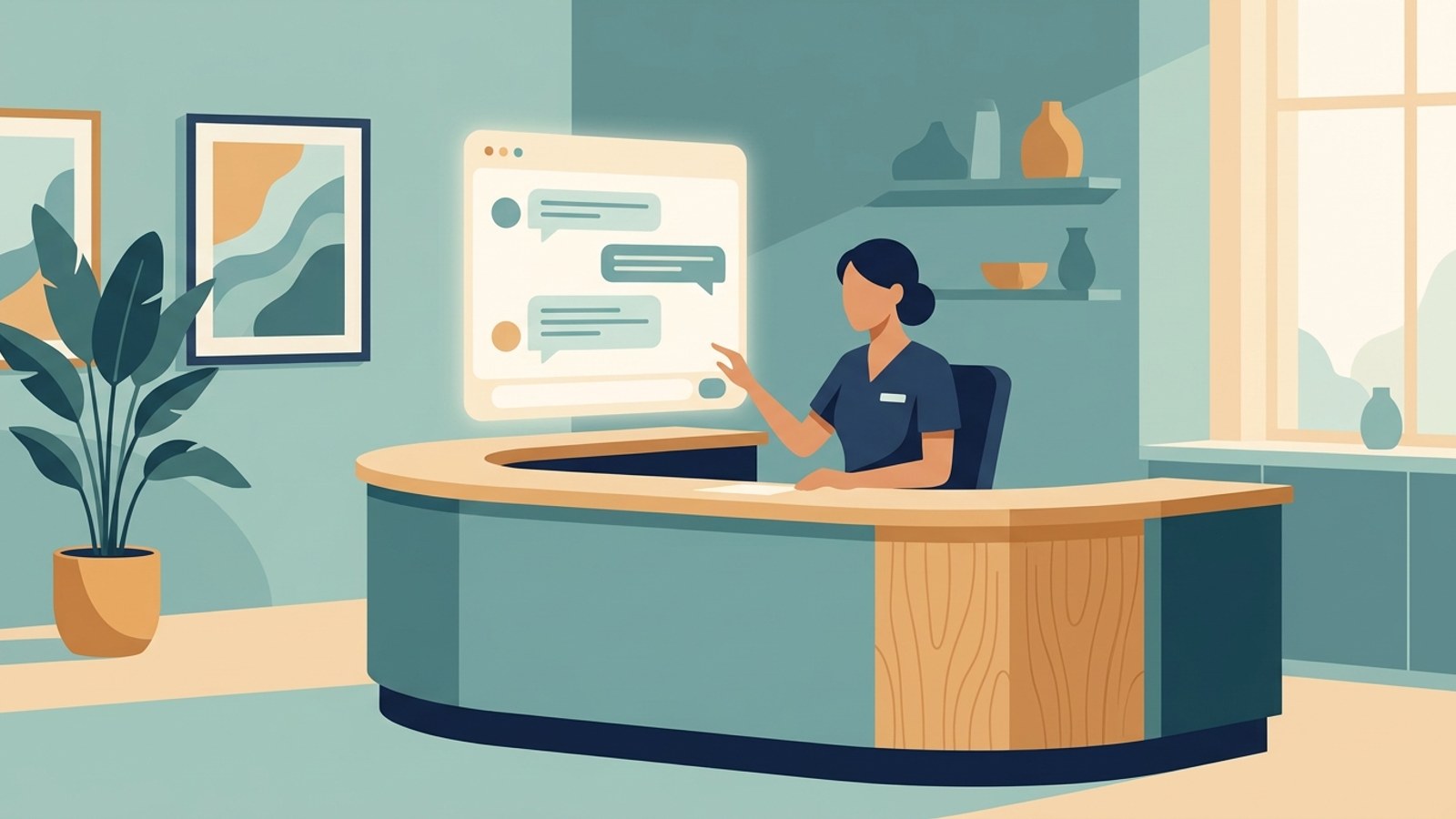
TL;DR: Yes, chatbots work for med spas — for a specific, non-clinical slice of what a front desk does. They handle before/after-hours consult requests, price-list and service-menu questions, package and membership enquiries, consultation booking (in chat via Calendly or Cal.com, or by sharing your booking link), and multilingual conversations well, with lead capture and optional OTP verification tightening up who actually shows up. They do not, and should not, evaluate whether a treatment is right for someone, interpret symptoms, or give medical advice — those go to a licensed provider every time. A med spa is not a dental office or a salon; it performs clinical procedures, and that distinction should shape exactly where the line sits.
Why This Question Deserves a Straight Answer
Search "do chatbots work for med spas" and you'll find vendor pages answering with an unqualified yes and a demo booking button. That's not dishonest, exactly — it's incomplete. A med spa is not a boutique or a coffee shop. It performs Botox injections, laser resurfacing, chemical peels, and other procedures requiring a licensed injector or provider's judgment. An AI system that starts giving opinions about whether a treatment is right for you has wandered somewhere it has no business being.
At the same time, "chatbots don't belong in healthcare, full stop" is also wrong. The broader landscape of AI in medical receptionist roles makes the same point: the technology has a real, bounded job in healthcare-adjacent settings — just not the job vendor demos sometimes imply. Most of what actually clogs a med spa's front desk — hours, pricing, package details, booking requests, aftercare policy questions like "how long before I can wear makeup" — has nothing to do with clinical judgment. It's information a front desk coordinator already recites a dozen times a day.
The honest answer sits in the middle: chatbots work well for the front-of-house layer of a med spa, and they should be deliberately kept out of anything that looks like a medical decision. This guide draws that line clearly, with concrete examples on both sides, so you can evaluate a vendor with your eyes open rather than taking their demo's word for it.
What "Working" Actually Means for a Med Spa Chatbot
Before getting into specifics, it helps to define what success looks like. A med spa chatbot is working when it:
- Answers the questions that would otherwise interrupt a treatment room or go unanswered after hours
- Captures a lead's contact details even when the conversation doesn't end in a booking
- Shares your consultation booking link at the right moment instead of asking the visitor to "call the front desk"
- Never wanders into territory that requires a license to answer
It is not working — regardless of how polished the conversation feels — if it answers a question like "is this safe for my skin type" with anything other than a routing response. That single failure mode is the one place a chatbot for a med spa differs meaningfully from a chatbot for, say, a beauty or wellness business doing hair and nails, or a general AI receptionist fielding scheduling questions. Judgment calls are for medically licensed people. For a wider view of where the agent-vs-chatbot distinction matters, see AI agent vs. chatbot.
What Works Well: The Front-of-House Layer
This is the part of the job that's genuinely well-suited to a document-grounded AI agent — no clinical judgment involved, just fast, accurate, always-on answers.
Before/After-Hours Consultation Requests
Most med spa inquiries don't arrive during business hours. Someone scrolls Instagram after dinner, sees an ad for a laser package, and wants to ask a question or book a consultation right then. If the only option is "call during business hours" or a static contact form, that interest cools by morning.
A chatbot answers immediately, at 9 PM or 6 AM, and shares your booking link so the visitor can lock in a consultation slot without waiting for a callback. This is the single highest-leverage use case for a med spa, because it converts a moment of interest into an actual calendar entry instead of a message that sits unread until your front desk opens.
Price-List and Service-Menu Questions
"How much is a Botox unit?" "What's included in your laser package?" "Do you carry Juvederm or Restylane?" These are questions with static, documentable answers — the same answers your front desk gives verbally, over and over, every single day. A chatbot pulls them from your uploaded price list and service menu instantly, without anyone picking up a phone.
This is also where the honesty boundary is easiest to keep clean: a chatbot stating "our lip filler starts at $650 per syringe" is reciting a price list. A chatbot saying "1 syringe should be enough for what you're describing" has crossed into a judgment call that belongs with your injector during the actual consultation.
Package and Membership Enquiries
Med spas increasingly sell recurring revenue — monthly memberships, treatment bundles, seasonal package deals. These have defined terms (what's included, price, renewal policy) that a chatbot can explain clearly from your documentation, the same way it would explain a single-treatment price. "What's included in your membership" is a menu question, not a medical one.
Consultation Booking in Chat
If your consults run through Calendly or Cal.com, the chatbot can read live availability, offer real open times, and book the consultation right in the conversation — the client gets a calendar invite by email (in-chat booking needs Calendly Standard or higher). If you use another booking tool, it hands over your booking link at the moment of interest instead. Either way, "I want to book a consult" turns into a booked slot or a click, not a stalled conversation. See appointment scheduling chatbot for how that flow works in more detail.
Multilingual Conversations
Aesthetic and wellness clients are demographically broad, and a meaningful share of inquiries in many markets arrive in a language other than English. A chatbot that detects and responds in the visitor's own language — across 100+ languages — removes a real barrier that a single-language front desk can't clear on its own. Since a large share of med spa inquiries arrive as Instagram DMs specifically, an Instagram chatbot that handles this natively — same knowledge base, same language detection — is often the highest-traffic channel to get right first.
Lead Capture — With an Optional Verification Layer
Every conversation is a potential lead worth capturing, whether or not it converts to a booked consultation. Collecting name and contact details up front means a partial conversation is still a follow-up opportunity, not a lost inquiry.
For med spas fielding a high volume of low-intent DMs — a common pattern around paid Instagram and Facebook campaigns — an OTP verification add-on can be layered on to confirm a phone number is real before it lands in your CRM. This is a paid, opt-in add-on (usage-based, recharge from $100, available on Pro and Max plans) — not something bundled into every plan — but it's worth knowing about if lead quality, not just lead volume, is the problem you're solving. See the broader chatbot lead generation mechanics, or the wider case for AI lead capture as a category.
What Doesn't (and Shouldn't) Work: The Clinical Line
This is the part vendor pages tend to skip, and it's the part that matters most for a business handling aesthetic medicine.
Treatment Suitability Questions
"Is Botox right for my forehead lines?" "Should I do filler or a laser for this?" "Am I a good candidate for microneedling?" These sound like product questions, but they're actually a request for a professional opinion about someone's face and body. That call belongs to a licensed injector or provider who can actually look at the person — not an AI system pattern-matching on a text description.
A well-configured chatbot recognizes these as consultation-worthy questions and routes them: "That's something our provider will assess during your consultation — want me to get you booked in?" It doesn't attempt an answer, and it doesn't need to.
Symptom and Safety Questions
"I have redness and swelling after my filler, is that normal?" "I'm on blood thinners, can I still get Botox?" These are exactly the kind of questions that read as harmless FAQs but are, in substance, clinical questions. Redness after a procedure could be entirely expected — or it could be a sign of something that needs a same-day call to the injector. A chatbot has no way to tell the difference from a text description, and pretending otherwise is where real risk creeps in.
The correct behavior is routing to a practitioner immediately, not a reassuring guess.
Medical Advice, Period
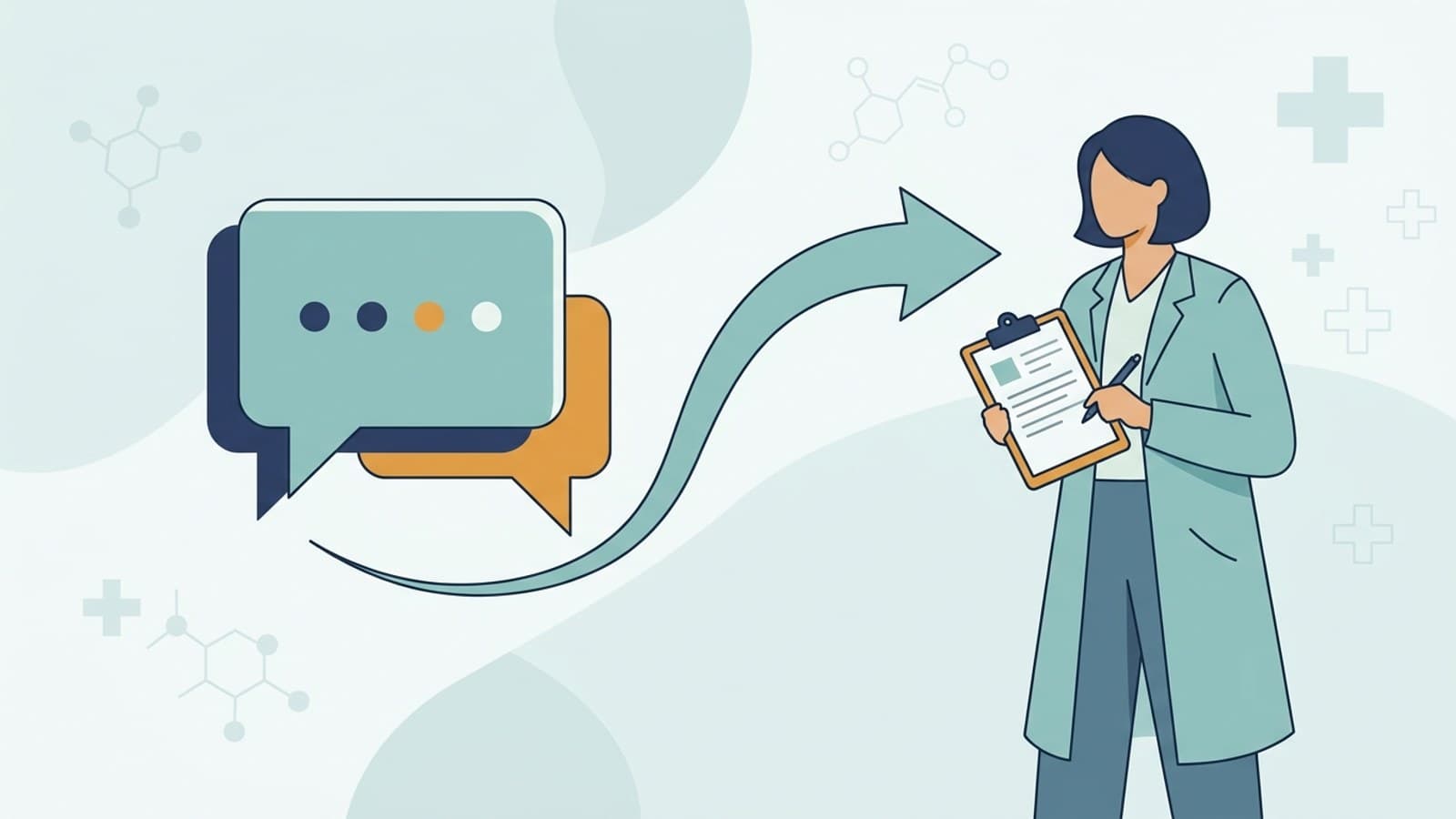
No AI chatbot — for a med spa or any healthcare-adjacent business — should give medical advice. That includes soft-sounding versions of it: "that dose sounds about right," "you probably don't need to worry about that," "most people are fine with that combination." A chatbot for a med spa is not, and should not be marketed as, a HIPAA-compliant clinical tool or a substitute for a provider's judgment. If your practice handles protected health information in a way that requires HIPAA compliance for that data, that's a separate question from what a front-desk chatbot should be doing — see what a HIPAA compliant AI chatbot needs to cover for that distinction. The chatbot's job ends where a diagnosis or treatment recommendation begins.
Aftercare Guidance vs. Aftercare Policy
This distinction is subtle enough to be worth spelling out on its own. "How long until I can wear makeup after this treatment?" or "how many days should I avoid the sun?" are policy questions — your practice has a documented, standard answer, and reciting it from your own aftercare instructions is no different than a front desk staffer reading from the same sheet. "I still have swelling three days after treatment, is that okay?" is a symptom question in disguise, and it should route to a human every time, even though both start with the word "aftercare."
The table below makes this split concrete.
| Question type | Chatbot handles it | Route to a human |
|---|---|---|
| "What are your hours / where are you located?" | ✅ | |
| "How much is a syringe of filler?" | ✅ | |
| "What's included in your membership?" | ✅ | |
| "Can I book a consultation for next week?" | ✅ (books via Calendly/Cal.com or shares booking link) | |
| "How long before I can wear makeup after a peel?" (documented policy) | ✅ | |
| "Is Botox or filler better for my situation?" | ✅ | |
| "I have swelling / redness, is this normal?" | ✅ | |
| "Can I get this treatment if I'm pregnant / on medication X?" | ✅ | |
| "What dose should I ask for?" | ✅ | |
| Anything describing pain, an adverse reaction, or an emergency | ✅ (routed immediately) |
What 200+ SMB Deployments Show, Qualitatively
Hyperleap AI has been deployed across 200+ active clients spanning 35+ industries, including a meaningful number of beauty, wellness, and aesthetic businesses. We don't publish invented conversion percentages for med spas specifically — no verified, third-party-sourced statistic exists for that segment yet, and inventing one would be worse than saying nothing. What the pattern across that broader deployment base does show, qualitatively, is consistent:
The volume problem is real and recurring. Front desk and treatment-room staff at aesthetic and wellness businesses report the same bottleneck repeatedly — the same handful of questions (pricing, hours, package details, "can I book this week") arrive dozens of times a week, and answering them by hand competes directly with time spent on paying clients in the chair.
After-hours inquiries are a consistent share of total volume. Across service businesses broadly — not med spas alone — a large share of inbound interest arrives outside staffed hours, which tracks with what's documented for the wider beauty and wellness category: salons and med spas miss a significant share of calls during appointments simply because staff are physically occupied with a client. The pattern isn't unique to beauty and wellness either — response time and conversion rates move together across most service industries, and the cost of slow response times compounds the same way whether the business is a med spa, a dermatology practice, or a broader healthcare provider.
The businesses that treat this as a front-desk problem, not a clinical one, get the clean win. The deployments that work well are scoped tightly to menu, pricing, hours, and booking, and explicitly route anything symptom- or suitability-shaped to a human. Stretching the chatbot into judgment territory creates confusion for the visitor and risk for the business, with no corresponding upside.
None of this promises a specific lift for your practice — it describes a pattern that holds broadly across service businesses built on repetitive front-desk questions and after-hours interest, and med spas fit that pattern closely.
How to Pilot a Med Spa Chatbot in a Week
If the front-of-house case above makes sense for your practice, here's a realistic, honest timeline for testing it — no inflated "live in five minutes across every channel" claim, just what an actual pilot week looks like.
Day 1: Gather your source content. Pull your price list, service menu, package and membership terms, hours, and any standard aftercare policy documents — not clinical guidance, just the printed sheet you already hand patients. This is the single biggest factor in answer quality, so don't rush it.
Day 2: Set up the trial and configure the knowledge base. Every plan includes a 7-day free trial — a card is required, and you won't be charged until it ends. Upload your Day 1 documents. The platform can read your existing website to draft a starting configuration, but review every answer against what you actually offer.
Day 3: Configure the lead form and routing rules. Decide what to collect before a conversation starts — name, phone or email, treatment interest. Then set explicit routing: symptom language, safety questions, and anything suitability-related goes straight to a human, every time. Don't skip this step to save time.
Day 4: Turn on channels. Website chat is the baseline; add WhatsApp, Instagram DM, or Facebook Messenger wherever your inquiries actually arrive — for most med spas, Instagram DM volume alone justifies covering it.
Day 5–6: Test with your real questions. Ask it the twenty questions your front desk fields most — pricing, packages, hours, booking, aftercare policy — and separately test the ones it should refuse: symptom descriptions, "is this right for me," anything wanting a clinical opinion. If it attempts an answer, tighten the routing before going further.
Day 7: Go live on one channel, then expand. Start with website chat or your highest-volume DM channel, watch the logs for a few days, and add channels once you're confident in what it's answering — and what it's routing away.
Red Flags When Choosing a Vendor
Not every AI chatbot vendor treats the clinical boundary with the seriousness a med spa needs. Watch for these signals during evaluation:
- The demo answers "is this treatment right for me" with a confident opinion instead of a routing response. If a sales demo does this, the production product will too — and that's a liability the vendor isn't flagging.
- Vague or absent language about what the AI won't do. A vendor who can't clearly articulate their own boundary between front-desk information and clinical territory hasn't thought about it — or has, and decided it's not their problem.
- Claims of HIPAA compliance without specifics. "HIPAA compliant" is a specific, verifiable claim about data handling, business associate agreements, and infrastructure — not a marketing adjective. If a vendor can't point to what that claim actually covers, treat it as unverified.
- No visible escalation or routing mechanism in the product. If there's no way to configure "route this to a human" behavior for specific topics or keywords, the chatbot can't enforce the clinical boundary even if the vendor says the right things in a sales call.
- Pressure to "let the AI answer everything" for a smoother-sounding demo. A chatbot that never says "let me connect you with our team" isn't more capable — it's just not routing things it should be routing.
- No way to review what the AI actually said. Conversation analytics and email summaries aren't a nice-to-have here; they're how you catch a boundary violation before it becomes a pattern.
How Hyperleap AI Fits a Med Spa Front Desk
Hyperleap AI is an AI agent platform built for small and mid-sized businesses that need an always-on, document-grounded front desk — not a system that improvises. For a med spa specifically, that means:
Document-grounded answers only. The AI answers from your price list, service menu, package terms, and aftercare policy documents — not from general internet knowledge about aesthetic procedures. If it's not in what you've uploaded, it says so and routes to your team rather than guessing.
Lead capture before the conversation starts. A lead form collects contact details up front, so even a partial conversation leaves your team with a name and a way to follow up. OTP-verified lead capture is available as a paid, opt-in add-on on Pro and Max plans for practices that want to confirm a phone number is real before it enters the pipeline.
Multi-channel from one configuration. Website chat, WhatsApp, Instagram DM, and Facebook Messenger all run from the same knowledge base and lead inbox — a common setup for beauty and wellness businesses whose inquiries arrive across all four.
Calendly and Cal.com booking, not a clinical booking system. With Calendly or Cal.com connected, the AI books consultation slots in the chat; with any other tool it shares your booking link. It cannot cancel or reschedule, and it does not connect to your practice-management or EMR software.
100+ languages, detected and matched automatically, for practices serving a linguistically diverse client base.
Pricing. Plans start at Plus ($40/month) for a single chatbot, Pro ($100/month) for two chatbots and white-label branding, and Max ($200/month) for up to five chatbots — each with a 7-day free trial (card required, no charge until the trial ends). OTP Verification (Pro/Max only, usage-based from $100) and Multi-variant (locations, courses, etc) ($40/mo + 2x credits per request, Pro/Max only) are optional add-ons. Suite ($99 one-time, all plans) unlocks AI Tools, AI Assistants, and API access. See the full breakdown on pricing.
This is the AI front desk layer — the messaging system that sits between an Instagram DM at 9 PM and your actual consultation calendar. It is not a clinical tool, a HIPAA-certified system, or a substitute for your injector's judgment. It's built to know exactly where that line is, and to hand off cleanly the moment a question crosses it. For the customer-service layer this sits inside more broadly, see conversational AI for customer service and how to automate customer support — or, for small businesses evaluating chatbots generally, AI chatbot for business.
For a walkthrough of exactly what a med spa AI receptionist automates day to day, see AI receptionist for med spas.
Frequently Asked Questions
Do chatbots actually work for med spas?
Yes, for the front-of-house layer specifically — hours, pricing, package details, booking-link sharing, and lead capture. They work well because these are repetitive, document-based questions with a single correct answer, not judgment calls. They should not be used for treatment suitability, symptom interpretation, or any question requiring a licensed provider's opinion — that part of the job stays with your team.
Can an AI chatbot recommend which treatment is right for me?
No, and a well-configured one shouldn't try. "Is Botox or filler right for me" requires a professional to actually assess the person, not pattern-match a text description. A properly scoped med spa chatbot routes this kind of question straight to a consultation booking instead of attempting an answer.
Is a med spa chatbot HIPAA compliant?
Hyperleap AI does not make HIPAA certification claims, and no vendor's claim of "HIPAA compliant" should be taken at face value without specifics on what it covers. If your practice handles protected health information in a way that triggers HIPAA obligations, treat that as a separate compliance question from the front-desk chatbot decision, and evaluate any vendor's data handling against your actual requirements — see what a HIPAA-compliant AI chatbot needs to cover.
What should a med spa chatbot never say?
It should never offer a treatment recommendation, interpret a symptom ("that redness is/isn't normal"), give a specific medical opinion, or reassure someone about a safety concern. Any question that sounds like it wants a clinical judgment call should be routed to a human, every time — even if the chatbot could technically generate a plausible-sounding answer.
How do I test whether a chatbot vendor handles this responsibly?
Ask their demo the clinical-boundary questions directly: "is Botox right for me," "I have swelling after my filler, should I be worried." If the demo answers confidently instead of routing to a human, that's a signal about how the production product will behave for your real patients.
How long does it take to set up a med spa chatbot?
A realistic pilot runs about a week: a day to gather your price list, menu, and policy documents; a day or two to configure the trial, lead form, and routing rules; a few days of testing with your actual front-desk questions (and the questions it should refuse); then a phased go-live starting with your highest-volume channel. Every plan includes a 7-day free trial, and a card is required to start.
Industry Solutions
See how AI chatbots work for these industries:
Related Articles
AI Receptionist for Med Spas: What It Actually Handles
An AI receptionist for med spas answers treatment and pricing questions, captures consultation requests on Instagram DM, and routes anything clinical to staff.

Wedding Venue Tour Enquiries: A Question Pack
Prepare better wedding venue tours with questions on date flexibility, guest range, event shape and priorities, plus a copy-ready host handoff.

Conflicting AI Sources: An Owner Review Workflow
Resolve conflicting chatbot knowledge with a source register, named decision owner, approved replacement and repeatable tests for the disputed answer.

AI Front Desk Holiday Hours and Escalation Playbook
Prepare holiday hours, honest response windows and clear escalation contacts with a practical AI front desk source sheet and review checklist.