AI Answering for Auto Repair Shops & Dealerships
AI answering for auto repair shops vs. dealerships: estimates and status vs. inventory, test drives, trade-ins — 24/7 across chat, WhatsApp, Instagram.

TL;DR: "AI answering" means something different for a repair shop than it does for a dealership, and treating them the same is why most automotive chatbots feel generic. A repair shop needs an AI that handles estimate requests, "can you look at it today" questions, and service status updates from your configured policies. A dealership needs an AI that answers inventory questions from the content you've given it, captures test-drive leads, and qualifies trade-in enquiries before routing them to a salesperson. This guide covers both — plus what's honestly out of scope today: phone/voice is on the roadmap, and there's no DMS or live-inventory-feed integration. Everything the AI answers is grounded in what you upload or link, on your website, WhatsApp, Instagram, and Facebook Messenger.
A customer's check-engine light comes on at 7 PM. They pull up your shop's website on their phone, hoping someone can look at it before their commute tomorrow. A few miles away, someone else is scrolling a dealership's inventory page after dinner, trying to figure out if the truck they liked is still on the lot and whether their trade-in is worth bringing up.
Neither of them is calling. Both are messaging — chat, WhatsApp, Instagram DM — because that's how people research and reach out now, especially after the service department or the sales floor has gone home for the night. Many go straight to Instagram DM or WhatsApp because that's the app already open on their phone.
The mistake a lot of automotive businesses make is buying "an AI chatbot for auto" as if repair shops and dealerships have the same customer journey. They don't. A repair shop customer wants to know if you can look at their car and roughly what it'll cost. A dealership shopper wants to know what's in stock, wants to book a test drive, and wants a fair look at their trade-in. This guide walks through what an AI agent for automotive businesses actually handles for each side of the industry, how it compares to answering the phones yourself, and where the honest boundaries are.
What "AI Answering" Means for Auto Repair Shops and Dealerships
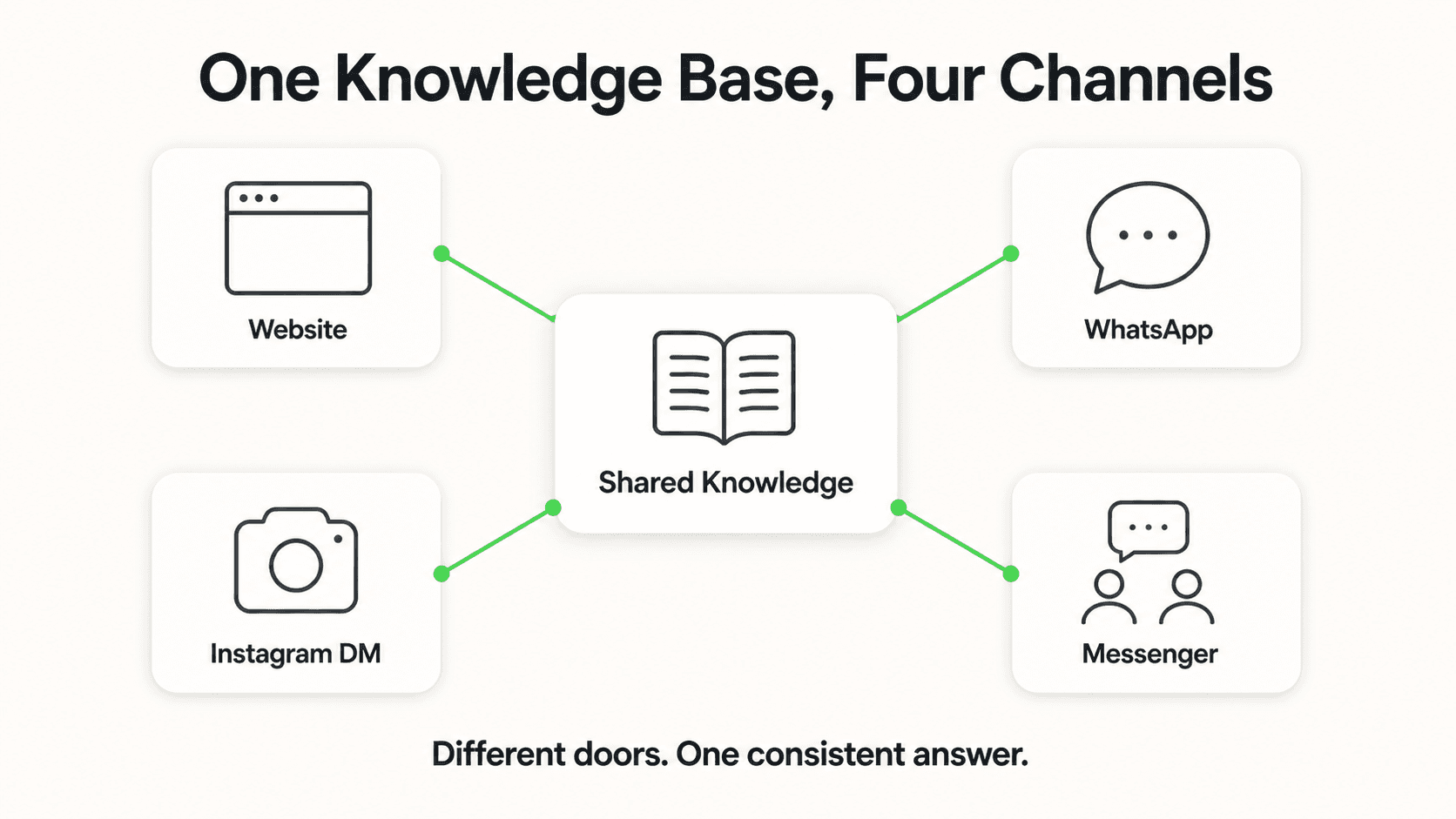
An AI answering system, in the sense this guide uses it, is a chat-based AI agent that engages customers across your website chat widget, WhatsApp Business, Instagram DM, and Facebook Messenger. It reads the documents, policies, and content you give it, and answers questions in that voice, 24 hours a day.
It is worth being direct about what it is not, because the phrase "AI answering service" gets used loosely in this industry:
- It does not answer phone calls. Voice and phone support are on Hyperleap AI's roadmap, not shipped today. If a customer calls your main line, they reach whatever phone setup you already have — this guide is about the messaging channels that sit alongside it.
- It does not connect to your DMS. There's no integration with CDK Global, Reynolds & Reynolds, Tekion, or any dealer/shop management system. The AI doesn't pull live technician schedules, real-time bay availability, or a synced inventory feed.
- It does not pull live inventory data. For dealerships, the AI answers inventory questions from the vehicle information, pricing notes, and inventory pages you upload or link — not from a live feed that updates the moment a car sells.
What it does do is answer the volume of repetitive, documentable questions that eat up a service advisor's or a salesperson's day — grounded entirely in what you've configured, available the moment a customer reaches out instead of the next business day. It's the same document-grounded approach covered in how an AI receptionist actually works, applied to the two automotive segments.
Repair Shop vs. Dealership: Different Jobs, One AI Layer
The two segments share the same underlying platform — document-grounded answers, multi-channel messaging, lead capture — but the jobs the AI performs are distinct enough to plan separately.
| Auto Repair Shop | Dealership | |
|---|---|---|
| Primary question type | "Can you look at my car?" / "What will this cost?" | "Is this vehicle still available?" / "What's it worth as a trade-in?" |
| Core AI job | Estimate requests, service status, drop-off logistics | Inventory Q&A, test-drive booking, trade-in qualification |
| Grounded in | Your service menu, price ranges, hours, drop-off policy | Your inventory listings, vehicle content, financing FAQ |
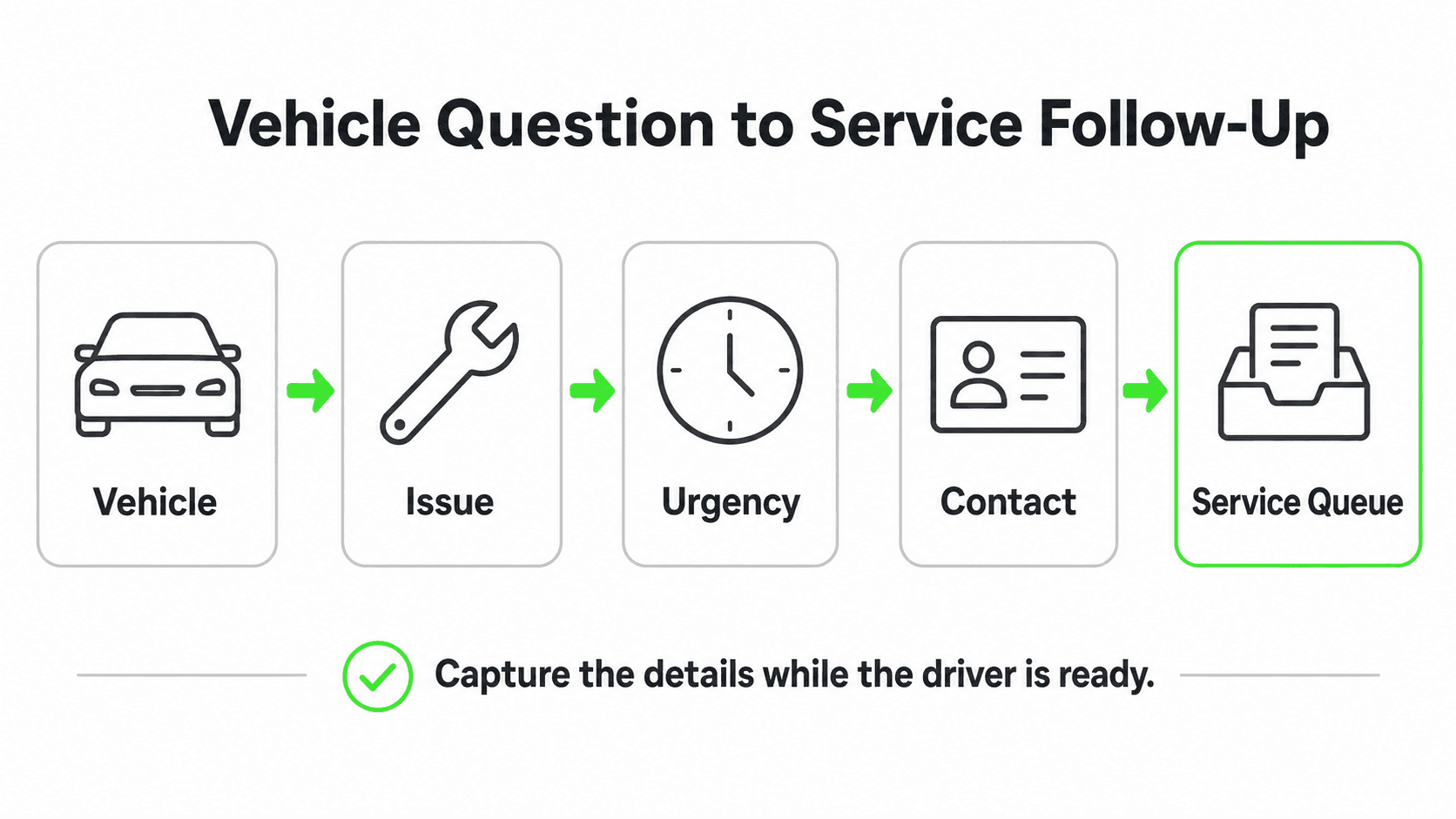
| Lead captured | Name, contact, vehicle, issue description | Name, contact, vehicle of interest, trade-in details |
| High-value lead handling | Standard lead form | Optional OTP verification for test-drive/trade-in leads |
| Routing | Service advisor for scheduling; tech for diagnosis | Sales rep for test drives; F&I or used-car buyer for trade-ins; service department for existing-customer service questions |
| Typical channels | Website, WhatsApp, Facebook | Website, Instagram, WhatsApp, Facebook |
Selling a repair shop and a dealership the exact same script produces an AI that half-answers both. The sections below break out what each one is actually configured to handle.
What the AI Handles for Auto Repair Shops
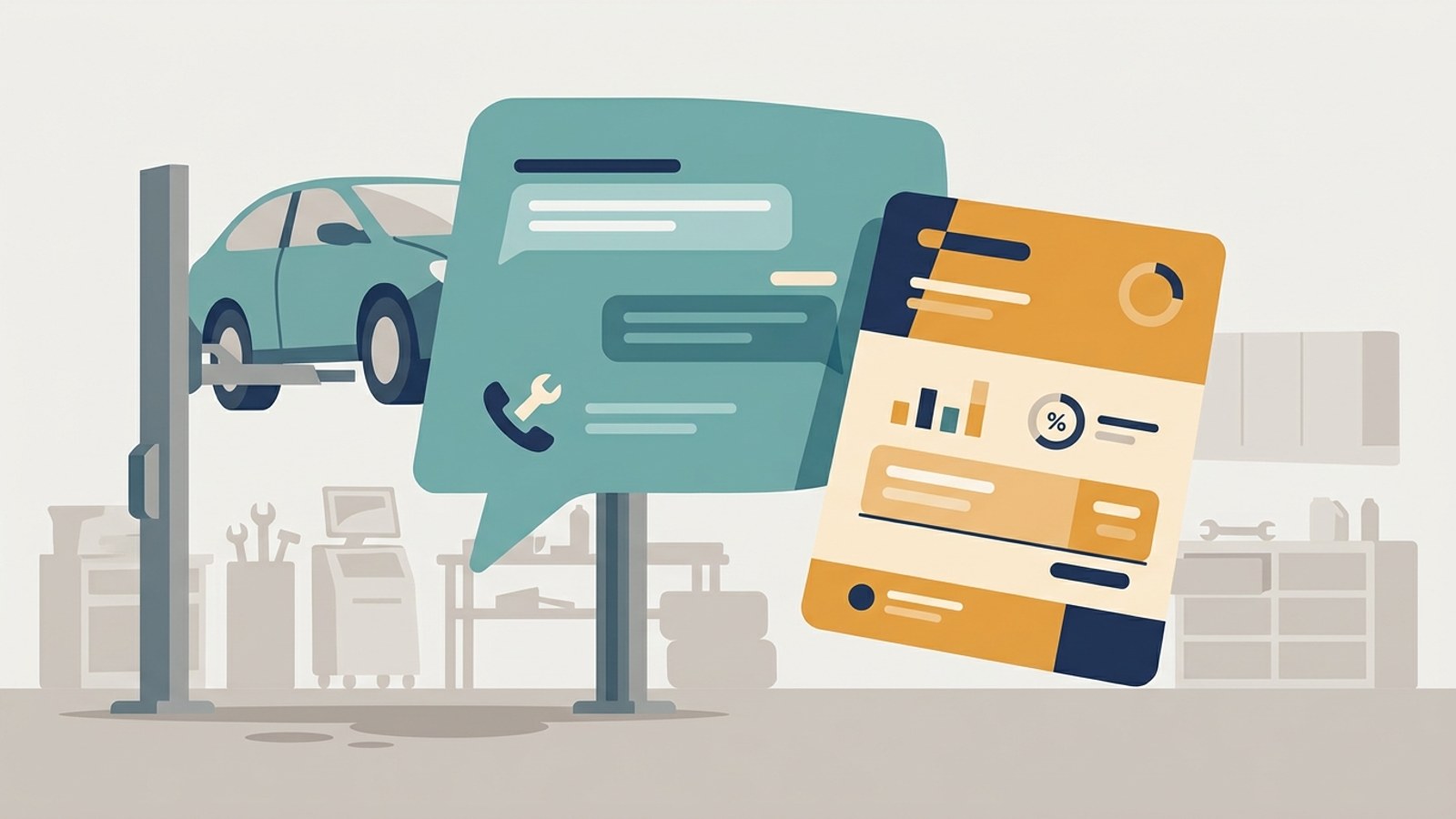
For an independent repair shop, quick-lube center, or tire shop, most inbound messages fall into a handful of predictable categories. Here's how the AI is meant to handle each.
Estimate requests. A customer describes a symptom — "my brakes are grinding" or "check engine light came on, what could that be" — and asks what it'll cost to fix. The AI responds with the price ranges you've configured for common services (brake pads, oil changes, alignments, inspections), framed as estimates, not quotes: actual pricing depends on inspection. It does not diagnose the mechanical issue or promise a number a technician hasn't confirmed.
"Can you look at it today?" This is the single most common message a shop's front desk fields, and it's entirely a scheduling-and-capacity question, not a technical one. The AI answers from your current-day availability policy — whether you take walk-ins, whether same-day diagnostics are typically possible, and it shares your booking link so the customer can lock in a slot rather than just getting a "maybe."
Service status questions. "Is my car ready?" arriving by text mid-afternoon is a distraction from the service drive. The AI answers from whatever status information your team has configured — general turnaround expectations for the service type, and a clear "your advisor will confirm timing directly" for anything specific to that repair order, so the customer isn't left guessing and your advisor isn't pulled off the floor to check.
Drop-off logistics and hours. After-hours key drop procedures, loaner car policy, whether you validate parking, your actual operating hours including any seasonal changes — these are static, documentable answers that the AI serves instantly instead of a customer calling and getting voicemail.
Policy-grounded answers only. Every one of these answers comes from documentation you've configured — your service menu, your price bands, your hours, your drop-off policy. If a customer asks something outside that scope, the AI says so and routes to your team rather than guessing at a number or a diagnosis. That's a deliberate design choice: a wrong price estimate or a guessed diagnosis is worse than no answer at all.
This maps closely to the workflow covered in automating service appointment scheduling for auto shops — the AI answering layer is the front door that feeds that scheduling process, and both sit on top of the same lead-routing logic described in how chatbot lead routing works.
What the AI Handles for Dealerships
Dealership shoppers ask a different set of questions, and they're often researching after the sales floor has closed — after-hours response gaps are a well-documented problem in this industry specifically because so much car shopping happens in the evening.
Inventory questions, answered from your content. "Do you still have the 2024 Highlander in blue?" or "What trims do you have on the lot right now?" — the AI answers from the vehicle information, inventory pages, and content you've uploaded or linked. To be precise about the boundary here: this is not a live feed synced to your DMS. If your inventory content is a week stale, the AI's answer will be too, so keeping that content current is part of running this well. For anything the AI can't confirm from what it has, it says so and offers to connect the shopper with a salesperson rather than guessing at availability.
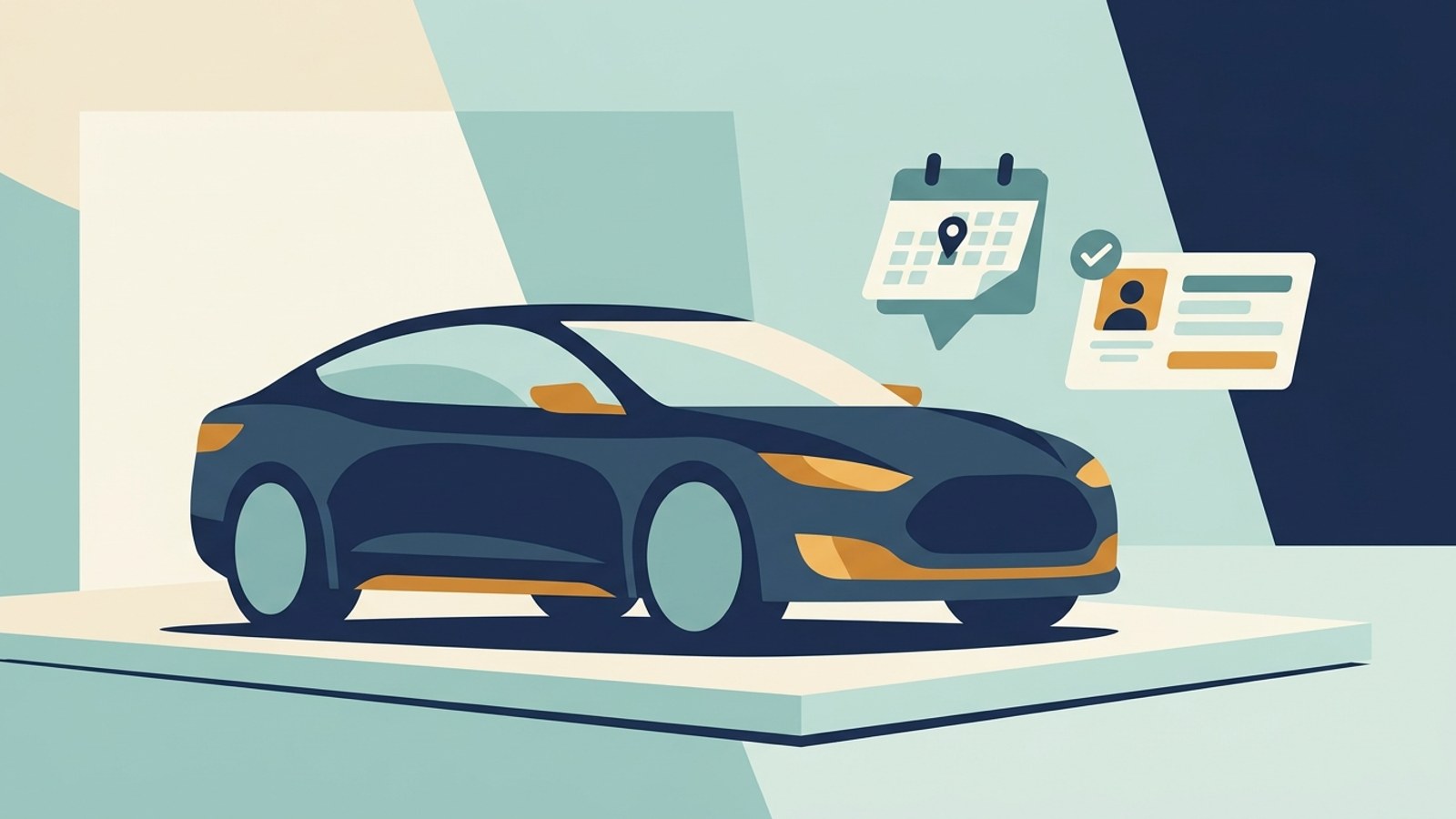
Test-drive lead capture. When a shopper is ready to move from browsing to visiting, the AI collects their contact details and vehicle of interest through a lead form before or during the conversation, and shares your booking link to schedule the test drive. Every inquiry becomes a lead your sales team can follow up on, even if the shopper doesn't finish the conversation.
Trade-in enquiry qualification. "What's my trade worth?" is one of the highest-intent questions a dealership gets, and it's also one that shouldn't be answered with a specific number by an AI. The AI's job is to qualify the enquiry — collect make, model, year, mileage, and condition notes — and route it to your F&I team or used-car buyer for an actual appraisal. This is qualification, not valuation.
Service department routing. Not every dealership visitor is shopping for a new vehicle — many are existing customers with a service question. The AI recognizes the intent shift ("my Camry is making a noise" from someone who bought there two years ago) and routes to your service department the same way a repair shop's AI would, rather than treating every dealership conversation as a sales conversation.
Financing FAQ, not financing decisions. General financing information you've documented — down payment ranges, what documents to bring, whether you work with a specific lender network — gets answered from your content. Pre-qualification decisions and specific rate quotes stay with your finance team.
The common thread across all four: the AI narrows and organizes the conversation so your sales and service teams start with a qualified lead and the right context, not a cold inbox of unread messages. That's the same lead-quality problem covered in the lead generation chatbot playbook — the goal isn't more messages, it's fewer wasted callbacks.
Grounded in Your Content — Not Your DMS or Inventory Feed
This is worth stating plainly, because it's the question that comes up in nearly every evaluation conversation with a dealership or a multi-bay shop.
Hyperleap AI does not have a native integration with dealer management systems (CDK Global, Reynolds & Reynolds, Tekion) or shop management platforms, and it does not sync to a live inventory feed. There's no background process pulling real-time bay schedules or checking whether a specific VIN sold ten minutes ago.
What it does instead is answer from a knowledge base you control: uploaded documents, linked pages, inventory listings, price sheets, service menus. The AI is exactly as current as what you've given it. For a dealership, that means updating inventory content when vehicles move. For a repair shop, that means keeping your price bands and hours current.
If you need conversation data or lead records connected to your existing systems, Hyperleap AI exposes a REST API and webhooks (lead created, new message, conversation started) that your development team or an integration tool can use to build that connection. That's the honest framing: the AI is the customer-facing messaging layer; your DMS or shop system stays exactly as it is; the bridge between them, if you want one, is something you build on top of the API.
Being upfront about this boundary matters more here than in most industries, because "does it talk to CDK" is usually the second question a dealership GM asks, and the honest answer — no, but here's what it does instead — is the one that avoids a bad surprise three weeks into using the product.
OTP Verification for High-Value Leads

A test-drive request or a trade-in enquiry is a higher-stakes lead than a general question — someone's about to make a real commitment, or your team is about to spend time preparing a trade appraisal for a number that may not answer. That's the category where genuine contact verification matters most.
OTP-verified lead capture is a paid add-on (usage-based, recharge from $100, available on the Pro and Max plans) that sends a one-time code to the phone number a lead provides before the AI treats that lead as confirmed. For a dealership, that means the test-drive booking or trade-in enquiry landing in your sales team's queue has a verified phone number attached — fewer wasted callbacks to disconnected numbers or typos.
It's not switched on by default and it isn't included on every plan — you turn it on for the conversations where a bad contact number actually costs you time, and leave general FAQ traffic on standard lead capture.
Configured Price Ranges, Not Guesswork
Both segments ask about cost constantly, and both need the same discipline in how the AI answers it: the price ranges the AI quotes come from what you configure, not from the AI estimating on its own.
For a repair shop, that means uploading your actual price bands for common services — an oil change typically runs in one range, a brake job in another, a diagnostic fee that applies before further work is quoted. The AI serves those configured ranges and is explicit that final pricing depends on an in-person inspection.
For a dealership, that means the AI works from the pricing information attached to your inventory content — MSRP, any listed incentives, financing ranges you've documented — never inventing a number or promising a deal the desk hasn't approved.
This is a deliberate constraint, not a limitation to work around. An AI that improvises pricing creates disputes at the counter and at the finance desk. An AI that quotes exactly what you've configured, and defers anything else to a human, builds the kind of trust that gets a customer to actually show up — the same trust-building logic covered in the AI receptionist cost breakdown and comparing an AI receptionist to hiring one.
Getting started follows the same pattern regardless of which side of the industry you're on: gather what customers actually ask, upload it, configure your lead forms and routing, and test before going live. For a repair shop, that's your service menu, price bands, hours, drop-off policy, and the emergency or urgent-issue keywords that should route straight to a service advisor. For a dealership, that's your current inventory content, financing FAQ, trade-in process notes, and the split between sales-intent and service-intent routing.
Both run on the same channel setup — Hyperleap AI deploys as the AI front desk for automotive businesses on your website chat widget, WhatsApp Business, Instagram DM, and Facebook Messenger, from one platform and one knowledge base. If you'd rather have the team build it from your materials, Managed Setup ($299 Free) is available on every plan. Plans start at Plus ($40/month, one chatbot), Pro ($100/month, two chatbots, white-label branding, OTP add-on eligible), and Max ($200/month, up to five chatbots). Every plan includes a 7-day free trial — a credit card is required to start, and there is no free plan. This sits within the broader category of conversational AI for customer service, and if your business spans repair and adjacent home-service work, the same grounding approach applies to home services businesses and to AI receptionists for plumbers and HVAC companies more broadly. You can see current plans and start a trial whenever you're ready.
Frequently Asked Questions
Does this AI answer phone calls for my shop or dealership?
No. Voice and phone answering are on Hyperleap AI's roadmap, not shipped today. This AI operates on messaging channels — your website chat widget, WhatsApp Business, Instagram DM, and Facebook Messenger. If a customer calls your main line, they reach your existing phone setup. This guide covers the messaging channels that run alongside it, which is where the majority of after-hours research and quick questions already happen.
Can it check if a specific vehicle is still in stock?
It can answer from the inventory content, vehicle listings, and pricing information you've uploaded or linked — not from a live feed synced to your DMS. If a vehicle sold recently and your inventory content hasn't been updated yet, the AI's answer reflects what it has, not real-time lot status. Keeping inventory content current is part of getting reliable answers from the AI. When the AI can't confirm availability with confidence, it says so and routes the shopper to a salesperson.
Does it integrate with CDK, Reynolds & Reynolds, or my shop management software?
No. There's no native integration with dealer management systems or shop management platforms. The AI operates as the customer-facing messaging layer and handles its own lead and conversation data. If you want that data connected to your DMS or shop system, Hyperleap AI exposes a REST API and webhooks (lead created, new message, conversation started) that your developer or an integration tool can use to build the connection.
Can the AI give an exact estimate for a repair or a trade-in value?
For repairs, the AI quotes the price ranges you've configured for common services and is explicit that final pricing depends on an in-person inspection — it does not diagnose or promise a specific number. For trade-ins, the AI qualifies the enquiry (make, model, year, mileage, condition) and routes it to your team for an actual appraisal; it does not state a trade-in value. Both are intentional: a specific number from an AI that hasn't inspected the vehicle creates more problems than it solves.
What happens to leads the AI captures — where do they go?
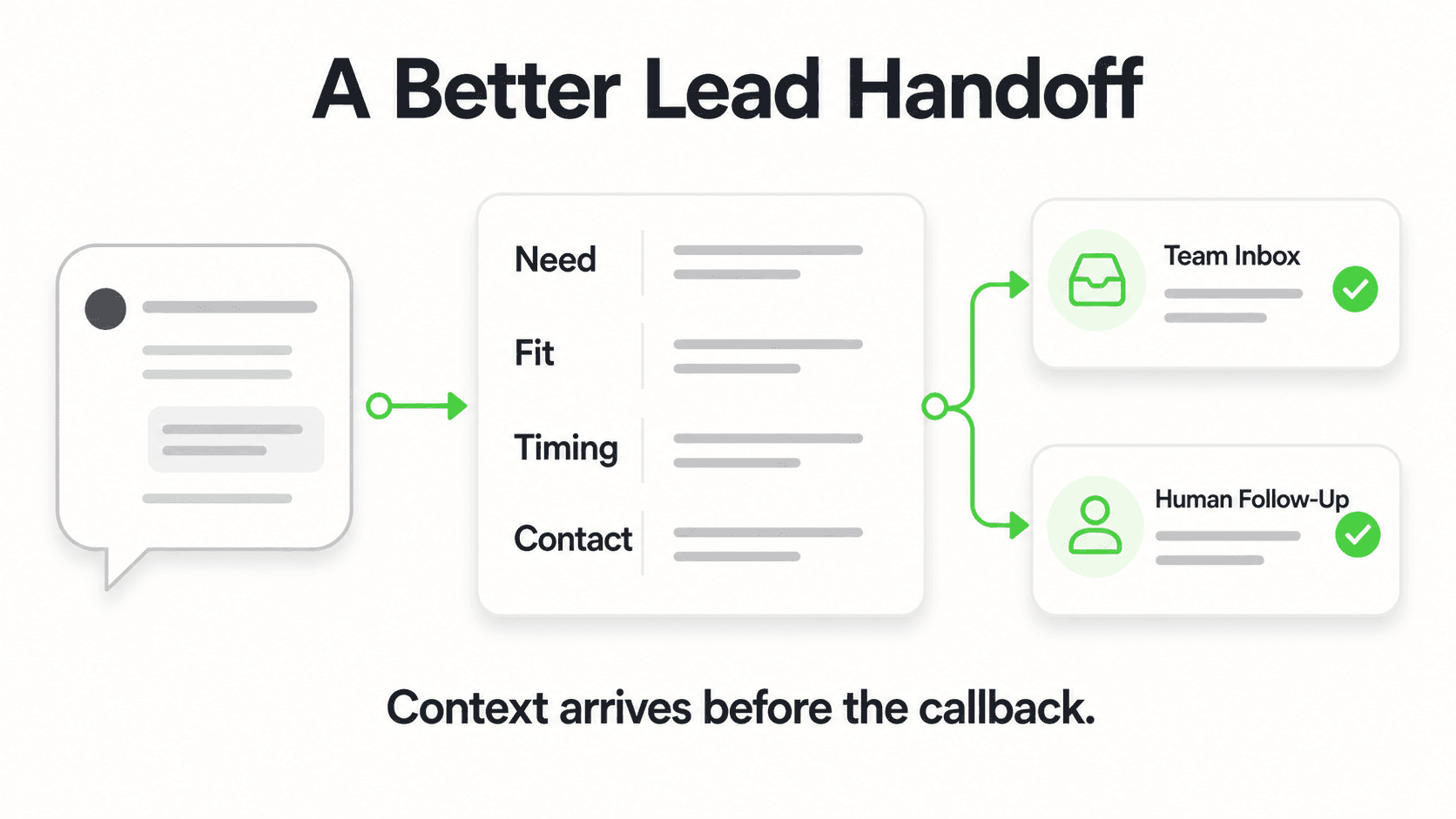
Every lead — a service estimate request, a test-drive enquiry, a trade-in qualification — is captured through a lead form and summarized for your team after the conversation, so whoever owns that lead starts with context instead of a raw chat log. See how chatbot lead summaries work for how that handoff is structured, and how AI lead routing decides who gets what for how sales-intent and service-intent messages get separated.
Is OTP verification required, or optional?
Optional, and it's a paid add-on (usage-based, recharge from $100, Pro and Max plans only) — never included by default on any plan. Most dealerships turn it on specifically for test-drive and trade-in leads, where a verified phone number is worth the extra step, and leave general inventory or FAQ questions on standard lead capture.
The Front Desk That Doesn't Close
A repair shop and a dealership sell different things, but they lose the same way: a customer who reaches out after hours, gets nothing back, and moves to the next listing. The AI answering layer described here isn't trying to replace your service advisors or your sales floor — it's trying to make sure the question that arrives at 7 PM gets a real, configured answer instead of a voicemail greeting, so your team opens the next morning with a qualified lead instead of a missed one.
See how it answers for your shop or dealership
Start your 7-day free trial and configure the AI with your own service menu, inventory content, and routing rules.
Get StartedIndustry Solutions
See how AI chatbots work for these industries:
Related Articles

Conversational AI for Small Business: A Starter Guide
A practical guide to conversational AI for small business: what to build first, a 5-step setup week, real costs, and the 3 use cases that pay for it first.

AI Virtual Receptionist: Your Messaging-Based Digital Front Desk
An AI virtual receptionist handles your website chat, WhatsApp, Instagram DM, and Facebook Messenger 24/7 — greeting visitors, answering questions, capturing leads, and routing to your team.
AI Real Estate Receptionist: What It Does and Why It Wins
An AI real estate receptionist answers property questions, captures buyer and seller leads 24/7, and books showings instantly — on Website, WhatsApp, Instagram, and Facebook.
Automate Service Appointment Scheduling for Auto Shops
A step-by-step guide to automating oil change, brake, and inspection scheduling so service advisors focus on upsells and CX.